

Munich Fabric Start
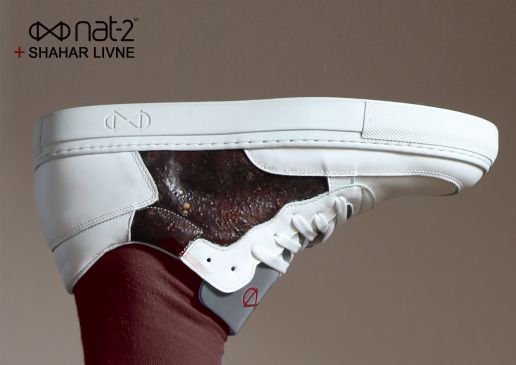
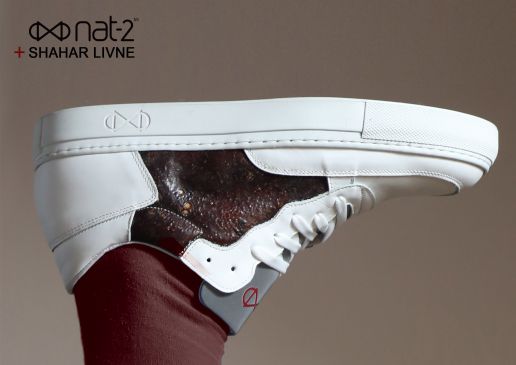
Nat-2™ and Shahar Livne: Sustainable Blood Sneakers
The kind of collaboration which is everything we could hope for here at Munich Fabric Start. Since its inception, Keyhouse is intended to be a platform which promotes the sharing and exchange of knowledge and innovation. We believe that through collaboration, innovations such as those presented by Shahar Livne and Sebastian Thies can thrive; growing arms and legs or in this case Blood Sneakers!
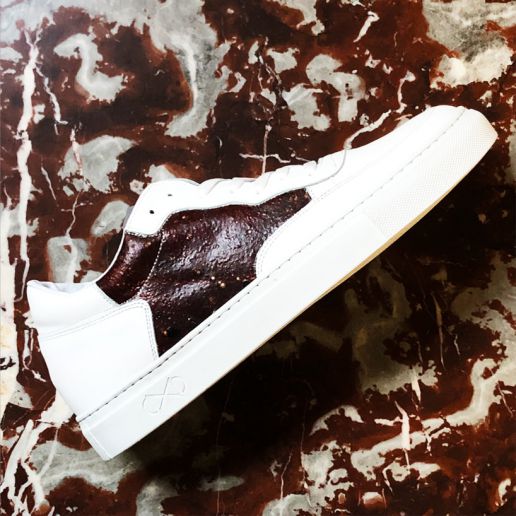
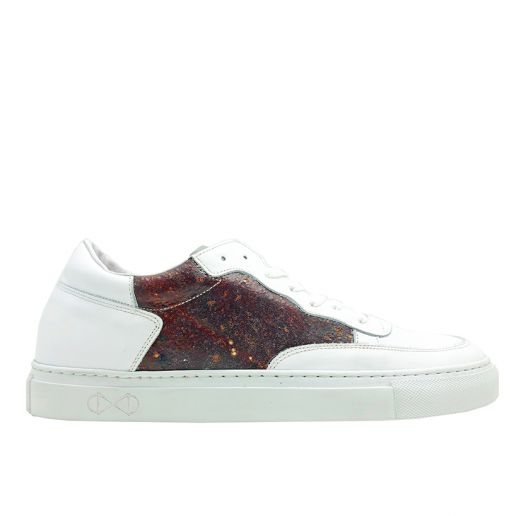
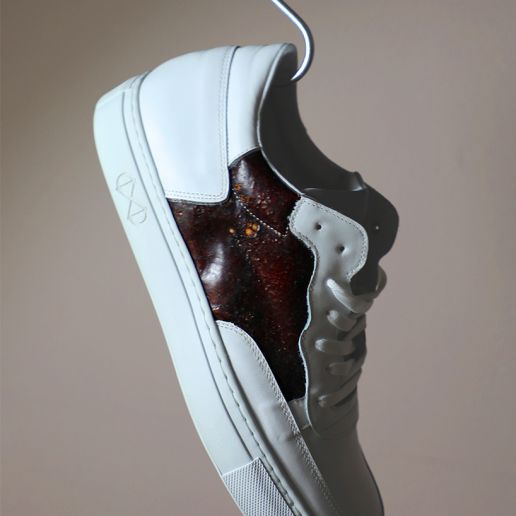
Creating the world’s first sneakers made from REAL BLOOD are nat-2™ Designer Sebastian Thies and Eindhoven based Designer Shahar Livne, both previous exhibitors at Keyhouse 2017 and 2018 respectively. The two designers joined forces in 2018 after meeting each other through Simon Angel who introduced Sebastian to the blood material in a raw state. Fascinated by the material Sebastian then contacted Shahar who was in to the idea. She further developed the material based on the needs for footwear given by nat-2™ and Sebastian designed and constructed the sneaker. Together they also developed the print image which Shahar later printed by silkscreen with real blood pigments. In January 2019 the project was shown to the public for the very first time at Neonyt. Afterwards it went on to exhibitions like Milan and Tortona Design Week, Interzum’s Disruptive Materials and was featured in Dezeen, Sportswear International, Vogue and already many international museums have bought the unique pairs for the collections.
THE PROJECT IDEA
In most slaughterhouses, blood is drained into the sewers and waterways, or re-used as a colourant for meat. Inspired by the construction and de-construction of living subjects in the food industry, Shahar Livne developed a new handmade “bio-leather” by using fat and bones, the subsequent materials from the waste streams of slaughterhouses in the Netherlands, as well as utilizing the wasted blood as a colourant and a plasticizer.
Other materials used in this concept shoe are finest nappa leather, glass, a real cork insole and real rubber outsoles. The shoes are made entirely by hand in Italy and incredibly all according materials are coming from the same region.
“The extraordinary material mix gives the product an absolute new feel and look, never experienced in footwear before”
By realizing these unique sneakers nat-2™ and Shahar Livne want to bring more attention to urgent international matters such as sustainability in different animal-based industries by using naturally occurring resources and upcycling leftovers from those industries. But also making a point for more tolerance, open-minded thinking by raising fascination, curiosity, highlighting the wasteful and disrespectful treatment of animals and natural resources.
Accompanying the sneakers in its 100% recycled paper packaging is a limited edition poster silkscreen printed with a uniquely developed real blood pigment by Shahar Livne, and hand-signed by both designers.

ABOUT THE MATERIAL
The “Meat Factory” project is a series of material experiments with the aim to create dissonance between attractiveness and disgust, natural and industrial attitudes while focusing on the blood as a material and a colourant. The results of the project are visualized in two directions:
1. The use of blood as ink to produce an exciting natural colour range in a silkscreen technique, a repetitive technique that refers to the ancient pigment Oxblood and the industrial revolution relating to food and materials.
2. The Bioleather is made only from meat industry driven waste and low-value materials as a proposal to create new valuable replacements for a polluting and often cruel industry. Shahar investigated the construction and deconstruction of living subjects and the wasteful and cynical treatment of animals and natural resources by human beings, inspired by the philosophy of “Nose to Tail” attitude of using the entire animal.
ABOUT THE DESIGNERS
Shahar Livne (Israeli born, *1989) is an internationally known designer located in Eindhoven, The Netherlands. Her lifelong fascinations in nature, biology, science, and philosophy developed into intuitive material experimentation way of work during her bachelor studies at the Design Academy Eindhoven. Shahar’s body of work focuses on conceptual material research in a multi-leveled methodology, bringing to life narratives through objects and installations centered around materials.
Find Shahar on Instagram
Sebastian Thies (Munich born, *1981), 6th generation footwear designer since 1856 has launched the sustainable luxury brand in 2007. Ever since, the award winning nat-2™ is all about innovation, design and sustainability paving the way for the future fashion footwear by using unique, uncommon materials such as milk, fish leather, natural felt, recycled leather and many vegan luxury alternative materials such as stone, wood, corn, cork, glass, fungus, coffee, grass, flowers, natural rubber and more.
Find nat-2™ on Instagram
Remark: No animal has been harmed or will be in the future by creating these pieces of art. All organic ingredients are from leftover materials. The glue is water-based.
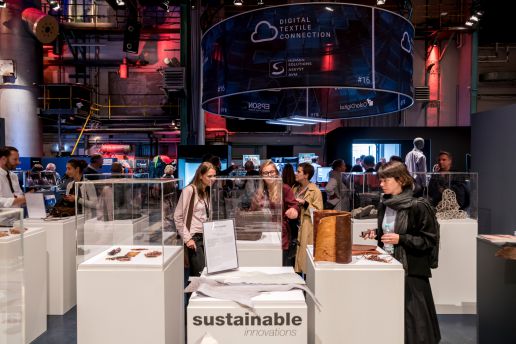
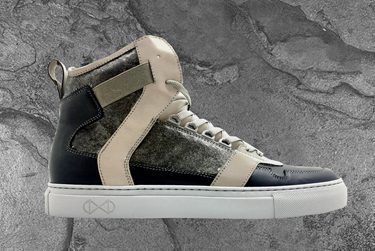
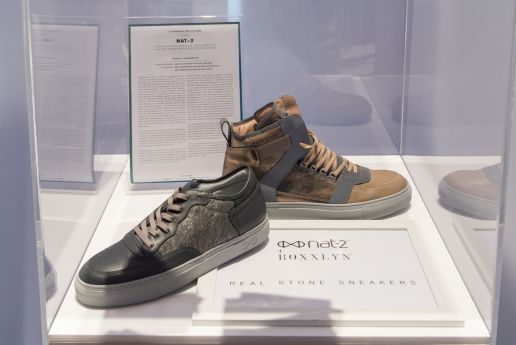
Our thanks and congratulations to Sebastian and Shahar for their successful collaboration and their wonderful insights into a more tolerant and inspiring world.

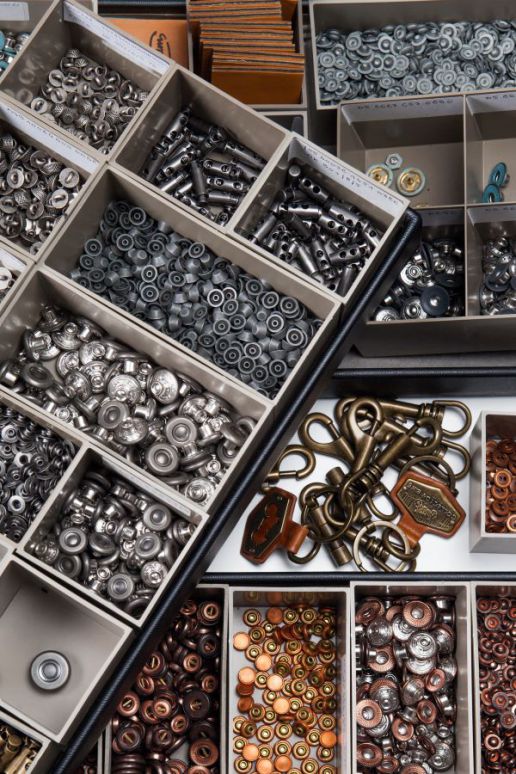
New Entry at BLUEZONE: Metal Trim Specialist Dorlet!
We are happy to announce that Dorlet, one of the leading European additional suppliers with a strong focus on metal and leather goods, will be complementing the BLUEZONE trims portfolio in September.
Founded in Paris in 1928, the family run business has a rich industrial heritage and a unique know-how passed down from generation to generation.
Initially specialising in the manufacturing and sale of hats and millinery supplies, Dorlet changed to selling lining materials for clothing in 1946, and then changed in a roundabout way 1958 to manufacturing fabric bags and waistbands, and finally in 1967 to sewing threads.
Since the 1980’s, Dorlet has been shifting their focus to devising, designing, developing, manufacturing, creating and selling metal products for ready-to-wear, fashion, sportswear, denim, workwear, shoes and leather goods. In addition, the product range is rounded off by nylon, wood and cotton accessories.
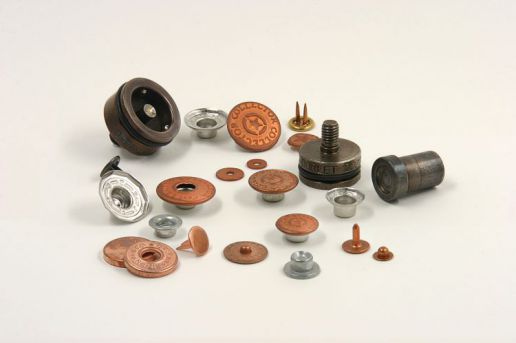
Brass, copper, alloy, iron and stainless steel provide the raw materials for Dorlet’s creations, with the option to tailor-make and personalized products: CAD design with customer logo, colouring and production of a 3D resin prototype are the beginning stages, followed by producing a mold as soon as the shape, material and functionality of the product have been approved.
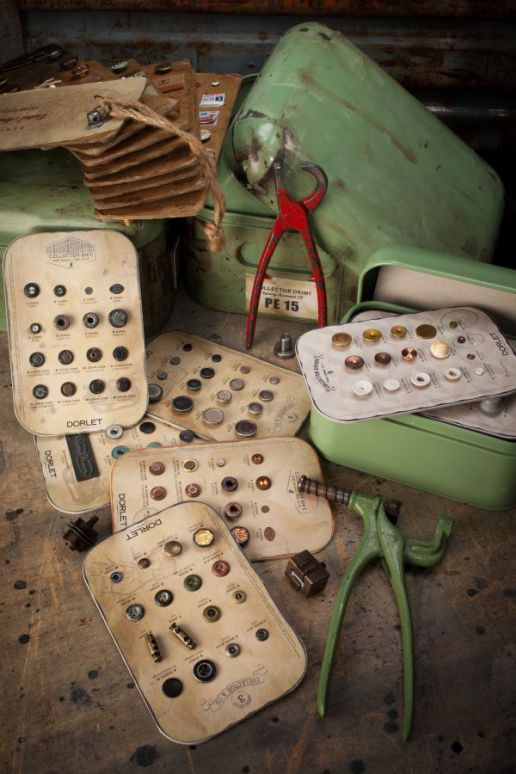
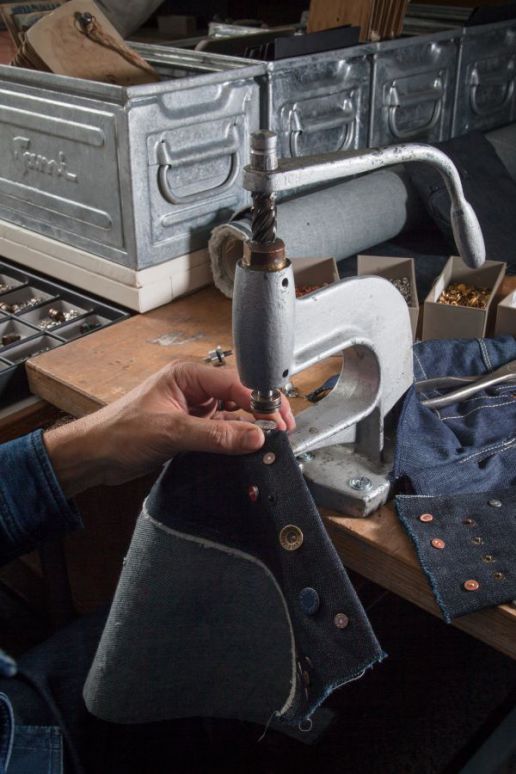
Carried out in close cooperation with the customer, Dorlet’s design process provides a great freedom in low-cost operations and tests to respond to its customers’ stylistic ideas as well as to their technical and environmental constraints.
Metal trims are certified Oko-tex Standard 100 and complied with REACH regulation.
Dorlet operates out of three continents, Europa, Africa and Asia, close to major textile and leather good production sites, thus being able to provide logistical and technical support. Real-time management, automated stock maintenance (SAP) and 3D prototyping within 48 hours carried out in France are certainly further USPs to be mentioned.
During our next edition of BLUEZONE, Dorlet will be showcasing their latest collection and novelties in Munich. Looking forward to welcome this promissing new entry to the BLUEZONE!
SOURCING –New Area at MUNICH FABRIC START
A new SOURCING area will be presented as part of the MUNICH FABRIC START trade show from 3 – 5 September 2019. The SOURCING area will be hosted in the newly integrated section of the fair in Hall 8 directly opposite the MOC venue. Here, the formerly designated APPAREL SOURCING area will be relaunched as SOURCING. This pooling of a both condensed and yet extensive portfolio is a decisive step for the strategic focus of the trade fair at destination Munich.
With SOURCING, MUNICH FABRIC START offers a platform dedicated to international manufacturing and sourcing solutions to meet the demand of buyers in the fashion sectors who are looking for full package, private label and bespoke sourcing solutions. The first MANUFACTURING edition will host a selection about approximately 70 international apparel manufacturers that meet our strict requirements regarding quality, production capacity, professional references, as well as their CSR strategy.
The idea underpinning this new format is to create both an inviting and effective setting for realizing unique communication as well as a working environment in a zeitgeist-inspiring, high-end environment. ”
Sebastian Klinder, Managing Director MUNICH FABRIC START
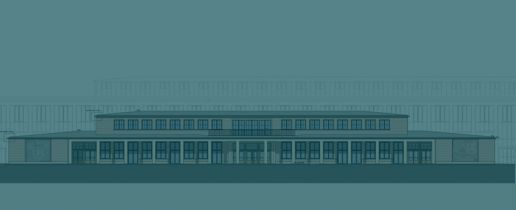
SOURCING in Hall 8 offers professional networking in a unique setting. Staged in a former industrial site for railway maintenance, this site has recently undergone extensive restoration work while maintaining the original industrial Bauhaus architecture dating from 1926. This unique venue offers the perfect setting for brands, retailers and intermediaries to meet and exchange. These are ideal prerequisites for MUNICH FABRIC START. The aim of SOURCING is to create a business platform with an enhanced atmosphere for future oriented networking.
Previous apparel sourcing editions at MUNICH FABRIC START presented manufacturers from Portugal, Germany, Lithuania, Italy, Bosnia and Herzegovina, Macedonia, Romania, Bulgaria, Turkey, Tunisia, and Egypt. Effectively demonstrating the focus of the exhibition, namely to present apparel manufactures neighbouring the European market, ensuring swift delivery times, flexible volumes and free market access.
The following product categories will be presented in the upcoming SOURCING edition: Accessories, Corporate, Couture, Lingerie, Leisurewear, Outdoor, Sportswear, Tailored, and Ready to Wear for Womenswear, Menswear and Kidswear.
MUNICH FABRIC START Spring.Summer 2020 Highlights
Discover our Spring Summer 2020 Highlights Video
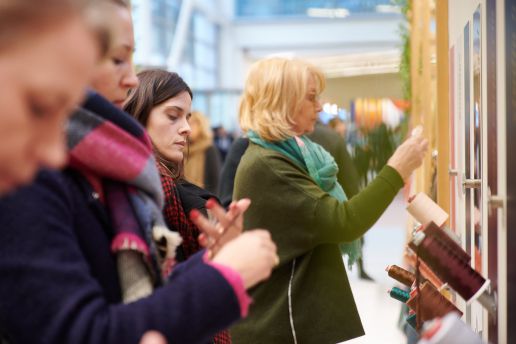
The latest MUNICH FABRIC START from 29th – 31st January 2019 focused intently on sustainability, new product and process solutions, strong collection statements and convincing concepts. Continuing to prove the benefits of direct exchanges and the importance intensive networking has for both visitors and exhibitors, and how amidst the changing industry landscape these connections are more valuable than ever.
MUNICH FABRIC START offers information and inspiration for the fashion and textile industry while also delivering solutions to the following prevalent questions: Which textile innovations can be incorporated into the modern collections? What role does technology and digitization play in production processes? And how strongly can the progressive topic of sustainability influence the textile business as a value driver?
Watch the latest trade fair highlights in the video:
Planet REhab Capsule: Celebrating Sustainable Collaboration
It is great to have organic fibres, right? But as a producer of fibres, the influence on a more sustainable textile production often stops here. Textile garments have complex supply chains which sometimes imply production partners all over the world. That’s why the solution for a more coherent and holistic form of sustainability often lies in right supply chain partnerships!
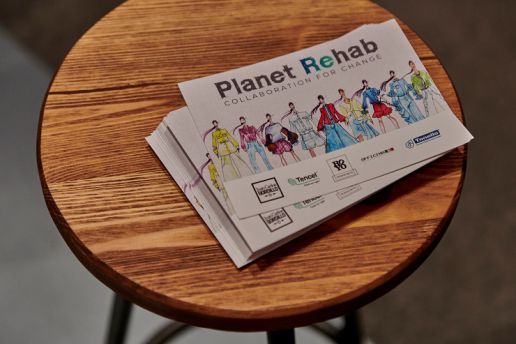
That’s the idea behind the so called “Planet Rehab” capsule collection, for which renowned textile companies, who are environmentally committed, have partnered up to create something bigger than their own.
The collection was presented during last edition of KEYHOUSE in January. MUNICH FABRIC START feels especially committed about this project as all project partners – Lenzing, Tejidos Royo, Officina +39, and Tonello have been long term exhibitors at the fair.
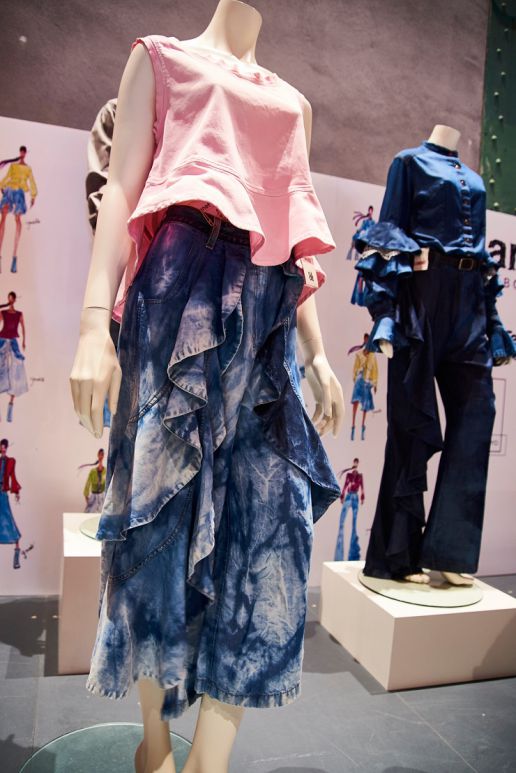
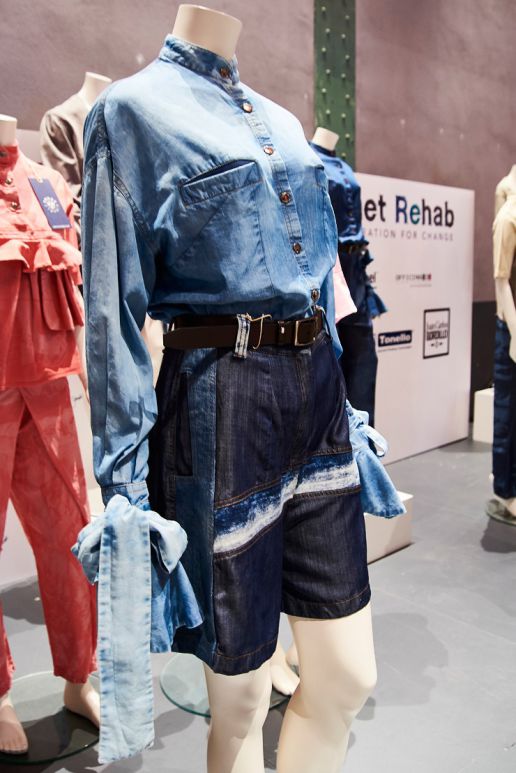
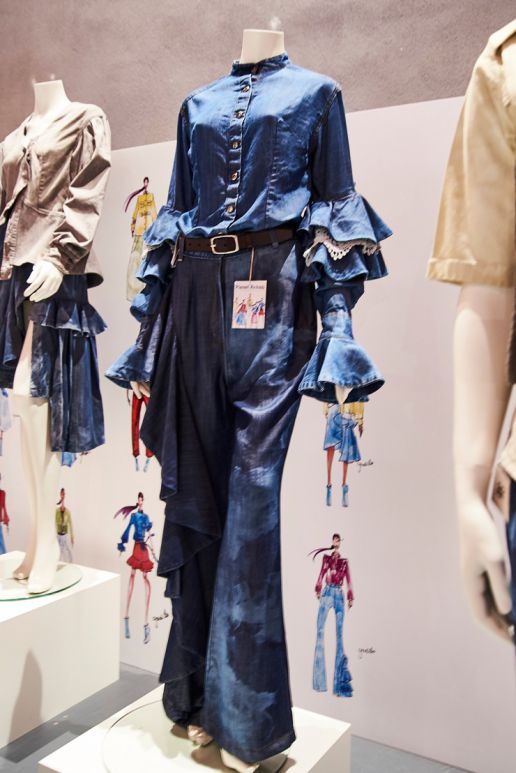
These companies recognized the success to achieving their own goals lies in fulfilling their shared ones, by working collaboratively and responsibly – seeking out more sustainable raw materials, implementing new technologies and employing processes that reduce resource utilization and waste. Juan Carlos Gordillo designed the Rehab collection around Lenzing’s TENCEL™ and TENCEL™ x REFIBRA™ branded lyocell fabrics from Tejidos Royo. The fabrics were dyed using Recycrom technology from Officina+39 and the resultant garments finished by Tonello.
Lenzing’s TENCEL™ and TENCEL™ x REFIBRA™ branded lyocell fibers enhance the sustainable qualities of the fabrics. Made from renewable wood in a closed loop, energy and resource efficient manufacturing process, TENCEL™ fibers and TENCEL™ x REFIBRA™ fibers made with recycled cotton scraps provide the fabrics with softness, smoothness, tenacity, and color intensity.
Spanish fabric producer, Tejidos Royo, creates “fabric with values” through the company’s commitment to the United Nations Sustainable Development Goals. The manufacturer’s vertical business model has substantially reduced its energy consumption and CO2 emissions through aggressive R&D and provides complete transparency and traceability for their customers
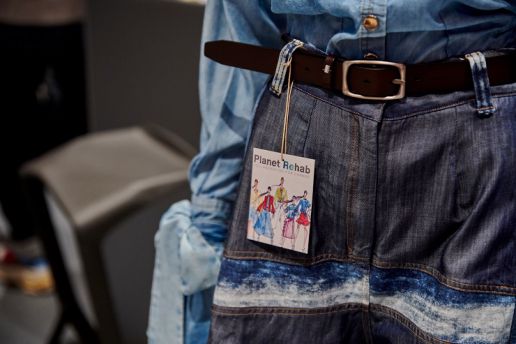
Officina+39’s Recycrom dyes are made from recycled clothing and textile scraps that are specially processed by these Italian experts through a sophisticated production process using only natural chemicals. Waste fabrics are crystalized into an incredibly fine powder that can be used as a pigment dye. Recycrom received the Hightex Award at MUNICH FABRIC START for Autumn/Winter 17/18.
Laundry specialist Tonello also based in Italy, contributed their ECOFREE 2 technology to the project. Fulfilling the needs of the designers and their customers, Tonello’s revolutionary washing process significantly reduces the water and hazardous chemical consumption typically associated with denim finishing.
Guatemalan designer, Juan Carlos Gordillo, applauds the Planet REhab objectives and used the member companies’ products to create fifteen women’s outfits that celebrate life and nature with exceptional color flair and a decidedly Latin influence. The full collection was displayed during the last edition of KEYHOUSE in January 2019, showcasing the eclectic and artistic style for which Gordillo is known for.
“Planet REhab is my tribute to the ocean with its deep colors and flowing shapes,” the celebrated designer says. “The collection also protects the ocean because it is created from the sustainable fibers, fabrics, dyes, and finishing techniques perfected by the Planet REhab collaborating companies. While many companies talk about being sustainable, these companies had the courage to actually create sustainable products and processes that benefit the industry, society, and the planet. I hope this collection can inspire other designers to prioritize sustainability in their creative processes.”