

Circularity is key
Pre-Loved von Studio Sarmite + Roua Atelier
Sustainable Innovations
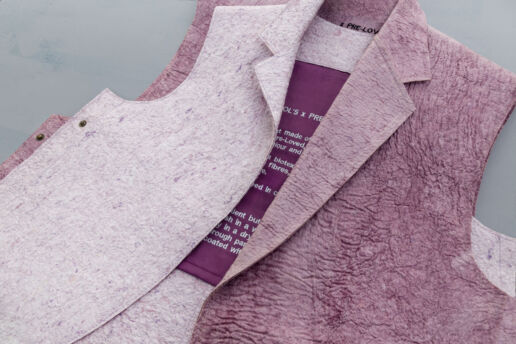
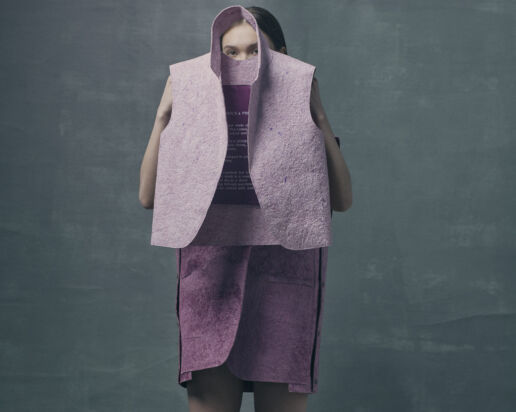
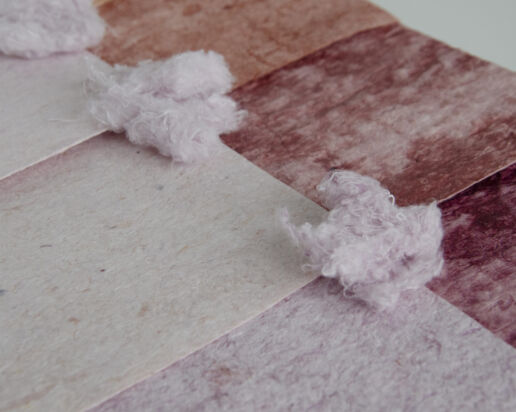
From old to new: Pre-Loved is a biotextile concept in which new products are created from used post-consumer textile waste. In a unique production process, low-quality mixed textile fibres are transformed into a robust, paper- and leather-like material that is suitable for a variety of applications – from fashion to interior design and product design.
Designer Sarmite Polakova gives waste a new meaning in this context: instead of something negative, she perceives it as a surplus recyclable material that can, however, at the same time be a resource for the creation of something new – the focus here is on circularity: it is about the recyclability of the material; a product made by Studio Sarmite can be dissolved at the end of its life and the textile fibres can be used for the next production cycle. The lightweight material displays a processuality, revealing a new aesthetic and highlighting each previous life of a worn garment through nuances of colour and texture. It can feature marble-like patterns as well as hues accentuated by natural dyes.
“The term ‘waste’ should be seen as a surplus rather than something negative and thus can be turned into a resource for creating something new.”
SARMITE POLAKOVA
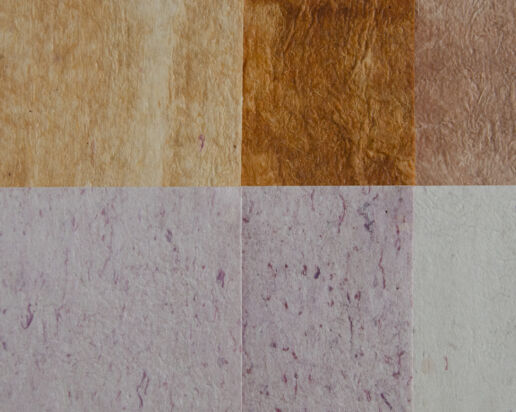
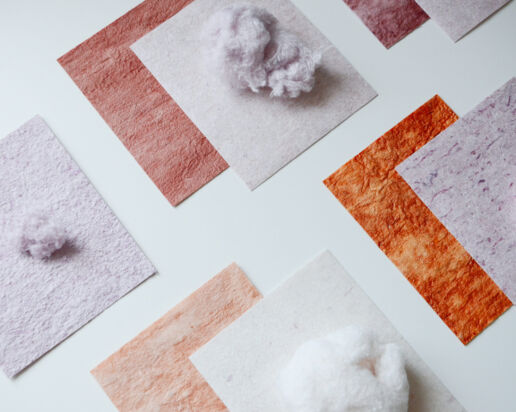
Cooperation is key – first Sarmite Polakova of Studio Sarmite teamed up with colour specialist Roua Alhalabi of Roua Atelier. The result of the collaboration is a groundbreaking dyeing method for blended fabrics based on natural pigments. The dyeing process is integrated into the production of the organic biotextiles and leads to a unique design language that gives room for surprising patterns and a certain playfulness. Moreover, the two designers have found a way to extract the dye during the recycling process of the textiles and use it for the next life cycle without the need for additional resources.
“Nature gives us a lot of resources that can be used in the natural dye industry. In fact, everything around us can be used to make color and support new materials. By using eco- riendly materials, we can become more sustainable and make a good impact.”
ROUA ALHALABI
———————————————————————–
THIS ALSO MIGHT BE INTERESTING FOR YOU
EMELIE SANDRE DESIGN – SUSTAINABLE INNOVATIONS
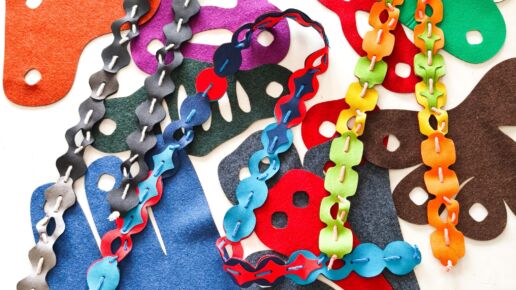
Modularity is hardly a new concept. It has transformed architecture, furniture and industrial design for decades. Applying it to soft textiles, however, opens an entirely different conversation.
Smart Textile Design – SUSTAINABLE INNOVATIONS
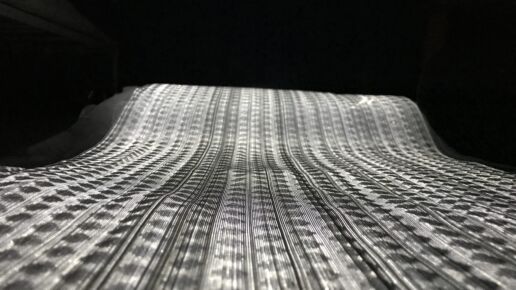
We have always been driven by creativity and curiosity. Our practice evolves through prototypes, never finished, always asking more questions of materials, processes and possibilities.
STUDIO ALICE GIELEN – SUSTAINABLE INNOVATIONS
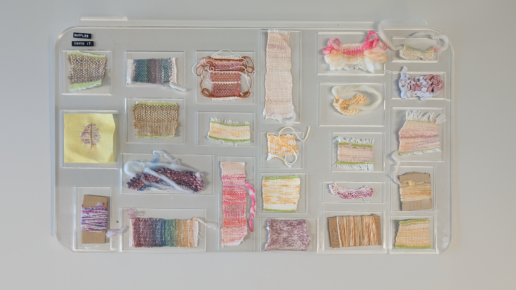
It is an idea that feels increasingly relevant as artificial intelligence and computational design become part of fashion's creative landscape. Perhaps the future is not about humans versus machines. Perhaps it is about learning how to create together.