

How Polopiqué has managed to distinguish itself through its innovation
An interview with Rosario Rodrigues
With more than 80 years of experience in the textile industry, Polopiqué is considered to be a leader in the textile industry. The company has managed to distinguish itself by mastering all phases of the textile production process, from spinning, weaving and finalization, to garment and commercialization of high quality products.
MUNICH FABRIC START had the opportunity to have a one on one interview with Rosario Rodrigues on how the Polopiqué has managed to distinguish itself through its innovation.
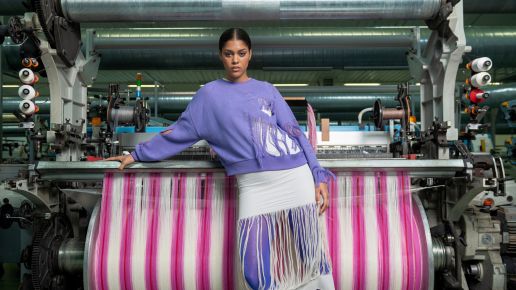
Polopiqué is an exhibitor at MUNICH FABRIC START 2022 in the new Hall 8 – THE SOURCE.
Already booked out for weeks, THE SOURCE is the new European One Stop Solution for holistic fashion sourcing. 65 selected international manufacturing companies will present their offers from Cut-Make-Trim (CMT) to High End Production. A cluster of the most important sourcing countries such as Portugal, Turkey, Morocco, Tunisia, Bosnia and Vietnam creates a business-relevant mix for risk diversification, independent of genre and price level. MUNICH FABRIC START has developed the new Hall 8 with around 2,500 square meters of additional space for this purpose. The recently restored Lokhalle, a listed building directly adjacent to the former MUNICH FABRIC START site, is the perfect location. With its gigantic dimensions and spectacular architecture, it is one of Europe’s largest cantilevered historic steel halls.
The result is a unique new venue for flexible sourcing services and rethought value chains.
How does Polopiqué distinguish itself in the textile industry?
Polopiqué is one of the few complete vertical textile industries worldwide, controlling production from spinning, weaving/knitting and finishing to making high-quality garments. At Polopiqué, we don’t just deliver the garment; we also provide the ideas, the solutions and the designs. We include creativity and design in everything we do.
Why has Polopiqué chosen Portugal for its production?
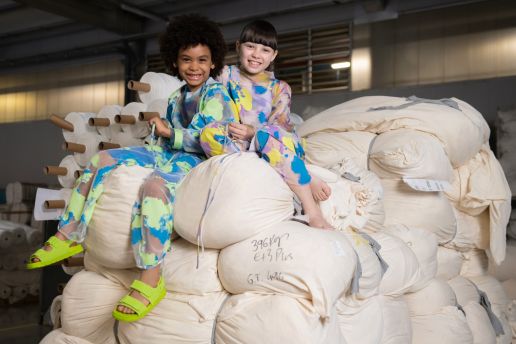
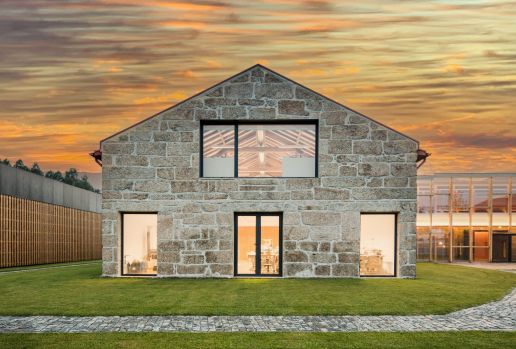
Polopiqué is a Portuguese family company with decades of tradition in the textile industry. In addition, Polopiqué was created and established in the most relevant geographical area in terms of textiles in Portugal. Therefore, we privilege this know-how and proximity, and we should consider the many benefits of local production in terms of sustainability, agility and quality guarantee.
How does Polopiqué optimize processes to improve the quality of manufactured products?
“Investing in Research and Development activities to constantly adopt new and innovative raw materials and production processes. It is also imperative to stay up to date regarding more agile and ecological modern technology and machinery.”
Polopiqué is a member of the Better Cotton initiative; what does that mean?
Better Cotton is the world’s leading sustainability initiative, presenting the mission to help cotton communities survive and thrive while protecting and restoring the environment. The better cotton initiative makes global cotton production better for producers, the environment, and the cotton sector’s future. It is about interacting with the whole supply chain to transform how cotton is sourced, ensure the improvement of the working conditions and a higher standard of living for farming communities, and spreading knowledge, support and resources for more sustainable practices in cotton production and other crops.
What are your thoughts on certification used in the textile industry?
We believe it is vital to convey trust and transparency to customers and consumers in their purchase acts to make informed choices. It is also relevant to involve them so that they feel an essential part in choosing brands with better practices throughout the chain of the production cycle.
Did you face challenges during the pandemic? And how did you deal with them?
Yes, of course, and at that stage, we invested in the production of personal protective equipment and products related to medicine and health, proving our ability to adapt to new situations and the flexibility of our team and production processes when developing new types of products.
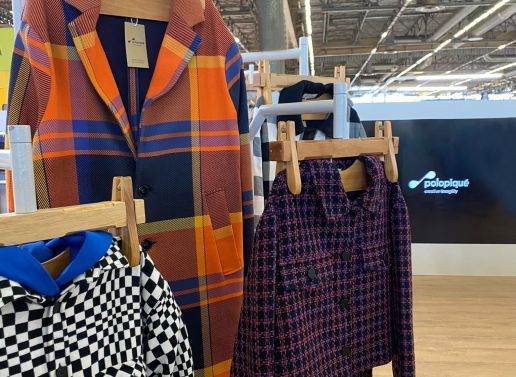
What’s next for Polopique? What direction do you see your company taking in the coming years?
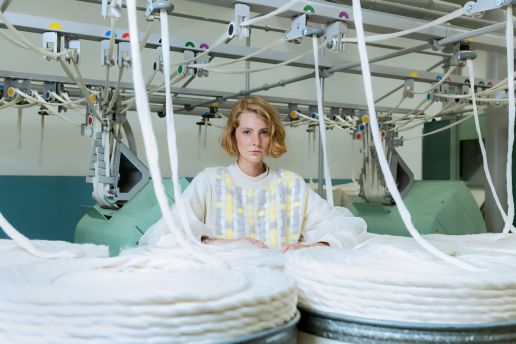
Continuing to surprise the market with innovations through constant R&D practices, taking advantage of new raw materials and production processes. Also reinforcing the weight and presence in new markets and business areas, namely in home textiles.
How important is it to be unique yet still have a recognizable factor in your work?
Very important. Polopiqué is flexible and proud to find solutions to most of our customer’s requests. Furthermore, by controlling all stages of the production process, we can guarantee higher quality standards and better agility.
This might be also interesting for you
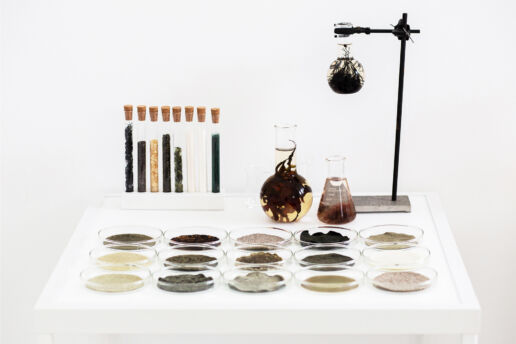
Leather from the Sea – SUSTAINABLE INNOVATIONS
"Through hands-on experimentation, I explore the potential of new surfaces and alternative forms of leather, aiming to reconnect human life with the natural world as an interconnected fabric."
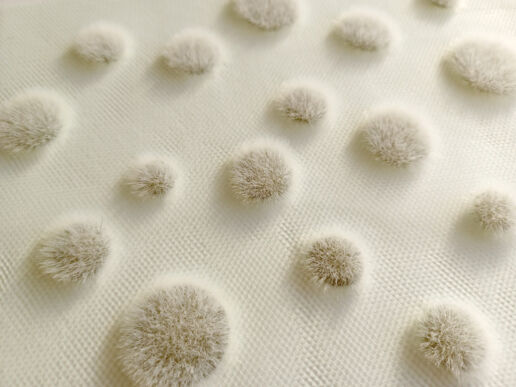
Maison du Flock – SUSTAINABLE INNOVATIONS
Working with everything from delicate tulle and lace to leather, sequins and other unconventional materials, the studio has transformed flock into a contemporary design language capable of meeting the demands of luxury fashion and Haute Couture.

MUNICH FABRIC START – January 26 closing report
A solid trade show. An optimistic mindset. That sums up the outcome of MUNICH FABRIC START. After three days, the Munich textile fair came to an end yesterday, Thursday, with the integrated show-in-shows BLUEZONE, KEYHOUSE and THE SOURCE. MUNICH FABRIC START concluded with a stable visitor frequency compared to the previous event.
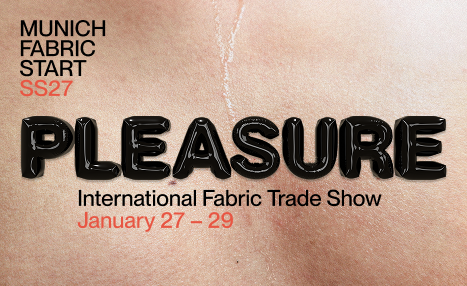
MUNICH FABRIC START – Between Attitude and Sensuality
The future begins where we reimagine it. The overarching theme of PLEASURE stands for fashion as an emotional space, as an expression of attitude and cultural reflection.
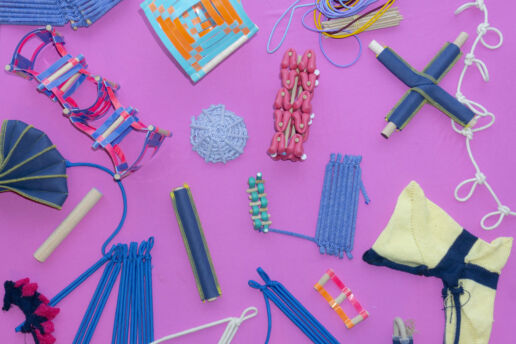
KnitForm+ by Jeanne Mora – SUSTAINABLE INNOVATIONS
What matters is how the textile responds: how it regulates volume, distributes pressure, and transitions from flat to three-dimensional states. Process transparency is embedded in the methodology itself.

Cartoon – WEAR YOUR OPTIMISM
Embark on this fashionable journey and discover the new Cartoon collection at our store. Be inspired, mix and match to your heart's content, and wear optimism—every day, for every occasion.

RETRAKT – SUSTAINABLE INNOVATIONS
Performance, in this context, is measured by organisational resilience. RETRAKT applies resilience engineering to help employees anticipate, monitor, respond to, and learn from complex and changing requirements.
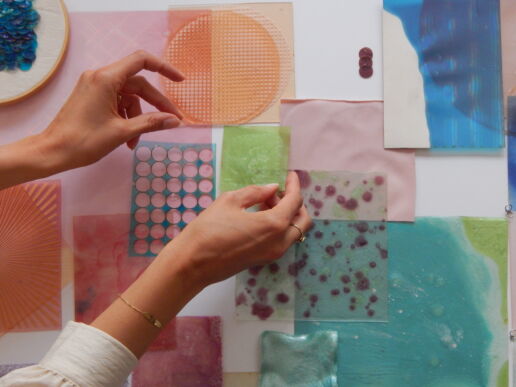
MATERIA FUTURA – SUSTAINABLE INNOVATIONS
Materia Futura is not proposing a new bio-material category, nor a finished commercial textile. What distinguishes the project is its design-led investigation into the emotional and aesthetic dimensions of bio-based materials, an area often sidelined in sustainability discourse.
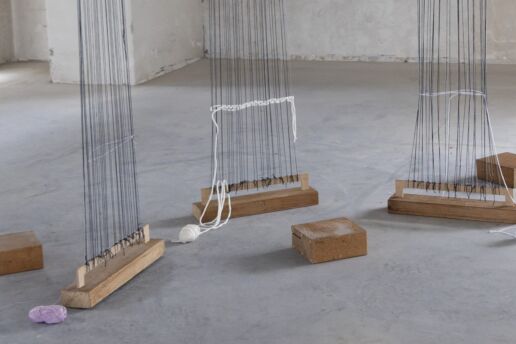
THREADED PROTOCOLS – SUSTAINABLE INNOVATIONS
Threaded Protocols is not a textile innovation in the commercial sense, nor a digital tool disguised as craft. What makes the work distinct is its material investigation into how computational logic originates in textile practice and what is lost when those logics are abstracted into opaque technological systems.
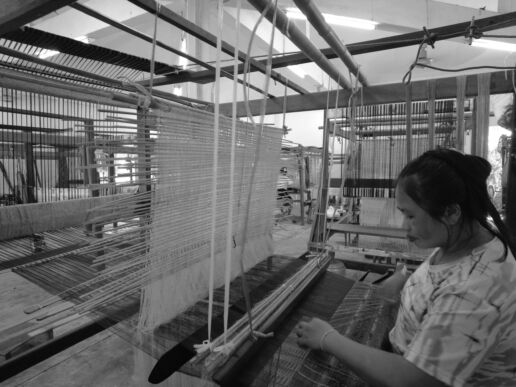
MARIE VILAY – SUSTAINABLE INNOVATIONS
Marie Vilay does not present a new fabric or production technique. What distinguishes her work is a method of reading and translating textile knowledge across cultures, systems, and moments of transition.