

KnitForm+ by Jeanne Mora
When Knitting Becomes Structure, Not Surface
SUSTAINABLE INNOVATIONS
KnitForm+ is not a new yarn system or surface innovation. What makes it different is its use of knitting as a structural design method, where form, volume, and stability are generated directly through textile construction rather than imposed through frames, padding, or rigid supports.
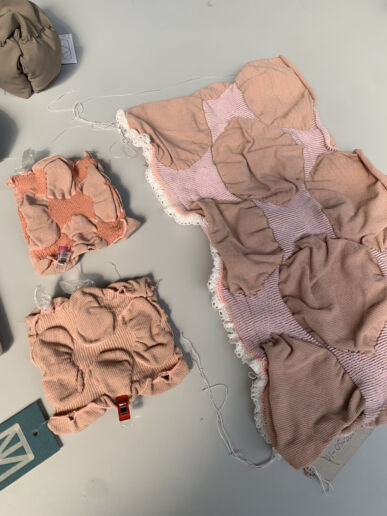
Developed by designer Jeanne Mora, KnitForm+ positions knitting as a construction language. Stitch architecture, tension, and machine constraints become the primary drivers of form. Instead of treating these limitations as technical problems, Mora treats them as design parameters that actively shape behaviour. The result is a series of knitted structures that fold, compress, inflate, and expand through their own material logic.
Material origin is intentionally secondary to structure. KnitForm+ is not presented as a fibre innovation, but as a system for working with knitted behaviour across different material bases. What matters is how the textile responds: how it regulates volume, distributes pressure, and transitions from flat to three-dimensional states. Process transparency is embedded in the methodology itself. Each form emerges through iterative sampling, structural testing, and machine-based experimentation rather than decorative finishing.
“What matters is how the textile responds: how it regulates volume, distributes pressure, and transitions from flat to three-dimensional states. Process transparency is embedded in the methodology itself.”
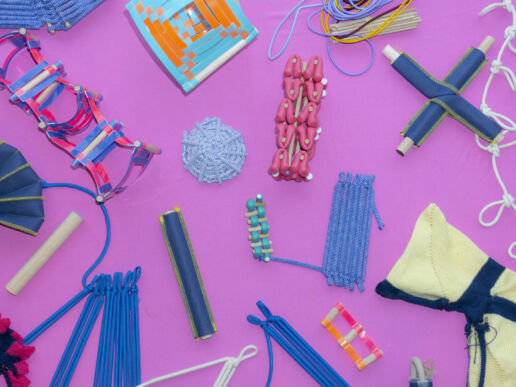
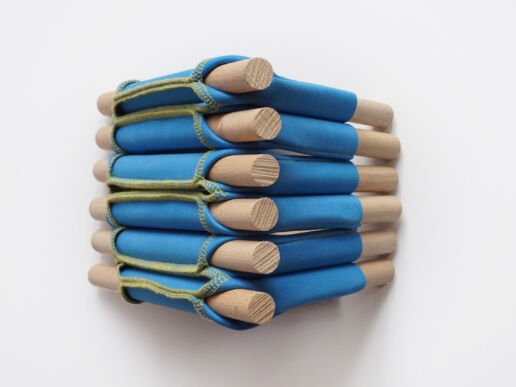
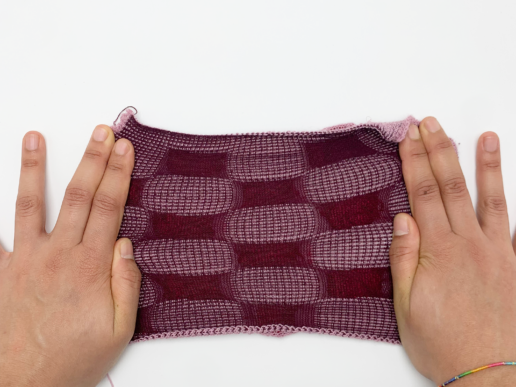
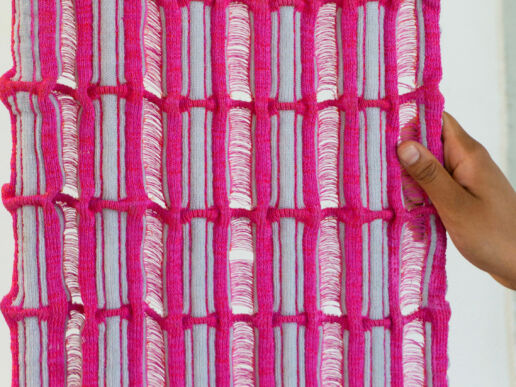
Scalability is addressed through adaptability. KnitForm+ is currently a research and design framework, not a product line. Its logic can be applied across furniture, interiors, and spatial design contexts, but requires collaboration with industrial knitting environments. The work is therefore scalable in principle, but intentionally not simplified into ready-made typologies.
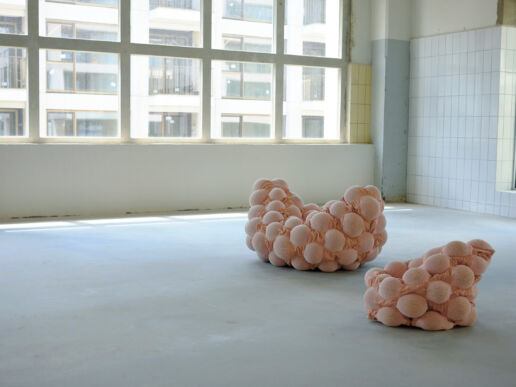
Performance is defined through behaviour rather than comfort claims. The knitted structures demonstrate controlled flexibility, compression, and deformation. In pieces such as the inflatable knitted seat developed with TextielLab in Tilburg, the textile regulates volume and pressure through stitch construction alone. The trade-off is clear: these systems demand precise machine control and deep material understanding, but in return they reduce the need for secondary construction layers.
Within the wider industry context, KnitForm+ challenges the separation between textile design and product engineering. It positions knitting as a tool for structural problem-solving, not surface styling. For furniture designers, textile developers, and manufacturers, it suggests a shift from textiles as coverings to textiles as frameworks.
KnitForm+ does not claim to optimise production or solve sustainability through material substitution. Its contribution is more fundamental. It proposes that textiles can be active construction systems, capable of shaping form, behaviour, and function directly.
For Jeanne Mora, success is not measured in product replication, but in establishing knitting as a structural design discipline with industrial relevance. KnitForm+ is less about what knitting looks like, and more about what knitting can do.
THIS MIGHT BE ALSO INTERESTING FOR YOU:
EMELIE SANDRE DESIGN – SUSTAINABLE INNOVATIONS
Modularity is hardly a new concept. It has transformed architecture, furniture and industrial design for decades. Applying it to soft textiles, however, opens an entirely different conversation.
Smart Textile Design – SUSTAINABLE INNOVATIONS
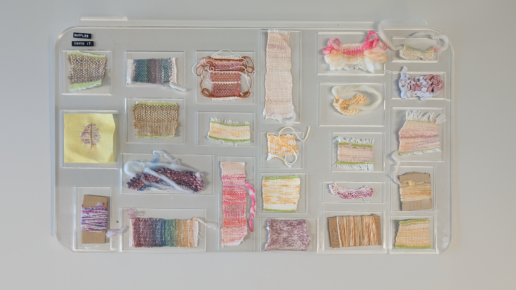
We have always been driven by creativity and curiosity. Our practice evolves through prototypes, never finished, always asking more questions of materials, processes and possibilities.
STUDIO ALICE GIELEN – SUSTAINABLE INNOVATIONS
It is an idea that feels increasingly relevant as artificial intelligence and computational design become part of fashion's creative landscape. Perhaps the future is not about humans versus machines. Perhaps it is about learning how to create together.
Leather from the Sea – SUSTAINABLE INNOVATIONS
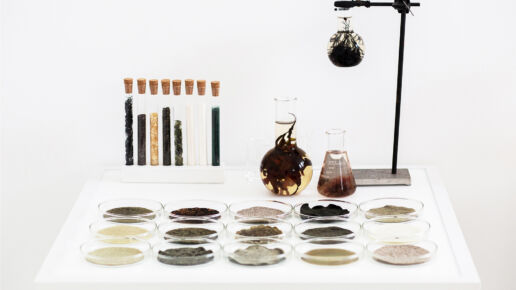
"Through hands-on experimentation, I explore the potential of new surfaces and alternative forms of leather, aiming to reconnect human life with the natural world as an interconnected fabric."
Maison du Flock – SUSTAINABLE INNOVATIONS
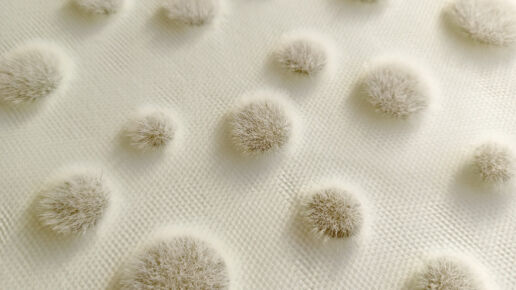
Working with everything from delicate tulle and lace to leather, sequins and other unconventional materials, the studio has transformed flock into a contemporary design language capable of meeting the demands of luxury fashion and Haute Couture.

MUNICH FABRIC START – January 26 closing report
A solid trade show. An optimistic mindset. That sums up the outcome of MUNICH FABRIC START. After three days, the Munich textile fair came to an end yesterday, Thursday, with the integrated show-in-shows BLUEZONE, KEYHOUSE and THE SOURCE. MUNICH FABRIC START concluded with a stable visitor frequency compared to the previous event.
MUNICH FABRIC START – Between Attitude and Sensuality
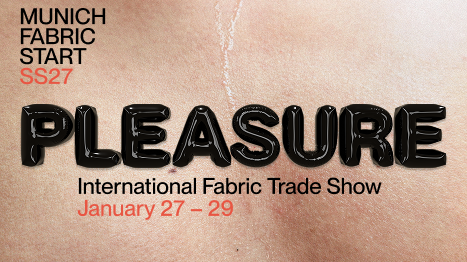
The future begins where we reimagine it. The overarching theme of PLEASURE stands for fashion as an emotional space, as an expression of attitude and cultural reflection.

Cartoon – WEAR YOUR OPTIMISM
Embark on this fashionable journey and discover the new Cartoon collection at our store. Be inspired, mix and match to your heart's content, and wear optimism—every day, for every occasion.

RETRAKT – SUSTAINABLE INNOVATIONS
Performance, in this context, is measured by organisational resilience. RETRAKT applies resilience engineering to help employees anticipate, monitor, respond to, and learn from complex and changing requirements.

MATERIA FUTURA – SUSTAINABLE INNOVATIONS
Materia Futura is not proposing a new bio-material category, nor a finished commercial textile. What distinguishes the project is its design-led investigation into the emotional and aesthetic dimensions of bio-based materials, an area often sidelined in sustainability discourse.