

THREADED PROTOCOLS:
When Weaving Becomes Computation Again
Explore these innovative projects at the Sustainable Innovations Forum in the Keyhouse in Hall 2
Threaded Protocols is not a textile innovation in the commercial sense, nor a digital tool disguised as craft. What makes the work distinct is its material investigation into how computational logic originates in textile practice and what is lost when those logics are abstracted into opaque technological systems.
Developed by artist and researcher Floor Berkhout, Threaded Protocols explores the structural relationship between weaving and computing. Both rely on binary decisions, pattern execution, and logical sequencing. Historically, the loom was the first computer. Threaded Protocols returns to this origin, using textile-making to expose the physical, gestural nature of computation that contemporary digital infrastructures have largely hidden.
Berkhout’s practice operates as a critical technical practice, working through craft methodologies to understand how protocols function materially. In Threaded Protocols, each crossing of threads becomes a binary operation: in front or behind, zero or one. Meaning emerges slowly, through repetition and attention, rather than speed or optimisation. This slowness is deliberate. It draws from perma-computing principles, which question the inevitability of fast, extractive technological progress and its influence on both digital systems and the textile industry.
The project also foregrounds the gendered history of both textile labour and computation, from 19th-century weaving rooms to the women who worked as “computers” in the mid-20th century. By re-embedding computation in the hands, Threaded Protocols seeks to reclaim agency that has been stripped away through industrialisation and black-box technologies.
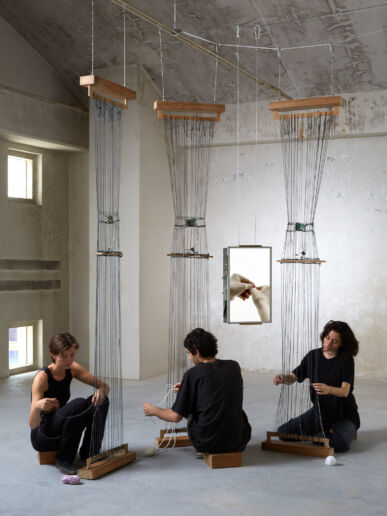
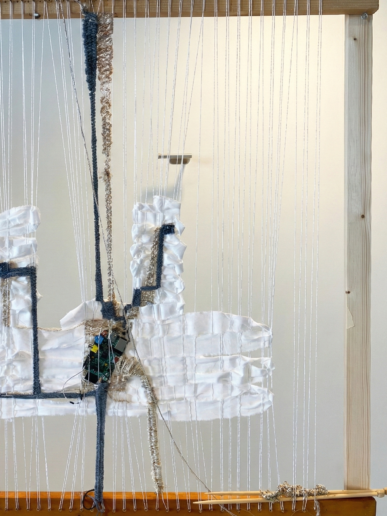
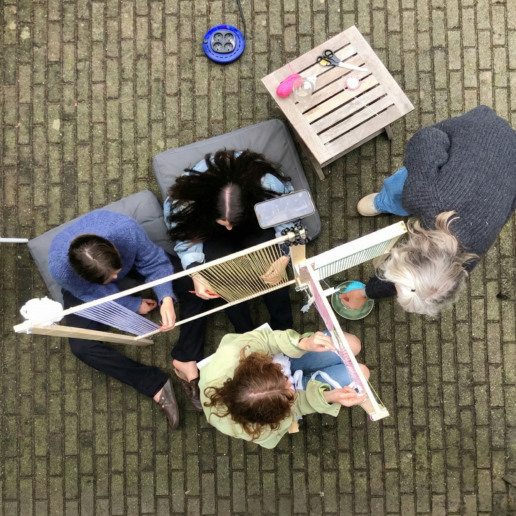
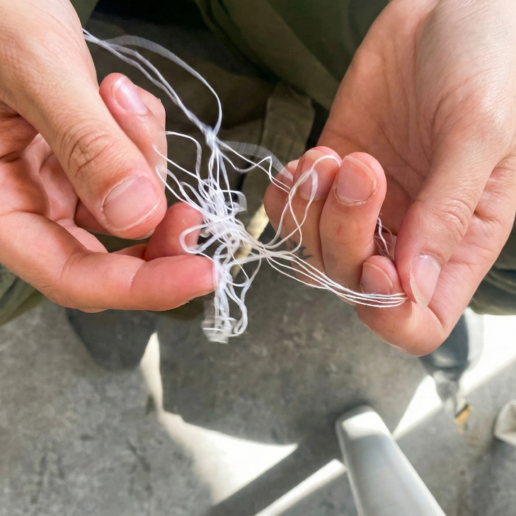
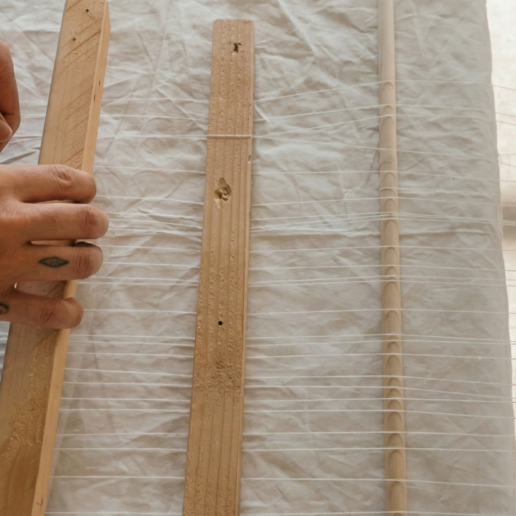
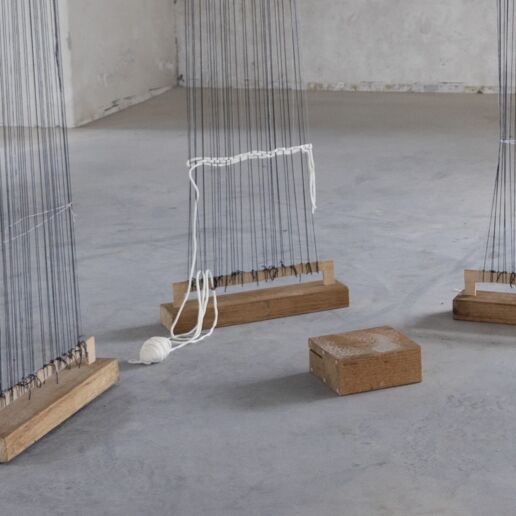
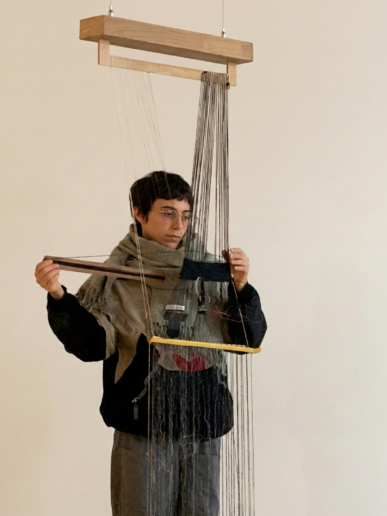
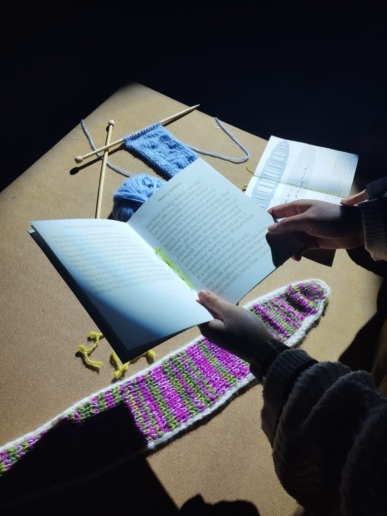
Threaded Protocols is presented as process-driven research and interactive installation, not as a scalable product or material solution. Its relevance lies in how it reframes technology as something made, touched, and shaped by human choice, rather than an abstract, neutral system.
For designers, technologists, and researchers, Threaded Protocols offers a reminder that systems which appear precise and objective are always political, always designed, and always traceable back to material decisions. In a landscape dominated by efficiency, Berkhout’s work insists on another value: the right to build meaning slowly.
The detailed explorer finds a bonus: her work is also touching theme’s of emancipation, gender-equality, historic manipulation…
Any input you think is helpful to create a dedicated article about your project:
https://materialprotocols.site/presskit/
https://materialprotocols.site/research&¬es/
THIS MIGHT BE ALSO INTERESTING FOR YOU
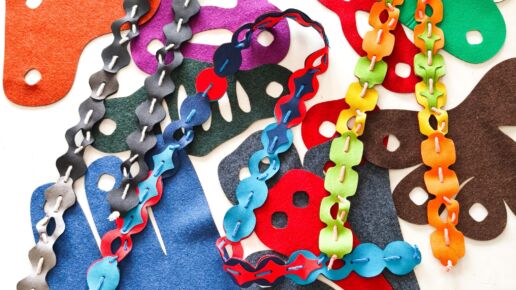
EMELIE SANDRE DESIGN – SUSTAINABLE INNOVATIONS
Modularity is hardly a new concept. It has transformed architecture, furniture and industrial design for decades. Applying it to soft textiles, however, opens an entirely different conversation.
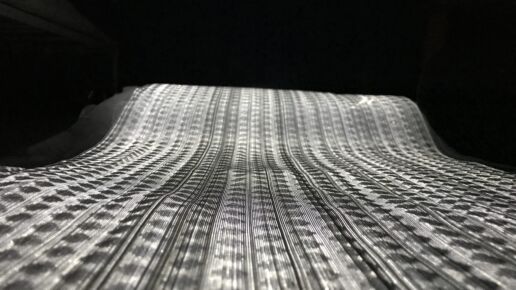
Smart Textile Design – SUSTAINABLE INNOVATIONS
We have always been driven by creativity and curiosity. Our practice evolves through prototypes, never finished, always asking more questions of materials, processes and possibilities.
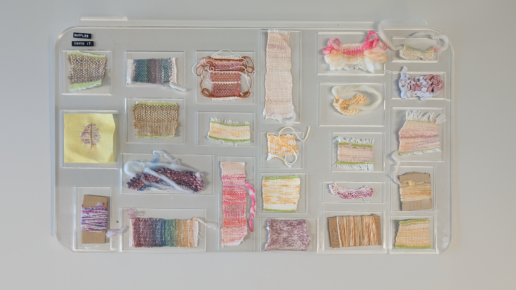
STUDIO ALICE GIELEN – SUSTAINABLE INNOVATIONS
It is an idea that feels increasingly relevant as artificial intelligence and computational design become part of fashion's creative landscape. Perhaps the future is not about humans versus machines. Perhaps it is about learning how to create together.
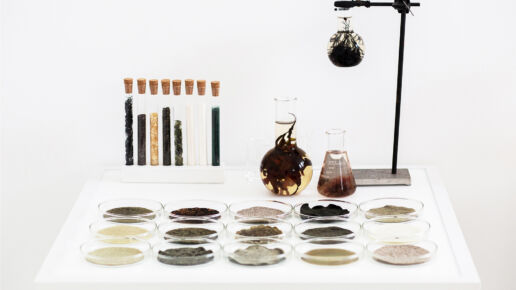
Leather from the Sea – SUSTAINABLE INNOVATIONS
"Through hands-on experimentation, I explore the potential of new surfaces and alternative forms of leather, aiming to reconnect human life with the natural world as an interconnected fabric."
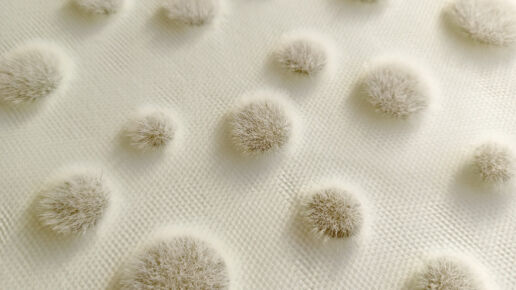
Maison du Flock – SUSTAINABLE INNOVATIONS
Working with everything from delicate tulle and lace to leather, sequins and other unconventional materials, the studio has transformed flock into a contemporary design language capable of meeting the demands of luxury fashion and Haute Couture.

MUNICH FABRIC START – January 26 closing report
A solid trade show. An optimistic mindset. That sums up the outcome of MUNICH FABRIC START. After three days, the Munich textile fair came to an end yesterday, Thursday, with the integrated show-in-shows BLUEZONE, KEYHOUSE and THE SOURCE. MUNICH FABRIC START concluded with a stable visitor frequency compared to the previous event.
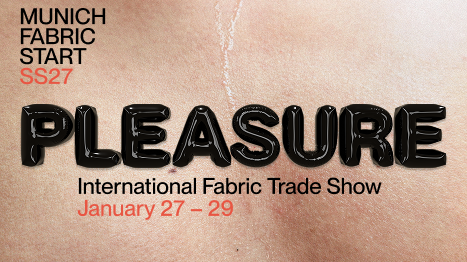
MUNICH FABRIC START – Between Attitude and Sensuality
The future begins where we reimagine it. The overarching theme of PLEASURE stands for fashion as an emotional space, as an expression of attitude and cultural reflection.

KnitForm+ by Jeanne Mora – SUSTAINABLE INNOVATIONS
What matters is how the textile responds: how it regulates volume, distributes pressure, and transitions from flat to three-dimensional states. Process transparency is embedded in the methodology itself.

Cartoon – WEAR YOUR OPTIMISM
Embark on this fashionable journey and discover the new Cartoon collection at our store. Be inspired, mix and match to your heart's content, and wear optimism—every day, for every occasion.

RETRAKT – SUSTAINABLE INNOVATIONS
Performance, in this context, is measured by organisational resilience. RETRAKT applies resilience engineering to help employees anticipate, monitor, respond to, and learn from complex and changing requirements.