

The New EU Textiles Strategy: 15 Things You Need To Know
A contribution of Muchaneta ten Napel, Founding Editor-in-Chief FashNerd.com
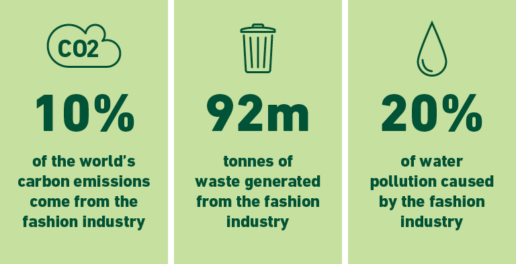
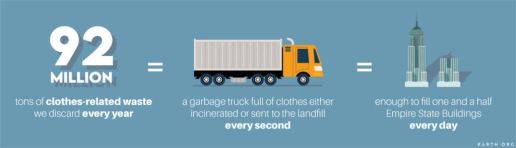
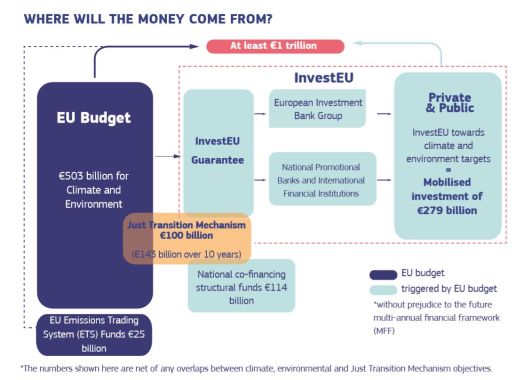
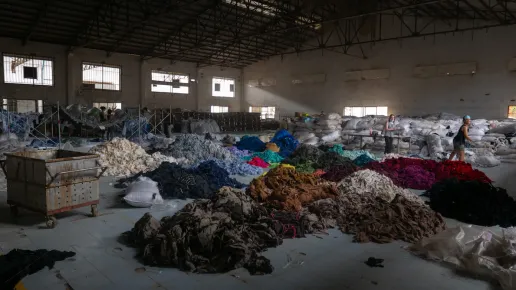
The fashion industry produces 92 million tonnes of waste. It is also responsible for 10% of the world’s carbon emissions. The ugly truth is that the way that the fashion industry does business is making an unsustainable impact on natural resources and the environment at each stage of the supply chain.
So what can be done to minimise an industry-wide problem’s carbon and environmental footprints? Well, this is where the new EU Strategy for Sustainable and Circular Textiles comes into play.
Is It Empowering the Green Transition?
More than just another set of rigid rules, the new EU textiles strategy is driven to address the need for businesses to take responsibility and act to minimise their carbon and environmental footprints. Proposed by the EU Commission, the plan has been set up to help the EU shift to a circular economy that can tackle fast fashion, textile waste and the destruction of unsold textiles. The strategy also aims to encourage businesses to participate actively in the co-creation process through their commitments to circularity and circular business models.
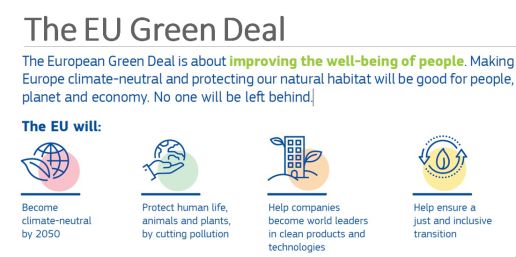
As part of the EU Green Deal, the strategy proposes to make sustainable products “the norm in the EU.” Pushing forward the idea that all production fully respects social rights, the plan also calls on companies to make textiles more durable, repairable, reusable and recyclable.
Bringing attention to a product’s lifecycle, the strategy focuses on design through to end-of-life. The agenda is to kickstart actions that ensure that by 2030 textile products placed on the EU market will be more eco-friendly and long-lasting.
With so much change promised, the Commission’s proposal of new rules can be complex for some to unpack. So here are ten things you need to know about the new EU Strategy for Sustainable and Circular Textiles.
15 Things you need to know
- The new strategy is part of a much broader package, including as many as 16 new legislative actions and other policies that will directly impact the textile value chain.
- Create a model of thriving green and digital transition in manufacturing.
- The strategy will require manufacturers to give consumers more information on how to reuse, repair and recycle clothing.
- The goal is to phase out fast fashion and have more businesses commit to business models that allow for the reuse and repair of products to be widely available.
- In the textile sector, the strategy hopes producers will take responsibility for their products along the value chain, including when they become waste.
- Promoting the circular textiles ecosystem, the EU textiles strategy aims to support and accompany the textiles ecosystem throughout its transformative journey.
- By supporting innovative fibre-to-fibre recycling, the plan is to reduce, to a minimum, the incineration and landfilling of textile waste.
- Solutions and measures include more precise information, a Digital Product Passport and a mandatory EU extended producer responsibility scheme.
- The strategy highlights the need for accuracy regarding green claims by proposing new consumer rights and a ban on greenwashing.
- Reverse overproduction and overconsumption, and discourage the destruction of unsold or returned textiles.
- Propose mandatory Extended Producer Responsibility for textiles with eco- modulation of fees.
- Address the unintentional release of microplastics from synthetic textiles.
- Restrict the export of textile waste and promote sustainable textiles globally.
- Incentivise circular business models, including reuse and repair services.
- Adopt favourable taxation measures for the reuse and repair sector. Lastly, the new EU Strategy for Sustainable and Circular Textiles end game is to make the EU market more friendly to the environment, circular, and energy-efficient and bring balance back to global supply chains. So to conclude, yes, the EU textiles sustainability strategy is very ambitious, but this is why it is critical that it is implemented correctly.
Are you interested in more in-depth facts and figures of the new textile economy?
Visit the FashNerd.com Lounge at H5 | 28 or join their mini lectures Keyhouse.
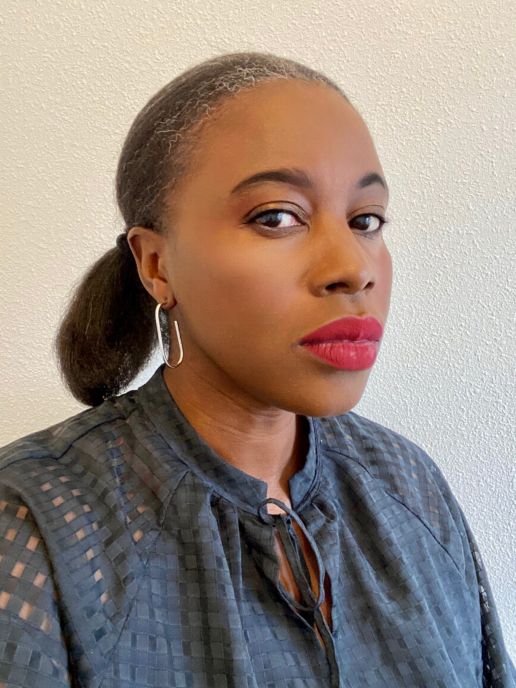
About the author
Founding editor-in-chief of FashNerd.com, Muchaneta has worked in the fashion industry for over 14 years. She is currently one of the leading influencers speaking and writing about the merger of fashion with technology and wearable technology.
Muchaneta ten Napel | editor@fashnerd.com
THIS MIGHT BE ALSO INTERESTING FOR YOU
EMELIE SANDRE DESIGN – SUSTAINABLE INNOVATIONS
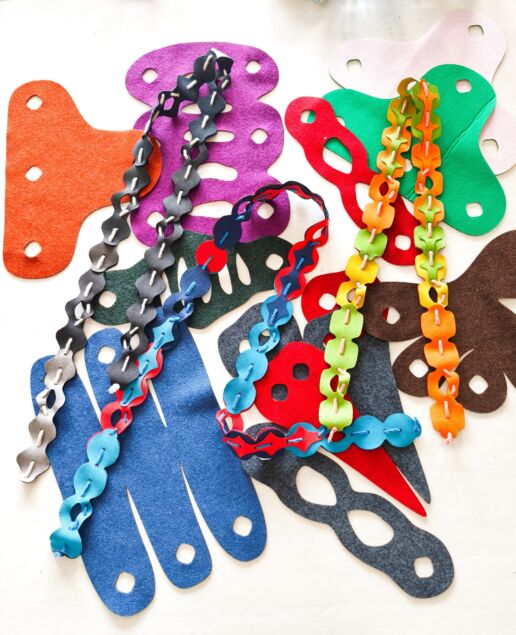
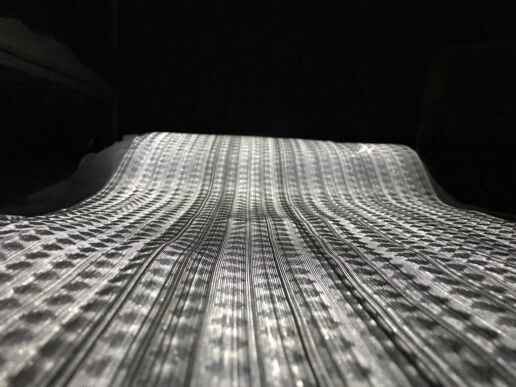
Modularity is hardly a new concept. It has transformed architecture, furniture and industrial design for decades. Applying it to soft textiles, however, opens an entirely different conversation.
Smart Textile Design – SUSTAINABLE INNOVATIONS
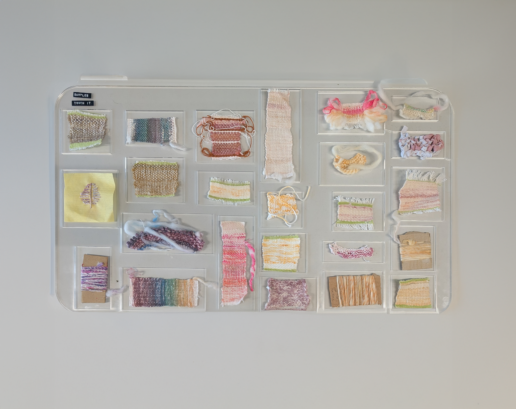
We have always been driven by creativity and curiosity. Our practice evolves through prototypes, never finished, always asking more questions of materials, processes and possibilities.
STUDIO ALICE GIELEN – SUSTAINABLE INNOVATIONS
It is an idea that feels increasingly relevant as artificial intelligence and computational design become part of fashion's creative landscape. Perhaps the future is not about humans versus machines. Perhaps it is about learning how to create together.
Leather from the Sea – SUSTAINABLE INNOVATIONS
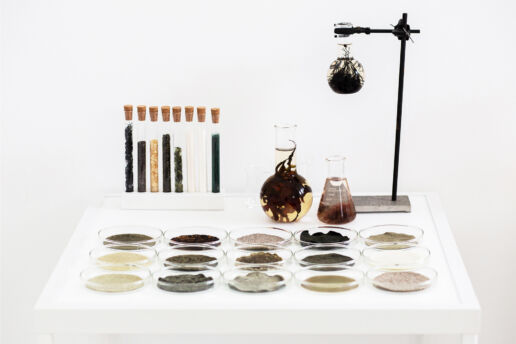
"Through hands-on experimentation, I explore the potential of new surfaces and alternative forms of leather, aiming to reconnect human life with the natural world as an interconnected fabric."
Maison du Flock – SUSTAINABLE INNOVATIONS
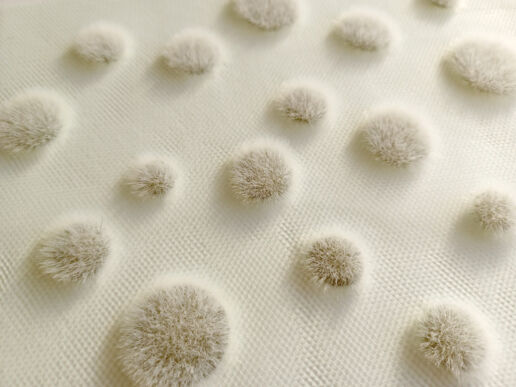
Working with everything from delicate tulle and lace to leather, sequins and other unconventional materials, the studio has transformed flock into a contemporary design language capable of meeting the demands of luxury fashion and Haute Couture.

MUNICH FABRIC START – January 26 closing report
A solid trade show. An optimistic mindset. That sums up the outcome of MUNICH FABRIC START. After three days, the Munich textile fair came to an end yesterday, Thursday, with the integrated show-in-shows BLUEZONE, KEYHOUSE and THE SOURCE. MUNICH FABRIC START concluded with a stable visitor frequency compared to the previous event.
MUNICH FABRIC START – Between Attitude and Sensuality
The future begins where we reimagine it. The overarching theme of PLEASURE stands for fashion as an emotional space, as an expression of attitude and cultural reflection.
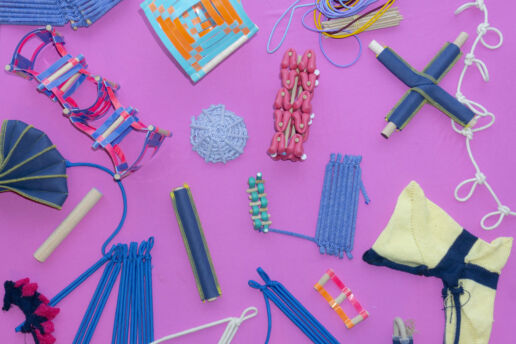
KnitForm+ by Jeanne Mora – SUSTAINABLE INNOVATIONS
What matters is how the textile responds: how it regulates volume, distributes pressure, and transitions from flat to three-dimensional states. Process transparency is embedded in the methodology itself.

Cartoon – WEAR YOUR OPTIMISM
Embark on this fashionable journey and discover the new Cartoon collection at our store. Be inspired, mix and match to your heart's content, and wear optimism—every day, for every occasion.

RETRAKT – SUSTAINABLE INNOVATIONS
Performance, in this context, is measured by organisational resilience. RETRAKT applies resilience engineering to help employees anticipate, monitor, respond to, and learn from complex and changing requirements.