

What If Designers Could Decide Colour Before the Yarn Even Exists?
SUSTAINABLE INNOVATIONS
Both the fashion and textile industry often celebrates creativity. Yet many of the industry’s creative decisions are made long before a designer ever begins designing. Colour being one of them. The thing is, by the time a designer selects yarn, someone else has already determined the available colours, sequences and combinations. Choice exists, but only within boundaries.
Moving Creativity Upstream
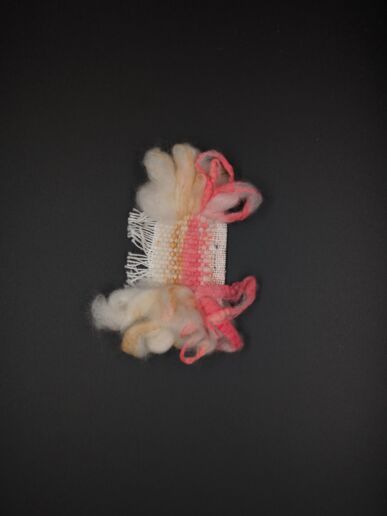
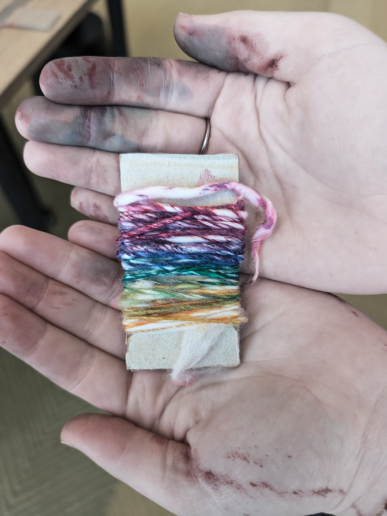
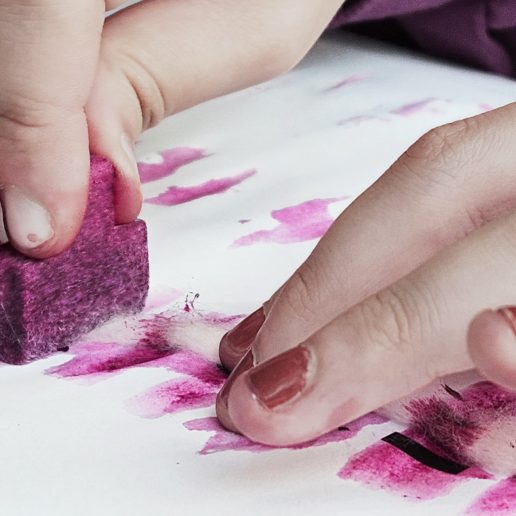
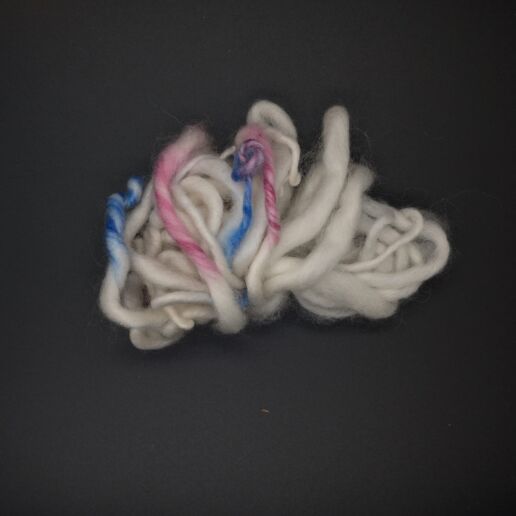
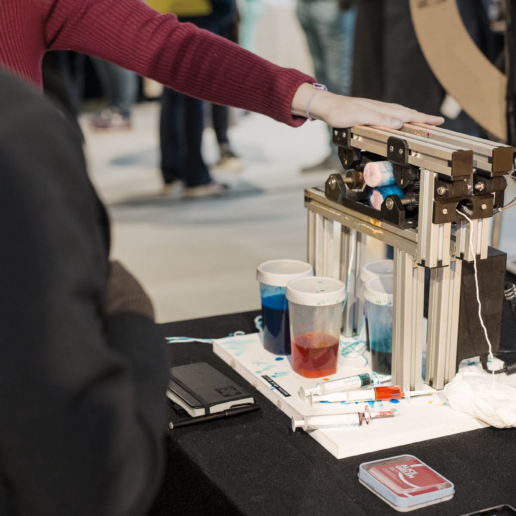
Studio Alice Gielen, the Sliver Fiber Printer reimagines one of textile production’s earliest stages. Instead of colouring yarn after it has been spun, the system applies dye directly onto loose fibre, known as sliver, before spinning takes place. This allows designers to programme colour sequences, gradients, mathematical patterns or even Morse code into the material itself before the yarn has been created. Better still, those sequences can be adjusted live, turning colour development into an active dialogue between designer, machine and material. The technology is impressive.The shift in creative ownership is even more significant.
Rethinking the Relationship Between Humans and Machines
Many of us know that it is automation is often framed as something that replaces human creativity. Studio Alice Gielen proposes something altogether different.
Rather than viewing machines as tools that simply execute instructions, the Sliver Fiber Printer creates space for collaboration. Programmed logic, material behaviour and human intuition influence one another throughout the making process, allowing unexpected outcomes to become part of the design itself.
As Alice explains: “I aim to contribute to a growing discourse that views machines not merely as tools of production but as partners in the creative process, capable of influencing both the method and the art of making.”
It is an idea that feels increasingly relevant as artificial intelligence and computational design become part of fashion’s creative landscape. Perhaps the future is not about humans versus machines. Perhaps it is about learning how to create together.
“I aim to contribute to a growing discourse that views machines not merely as tools of production but as partners in the creative process, capable of influencing both the method and the art of making.”
A Different Way to Build Textile Systems
The Sliver Fiber Printer does more than expand creative possibilities.
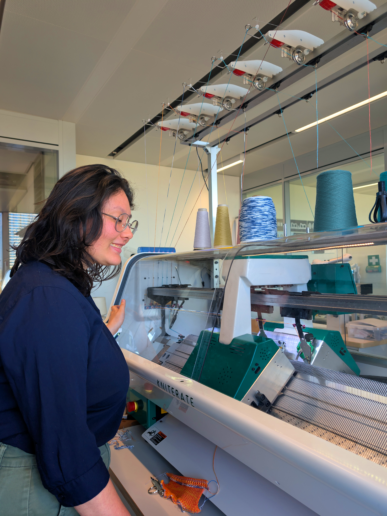
By moving colour decisions to an earlier stage in the production process, it gives independent designers, craftspeople and small studios greater control over experimentation while supporting small-batch production through a closed-loop, zero-water-waste dyeing process. Rather than relying on industrial forecasting to determine available yarns, designers become authors of their own material language.
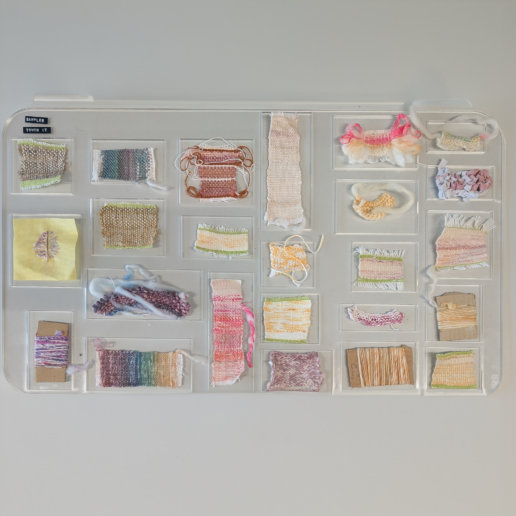
This philosophy is brought to life through KI MONO, a knitted garment inspired by Japanese kasuri and ikat traditions, where algorithmic colour sequences become wearable expressions of both cultural heritage and computational design. It demonstrates that innovation can honour tradition while simultaneously expanding its possibilities.
Visitors exploring the Sustainable Innovation space at Munich Fabric Start between 14-16 July 2026, will discover a project that asks a deceptively simple question will encounter more than a new textile machine.
They will encounter a new way of thinking about authorship. Because perhaps the future of textile innovation isn’t simply about making better materials. Perhaps it is about giving designers back the freedom to shape them from the very beginning.
THIS MIGHT BE ALSO INTERESTING FOR YOU
EMELIE SANDRE DESIGN – SUSTAINABLE INNOVATIONS
Modularity is hardly a new concept. It has transformed architecture, furniture and industrial design for decades. Applying it to soft textiles, however, opens an entirely different conversation.
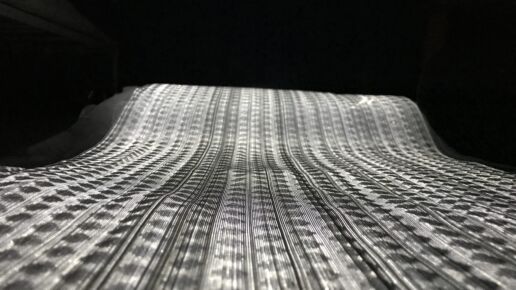
Smart Textile Design – SUSTAINABLE INNOVATIONS
We have always been driven by creativity and curiosity. Our practice evolves through prototypes, never finished, always asking more questions of materials, processes and possibilities.
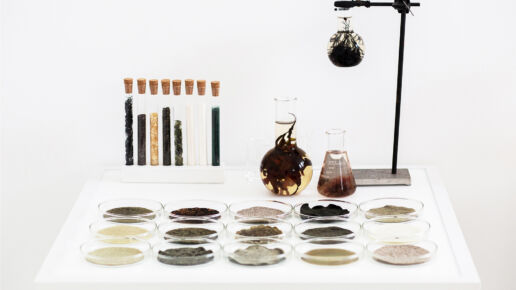
Leather from the Sea – SUSTAINABLE INNOVATIONS
"Through hands-on experimentation, I explore the potential of new surfaces and alternative forms of leather, aiming to reconnect human life with the natural world as an interconnected fabric."
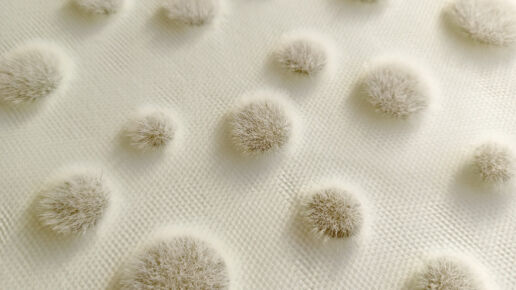
Maison du Flock – SUSTAINABLE INNOVATIONS
Working with everything from delicate tulle and lace to leather, sequins and other unconventional materials, the studio has transformed flock into a contemporary design language capable of meeting the demands of luxury fashion and Haute Couture.

MUNICH FABRIC START – January 26 closing report
A solid trade show. An optimistic mindset. That sums up the outcome of MUNICH FABRIC START. After three days, the Munich textile fair came to an end yesterday, Thursday, with the integrated show-in-shows BLUEZONE, KEYHOUSE and THE SOURCE. MUNICH FABRIC START concluded with a stable visitor frequency compared to the previous event.
MUNICH FABRIC START – Between Attitude and Sensuality
The future begins where we reimagine it. The overarching theme of PLEASURE stands for fashion as an emotional space, as an expression of attitude and cultural reflection.

KnitForm+ by Jeanne Mora – SUSTAINABLE INNOVATIONS
What matters is how the textile responds: how it regulates volume, distributes pressure, and transitions from flat to three-dimensional states. Process transparency is embedded in the methodology itself.

Cartoon – WEAR YOUR OPTIMISM
Embark on this fashionable journey and discover the new Cartoon collection at our store. Be inspired, mix and match to your heart's content, and wear optimism—every day, for every occasion.

RETRAKT – SUSTAINABLE INNOVATIONS
Performance, in this context, is measured by organisational resilience. RETRAKT applies resilience engineering to help employees anticipate, monitor, respond to, and learn from complex and changing requirements.

MATERIA FUTURA – SUSTAINABLE INNOVATIONS
Materia Futura is not proposing a new bio-material category, nor a finished commercial textile. What distinguishes the project is its design-led investigation into the emotional and aesthetic dimensions of bio-based materials, an area often sidelined in sustainability discourse.