

Cooperation is key
Process Runway – from farm to fabric by Enschede Textielstad
Sustainable Innovations
Local and recycled: Enschede Textielstad was founded in 2013 by Annemieke Koster to create responsibly produced fabrics from recycled yarns and local raw materials such as flax, hemp and wool for apparel and interior textiles. To keep the supply chain as short and regional as possible, one of the main focuses of the concept is to develop smart and circular uses of waste streams and local resources – for example, Dutch wool. Its quality is not good enough to make clothes from, and to date there has been no viable business model in sight for this resource – so it has been burned. However, what is not good enough for clothing may be absolutely sufficient for other purposes, so Enschede Textielstad now weaves fabrics from the wool that are ideal for upholstered furniture.
The same applies to linen – there have been no projects with economic viability in the Netherlands to date. To change this, The Linen Project was founded in 2019 as an initiative of Crafts Council Nederland and ArtEZ University of Fine Arts (see feature in also this Sustainable Innovations issue). In 2020, the two projects began a collaboration based on division of labor, with Enschede Textielstad acting as a weaving mill for flax cultivated in the Netherlands.
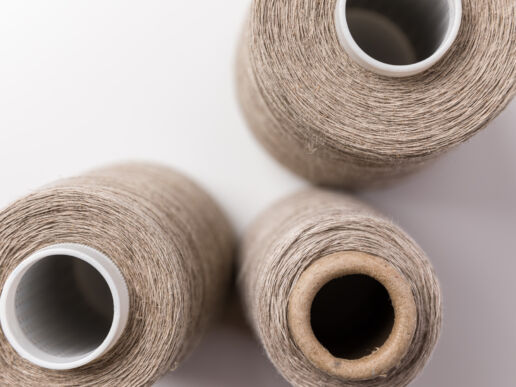
“We are bridging the gap between mass production and laboratory scale testing. We do so with a focus on sustainable, local and social production on the most innovative machine the industry has to offer. With our investment and expertise we help the industry move forward by testing new materials in early stages of development.”
ANNEMIEKE KOSTER, FOUNDER ENSCHEDE TEXTIELSTAD
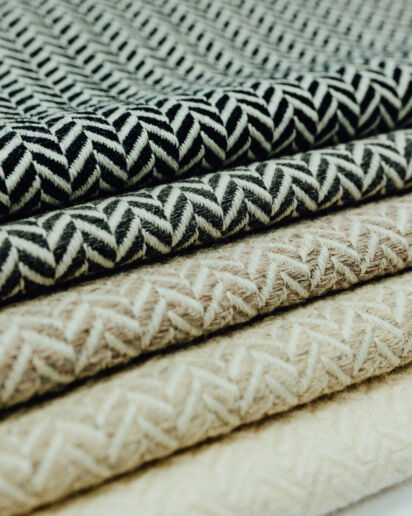
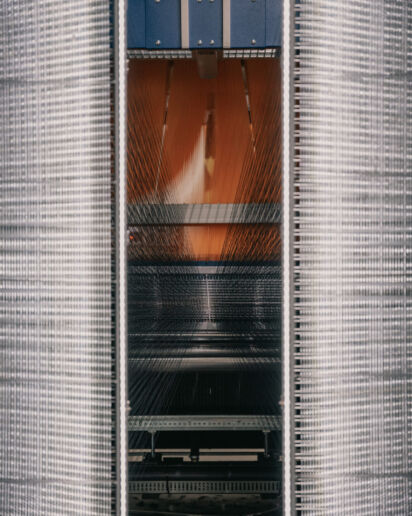
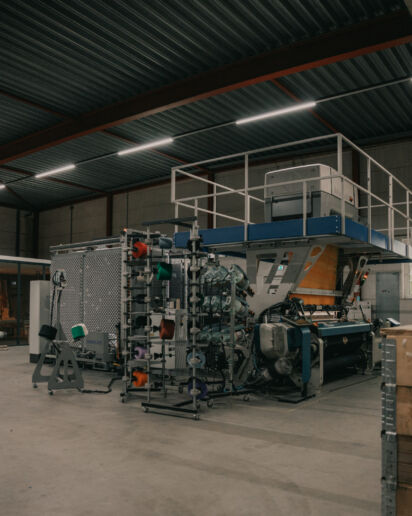
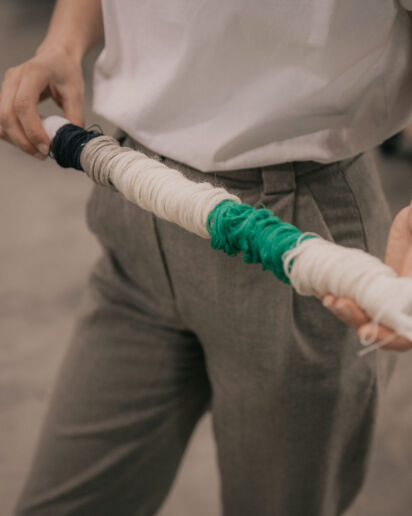
This collaboration is accompanied by a new cooperative business model: instead of simply selling the fabric by the meter to customers, a subscription model was designed for The Linen Project. Customers become part of the supply chain and share responsibility for the process of harvesting, weaving and finishing. The fabrics are then sold as “lots”, with all the imperfections as these are part of the subscription.
———————————————————————–
THIS MIGHT ALSO BE INTERESTING FOR YOU
EMELIE SANDRE DESIGN – SUSTAINABLE INNOVATIONS
Modularity is hardly a new concept. It has transformed architecture, furniture and industrial design for decades. Applying it to soft textiles, however, opens an entirely different conversation.
Smart Textile Design – SUSTAINABLE INNOVATIONS
We have always been driven by creativity and curiosity. Our practice evolves through prototypes, never finished, always asking more questions of materials, processes and possibilities.
STUDIO ALICE GIELEN – SUSTAINABLE INNOVATIONS
It is an idea that feels increasingly relevant as artificial intelligence and computational design become part of fashion's creative landscape. Perhaps the future is not about humans versus machines. Perhaps it is about learning how to create together.