

MARIE VILAY: Reading, Carrying, and Reframing Textile Knowledge
SUSTAINABLE INNOVATIONS
Marie Vilay does not present a new fabric or production technique. What distinguishes her work is a method of reading and translating textile knowledge across cultures, systems, and moments of transition. Her practice asks a question that sits at the edge of innovation: what happens to textile traditions, patterns, and objects when they move between geographies, power structures, and production logics?
“For designers, researchers, and institutions navigating questions of decolonisation, migration, and responsibility, her work offers a different kind of innovation: one rooted in listening, translation, and care rather than optimisation.”
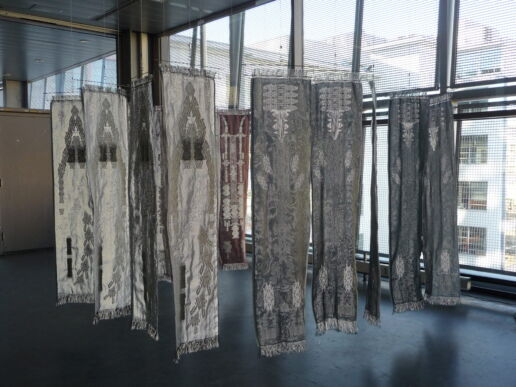
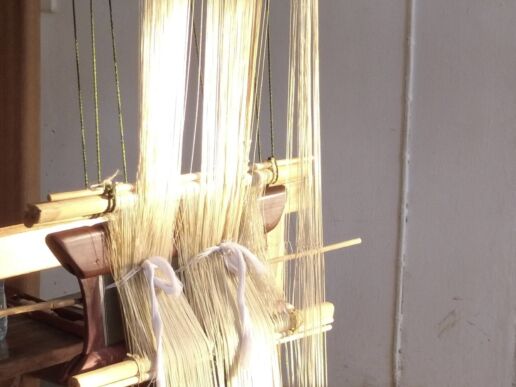
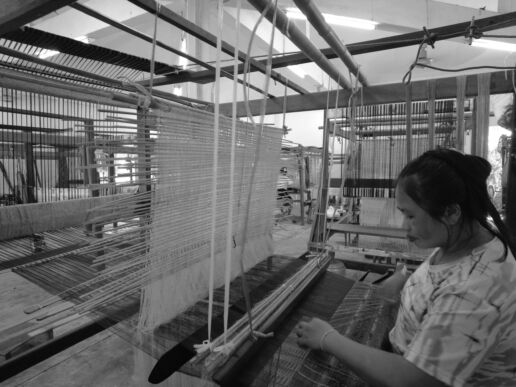
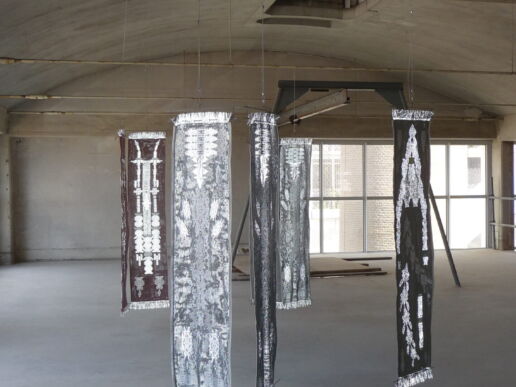
In To Read a Pattern, Vilay investigates how Laotian weaving patterns might persist when removed from their original cultural and social context and placed within European industrial production.
In Laos, weaving is a living, evolving practice, with patterns traditionally passed from mother to daughter. Vilay’s research highlights how colonial history and orientalist framing have shaped how these patterns are perceived in Western contexts, often flattening them into static heritage rather than living knowledge.
Using patterns gathered through field research in Laos and developing new interpretations through industrial processes, she explores whether continuity is possible without extraction or simplification. This work was produced in collaboration with TextielLab and the Textile Museum in Tilburg.
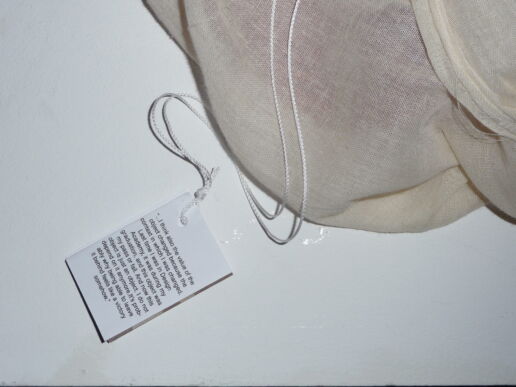
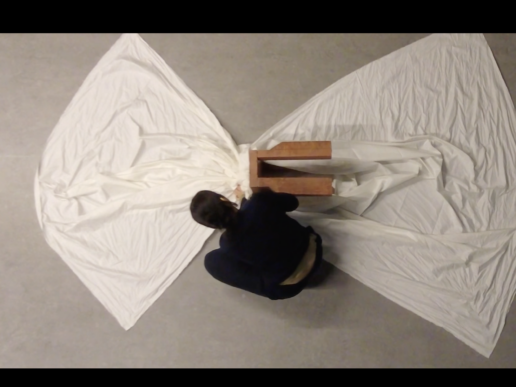
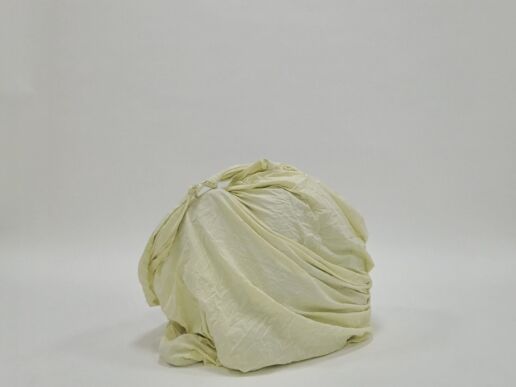
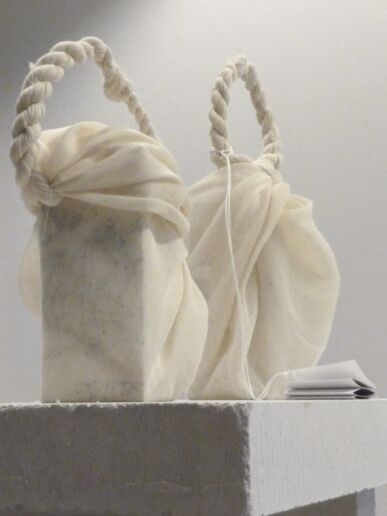
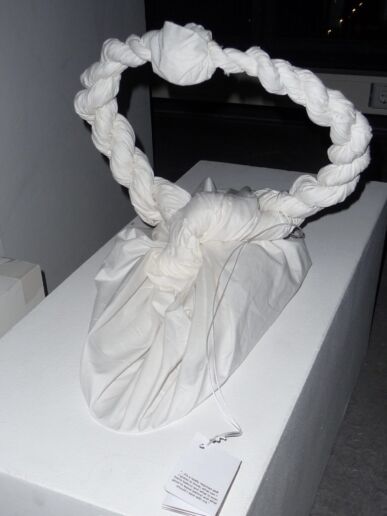
Her second project, A Bindle (in Transition), shifts from production systems to personal and collective movement. A bindle is a simple cloth used to carry essential belongings while travelling. Vilay reinterprets this form as a container for care, memory, and what is left behind. Using graduation projects abandoned by peers as material, she documents stories of departure, uncertainty, and transition, binding objects and narratives together through a universal textile gesture.
Vilay’s work is not designed for immediate commercial application. Its relevance lies elsewhere: in challenging how value, authorship, and continuity are assigned in textile culture. For designers, researchers, and institutions navigating questions of decolonisation, migration, and responsibility, her work offers a different kind of innovation: one rooted in listening, translation, and care rather than optimisation.
THIS MIGHT BE ALSO INTERESTING FOR YOU:
EMELIE SANDRE DESIGN – SUSTAINABLE INNOVATIONS
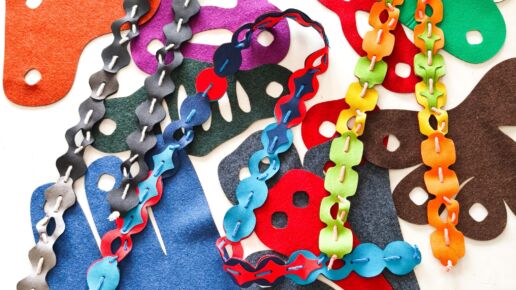
Modularity is hardly a new concept. It has transformed architecture, furniture and industrial design for decades. Applying it to soft textiles, however, opens an entirely different conversation.
Smart Textile Design – SUSTAINABLE INNOVATIONS
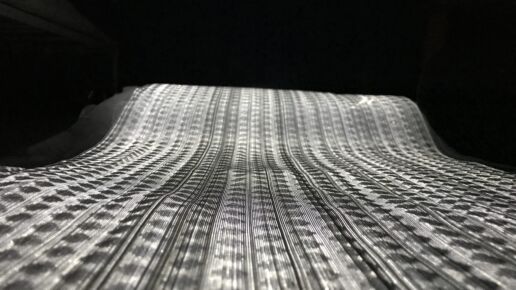
We have always been driven by creativity and curiosity. Our practice evolves through prototypes, never finished, always asking more questions of materials, processes and possibilities.
STUDIO ALICE GIELEN – SUSTAINABLE INNOVATIONS
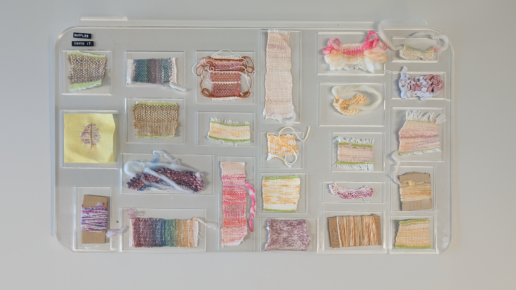
It is an idea that feels increasingly relevant as artificial intelligence and computational design become part of fashion's creative landscape. Perhaps the future is not about humans versus machines. Perhaps it is about learning how to create together.
Leather from the Sea – SUSTAINABLE INNOVATIONS
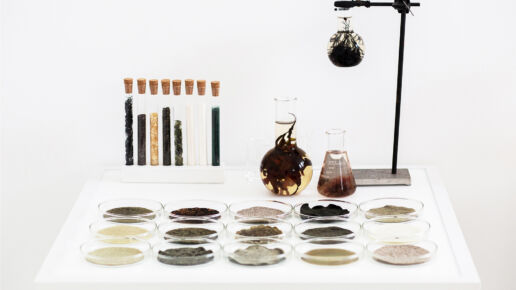
"Through hands-on experimentation, I explore the potential of new surfaces and alternative forms of leather, aiming to reconnect human life with the natural world as an interconnected fabric."
Maison du Flock – SUSTAINABLE INNOVATIONS
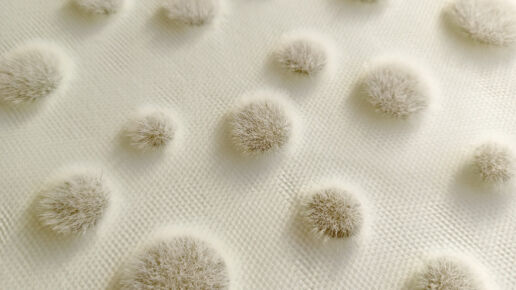
Working with everything from delicate tulle and lace to leather, sequins and other unconventional materials, the studio has transformed flock into a contemporary design language capable of meeting the demands of luxury fashion and Haute Couture.

MUNICH FABRIC START – January 26 closing report
A solid trade show. An optimistic mindset. That sums up the outcome of MUNICH FABRIC START. After three days, the Munich textile fair came to an end yesterday, Thursday, with the integrated show-in-shows BLUEZONE, KEYHOUSE and THE SOURCE. MUNICH FABRIC START concluded with a stable visitor frequency compared to the previous event.
MUNICH FABRIC START – Between Attitude and Sensuality
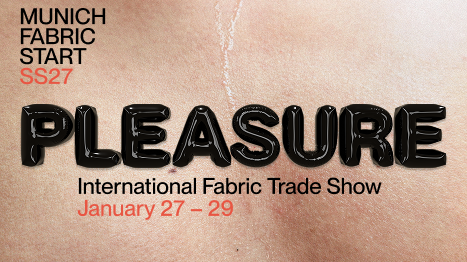
The future begins where we reimagine it. The overarching theme of PLEASURE stands for fashion as an emotional space, as an expression of attitude and cultural reflection.

KnitForm+ by Jeanne Mora – SUSTAINABLE INNOVATIONS
What matters is how the textile responds: how it regulates volume, distributes pressure, and transitions from flat to three-dimensional states. Process transparency is embedded in the methodology itself.

Cartoon – WEAR YOUR OPTIMISM
Embark on this fashionable journey and discover the new Cartoon collection at our store. Be inspired, mix and match to your heart's content, and wear optimism—every day, for every occasion.

RETRAKT – SUSTAINABLE INNOVATIONS
Performance, in this context, is measured by organisational resilience. RETRAKT applies resilience engineering to help employees anticipate, monitor, respond to, and learn from complex and changing requirements.