

Blooming Minds: Social Printing
Dynamic Diversity In Textile Printing
by ELIZABETH BALADO
Sustainable Innovations
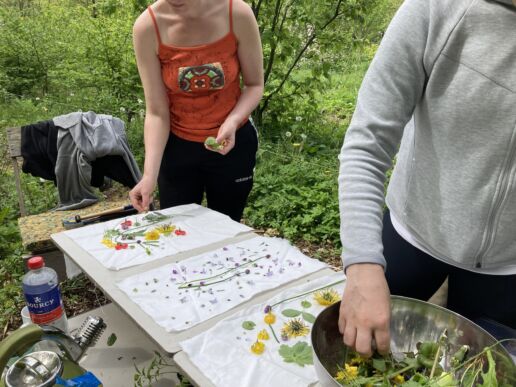
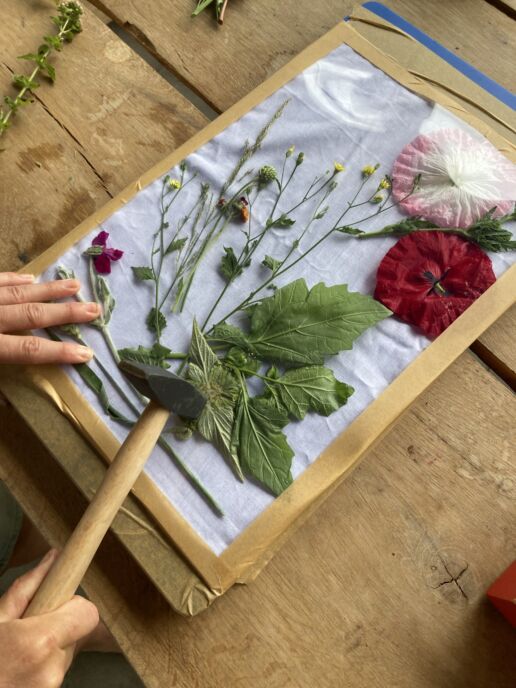
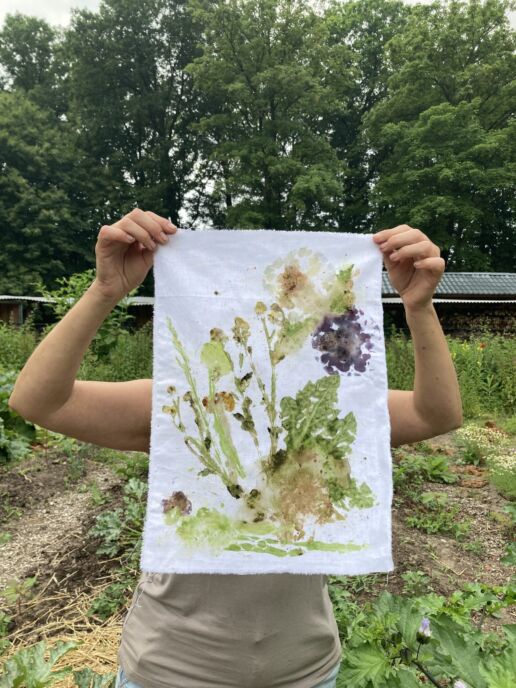
Elizabeth Balado is an artist, designer, and researcher from London, presenting a unique, experientially-driven workshop with her project “Blooming Minds: Social Printing”. Developed over the past year, the workshop combines the psychological and physical benefits of nature with community-based creation, by guiding participants to create their own prints. The workshop encourages participants to follow their own intuition to select and forage flowers and plants and then arrange a composition, before using a technique to transfer the natural dye onto cotton using a mallet.
She will be presenting a variation of the workshop at the KEYHOUSE during Munich Fabric Start, which will consist of participants applying the print technique onto tote bags, allowing them to create and keep their own work. Elizabeth’s research focuses on combining nature – especially the use of natural and recycled materials – and community, a social practice which weaves themes such as mental health while encouraging accessible creativity. Her current work can be found on her Instagram and website. Elizabeth is open to collaboration with foragers, biologists, mental health services and others interested about participating in further printing workshops.

———————————————————————–
THIS MIGHT BE ALSO INTERESTING FOR YOU

MUNICH FABRIC START – January 26 closing report
A solid trade show. An optimistic mindset. That sums up the outcome of MUNICH FABRIC START. After three days, the Munich textile fair came to an end yesterday, Thursday, with the integrated show-in-shows BLUEZONE, KEYHOUSE and THE SOURCE. MUNICH FABRIC START concluded with a stable visitor frequency compared to the previous event.
MUNICH FABRIC START – Between Attitude and Sensuality
The future begins where we reimagine it. The overarching theme of PLEASURE stands for fashion as an emotional space, as an expression of attitude and cultural reflection.

KnitForm+ by Jeanne Mora – SUSTAINABLE INNOVATIONS
What matters is how the textile responds: how it regulates volume, distributes pressure, and transitions from flat to three-dimensional states. Process transparency is embedded in the methodology itself.