

MARIE VILAY: Reading, Carrying, and Reframing Textile Knowledge
SUSTAINABLE INNOVATIONS
Marie Vilay does not present a new fabric or production technique. What distinguishes her work is a method of reading and translating textile knowledge across cultures, systems, and moments of transition. Her practice asks a question that sits at the edge of innovation: what happens to textile traditions, patterns, and objects when they move between geographies, power structures, and production logics?
“For designers, researchers, and institutions navigating questions of decolonisation, migration, and responsibility, her work offers a different kind of innovation: one rooted in listening, translation, and care rather than optimisation.”
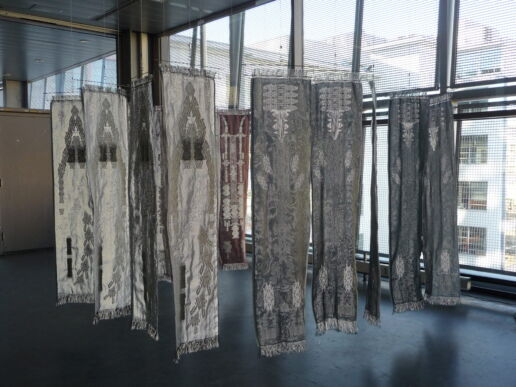
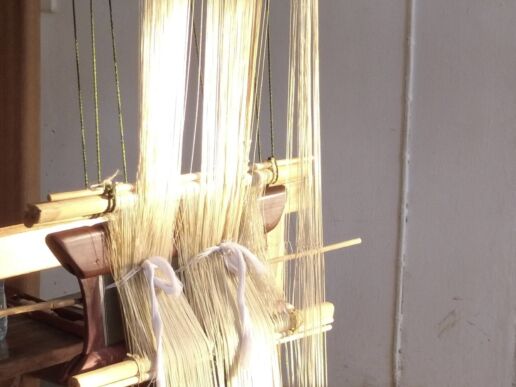
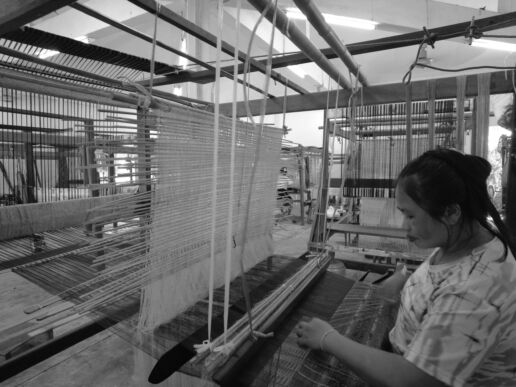
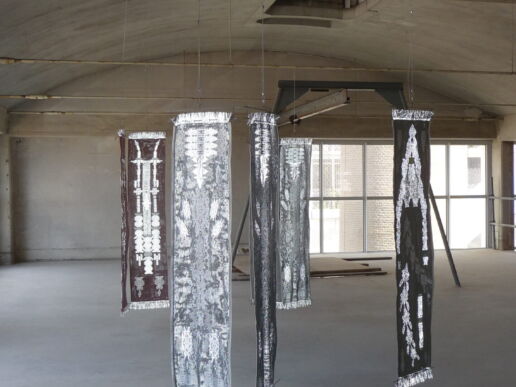
In To Read a Pattern, Vilay investigates how Laotian weaving patterns might persist when removed from their original cultural and social context and placed within European industrial production.
In Laos, weaving is a living, evolving practice, with patterns traditionally passed from mother to daughter. Vilay’s research highlights how colonial history and orientalist framing have shaped how these patterns are perceived in Western contexts, often flattening them into static heritage rather than living knowledge.
Using patterns gathered through field research in Laos and developing new interpretations through industrial processes, she explores whether continuity is possible without extraction or simplification. This work was produced in collaboration with TextielLab and the Textile Museum in Tilburg.
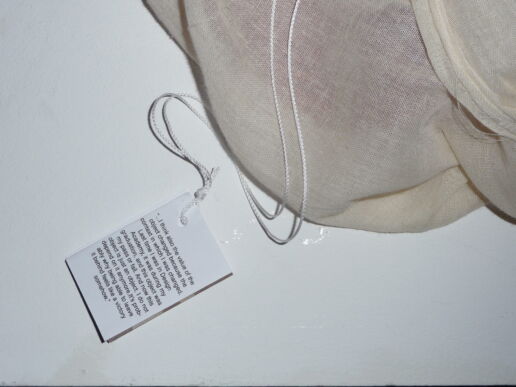
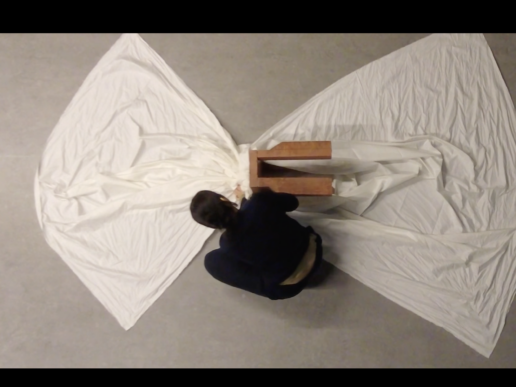
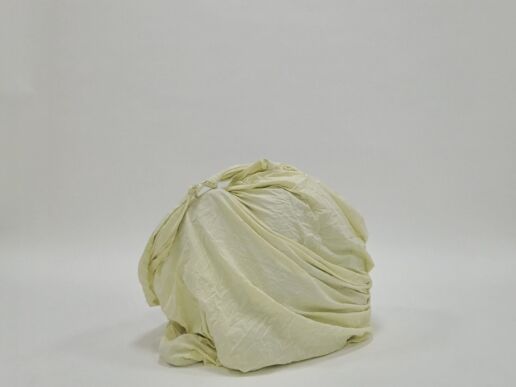
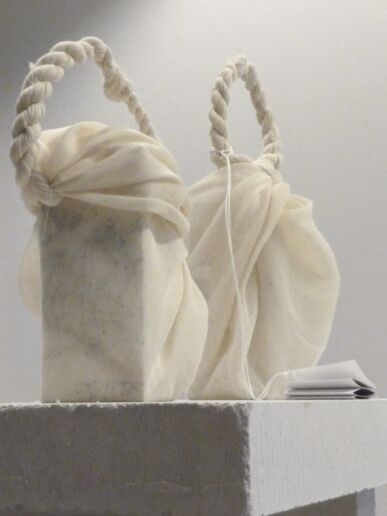
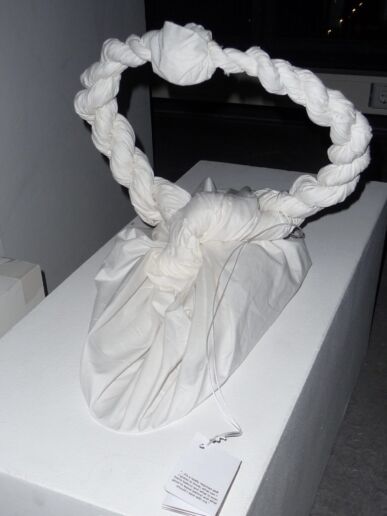
Her second project, A Bindle (in Transition), shifts from production systems to personal and collective movement. A bindle is a simple cloth used to carry essential belongings while travelling. Vilay reinterprets this form as a container for care, memory, and what is left behind. Using graduation projects abandoned by peers as material, she documents stories of departure, uncertainty, and transition, binding objects and narratives together through a universal textile gesture.
Vilay’s work is not designed for immediate commercial application. Its relevance lies elsewhere: in challenging how value, authorship, and continuity are assigned in textile culture. For designers, researchers, and institutions navigating questions of decolonisation, migration, and responsibility, her work offers a different kind of innovation: one rooted in listening, translation, and care rather than optimisation.
THIS MIGHT BE ALSO INTERESTING FOR YOU:
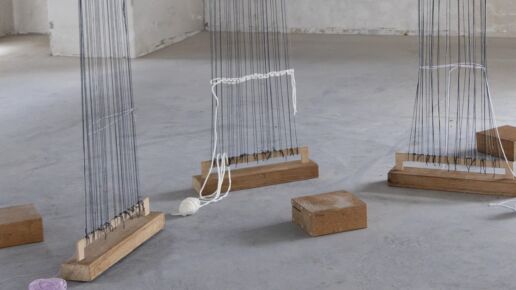
THREADED PROTOCOLS – SUSTAINABLE INNOVATIONS
Threaded Protocols is not a textile innovation in the commercial sense, nor a digital tool disguised as craft. What makes the work distinct is its material investigation into how computational logic originates in textile practice and what is lost when those logics are abstracted into opaque technological systems.
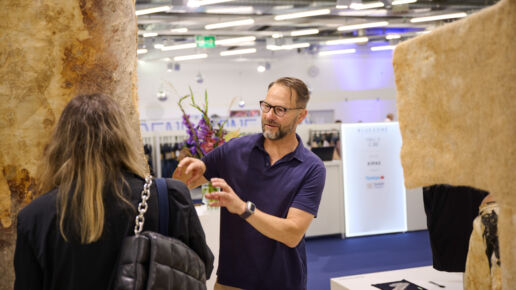
Interview with Simon Angel, Curator of SUSTAINABLE INNOVATIONS
Each season, the Sustainable Innovations forum brings together projects that provoke, inspire, and challenge assumptions. This year is no exception, with work ranging from bio-luxury couture to energy-generating textiles and regenerative materials grown from wetlands.
MUNICH FABRIC START – September 25 closing report
At its 56th edition, MUNICH FABRIC START reinforced its clear positioning. Over two days, the Munich textile trade show brought the fashion industry together with its four show-in-show formats.
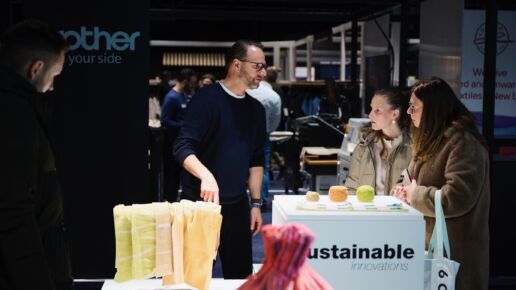
Materials as Agents of Change with Simon Angel
Each season, the Sustainable Innovations forum brings together projects that provoke, inspire, and challenge assumptions. This year is no exception, with work ranging from bio-luxury couture to energy-generating textiles and regenerative materials grown from wetlands.
AUTUMN.WINTER 26/27 FABRIC HIGHLIGHTS & MATERIAL NOVELTIES – PART X
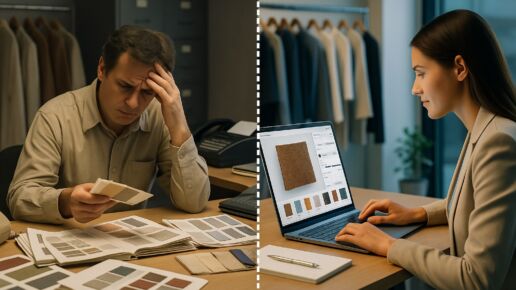
For the first time in Germany, S2G XR (Style 2 Garment eXtended Reality) will present a live demo of its 3D textile configurator at booth A4.20 Not a teaser.
Living Matter: Bio-Luxury for Future Materials
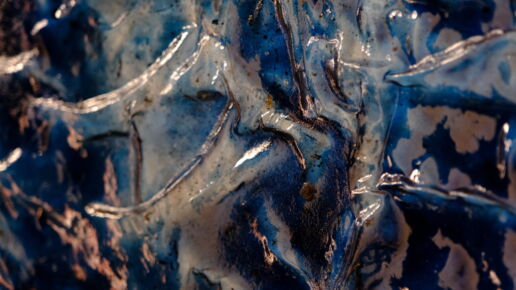
Indigo, a colour with a lot of history, is the main focus of this project. Denim has always meant strength and durability, and its roughness is linked to work and usefulness.
BLUEZONE NEWS FOR SEPTEMBER 2025 – PART VI
At DNM Denim, the journey continues. Inspired by nature’s cycles and guided by Flow Theory, the company moves from Challenge to Focus, and now to Freedom—the phase where potential becomes power.
BIOTEXFUTURE: How to Make Textiles from Fossils
The program is a group of businesses and universities working together to find scalable, bio-based alternatives.
Additionals Trends Autumn.Winter 26/27 – Part 8
This collection embodies softness, simplicity, and flow – from soft-touch labels and stretchable materials that move with the body, to a calming palette of pastel tones and organic, natural fibers.
Wetlands Matters – by Marc Wijkmans
Wijkman’s idea came from a simple but important observation: animals carry seeds across ecosystems in their fur.