

Munich Fabric Start

The twenties are taking shape
“The Twenties are taking shape”
Trend analyst Carl Tillessen on the start of a new macro trend and the new awareness of the clientele
Trend analyst Carl Tillessen not only observes; he anticipates. As a member of the management and chief analyst of the Deutsches Modeinstitut, he knows the textile and fashion to the smallest detail. Here he reveals the upheavals and trend changes that are in store for us.
How can you foresee which trends will develop?
What role does culture play, do current events play?
As part of an association of the most important trend institutions in the world, DMI always sets the key directions for a season two and a half years in advance. To think that far ahead, it is not enough to sell people something as a trend that is already visible in Milan, Paris and New York. You have to recognise trends before they become visible. Let me explain it this way: A bad trend analyst and a good trend analyst go to a bar. They see that the guests are nibbling salty biscuits. The bad trend analyst says: ‘People are eating savoury biscuits. We need savoury biscuits.’ The good trend analyst says, ‘People will get thirsty soon. We need drinks.’
Are people consuming more again right now? If so, why? Does compensation (e.g. for the time lost during the pandemic years) play a role?
Yes and no: No, little is being consumed at the moment. Yes, compensation plays a big role. Before the pandemic, people had increasingly spent money on experiences and less on things. Then the pandemic came and many experiences were not possible or not allowed. So people spent more money on things again. Accordingly, retail sales in the last two years have been much higher than before Corona. Now people are trying to make up in one summer for everything that was cancelled in the last two summers – trips, weddings, festivals, concerts … That costs a lot of money. And this money is missing from the shopping budget.

Carl Tillessen
In view of the very contradictory developments – sustainability and minimalism on the one hand, hedonism and expression through consumption on the other – what forecast would you make for the next few years?
The pandemic has polarised our society in this respect as well. While the majority of people simply wanted their old lives back and to continue exactly where they left off, it became apparent after only a few weeks that the powerful cultural elite took the sitting-at-home-and-cleaning-out-the-closet as an opportunity to rethink their overconsumption and to make a resolution to live more frugally after the pandemic. This idea of consumerism is now in the world, and it is only a matter of time before it becomes mainstream.
What are the challenges and opportunities ahead for the industry?
So far, fashion companies have been able to answer the demand for more sustainability with a more sustainable quality of their products. They replaced cotton with organic cotton, for example, and customers simply bought the same thing in green. But now customers are additionally questioning the quantities. It is less and less about what they want to buy and more about how much they want to buy. Adapting to this new situation is currently the big challenge and opportunity for the industry.
Do your trend analyses differ for the different price segments?
Yes, also. But due to people’s hybrid consumption, this is becoming less and less important. Luxury fashion is increasingly being bought by people who can’t actually afford it, and cheap fashion is also being bought by people who don’t actually need it. In this respect, buying decisions are determined much less by how much someone earns than by what style world they want to live in.
What long-term changes do you see in the next few years?
We are actually just at the end of a macro trend and the beginning of a new one. It’s about more than just a fashion variant. It’s about a new style, a new music direction, a new attitude to life. The twenties are taking shape. But more on that elsewhere.
Get informed & inspired at the MUNICH FABRIC START at DMI:
Get informed & inspired at the MUNICH FABRIC START at DMI:
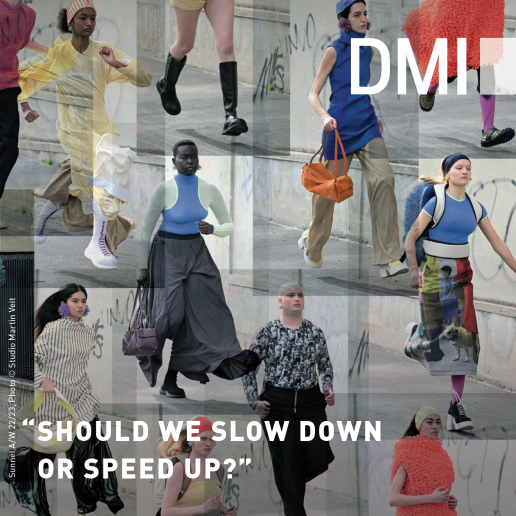
TREND LECTURE: Should we slow down or speed up?
Wednesday, 31 August 2022 from 4:00 – 5:00 pm
in room K1 in front of Hall 1, MOC
TREND BRIEFING:
Ask our analysts in a personal conversation specifically about impulses, colours and materials that are relevant for your products,
your target group and your brand essence.
Tuesday, 30 August from 9:30 am to 6:30 pm
Wednesday, 31 August from 9:30 am to 3:00 pm
Discover further industry-disrupting innovations at our upcoming shows:

Back with furore
BACK WITH A FURORE
The organisers of MUNICH FABRIC START on the joy of coming together again,
the challenges of the present and for the future.
the challenges of the present and for the future.
1. The industry is finally coming together again after two years.
From 30 August to 1 September 2022, the MUNICH FABRIC START will be
held without restrictions – What are you particularly looking forward to?
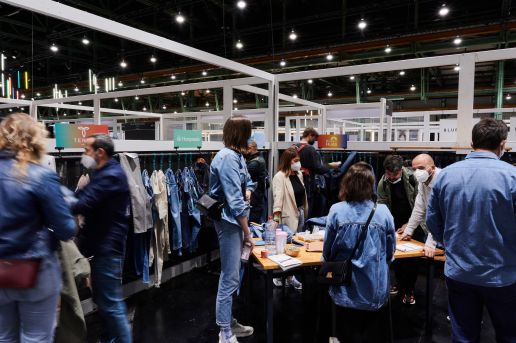
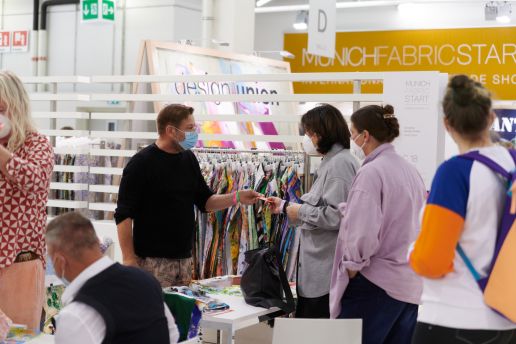
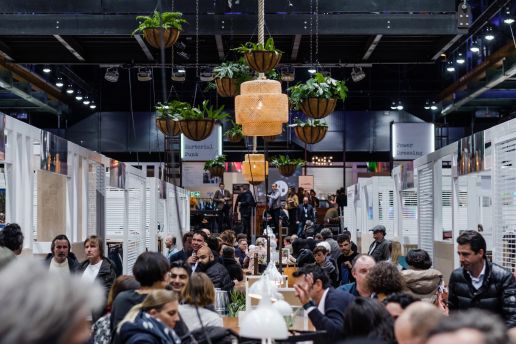
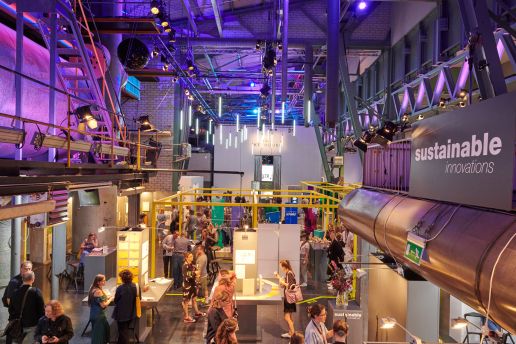
Sebastian Klinder: The answer is quite clear: to finally gather the entire industry in one place again – and with a big impact. With almost 900 exhibitors and 1,500 collections on a total exhibition area of around 45,000 square metres, MUNICH FABRIC START now comprises eight areas: Fabrics and Additionals with international material innovations for all apparel segments, Resource and Sustainable Innovations for innovative developments, Design Studios with fabric designs and novelties for prints on an enlarged area, the KEYHOUSE innovation hub, the BLUEZONE and the new sourcing area THE SOURCE for international, vertical integration.
Frank Junker: To expand as a trade fair in such challenging times is anything but a matter of course. However, we dared to do so and are happy to say: it was important and right. That is why we are all the more pleased to launch THE SOURCE this year. The One Stop Solution for holistic fashion sourcing is being launched for the first time – and was already fully booked far in advance. 65 selected international manufacturing companies will present their offerings from cut-make-trim (CMT) to high-end production there. A cluster of the most important sourcing countries such as Portugal, Turkey, Morocco, Tunisia, Bosnia and Vietnam creates a business-relevant mix for risk diversification, the right product mix and for every genre.
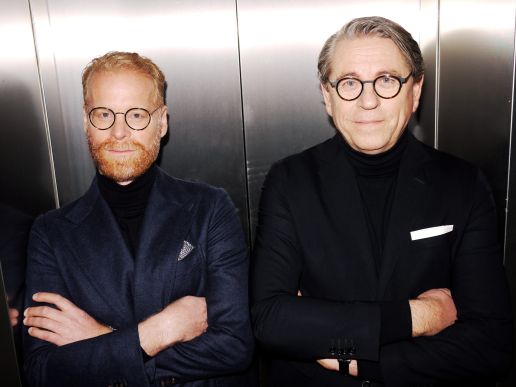
Sebastian Klinder, Managing Director MUNICH FABRIC START; left
Frank Junker, Creative Director MUNICH FABRIC START; right
2. The motto of the upcoming edition is FURORE. What can exhibitors and visitors imagine by this?
Frank Junker: The origin of the word FURORE lies in the Italian language: ‘Far furore’, which means to arouse enthusiasm. We get excited about new worlds, like the metaverse, a new sense of community or innovative biomaterials. But FURORE also stands for a bit of frenzy and anger about all the things that are going on in the world right now. Outside as well as inside our common industry, which we don’t want to close ourselves off to, but want to and will face up to.
Sebastian Klinder: For this season, we expect over 20,000 trade visitors at MUNICH FABRIC START, including designers, product managers and buyers from the textile, fashion, denim, sports and outdoor industries. They all come to Munich to find out about colour and material trends, innovations and current market developments. The trend worlds for Autumn.Winter 23/24 reflect this in a controversy – from almost invisible to maximally striking.

3. Time for an outlook: How will MUNICH FABRIC START
develop and position itself in the future?
Frank Junker: MUNICH FABRIC START is a family business. We are firmly convinced that a trade show can only be successful if everyone pulls together, because only then a trade show does acquire an identity, a soul. That is exactly what our visitors appreciate about us – and that is what we want to maintain. At
the same time, it is time to think bigger, as we have already done this season.
Sebastian Klinder: At MUNICH FABRIC START from 30 August to 1 September 2022, we can already show that we have the courage to exploit our potential
and go beyond borders – and we will continue to do so: with growth, a broader portfolio and the internationalisation of our visitors. We are currently stronger than ever – and we want to build on this.
Discover further industry-disrupting innovations at our upcoming shows:
Vifrex Studio - Experts in Fabrics Design and Production from Barcelona
Vifrex Studio - Experts in Fabrics Design and Production
from Barcelona
An interview with Luigi Maria Cialdini, VIFREX STUDIO
This season we are profiling some of the exhibitors showcasing at MUNICH FABRIC START 2022. We are excited to present you VIFREX STUDIO.
With years of professional experience in the textile sector and the main Spanish retail group, Joan Vilalta founded VIFREX STUDIO in 2017. Located in Barcelona and Istanbul, the company covered all the needs from design, commercial area, planning and quality control, expanding to the vertical production of garments.
Known for the design, production and sale of fabrics, we decided to take a moment with Luigi Maria Cialdini of VIFREX STUDIO to discuss the company’s drive, challenges and newest developments.
You are specialists in textile design; what services does VIFREX Studio offer?
We are a team of fabrics designers and textile engineering. We provide our customers with a personal fabric designer that can help and assist in all the developments, proposing trends and mood boards for their needs.
What would you say your strengths are?
Quick development process starting from trends, colours, and base qualities proposals.
When it comes to sustainability, can you elaborate on your green strategies so far?
All our items meet the highest sustainable standards. We possess all the certifications like OCS, GRS, BCI, and CARE FOR WATER. More than 90% of our last year’s productions were sustainable.
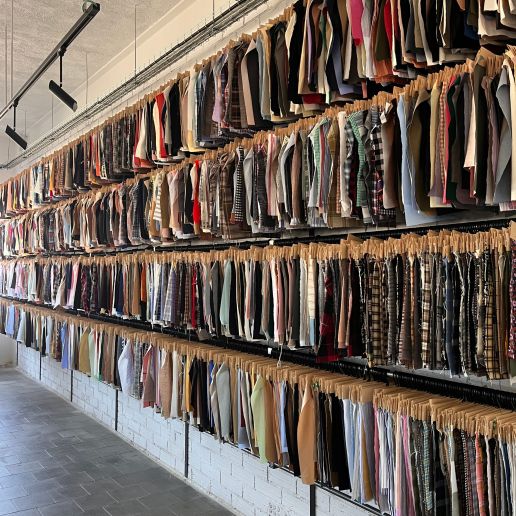
You have a garment production base in Turkey; what do you do differently?
We assist our customers in the entire development process. We can produce for any size Brand, from the big retail chains to the slow fashion brands.
SLCP audited your fabric, and you are JOIN LIFE certified; how important do you think certification is in the Textile industry?
More than 90% of our last year’s productions were sustainable, and Join Life. We believe that the textile industry needs to be committed to the highest social value to improve the earth’s condition.
How important is it to be unique yet still have a recognizable factor in your work?
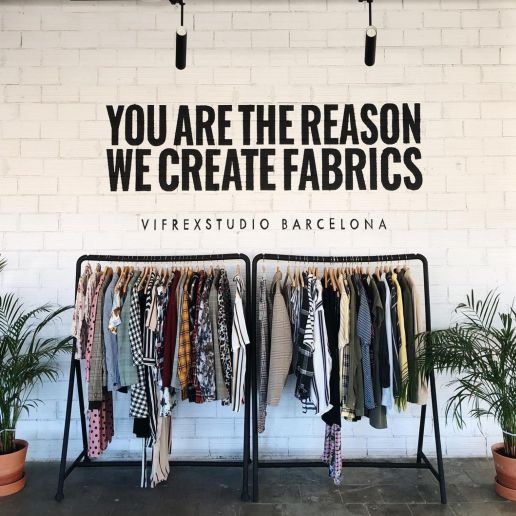
Being unique and quirky is the key to this business s success. We continually experiment with new colours, bases, and constructions to look attractive. The creative part is where we invest most of our time and effort. We are surrounded by a team of experienced designers always aiming for the newest and best product construction/combinations. Our motto is: YOU ARE THE REASON WE CREATE FABRICS.
Did you face challenges during the pandemic? And how did you deal with them?
We had a lot of time to think and reshape our business model. We concluded that being unique and attractive is the key.

Luigi Maria Cialdini – VIFREX STUDIO
Is it hard to stay innovative?
Not at all; innovation and creation have always been our goals since we started in 2016. Without breaking boundaries, our day-to-day job will be useless.
How do you walk the line between being unique and having commercial appeal?
This could be the tricky part of our business model, but our team of engineers is constantly building new bases and constructions to be commercial and attractive.
What’s next for VIFREX Studio? What direction do you see your company taking in the coming years?
We are about to launch Vifrex Atelier. Our garment studio design centre. We will assist our customers in the development process. Form Fabric to garments.
Come along and meet the VIFREX Studio team at Hall S1 Stand E106.
MUNICH FABRIC START will be taking place from 30st August 2022 until the 1st September 2022.
This might be also interesting for you
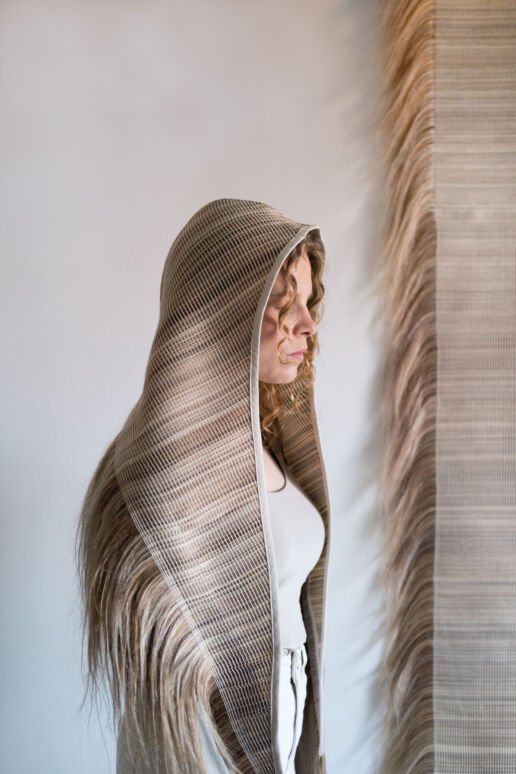
Hairy affair – Sustainable Innovation
Hair creates identity - we dye and style it, create new looks and expressions and thus assign ourselves to cultural or social groups. They lose their meaning and become garbage to be disposed of.
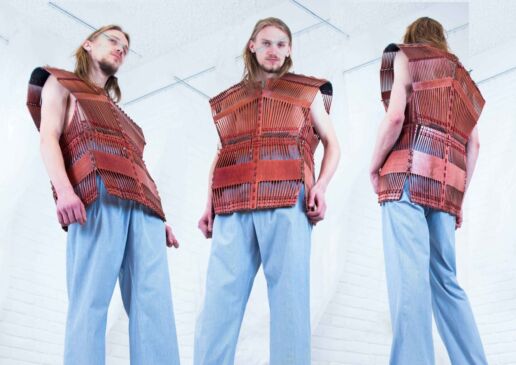
A Suit of Armour – Sustainable innovations
The name says it all: "Choub" means "wood" in Farsi - the material that designer Mehdi Mashayekhi draws on in his Choub project, using innovative methods to create something new:

A Vibe Shift is coming
But then at some point there is suddenly a fundamental break, a completely new attitude to life, a completely different basic mood, a "vibe shift". We are now at such a turning point.
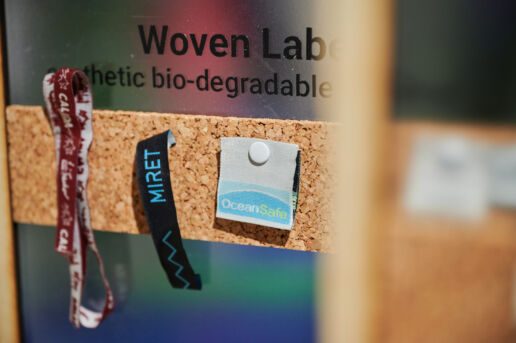
Textile Innovations: Ready To Be Supercharged in 2023?
When it comes to textiles, one of the biggest challenges has been the industry taking on the responsibility to examine its processes.
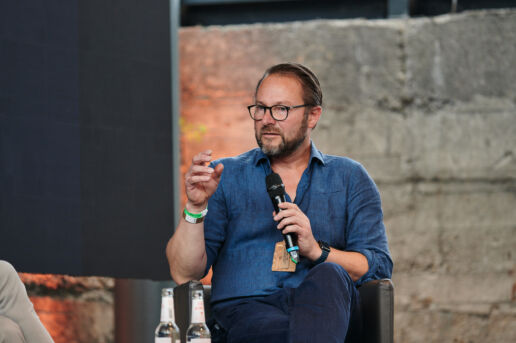
“How do our actions contribute to the better?”
Various developments can be seen - Very interesting and inspiring at the same time: Newcomers are faced with the decision to join the industry or create their own.
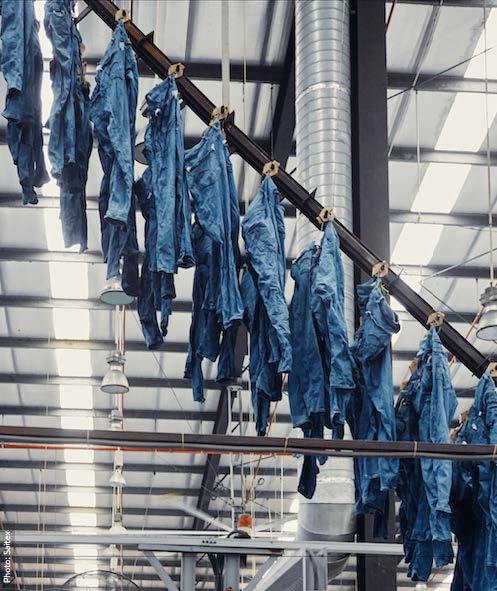
Meet Saitex – the vertical Vietnamese Denim Entity
Global jeans manufacturer Saitex is going vertical as it officially announces the opening of its first denim fabric making
mill in Vietnam.
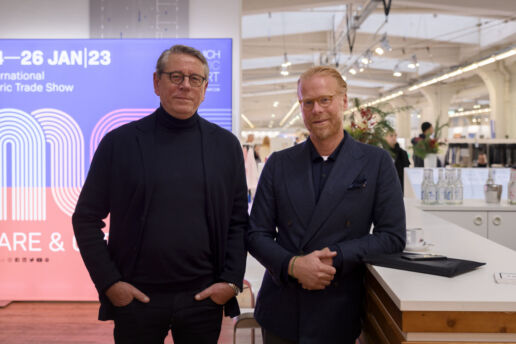
DARE & CARE
"We are continuing the positive, motivated and ambitious mood that is evident at the current shows."
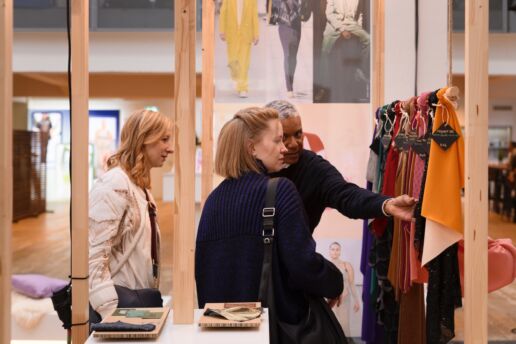
VIEW Premium Selection: leading the way
In a tense market environment, the exhibiting weavers, producers and accessories manufacturers and
their around 300 pre-collections positioned themselves with strong trend statements and solutionoriented
new developments. Providing confidence and trend-setting answers in uncertain times was
the overriding theme.
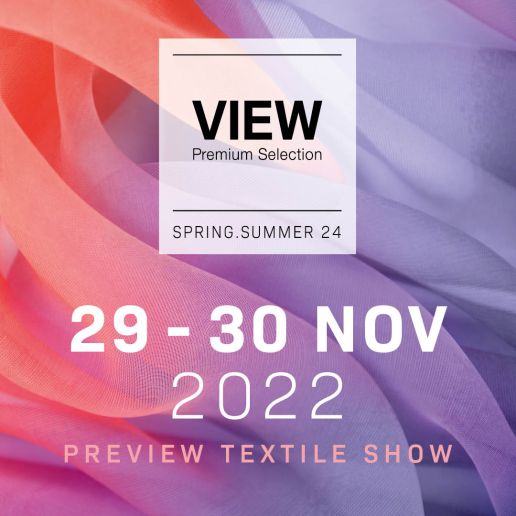
VIEW Premium Selection presents some 300 Pre-Collections
The earliest material and trend information for Spring.Summer 2024 will be provided by the VIEW Premium Selection on 29 and 30 November 2022 at the MVG Museum in Munich. Around 300 pre-collections from international producers will provide information about the new material developments and colours for summer – including numerous newcomers and returnees.
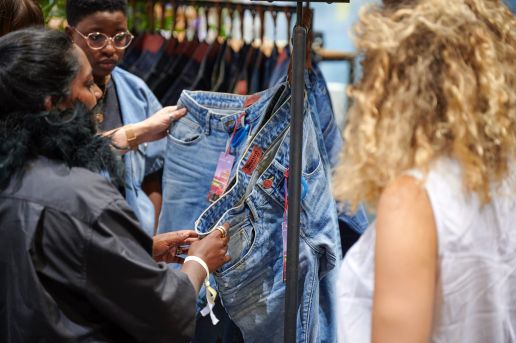
Texfash – Interview
Munich Fabric Start is a big event, packed with diverse and distinct verticals within the event ecosystem. See this in the backdrop of the array of exhibitors and the diversity of visitors, and, presto, it becomes an indubitable place to gauge the pulse of the industry and palpable elements that will become trends in the near future.
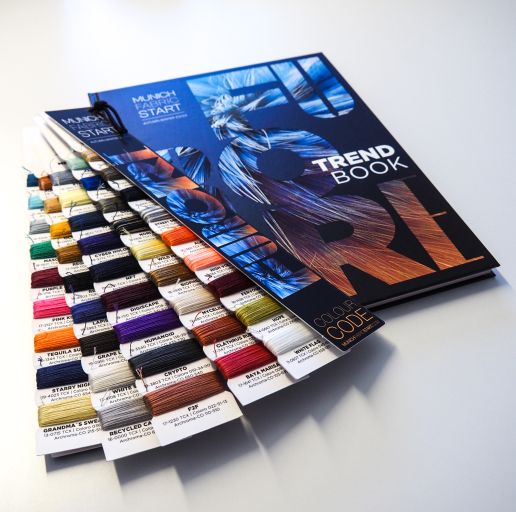
Get your Autumn,Winter 23/24 Trend Forecast now
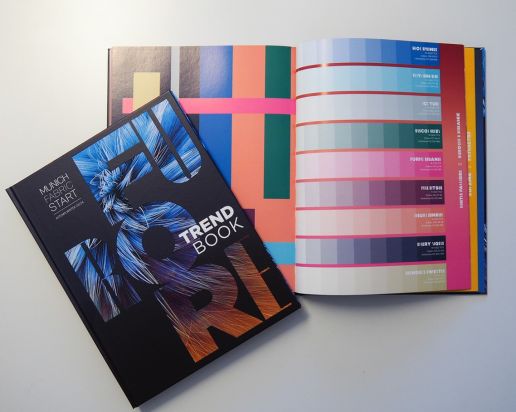
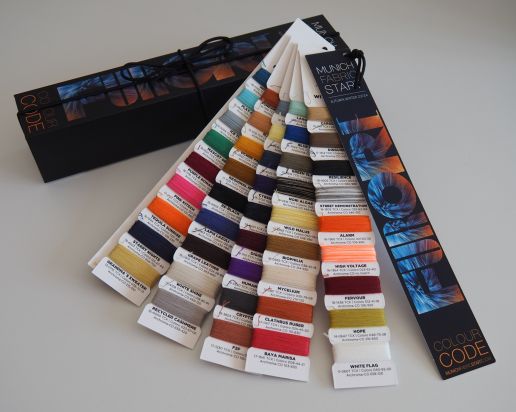
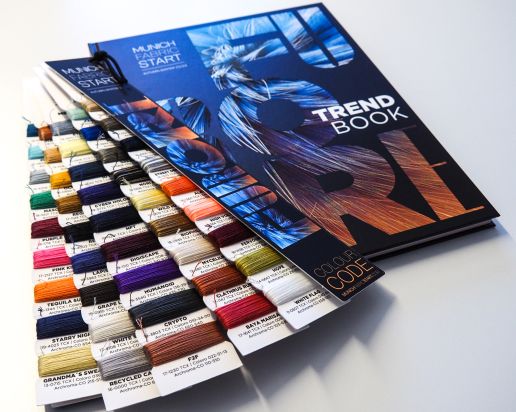
Now available: FURORE Trend Book & Colour Code
TREND FORECAST Autumn.Winter 23/24
The MUNICH FABRIC START Autumn.Winter 23/24 will be staged in the seasonal theme FURORE. Catch the eye, cause a stir and get excited about new worlds like the metaverse, a new sense of community or newly developed organic materials. But FURORE also stands for a bit of frenzy and anger about all the things that are going on in the world right now. Outside as well as inside our common industry, which we do not want to close our minds to, but want to and will face up to. The world is changing faster than we are used to.
Let’s join in; from totally invisible to maximum visibility – let’s far furore!
WHAT’S NEW?
The key colours of this season are warm, earthy ochre and a digital-electric blue. Natural hues set the tone – cool or warm – along with deep blue, sulphur, and turquoise contrasted with rainbow highlights.
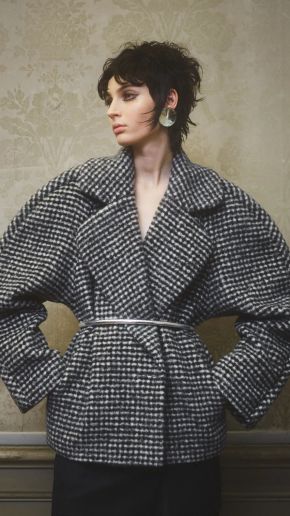
Materials amaze through new extremes – from maximum padded cosiness to ultra-light fluidity. Patterns blow up to an ultimate size and checks and camouflage are oversized. Wool and fake furs offer an enhanced tactile sensation.
Progressive silhouettes make statements with extreme lengths and oversized cuts. Skinny shapes and cut-outs create a sexy contrast, while new coordinates meet ski-wear influences.
These 5 FURORE trend themes as well as the 4 denim, street and sportswear trends of BLUEZONE under the leading theme CAMPUS can be found as a comprehensive trend analysis with detailed colour cards, inspiring materials, moods, prints and styles in our TREND BOOK and COLOUR CODE.
Our COLOR CODE supports you with a high-quality yarn selection in key seasonal colours when designing the colour palette for your next collection.
You can purchase the TREND BOOK and COLOR CODE individually, or together as a TREND PACKAGE for full information and inspiration to support your collection development.
FURORE presents 5 trend worlds for the Autumn.Winter 23/24 season:
WITHSTAND
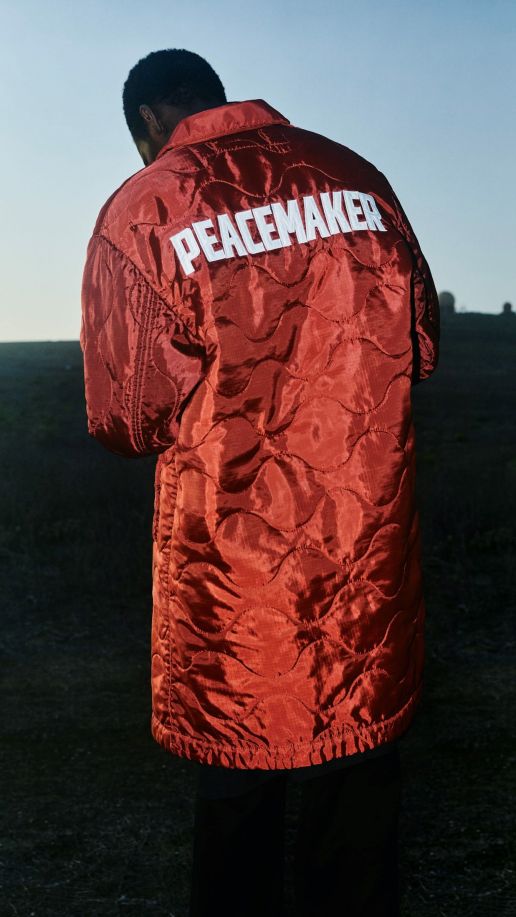
Picture credit:
OAMC RE-WORK
ECOPOLIS
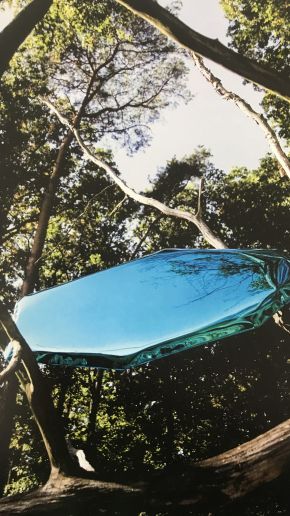
Picture credit:
ZIETA
METAHAZE

Picture credit:
KRI STA KIM
by THE FABRICANT
WINTER FANTASIES

Picture credit:
BOB MARTIN
BETTER BASICS
Picture credit:
CASPER SEJERSEN
Don't miss:
Inspiration & Information for your Collection Development - Colours, Moods, Shapes & Styles
TREND BOOK
MUNICH FABRIC START & BLUEZONE MOODS AND TRENDS
85 EUR
COLOUR CODE
MUNICH FABRIC START & BLUEZONE TREND COLOURS
110 EUR
TREND PACKAGE
TREND BOOK AND COLOUR CODE AUTUMN.WINTER 23/24
135 EUR
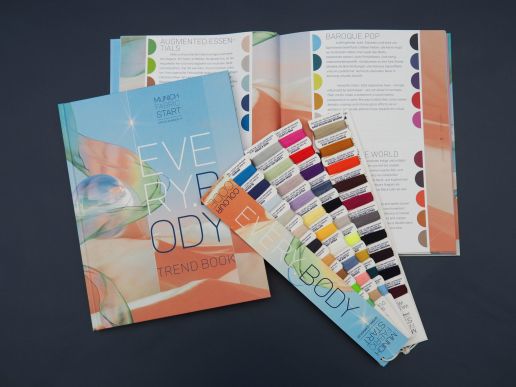
TREND PACKAGE SPRING.SUMMER 23
TREND BOOK & COLOUR CODE
135 EUR
Polopiqué - Innovating Textile Production
How Polopiqué has managed to distinguish itself through its innovation
An interview with Rosario Rodrigues
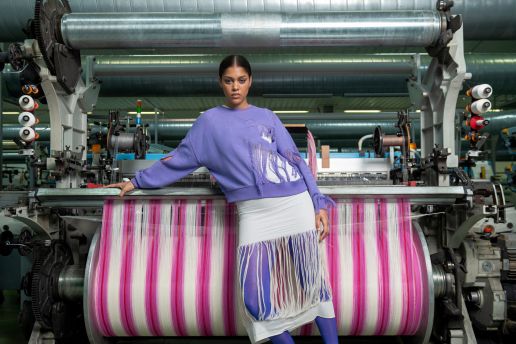
With more than 80 years of experience in the textile industry, Polopiqué is considered to be a leader in the textile industry. The company has managed to distinguish itself by mastering all phases of the textile production process, from spinning, weaving and finalization, to garment and commercialization of high quality products.
MUNICH FABRIC START had the opportunity to have a one on one interview with Rosario Rodrigues on how the Polopiqué has managed to distinguish itself through its innovation.
Polopiqué is an exhibitor at MUNICH FABRIC START 2022 in the new Hall 8 – THE SOURCE.
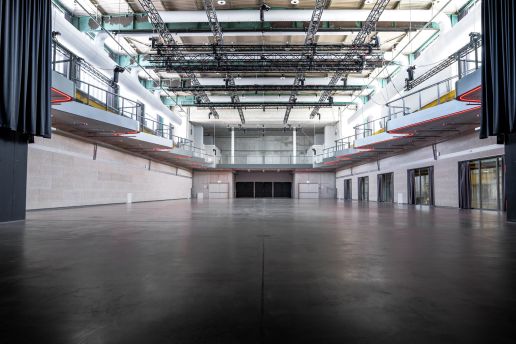
Already booked out for weeks, THE SOURCE is the new European One Stop Solution for holistic fashion sourcing. 65 selected international manufacturing companies will present their offers from Cut-Make-Trim (CMT) to High End Production. A cluster of the most important sourcing countries such as Portugal, Turkey, Morocco, Tunisia, Bosnia and Vietnam creates a business-relevant mix for risk diversification, independent of genre and price level. MUNICH FABRIC START has developed the new Hall 8 with around 2,500 square meters of additional space for this purpose. The recently restored Lokhalle, a listed building directly adjacent to the former MUNICH FABRIC START site, is the perfect location. With its gigantic dimensions and spectacular architecture, it is one of Europe’s largest cantilevered historic steel halls.
The result is a unique new venue for flexible sourcing services and rethought value chains.
How does Polopiqué distinguish itself in the textile industry?
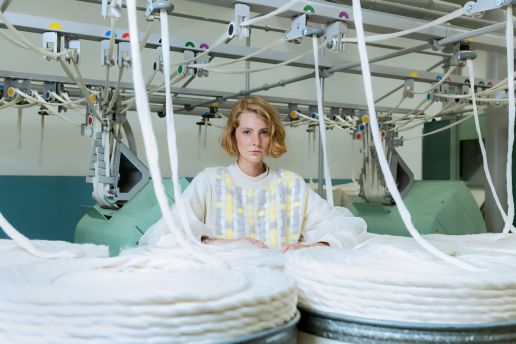
Polopiqué is one of the few complete vertical textile industries worldwide, controlling production from spinning, weaving/knitting and finishing to making high-quality garments. At Polopiqué, we don’t just deliver the garment; we also provide the ideas, the solutions and the designs. We include creativity and design in everything we do.
Why has Polopiqué chosen Portugal for its production?
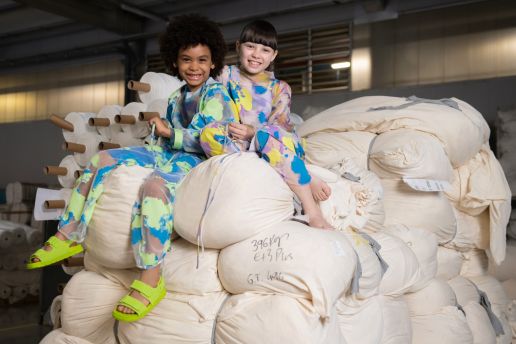
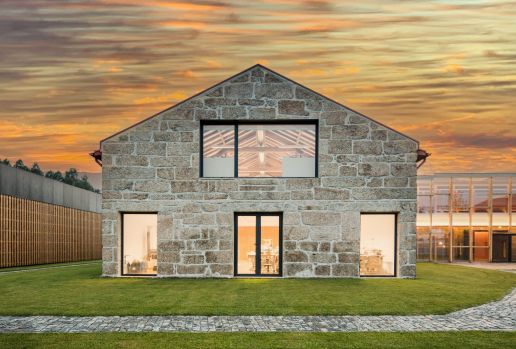
Polopiqué is a Portuguese family company with decades of tradition in the textile industry. In addition, Polopiqué was created and established in the most relevant geographical area in terms of textiles in Portugal. Therefore, we privilege this know-how and proximity, and we should consider the many benefits of local production in terms of sustainability, agility and quality guarantee.
How does Polopiqué optimize processes to improve the quality of manufactured products?
“Investing in Research and Development activities to constantly adopt new and innovative raw materials and production processes. It is also imperative to stay up to date regarding more agile and ecological modern technology and machinery.”
Polopiqué is a member of the Better Cotton initiative; what does that mean?
Better Cotton is the world’s leading sustainability initiative, presenting the mission to help cotton communities survive and thrive while protecting and restoring the environment. The better cotton initiative makes global cotton production better for producers, the environment, and the cotton sector’s future. It is about interacting with the whole supply chain to transform how cotton is sourced, ensure the improvement of the working conditions and a higher standard of living for farming communities, and spreading knowledge, support and resources for more sustainable practices in cotton production and other crops.
What are your thoughts on certification used in the textile industry?
We believe it is vital to convey trust and transparency to customers and consumers in their purchase acts to make informed choices. It is also relevant to involve them so that they feel an essential part in choosing brands with better practices throughout the chain of the production cycle.
Did you face challenges during the pandemic? And how did you deal with them?
Yes, of course, and at that stage, we invested in the production of personal protective equipment and products related to medicine and health, proving our ability to adapt to new situations and the flexibility of our team and production processes when developing new types of products.
What’s next for Polopique? What direction do you see your company taking in the coming years?
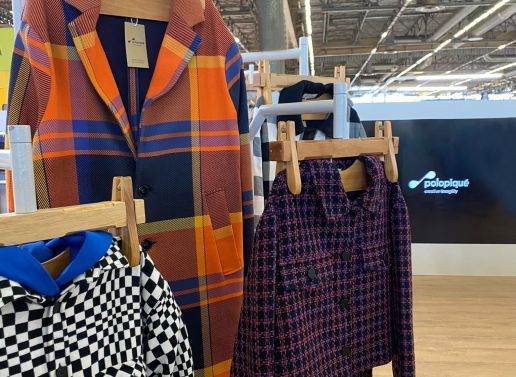
Continuing to surprise the market with innovations through constant R&D practices, taking advantage of new raw materials and production processes. Also reinforcing the weight and presence in new markets and business areas, namely in home textiles.
How important is it to be unique yet still have a recognizable factor in your work?
Very important. Polopiqué is flexible and proud to find solutions to most of our customer’s requests. Furthermore, by controlling all stages of the production process, we can guarantee higher quality standards and better agility.
This might be also interesting for you
Hairy affair – Sustainable Innovation
Hair creates identity - we dye and style it, create new looks and expressions and thus assign ourselves to cultural or social groups. They lose their meaning and become garbage to be disposed of.
A Suit of Armour – Sustainable innovations
The name says it all: "Choub" means "wood" in Farsi - the material that designer Mehdi Mashayekhi draws on in his Choub project, using innovative methods to create something new:
A Vibe Shift is coming
But then at some point there is suddenly a fundamental break, a completely new attitude to life, a completely different basic mood, a "vibe shift". We are now at such a turning point.
Textile Innovations: Ready To Be Supercharged in 2023?
When it comes to textiles, one of the biggest challenges has been the industry taking on the responsibility to examine its processes.
“How do our actions contribute to the better?”
Various developments can be seen - Very interesting and inspiring at the same time: Newcomers are faced with the decision to join the industry or create their own.
Meet Saitex – the vertical Vietnamese Denim Entity
Global jeans manufacturer Saitex is going vertical as it officially announces the opening of its first denim fabric making
mill in Vietnam.
DARE & CARE
"We are continuing the positive, motivated and ambitious mood that is evident at the current shows."
VIEW Premium Selection: leading the way
In a tense market environment, the exhibiting weavers, producers and accessories manufacturers and
their around 300 pre-collections positioned themselves with strong trend statements and solutionoriented
new developments. Providing confidence and trend-setting answers in uncertain times was
the overriding theme.
VIEW Premium Selection presents some 300 Pre-Collections
The earliest material and trend information for Spring.Summer 2024 will be provided by the VIEW Premium Selection on 29 and 30 November 2022 at the MVG Museum in Munich. Around 300 pre-collections from international producers will provide information about the new material developments and colours for summer – including numerous newcomers and returnees.
Texfash – Interview
Munich Fabric Start is a big event, packed with diverse and distinct verticals within the event ecosystem. See this in the backdrop of the array of exhibitors and the diversity of visitors, and, presto, it becomes an indubitable place to gauge the pulse of the industry and palpable elements that will become trends in the near future.
The Material Revolution - Who is leading the charge?
The Material Revolution, Who is Leading The Charge
Guest article by Muchaneta ten Napel, Founding Editor-in-Chief FashNerd
In the past five years, groundbreaking science has been changing the clothing industry one experiment at a time. With a ravenous appetite for new fabrics, some great candidates have been castor bean-derived nylons, mushroom leather, and synthetic spider silks. Designed to correct some of the textile industry’s wrongs, new materials have been enticing the attention of some of the most prominent players in the fashion industry, which is an excellent thing.
Introducing Cutting Edge Atelier
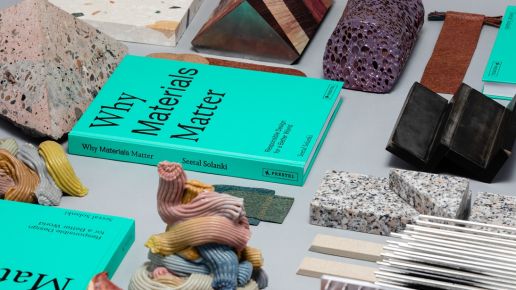
As we enter a new material age, there has been an influx of fabric alternatives being researched and explored. So even though it may all seem pretty experimental right now, here are five companies making many of us believe that new materials will become the norm over traditional ones.
Picture credit:
Circular Systems
AlgiKnit
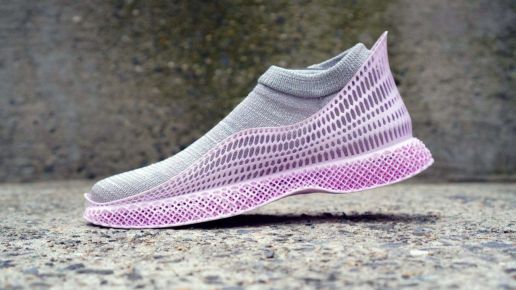
Is biology the future of fashion? Well, AlgiKnit seems to think so. The biomaterials company has been developing biomaterials that can play a vital role in the future of sustainable manufacturing.
By addressing the ecological damage caused by the fashion industry, AlgiKnit is making an impact by operating in a closed-loop product lifecycle that will bring sustainable bio-based textile alternatives to the footwear and apparel industries.
The biomaterials startup focuses on transforming the apparel ecosystem with rapidly renewable bio-based textiles. AlgiKnit has found a way of utilising materials with a significantly lower environmental footprint than conventional textiles. One of these materials is Kelp. Considered to be one of the fastest-growing organisms on earth – up to 10 times faster than bamboo. “Kelp is grown in aquatic farms around the world in coastal communities, often by fishermen and women, providing income during the fishing off-season,” states their site.
One of the benefits of Kelp, according to Fashion United is that it improves the environment by absorbing nutrients from agricultural and sewer run-off that can alter coastal settings. This recaptures nutrients for the next generation of biomaterials. Also, Algiknit’s biopolymer is entirely customisable.
Picture credit: Algiknit

Picture credit: Algiknit
MyCoWorks
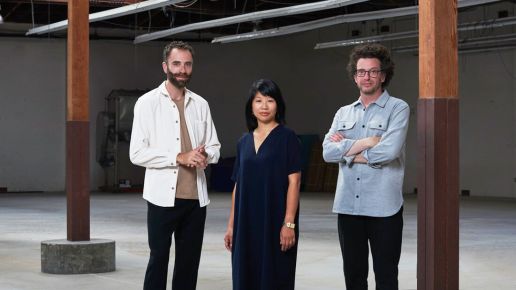
Founded by Philip Ross, Sophia Wang and Eddie Pavlu, the California startup MyCoWorks comprises a team of creative engineers, designers, and scientists. Their distinctive disciplines gave birth to a rapidly renewable natural resource called mycelium.
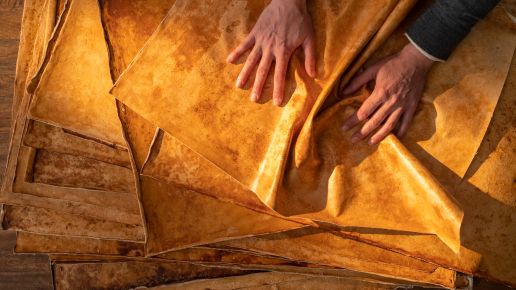
According to Insider.com, Mycelia are thread-like masses of fungi that grow underground. They run through almost every square inch of earth, delivering nutrients and allowing plants to “talk” to each other. MyCoWorks has innovatively used fungi to create a textile that performs like leather. On the mushroom-like material, Wang admitted to it being “a new thing in the world.”
So what does mycelium bring to the table? Well, MyCoWorks have presented mycelium as the solution to replace the resource-intensive product, leather. Relying on nature’s best tools, they have created a new kind of leather that can multiply from mycelium using a carbon-negative process. In addition, their custom-engineered material is sustainable, versatile, and animal-free. On MyCoWorks new leather, Dr Amanda Parkes, Chief Technology and Research at Manufacture NY, shared, “I believe we can solve all the world’s problems with mycelium biology”.
Picture credit: MyCoWorks
Picture credit: MyCoWorks

Picture credit: MyCoWorks
Desserto
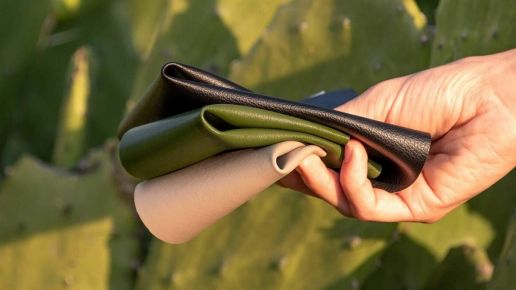
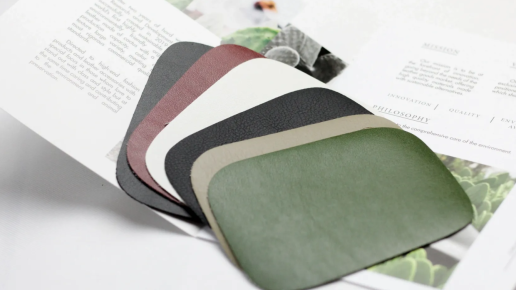
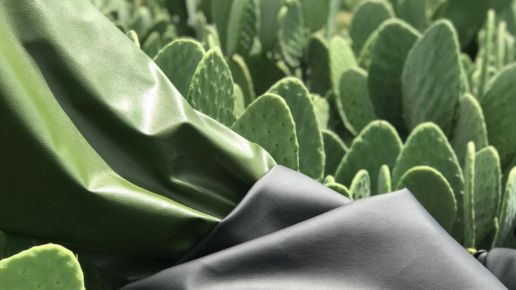
Cactus vegan leather is nothing new. The material first came to our attention back in 2019. We wrote about how the two entrepreneurs, Adrián López Velarde and Marte Cázarez, developed and showcased their vegan leather material at the International Leather Fair Lineapelle 2019.
Made with cactus, the alternative to animal leather was heralded as a high resistance vegan cactus leather that would appeal to the fashion, interior and car industries.
Named Desserto, the cost-competitive material has been designed and developed to meet the most rigorous standards from the Aeronautic to the Fashion industries. That being said, not everyone has sung their praises. For example, Dr Ashley Holding and Paula Lorenz outed the Desserto material as partly vegan leather with cactus; the rest they described in a write-up was “undefined chemicals”. Although the founders have shared that the chemicals they use are non-toxic, it is not a truth revealed so openly by Desserto. Instead, the Mexican startup concentrated on the fact that their material was ‘PVC Free’ and did not contain a particular type of plastic.
Picture credit: Desserto
Picture credit: Desserto
Picture credit: Desserto
Agraloop
Picture credit: Agraloop
Agraloop has been busy transforming leftovers from food and medicine crops into scalable high-value natural fibre fashion products. The materials science company refines natural fibres from crops into a textile-grade fibre called Agraloop™ BioFibreTM.
“Our circular plus regenerative technologies provide systemic solutions for transforming waste into valuable fibre, yarn, and fabrics for the fashion industry,” states their website.
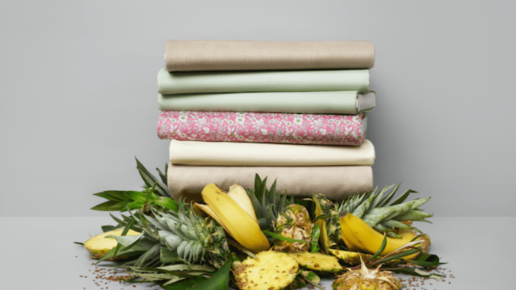
Mindfully sourced for circularity, Agraloop has developed a specialised wet processing technique; cellulose fibre from stems and leaves is purified into soft fibre bundles ready to spin into yarns. The Agraloop processes leftovers from various food and medicine crops, including oilseed hemp/flax, CBD hemp, banana, and pineapple.
Modern Meadow
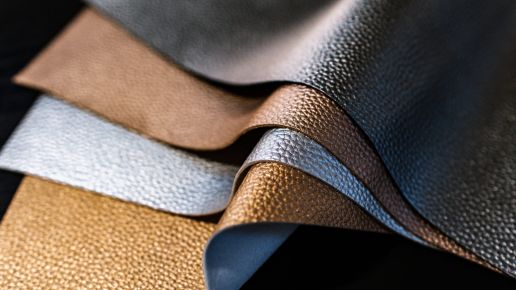
Modern Meadow exists at the intersection of performance, scalable adoption and sustainability. The company began with an R&D initiative to develop a sustainable alternative to leather, which led to a breakthrough discovery of proteins as functional ingredients.
Harnessing the power of design, biology, and engineering, in 2017, Modern Meadow launched their prototype materials brand, ZOA. With the ability to impact a range of products across multiple industries, Modern Meadow state on their website: “Our experiments and exploration within ZOA led to the creation of Bio-Alloy™ and its application in a wide range of high-performing, low-waste bio fabricated materials, and our unique capabilities to create functional, animal-free proteins.”
Scaling by partnering with forward-thinking developers, manufacturers, and brands, Modern Meadow continues to educate industries on the possibilities of a biomaterial future.
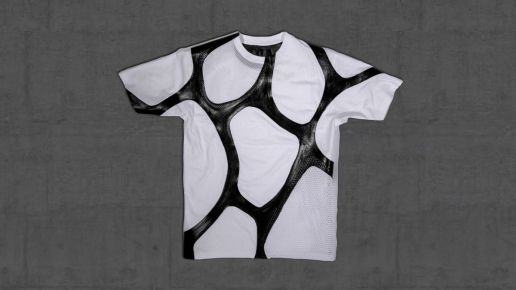
Picture credit:
Modern Meadow

About the author
Founding editor-in-chief of FashNerd.com, Muchaneta has worked in the fashion industry for over 14 years. She is currently one of the leading influencers speaking and writing about the merger of fashion with technology and wearable technology.
Muchaneta ten Napel | editor@fashnerd.com
———————————————————————–
Discover further industry-disrupting innovations at our upcoming shows:
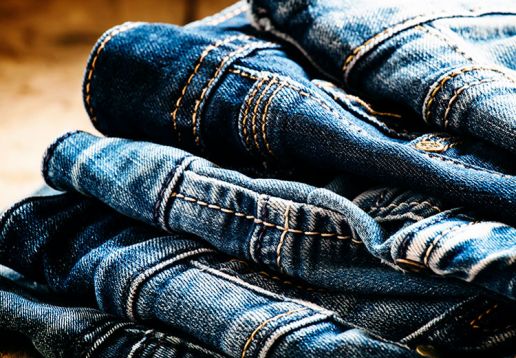
Advancements and Innovation: Who is Busy Solving a $4.6 Billion Problem?
Advancements and Innovation:
Who is Busy Solving a $4.6 Billion Problem?
Guest article by Muchaneta Ten Napel, Founding Editor-in-Chief FashNerd
A ubiquitous wardrobe staple, denim is one of the most prevalent fabrics of our time. Developed through the ages, those behind the widely used material are on a mission to transform the global apparel business into a cleaner, more ethical and more sustainable industry.
It is no secret that denim production is negatively impacting the environment.
Still, the good news is that more and more manufacturers, brands, retailers, and consumers are making an immense effort to undertake the issues related to the production of denim. Furthermore, driven by buzz words like ‘sustainability’ and ‘recycling’, many denim businesses are turning to new technologies to help them attain the most sustainable system possible.
When the denim industry becomes more sustainable, we need a new approach. The good news is that the technology has advanced to the point where we can make a big difference in reducing the environmental footprint of denim. Here are some great examples of some of the revolutionary approaches that have been introduced to the denim industry in the past few years.
Picture credit: Ecotextile News
Smart Factory 4.0: Denim’s Greenest Ecosystem
Crescent Bahuman is taking the denim industry on a journey. Understanding the need for the industry to digitise, Zaki Saleemi, vice president of Crescent Bahuman, believes that one of the ways of doing this is through intelligent decisions supported by data.
Saleemi explained to Sourcing Journal that the intelligent factory is designed to give on-site managers real-time information on shop floor activity and other vital sustainability-related metrics like water measurements. The upgrade is a digitization plan that can help a denim company “get organised, get connected, get insights, and get optimised”.
Another exciting development is that Crescent Bahuman is also implementing the blockchain-enabled PaperTale, which shows the entire map of the supply chain – where the cotton came from, where it was manufactured, and where it got converted into fabric.
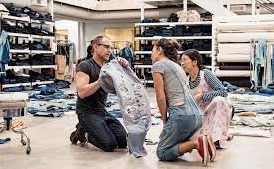
Picture credit: Levi
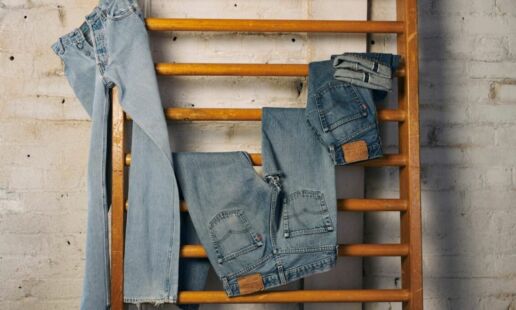
Picture credit: Levi Strauss
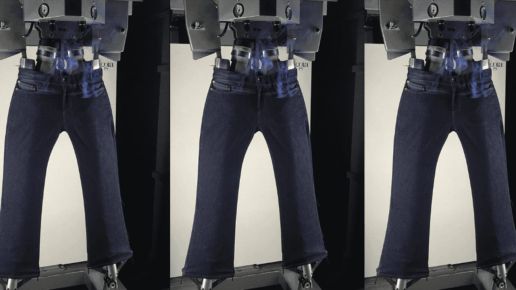
Levi’s Earth Conscious Robotic Technology
The majority of jeans are washed for hours to achieve that perfect blue colour, and the result is that the dyes end up polluting the groundwater. Looking back to a time when new innovation was leaving its mark on the denim industry, Levi came up with laser technology that made creating ripped and washed jeans easier and more efficient.
Looking to reduce the man-hours put in by designers trying to figure out the perfect fade and the time factory workers spend sandpapering the jeans, Levi’s is also determined to lessen the harsh chemicals that give jeans that much sought after faded look.
Picture credit: The Spin Off
Probing the use of Alternative Raw Materials
Exploring alternative raw materials such as hemp or orange pulp in textile production, Lenzing and denim manufacturer Candiani partnered to push the traditional boundaries of fibre production.
With similar environmental goals, Candiani’s biodegradable stretch denim made from Tencel Limited Edition yarns to the game contains 20% hemp fibre.
Again, Lenzing’s closed-loop manufacturing process has provided an excellent alternative to many classics – a new Tencel Limited Edition hemp soft fibre is an excellent alternative to many classics.
G-Star Raw: Pioneering New Means of Production
When it comes to sustainability, G-Star RAW is not only talking the talk; they are proving their commitment by continuously challenging the conventions of denim design.
Pioneering new means of production while maintaining an uncompromising dedication to quality and style, a few years ago, G-Star came up with a step-by-step process of how the Elwood RFTPi Jean came about. It was a process that pioneered a radical new dyeing method which is hydro and salt-free. They called the process Crystal Clear.
Considered to be the most radical change at the time when it comes to indigo dyeing process, the formula, even in its infancy, showed off its potential to play a part in saving the environment.
Picture credit: Fast Company
Picture credit: Science News for Students
Helping the Denim Industry Go Green
Combining economy and ecology, Sedo Engineering’s innovation is helping the denim industry go green. The Swiss innovation specialists have developed smart-INDIGO to help denim brands quickly move towards this sustainable production structure with more benefits at lower costs. Instead of toxic chemicals, Sedo Engineering uses only electricity and caustic soda to dissolve indigo dyes.
Giving out oxygen instead of toxic wastewater, smart-INDIGO reduces water use by 70 per cent, energy consumption by six times and carbon emission by ten times. The innovation is a “win-win solution for our clients”, says Werner Volkaert, managing director of Sedo Engineering.
With 17 smart-INDIGO machines operating worldwide, Sedo Engineering hopes to bring a revolutionary change to the denim industry.
About the author
Founding editor-in-chief of FashNerd.com, Muchaneta has worked in the fashion industry for over 14 years. She is currently one of the leading influencers speaking and writing about the merger of fashion with technology and wearable technology.
Muchaneta Ten Napel | editor@fashnerd.com
———————————————————————–
Don’t miss to explore more sustainable fabrics and trims
from international suppliers in our ReSOURCE area!
Also discover further industry-disrupting innovations at our upcoming shows in Munich this summer:
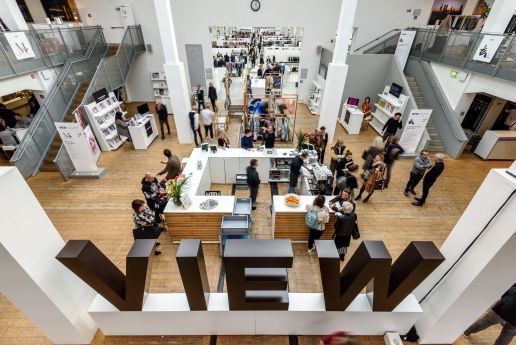
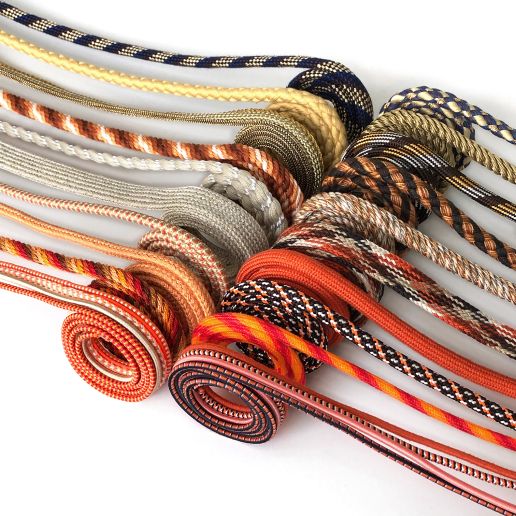
Accessories, ribbons, zippers and more Made in Germany
4 additionals manufacturers from the DACH region
Piping, cords, ribbons, waistbands and fringes to complete your collection. There are no such manufacturers in the DACH region?
We will prove the opposite to you and present four of our exhibitors of the upcoming MUNICH FABRIC START who produce accessories MADE IN GERMANY and MADE IN AUSTRIA: FRIEBA, GEBE, INDUSTRY PERFECT and INSIDE Textil.
FRIEBA
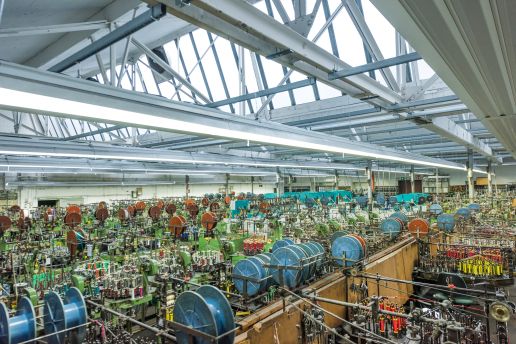
FRIEBA Textilwerk Carl Friedrich: Production
Textilwerk Carl Friedrich – FRIEBA
The medium-sized family company FRIEBA has been producing in Wuppertal (DE) for over 100 years – now with around 25 employees. The location of the company is no coincidence, Wuppertal has always been an important textile location.
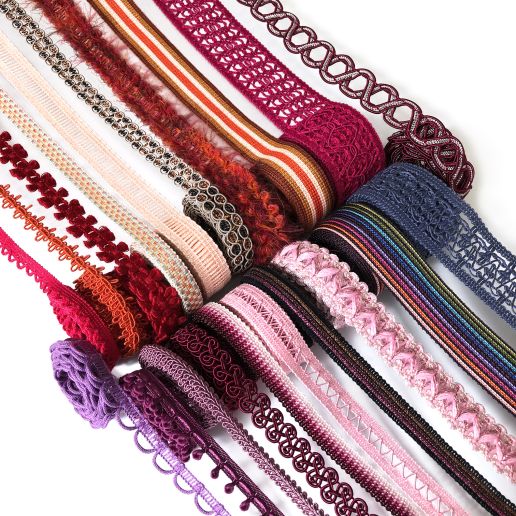
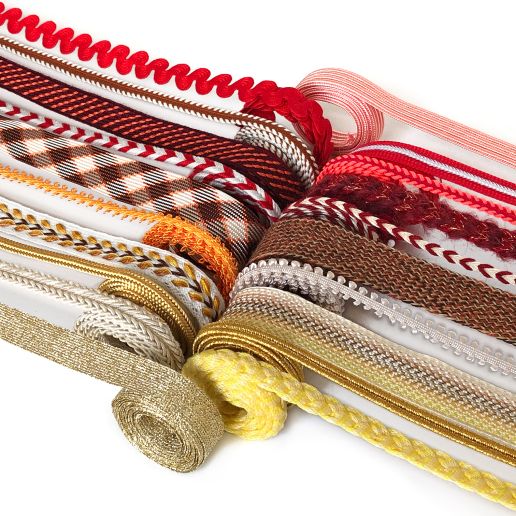
The product portfolio includes piping, cords, braids, ribbons, braids and fringes made from a wide variety of materials: viscose, cotton – GOTS certified, linen, merino wool, metallic yarns, effect yarns, polyester etc. Extensive color charts are available for every material. Only certified yarns are processed.
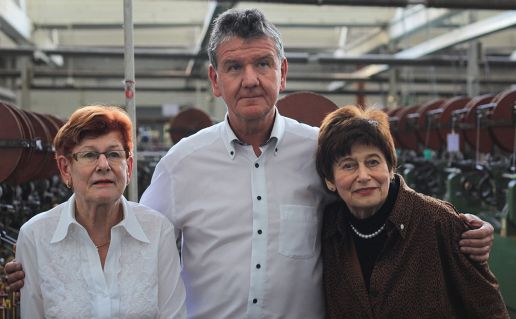
Owners and descendants of the company founder Mrs. Annegret Jarminowski and Mrs. Ingeborg Markowski with the managing director Mr. Uwe Hein.
“FRIEBA has been producing in Wuppertal for over 100 years and is therefore firmly rooted in the beautiful Bergisches Land. Our products reflect the skill, love and time that our employees give the products. That is why FRIEBA quality is inextricably linked with the people who are involved in the creation of our articles. The skills of our employees and the production on site not only correspond to the understanding of our social and ecological responsibility, but ultimately also bring the decisive quality advantage.”
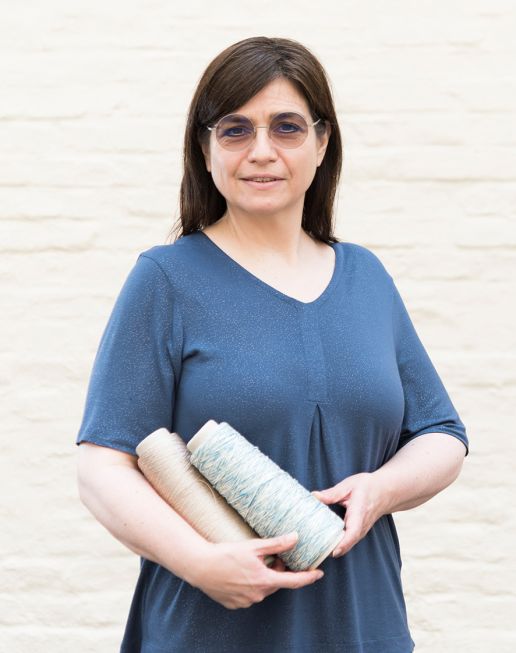
Anja Albrecht, product development and design
————————————————————————–
GEBE Textil Technik GmbH
Quality from the Black Forest
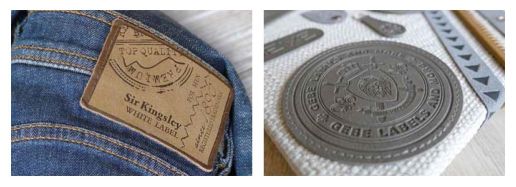
Since 1988, GEBE has been producing high-quality “labels and more” with conviction and reliability. Exclusively in Pfalzgrafenweiler, the manufactory cuts, embosses, punches, lasers, sews and finishes products made of microfiber, leather and imitation leather qualities. Great importance is attached to the choice of materials: REACH-compliant and certified with the Öko-Tex Standard 100.
The product portfolio includes high-quality labels, piping and ribbons, zippers and accessories, technical embossed and stamped parts, promotional items, products for home textiles.


“Pfalzgrafenweiler: A location for many industrial and handicraft businesses for generations. The proximity to innovative machine manufacturers, etc. is also very important to us and ultimately ensures high product quality standards, short distances, fast delivery times and this all at fair prices. A healthy climate and the attractive surroundings in the Black Forest, good transport connections and the high level of motivation of our long-standing employees – all this contributes to the overall structure that we appreciate at our long-standing location and think that all of this is also suitable for our grandchildren.”
Michael Beichel, Managing Director
————————————————————————–
INDUSTRY PERFECT
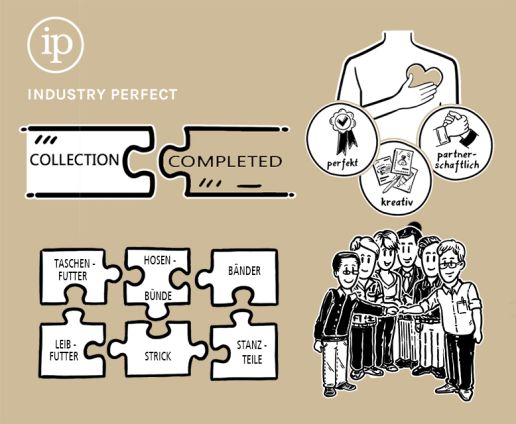
As a specialist for ribbons, waistbands, pocket and body linings, Industry Perfect has been a reliable partner to the fashion industry for years. Founded in 1997 as a bandmaker, owner-managed and from the heart of Munich.
Industry Perfect accompanies textile processes from the initial brainstorming to punctual delivery, from the briefing to the sewn-on label. Industry Perfect stands for product and service quality from Germany. Partnership, creativity, perfect.
“Industry Perfect was founded in the heart of Munich. Producing locally corresponds to our quality standards. Precision, speed, short distances, accessibility, quality you can touch – you can only find all of that together here.”
Holger Amende, managing director and owner
————————————————————————–

INSIDE TEXTIL
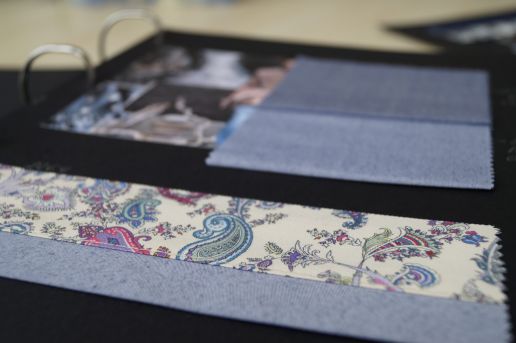
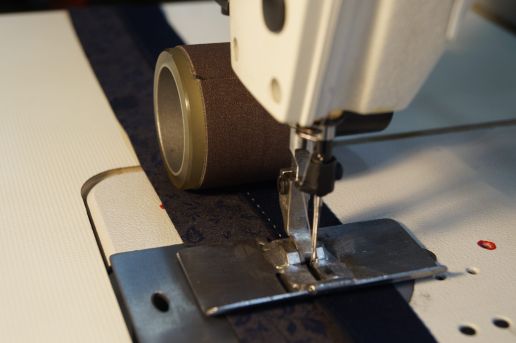
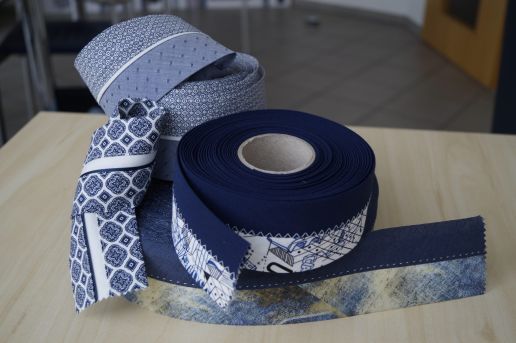
Inside Textil GmbH with its subsidiary Emig GmbH & Co. KG based in Großostheim is an internationally successful company in the textile industry of special products, linings and ribbons. Customers include internationally active customers from the fields of clothing, home textiles and the automotive industry as well as medical and environmental technology.
At the site in Großostheim, trouser waistbands, perfo tapes, edging tapes and tapes with print are produced and other services are offered in the following process technologies: cutting processes in various technologies, punching and endless punching, sewing and packaging (endless), laminating of narrow textiles (endless), hose production, bias tape production etc.
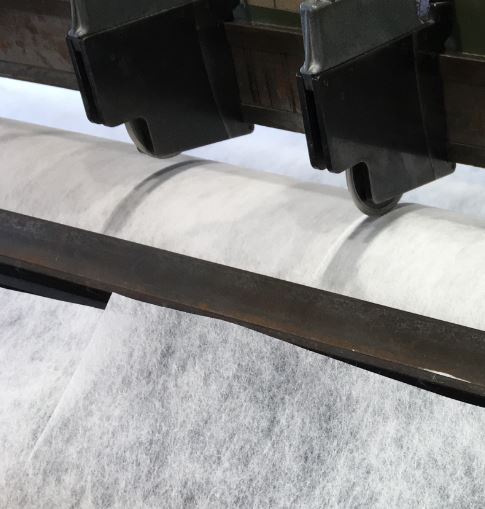
“By keeping the production in Großostheim, we can offer our customers the best possible service, i.e. flexibility, transparency, speed and short distances.”
Leander Hein, Managing Director
————————————————————————–
Agency WILDE TRADITION
At the upcoming MUNICH FABRIC START you can also meet the WILDE TRADITION agency, which represents partners who produce exclusively in Germany and Austria:
- FRIEDRICH SEIBT from Kaufbeuren (DE): Glass buttons
- Ribbon factory Gebr. Stuhr from Wuppertal (DE): ribbons and trimmings
- Gmundner Metallwaren Schrabacher from Gmunden am Traunsee (AT): metal buttons and accessories
————————————————————————–
We invite you:
Network, get inspiration and establish long-term and professional partnerships.
Discover national and international exhibitors at the upcoming VIEW Premium Selection as well as at MUNICH FABRIC START and BLUEZONE. We look forward to seeing you in Munich!

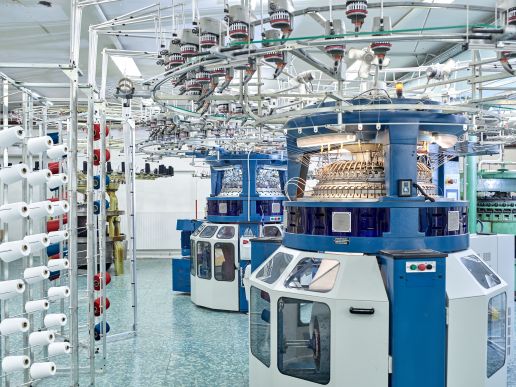
Highest wool and loden craftsmanship? Made in Austria!
4 wool and loden experts who produce 100% in Austria
What does MADE IN AUSTRIA stand for?
Clearly: For the highest loden and wool craftsmanship!
We present four of our exhibitors at the upcoming MUNICH FABRIC START, who have been producing 100% in Austria for generations and will continue to do so in the future: Gottstein, Leichtfried Loden, Seidra and Steiner1888.

GOTTSTEIN
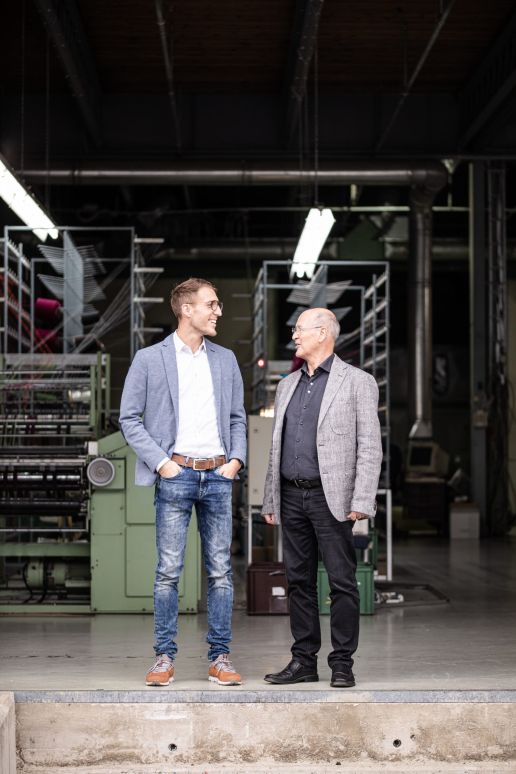
The manufactory of noble wool.
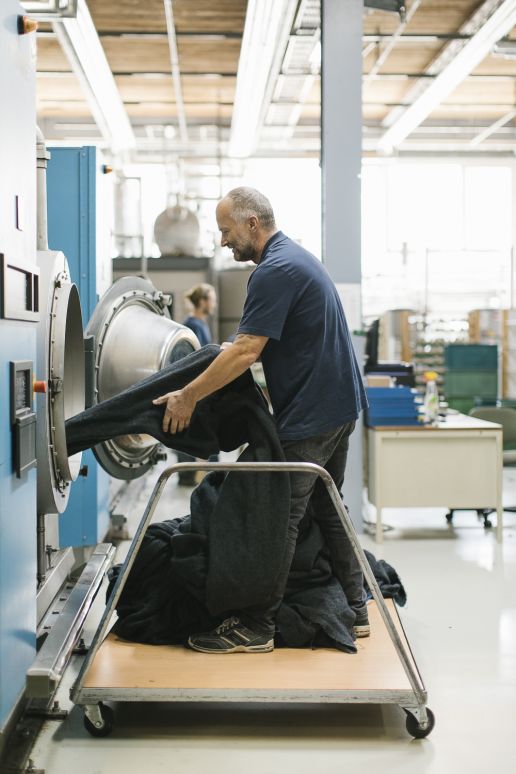
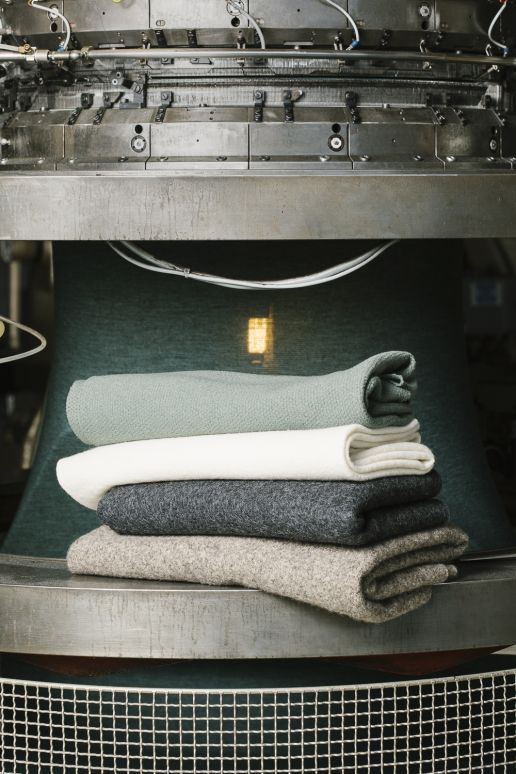
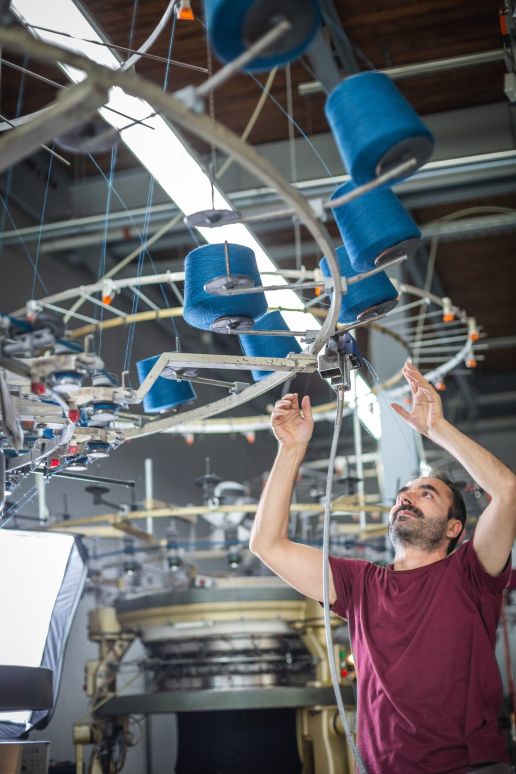
Gottstein was founded in 1926 and has always been producing fine, high-quality walk wool in Tyrol (Austria). The family business has specialized in the processing of wool and has been family-run for four generations. From knitting to fulling to quality control, all processes are carried out in Austria – and have been since day one! In harmony with nature, Gottstein attaches great importance to sustainable, regional production, with a conscious focus on short transport routes and premium wool yarns from Austria and Europe. The product portfolio currently includes more than 45 different walk wool fabrics, along with matching wefts that are also produced in-house.
“Sustainable value creation has been deeply anchored in our roots since the company was founded. We secure jobs by concentrating on regional procurement channels and environmentally friendly and sustainable production. Because we are not only responsible for what we do, but also for what we don’t do.”
Philipp Gottstein (Managing Director)
————————————————————————–
LEICHTFRIED
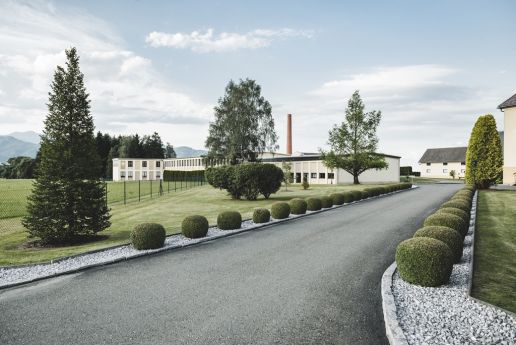
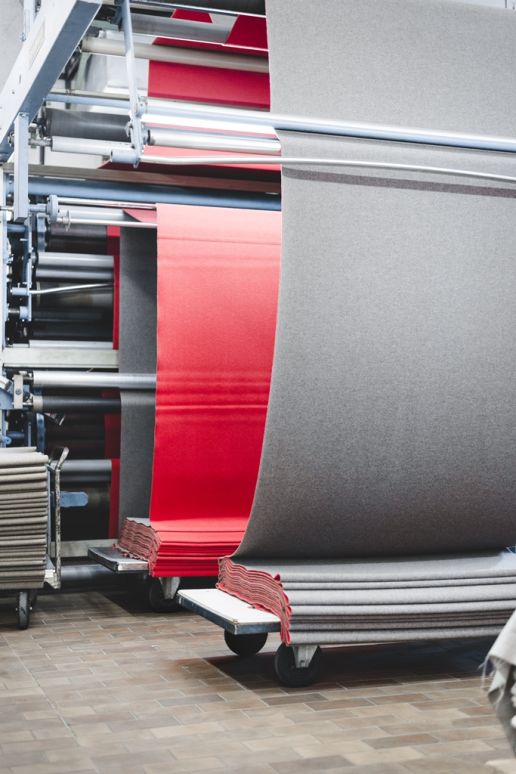
The constant pursuit of the highest quality is Leichtfried‘s passion, daily task and drive. For more than 130 years, this has guaranteed the production of the finest wool and loden fabrics in the heart of Europe.
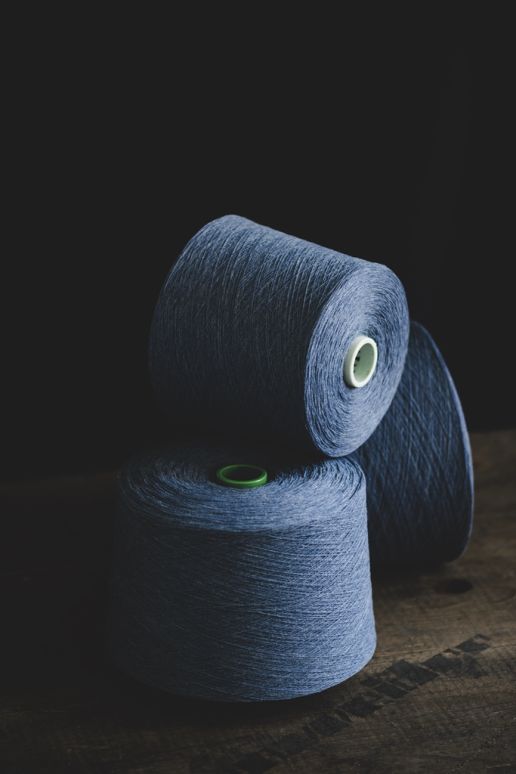
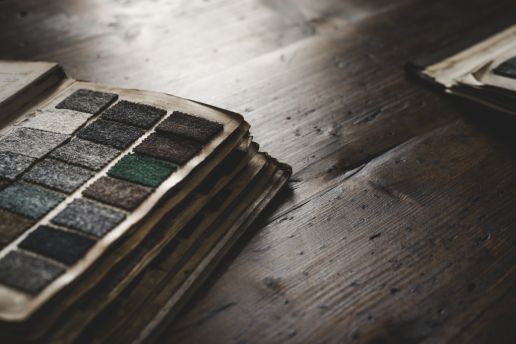
The Leichtfried factory, based in Möbersdorf near Zeltweg in Styria, has been in existence since 1884 and specializes in the production of high-quality woolen cloth and loden fabrics, primarily from extra-fine Australian merino wool.
————————————————————————–
SEIDRA
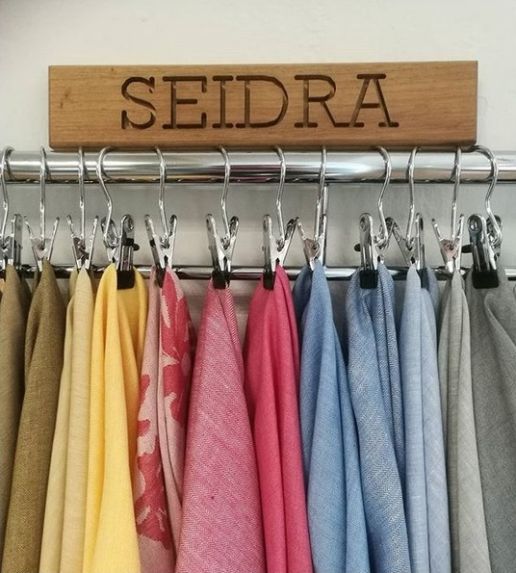
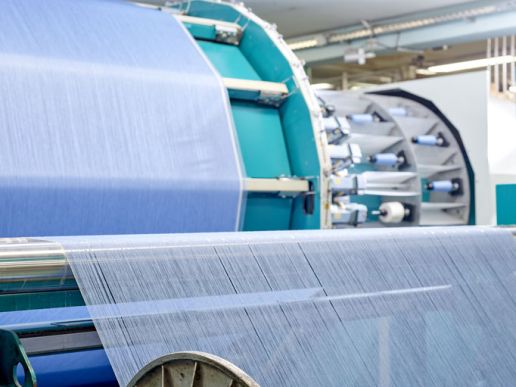
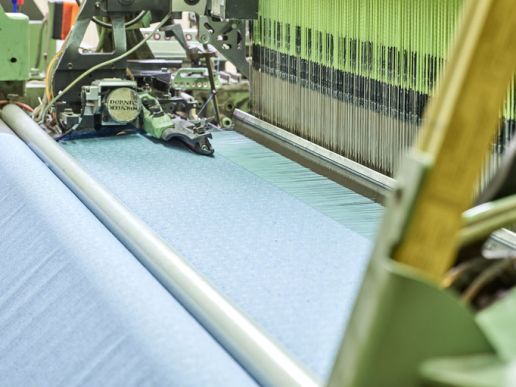
SEIDRA is one of the last linen weaving mills in Austria and one of the last European companies to combine weaving and knitting under one roof. Seidra’s high-quality fabrics are made from fair, non-toxic and sustainable production exclusively in Draschitz, Carinthia.
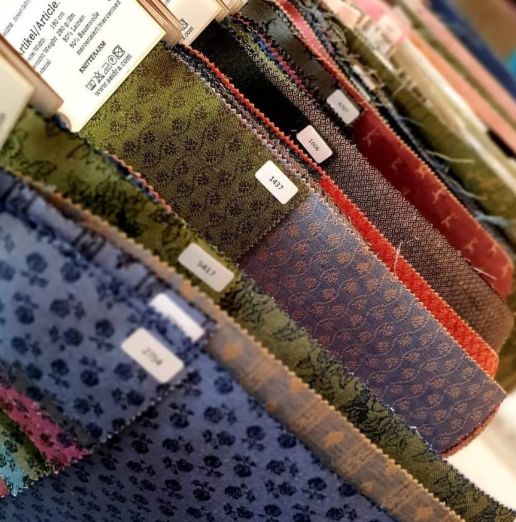
Twice a year, SEIDRA develops new collections for the fashion and traditional costume industry, as well as interior and home textiles. The main focus is still on the production of fabrics made of linen, wool and cotton in current designs and colors, as well as fabrics with GOTS certification.
“Why do we produce in Draschitz, Carinthia? Simply because we are deeply rooted here. All our employees come from the region and produce the highest quality fabrics for the textile industry with a lot of commitment and passion. In addition, proximity to Italy is a great advantage for us, since the majority of our refiners are based there. Not to mention the beautiful view of the mountains. 😊”
Klaus Gutenberger & Martina Santner (Management)
————————————————————————–
STEINER 1888
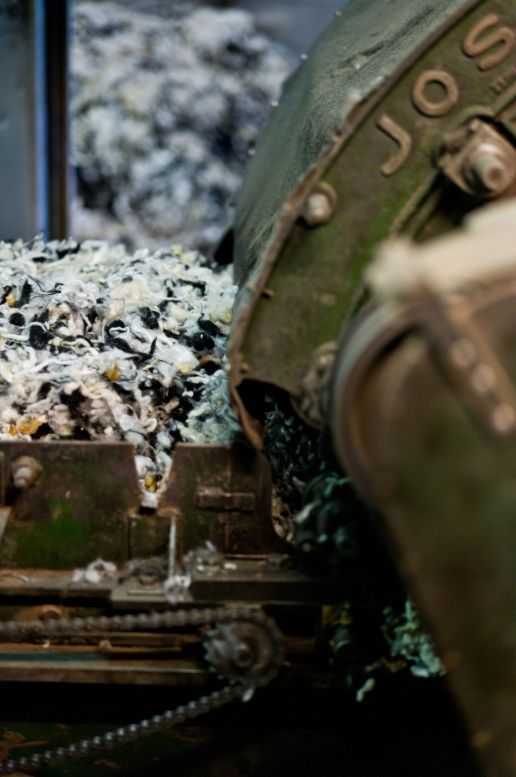
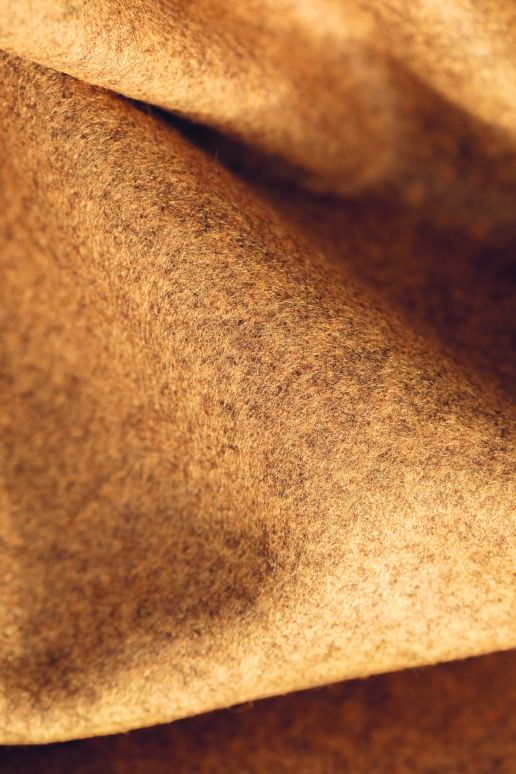
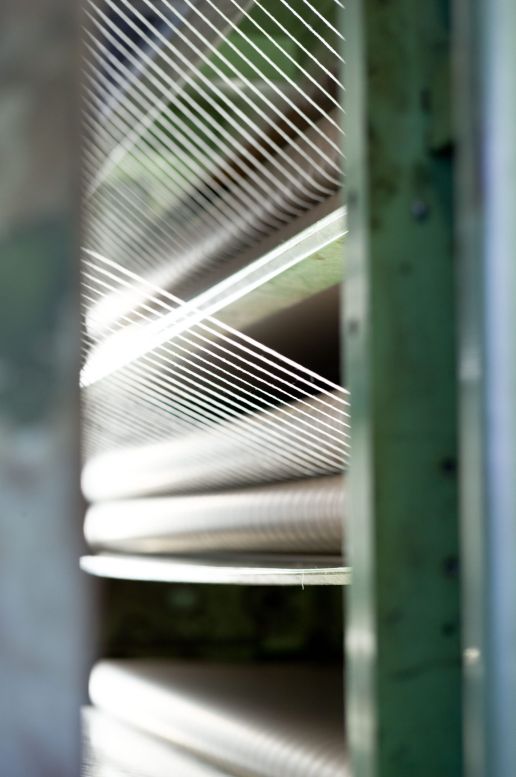
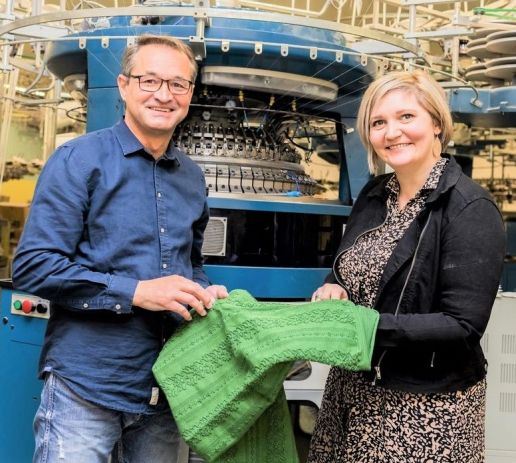
The Loden Steiner family business has been manufacturing the finest wool fabrics with great care and love for over 130 years. Loden fabrics are created from the natural and high-quality materials according to old craftsmanship tradition, which combine the Austrian attitude to life with modern design and creative design power.
Master craftsmanship – Made in Austria – natural & sustainable – since 1888 in family hands.
These core values make up the uncompromising quality of Loden Steiner and drive constant further development. The focus is on producing the best fabrics from pure new wool in harmony with nature.
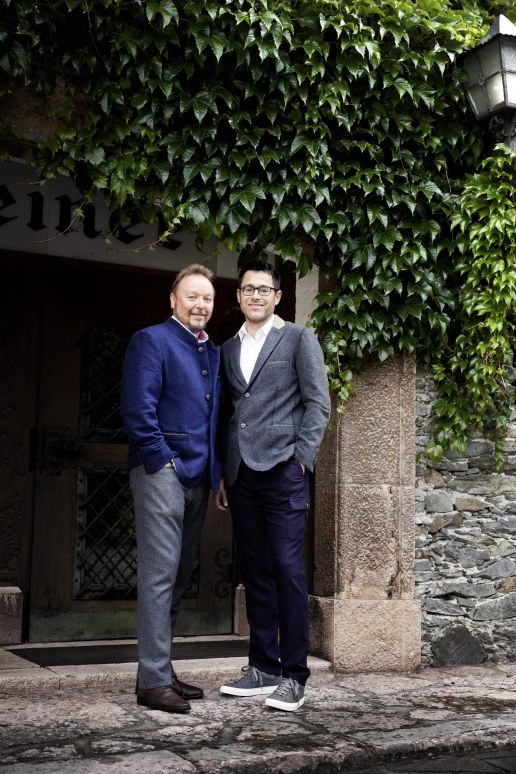
“When we let something get very, very close to us to warm and touch us, we want to know exactly where it came from and what it’s made of.”
says Johannes and Herbert Steiner, managing directors of Loden Steiner (Steiner1888) about the selection of the raw materials and the production site.
————————————————————————–
We invite you:
Network, get inspiration and establish long-term and professional partnerships.
Discover national and international exhibitors at the upcoming VIEW Premium Selection as well as at MUNICH FABRIC START and BLUEZONE. We look forward to seeing you in Munich!
Recycling Textile Waste, Viable Solution or Short term plan?
The not-so-easy feat of Recycling Textile Waste
Guest article by Muchaneta Kapfunde, Founding Editor-in-Chief FashNerd
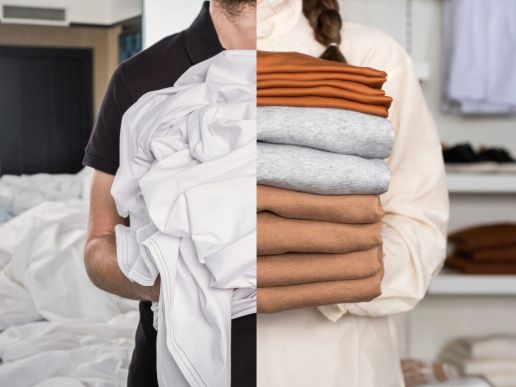
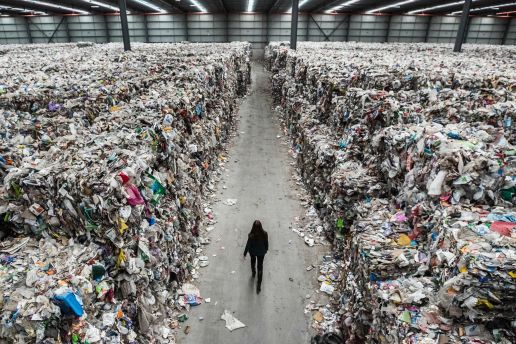
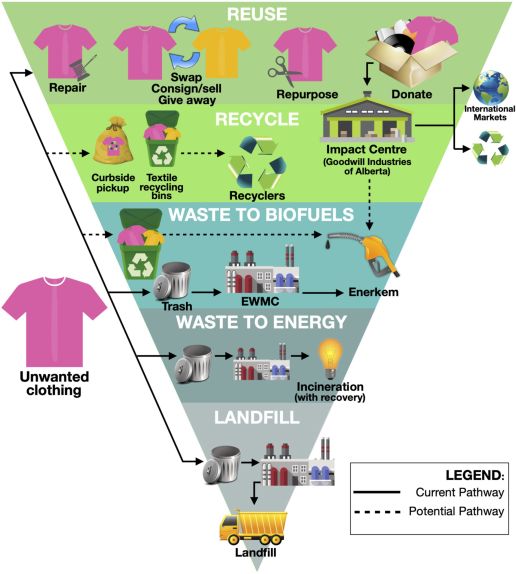
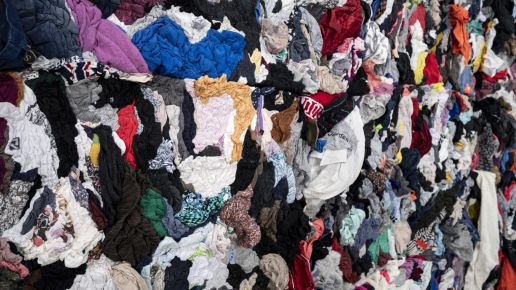
With the rapid global increase in textile waste caused by the growth of the clothing and textile industry and fast fashion among consumers, textile recycling has become paramount.
The problem is that recycling textile is not an easy feat.
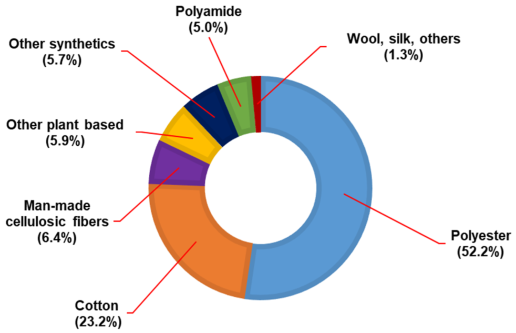
Many factors need to be considered. The most challenging obstacle to textile recycling is that the fabrics are often made from blended materials, and it is not easy to recycle mixed materials. This is mainly because each textile needs to be isolated before being effectively recycled. So as the fashion industry feels the pressure to move toward closed-loop production, what is the solution?
Picture credit: Rolling Stone
Picture credit: Pollima
Picture credit: MDPI
Game-Changing Solutions Explained
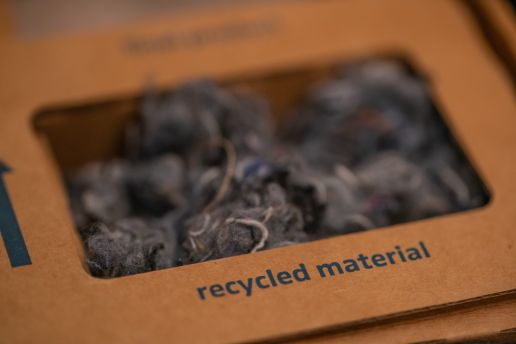
Well, with various groundbreaking methods in the works, like the Hong Kong Research Institute of Textiles and Apparel (HKRITA), who came up with a solution that makes it possible to recycle blended material into new fabrics and yarns without any quality loss. They can do this thanks to a hydrothermal (chemical) process.
Working together with H&M Foundation, they successfully developed a process that can fully separate and recycle cotton and polyester blends. The recovered polyester material can be reused directly, creating new benefits of recycling without any quality loss. The hydrothermal process uses only heat, water and less than 5% biodegradable green chemical to self-separate cotton and polyester blends. This fibre-to-fibre recycling method is cost-effective, and there’s no secondary pollution to the environment, ensuring the life of the recycled material is prolonged sustainably. The technology will be licensed widely to provide broad market access and maximum impact.
Picture credit: Sion Fraser University
Erik Bang, former Innovation Lead at H&M Foundation, shared:
“For too long, the fashion industry has not been able to recycle its products properly since there’s no commercially viable separation, sorting, and recycling technology available for the most popular materials such as cotton and polyester blends”. He continues, “This very encouraging finding has the potential to change that. We are very excited to develop this technology and scale it beyond the laboratory, which will benefit the global environment, people and communities.”
Then there is the Swedish company Södra. They have come up with a unique recycling solution that could influence how the fashion industry recycles its textiles.
Designed to enable large-scale textile recycling, the Södra, a significant forestry cooperative based in Växjö, Sweden, has come up with a unique solution that solves this fundamental obstacle to the textile industry. The pioneering solution makes it possible to recycle textiles on a large scale.
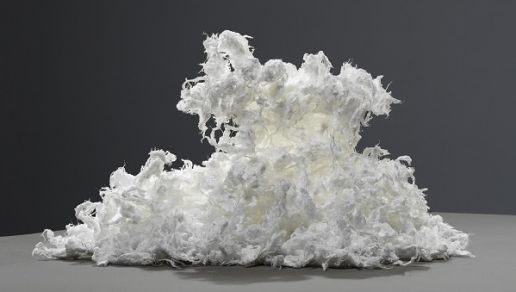
Using its resources and expertise for an innovative textile recycling solution, Södra has found a way to recycle fibres from blended fabrics on a large scale. They did this by enabling circular flows in the fashion and textile industry.
Picture credit: Södra
“Södra also has aggressive sustainability targets. We are, therefore, seeking companies with high sustainability ambitions that would like to partner with us in the delivery of textiles. That will determine our start-up and future production capacity” says Helena Claesson, Project Manager Södra.
Explaining the process further, Johannes Bogren, President of Södra Cell Bio-products, shared: “We are now redrawing the fashion and textile industry map by offering circular flows of textile fibres. A sweater can now become a sweater again. This will create added value for our customers, especially the fashion industry.”
The Fashion for Good Full Circle Textiles Project turned to innovative recycling technologies to close the loop on textile waste. The project’s objective was to explore the potential to reduce the environmental impact of textile waste; the textile-to-textile recycling solution has the potential to eliminate the industry’s dependence on virgin raw materials.
Picture credit: Fashion for Good
Supported by C&A, Martha Willis, Senior Manager of Sustainable Materials and Circular Innovation at C&A says: “This project will help us all in understanding the barriers, impacts and opportunities in the chemical recycling of polyester and is an important foundation to C&A’s commitment to connecting principles of circularity to 7 out of 10 of our products by 2028.”
Focusing on investigating economically viable and scalable solutions, the Full Circle Textiles Project has accomplished their objective scale of disruptive innovation in the industry and the capability of chemical recycling to accelerate circularity.
“The next phase of the project focuses on scaling these solutions and encourages brands, innovators, and supply chain partners to create long-term partnerships, catalyse funding to enable scaling, and leverage industry expertise to develop and implement these technologies further,” says Fashion For Good.
The C&A supported project, which was launched in September 2020, was successfully executed. Read the outcomes and learnings of the project here.
Picture credit: Nord News
Picture credit: Eco Rebels
Picture credit: Nouryon
Conclusion
So is recycling textile waste a viable solution or short term plan?
I think that the aim should be to develop the infrastructure necessary to scale textile recycling, and to do this, fashion businesses need to take advantage of upcoming technological developments. By working together toward a common goal, we will get one step closer to a more sustainable textile recycling process, with the end goal of contributing to facilitating a circular economy.
About the author
Founding editor-in-chief of FashNerd.com, Muchaneta has worked in the fashion industry for over 14 years. She is currently one of the leading influencers speaking and writing about the merger of fashion with technology and wearable technology.
Muchaneta Kapfunde | editor@fashnerd.com
———————————————————————–
Discover further industry-disrupting innovations at our upcoming shows: