

KEYHOUSE NEWS
Meet LOOPER Textile Co.
A second life for unwanted garments
Looper Textile Co. is an independent company jointly owned by the H&M Group and REMONDIS. They provide retailers and municipalities with responsible solutions to extend the useful life of garments and textiles through re-use and recycling. At Munich Fabric Start, we are excited to welcome Looper Textile Co. as one of the key players at the upcoming KEYHOUSE during the next show on January 21 + 22, 2025 in Munich. Learn more about Looper Textile Co.’s mission to give unwanted garments a second life and how they contribute to increasing the likelihood that each garment meets its intended end state. Here’s how:
When it comes to unwanted garments, the challenges we face today are pretty overwhelming. Each year, an estimated 100 – 150 billion items of clothing are produced globally.
- The majority of these textiles are unfortunately fated to go to waste, contributing to resource depletion and environmental damage.
- Globally, around 87% of discarded textiles directly end up in wrongful disposal, while more than 90% are reusable and recyclable.
- Today, less than 1% of used clothes and other textile materials are recycled into new textile products. At Looper Textile Co., they keep textiles out of wrongful disposal and provide solutions to extend the life of garments that are reusable. For those that can’t be reused, they ensure that the materials are recycled at their highest value.

At Looper Textile Co., they keep textiles out of wrongful disposal and provide solutions to extend the life of garments that are reusable. For those that can’t be reused, they ensure that the materials are recycled back into the loop at their highest value.
They collect and sort garments to extend their useful life:
Collect: They collect used and unwanted garments from retailers (including leftovers, customer returns, stop orders, faulty items, and post-consumer garments collected in stores or via post). They also collect post-consumer textiles in communities (street collection), via charity shops, and directly from consumers.
Re-use: They extend the useful life of products (garments, shoes, accessories) through responsible reuse. The majority of garments they collect are eligible for reuse. At Looper Textile Co., facilities, they sort pieces by piece into more than 200 categories so they can meet customer needs and ensure that garments will have the best possible new life.
Recycle: They have developed an industry-leading near-infrared (NIR) sorting line equipped with optical sensors, enabling them to detect material composition and color and thereby meet the requirements of closed-loop recyclers. For textiles where closed-loop recycling is not an option yet yet (currently the majority), they supply to open-loop recycling solutions (wiping cloths, nonwovens for insulation, and automotive).
Recovery: A small remainder of garments that are contaminated or ineligible for reuse or recycling are disposed of in established waste facilities, prioritizing energy recovery whenever possible.
„By investing in advanced sorting technologies, Looper Textile Co. is positioning itself as a key feedstock supplier for scalable textile-to-textile recycling solutions.” – Hélène Smits, Head of Business Development & Partnerships
Looper Textile Co. is a trusted partner in preparing garments for the next phase of their lifecycle. The bold ambition and strong heritage of this young company lies in understanding the retailer’s perspective and best-in-class operations. They are:
SOLUTIONS ORIENTED:
They meet you where you are: They provide custom solutions depending on the starting point and ambition level of the brand or retailer. This may range from securing responsible handling of unwanted garments to capturing post-consumer fibers to be introduced back into brand supply chains.
Circular supply chains: They actively support closed-loop trials to kick-start the flow of secondary raw materials into your supply chains.
Global turn key solutions: They operate three facilities in Europe, and through their global partner network, they are able to provide our solutions across all global markets. Their partners uphold their standards and share their commitment to giving unwanted garments a second life in a reliable and transparent way.
OPEN & TRANSPARENT:
Monthly Reports: They provide end-to-end visibility of what happens to the textiles from collection to sales markets in clear and engaging monthly reports.
Authenticity: They are straightforward about the challenges and opportunities they see, as well as their approach to each.
Customer Engagement: They can help you create a compelling narrative for your customers and answer any questions they might have.


INVESTED IN PROGRESS:
Automated Sorting for Circularity: They continue to invest in improving and scaling their automated sorting capabilities in order to supply textile feedstock to closed-loop recyclers with the right specifications. They are taking part in several trials and commercial pilots with fiber recyclers and manufacturers that bring recycled textile materials back into new products.
Responsible Re-Use: They are pushing for enhanced visibility practices within their sector via deep dives into reuse sales markets and transparent reporting. Their leadership in these areas contributes to more secure sales channels and increases the likelihood that each garment meets its intended end state. They are also involved in piloting solutions for end-of-life textiles in one of their main re-use markets in order to tackle the textile waste problem that is present there.
BEYOND COMPLIANCE:
With the introduction of the EU’s Extended Producer Responsibility (EPR) schemes for textiles and the Eco-design for Sustainable Products Regulation (ESPR), brands and retailers face increasing pressure to take responsibility for their products throughout their lifecycle, from design to production to end-of-life. Additionally, sustainability-conscious consumers are demanding transparency and ethical practices, pushing brands to adopt circular business models.
Whether you are focused solely on compliance, regard circularity as a key strategic advantage for your business, or anything in between, they can help!
Looper Textile Co.’s solutions are in accordance with ESPR, EPR, and other relevant legislation, and they ensure that you not only meet your producer requirements but also help you achieve your sustainable ambitions.


Visit them at the KEYHOUSE to discover the possibilites for your own brand. Don’t miss them on the KEYHOUSE stage with valuable insights.
THIS MIGHT BE ALSO INTERESTING FOR YOU
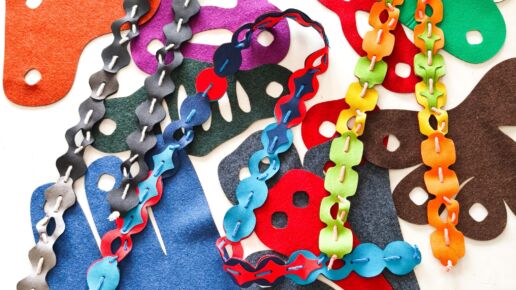
EMELIE SANDRE DESIGN – SUSTAINABLE INNOVATIONS
Modularität ist kein neues Konzept. Seit Jahrzehnten prägt sie die Architektur, das Möbeldesign und das Industriedesign. Ihre Anwendung auf weiche Textilien eröffnet jedoch eine ganz neue Diskussion.
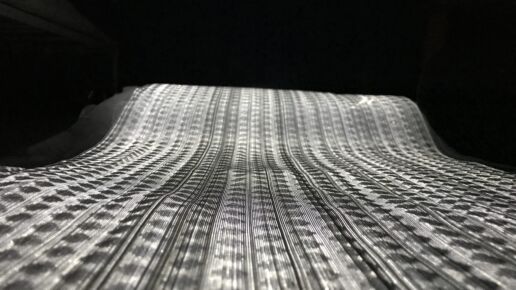
Smart Textile Design – SUSTAINABLE INNOVATIONS
Kreativität und Neugierde waren schon immer unsere Triebfeder. Unsere Arbeit entwickelt sich durch Prototypen weiter – sie ist nie abgeschlossen und wirft immer wieder neue Fragen zu Materialien, Prozessen und Möglichkeiten auf.
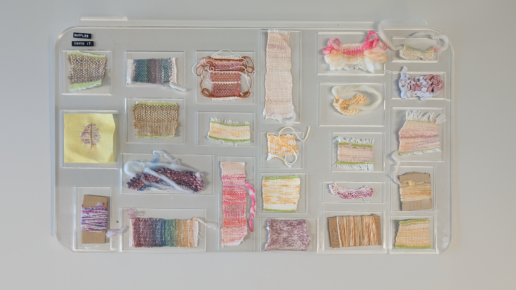
STUDIO ALICE GIELEN – SUSTAINABLE INNOVATIONS
Diese Idee gewinnt zunehmend an Bedeutung, da künstliche Intelligenz und computergestütztes Design immer mehr Teil der kreativen Landschaft der Modebranche werden. Vielleicht geht es in der Zukunft gar nicht um den Gegensatz zwischen Mensch und Maschine. Vielleicht geht es vielmehr darum, zu lernen, wie man gemeinsam etwas schafft.

Leather from the Sea – SUSTAINABLE INNOVATIONS
„Durch praktisches Experimentieren erkunde ich das Potenzial neuer Oberflächen und alternativer Lederformen, mit dem Ziel, das menschliche Leben wieder mit der Natur als einem miteinander verflochtenen Gefüge zu verbinden.“
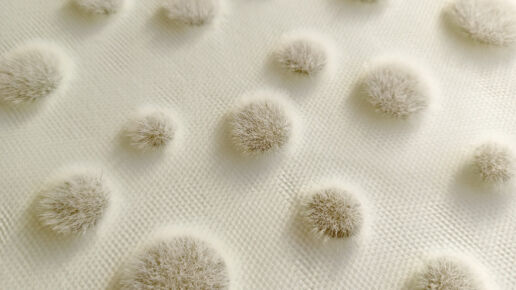
Maison du Flock – SUSTAINABLE INNOVATIONS
Das Atelier arbeitet mit den unterschiedlichsten Materialien – von zartem Tüll und Spitze bis hin zu Leder, Pailletten und anderen unkonventionellen Stoffen – und hat Flock zu einer zeitgemäßen Designsprache weiterentwickelt, die den Anforderungen der Luxusmode und der Haute Couture gerecht wird.

MUNICH FABRIC START – Januar 26 Abschlussbericht
Eine solide Messe. Eine optimistische Stimmung. So lässt sich das Ergebnis der MUNICH FABRIC START zusammenfassen. Nach drei Tagen ging die Münchner Textilmesse gestern, Donnerstag, mit den integrierten Show-in-Shows BLUEZONE, KEYHOUSE und THE SOURCE zu Ende. Die MUNICH FABRIC START schloss mit einer im Vergleich zur Vorveranstaltung stabilen Besucherfrequenz ab.
MUNICH FABRIC START – Between Attitude and Sensuality
Die Zukunft beginnt dort, wo wir sie neu erfinden. Das übergreifende Thema von PLEASURE steht für Mode als emotionalen Raum, als Ausdruck von Haltung und kultureller Reflexion.

Cartoon – Fashion for courage, joie de vivre and self-realisation
Embark on this fashionable journey and discover the new Cartoon collection at our store. Be inspired, mix and match to your heart's content, and wear optimism—every day, for every occasion.

KnitForm+ by Jeanne Mora – SUSTAINABLE INNOVATIONS
Entscheidend ist, wie das Textil reagiert: wie es das Volumen reguliert, den Druck verteilt und von flachen in dreidimensionale Zustände übergeht. Die Transparenz des Prozesses ist in der Methodik selbst verankert.

RETRAKT – SUSTAINABLE INNOVATIONS
Leistung wird in diesem Zusammenhang anhand der organisatorischen Resilienz gemessen. RETRAKT nutzt Resilienz-Engineering, um Mitarbeitern dabei zu helfen, komplexe und sich ändernde Anforderungen zu antizipieren, zu überwachen, darauf zu reagieren und daraus zu lernen.