

Curiosity, Courage and Craftmanship
Interview with Simon Angel - Guest article by Muchaneta ten Napel
Clothes Encounters and Warmly Related Relevance
With “FLORECSENCE” as the guiding principle of MUNICH FABRIC START and TECHKNOWLEDGE for the KEYHOUSE, Simon Angel, curator of Sustainable Innovations, highlights how the projects he has chosen can redefine what’s next in fashion by challenging us to think beyond quick fixes and instead embrace a deeper, more holistic approach to sustainability.
Simon, how did you approach curating this season’s Sustainable Innovations exhibit at Munich Fabric Start?
Simon Angel: Well, I wanted the projects included in the Sustainable Innovations exhibit to signal a major shift in the textile industry. The projects I selected this season challenge us to rethink everything from raw materials to end products and production processes, whilst emphasising on sustainability as an ongoing dialogue; it sparks a broader conversation about the future of our industry, urging everyone in the textile community to consider more responsible and imaginative approaches.
Could you elaborate on how year’s philosophy manifests in the exhibited projects?
Simon Angel: Certainly! This year’s philosophy is deeply embedded in each project I’ve selected for the exhibit, particularly emphasising sustainable practices that integrate seamlessly with innovative design. Take Shushanik Droshakiryan’s “PSYCHEDELIC TEXTILES.” Her work pushes the boundaries by harnessing techniques inspired by microbiology and chemistry. Her work serves as a powerful call to action for the industry to rethink the way materials are sourced, valued, and ultimately returned to the environment. By focusing on the end-of-life phase of materials, she underscores the necessity of designing within a circular economy framework, envisioning a future where environmental stewardship and fashion innovation are seamlessly integrated.


Milou – photo credit Lieke Bielderman
Studio Nicky Vollebregt’s “Pollia,” “HIGHLIGHT,” and “Uncover” projects are also featured. How do they fit into this narrative?
Simon Angel: Studio Nicky Vollebregt’s projects demonstrate a holistic approach to textile innovation by exploring colour reflection, material transparency, and transformative finishing techniques. The studio isn’t just making visually striking fabrics; it’s probing our concepts of light, colour, and texture, and questioning how small interventions in the material creation process can have far-reaching environmental and usability impacts. It’s a reminder that sustainability and aesthetic appeal aren’t mutually exclusive.
Can you discuss how Daan Sonnemans’s & Anabel Poh’s”Kantamanto Social Club” enhances the themes of this exhibit?
Simon Angel: Daan Sonnemans and Anabel Poh address a critical aspect of sustainability: the human and social dimension. With “Katamanto Social Club,” he focuses on community engagement and ethical labour practices, integrating cultural heritage with environmentally responsible production. I feel that this project goes beyond material innovation because it reminds us that sustainability isn’t just about new materials or recycling; its core is about the people and communities behind the products. In a way you can call his this project a sustainable process-intervention.
Can you tell us about Milou Voorwinden’s “Explorations in 3D weaving”?
Simon Angel: Milou’s work is an excellent example of how reimagining a fundamental technique can open up entirely new possibilities. In “Explorations in 3D weaving,” she looks at the loom not just as a tool for flat textiles but as a platform for sculptural, structural forms. By combining different fibres and experimenting with density, she creates fabrics with varying properties – some rigid, some flexible. These explorations challenge the binary thinking of “fabric vs. structure,” showing how textiles can be engineered in ways that minimise material waste while expanding design potential. Her design-principle brings a shift in the design-pattern-production cycle.

Shushanik

Oscar

Nicky – Pollia
credit Patty van den Elshout i.o.v. TextielMuseum
Wool matters” by Beatriz Isca is another project drawing attention. How does it fit into this year’s theme?
Simon Angel: Beatriz’s “Wool matters” project underscores the value of a raw material we often take for granted. By spotlighting the processes of sourcing, cleaning, and transforming wool, she shows how something as ancient as wool can be reinterpreted for modern, eco-conscious lifestyles. She not only showcases wool’s versatility; she reveals the stories, heritage, and communities behind the fibre. I am hopeful that her perspective will encourage us to consider the entire life cycle of our materials – and the people involved – before we even start to design.
Lastly, Oscar Wentz’s AFTERLIFE “REWORK AND RETHINK YOUR OWN TRASH” project stands out. Can you shed some light on this?
Simon Angel: Oscar’s AFTERLIFE project is a bold statement on waste and consumer culture. Through upcycling discarded clothes and materials, he creates street-style garments that demonstrate how a simple change in perspective can spark a larger conversation about responsibility and resource use. It’s the perfect example of how a hands-on, interventionist approach can galvanise people to embrace more circular practices.

Beatriz – Wool matters

How do you see these innovations in the exhibition influencing the future of the textile industry?
Simon Angel: These projects collectively represent a significant shift to question what’s possible and to look at sustainability as an ongoing dialogue rather than a final box to tick. Each project showcased in the Sustainable Innovation exhibit challenges existing paradigms, pushing us closer to a world where textiles are created with both people and the planet in mind.
Thank you for sharing these insights, Simon. It’s clear that this season’s Sustainable Innovation exhibit goes beyond showcasing new materials – it’s about sparking a broader conversation on the future of our industry.
Simon Angel: My pleasure. I’m thrilled for everyone to experience these projects and be part of the conversation. I believe that it is through collective curiosity and willingness to experiment that we’ll drive real, lasting sustainable innovation.
We look forward to seeing the exhibit and witnessing how these pioneering ideas will shape what’s next in textile design.
Simon Angel: Thank you. Don’t forget to visit us at the Keyhouse in Hall 7 – we can’t wait to show you how these interventions are rewriting the future of fashion and textiles.

About the author
Founding editor-in-chief of Shape Innovate, Muchaneta has worked in the fashion industry for over 14 years. She is currently one of the leading influencers speaking and writing about the merger of fashion with technology and wearable technology.
Muchaneta ten Napel | m@shapeinnovate.com
THIS MIGHT BE ALSO INTERESTING FOR YOU:
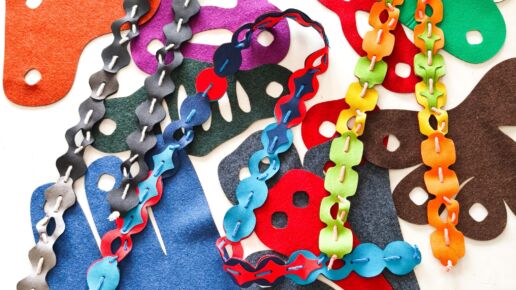
EMELIE SANDRE DESIGN – SUSTAINABLE INNOVATIONS
Modularity is hardly a new concept. It has transformed architecture, furniture and industrial design for decades. Applying it to soft textiles, however, opens an entirely different conversation.
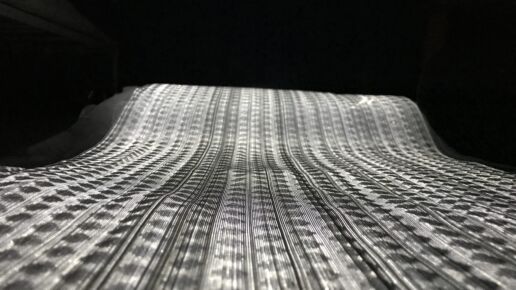
Smart Textile Design – SUSTAINABLE INNOVATIONS
We have always been driven by creativity and curiosity. Our practice evolves through prototypes, never finished, always asking more questions of materials, processes and possibilities.
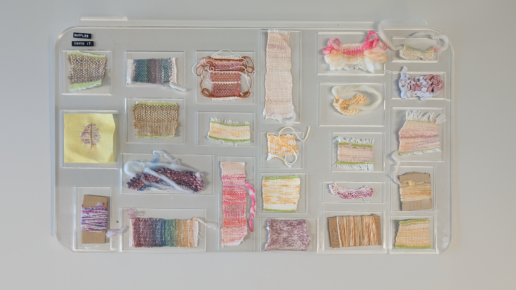
STUDIO ALICE GIELEN – SUSTAINABLE INNOVATIONS
It is an idea that feels increasingly relevant as artificial intelligence and computational design become part of fashion's creative landscape. Perhaps the future is not about humans versus machines. Perhaps it is about learning how to create together.
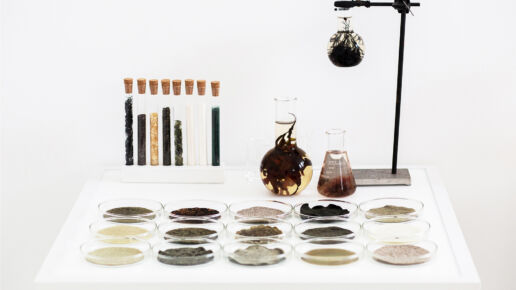
Leather from the Sea – SUSTAINABLE INNOVATIONS
"Through hands-on experimentation, I explore the potential of new surfaces and alternative forms of leather, aiming to reconnect human life with the natural world as an interconnected fabric."
Maison du Flock – SUSTAINABLE INNOVATIONS
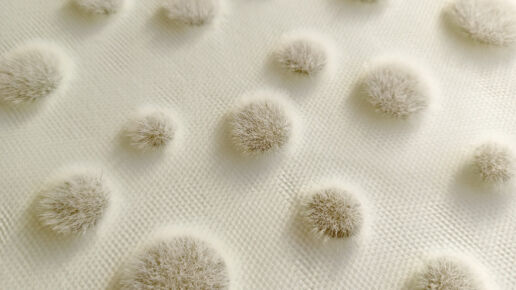
Working with everything from delicate tulle and lace to leather, sequins and other unconventional materials, the studio has transformed flock into a contemporary design language capable of meeting the demands of luxury fashion and Haute Couture.

MUNICH FABRIC START – January 26 closing report
A solid trade show. An optimistic mindset. That sums up the outcome of MUNICH FABRIC START. After three days, the Munich textile fair came to an end yesterday, Thursday, with the integrated show-in-shows BLUEZONE, KEYHOUSE and THE SOURCE. MUNICH FABRIC START concluded with a stable visitor frequency compared to the previous event.
MUNICH FABRIC START – Between Attitude and Sensuality
The future begins where we reimagine it. The overarching theme of PLEASURE stands for fashion as an emotional space, as an expression of attitude and cultural reflection.

KnitForm+ by Jeanne Mora – SUSTAINABLE INNOVATIONS
What matters is how the textile responds: how it regulates volume, distributes pressure, and transitions from flat to three-dimensional states. Process transparency is embedded in the methodology itself.

Cartoon – WEAR YOUR OPTIMISM
Embark on this fashionable journey and discover the new Cartoon collection at our store. Be inspired, mix and match to your heart's content, and wear optimism—every day, for every occasion.

RETRAKT – SUSTAINABLE INNOVATIONS
Performance, in this context, is measured by organisational resilience. RETRAKT applies resilience engineering to help employees anticipate, monitor, respond to, and learn from complex and changing requirements.