

Kantamanto Social Club – Pioneering Regenerative Fashion with
Daan Sonnemans & Anabel Poh
SUSTAINABLE INNOVATIONS

A revolution is unfolding.
Kantamanto Social Club was born from inspiration brought about by the vibrant, bustling markets of Kantamanto, Ghana. Co-founders Anabel Poh and Daan Sonnemans’ objective was to transform the global fashion landscape through amplifying the practices of communities that the fashion and textile industry often overlook. The club’s initiative goes beyond mere sustainability – it’s about reshaping power dynamics in an industry that usually doesn’t empower marginalised communities.
Kantamanto Social Club’s Vision of a Circular Fashion Future
The mission of Kantamanto Social Club is clear: to empower communities in the Global South. It aims to shine a spotlight on communities, particularly those whose circular and regenerative practices have been undervalued for too long. “The core of this project centres on the inherently sustainable communities of the Global South, which have practiced regenerative methods for generations,” explained Daan. Rather than viewing these communities as recipients of Western “aid” or “guidance,” the Social Club positions them as leaders in sustainable fashion.
By focusing on a philosophy that brings traditionally marginalised voices into global discussions on environmental and economic sustainability, the club has taken on the responsibility to empower artisans who are transforming discarded textiles from the Global North into high-value fashion items. They are doing this by providing a platform that showcases the artisan’s potential, creativity, resilience and ability to demonstrate how sustainable practices can counteract global consumption excesses.
Daan poses a crucial question, “How, at the brink of collapse, can we turn the tide and transition the fashion industry towards a regenerative model?” Through these efforts, Sonnemans challenges industry norms, advocating for systemic change that prioritises ecological and social integrity.
Creating Bridges Through Art and Advocacy
Forging tangible connections between local artisans and the global stage, Kantamanto Social Club’s voice can be heard through exhibitions, storytelling, and collaborative research initiatives. These platforms not only underscore the creative potential of upcycled fashion but also offer critical commentary on the prevailing norms of production and consumption in the fashion industry. This approach sets the stage for a deeper exploration into sustainable practices.
Building on this foundation, a significant aspect of the club’s work will focus on sustainability education as a next step. Through workshops, the club will inspire and train the next generation of designers, embedding sustainable thinking right from the start of their careers. Furthermore, the club will facilitate cultural exchanges that elevate the work of Kantamanto’s creatives, giving them the international recognition they deserve. Daan poses a crucial question, “How, at the brink of collapse, can we turn the tide and transition the fashion industry towards a regenerative model?” Through these efforts, Sonnemans challenges industry norms, advocating for systemic change that prioritises ecological and social integrity.
Beyond sparking a creative resurgence, the Kantamanto Social Club actively engages in policy advocacy, influencing global strategies on waste management and sustainable practices. Their initiatives serve as a call to action, urging the international community to reconsider the values and interactions that define the fashion industry. This holistic approach ensures that the impact of their advocacy resonates beyond artistic circles, reaching into the realms of global policy and practical change.
Engage with Kantamanto Social Club
Whether you’re a designer, policy-maker, or curious observer, the Kantamanto Social Club invites you to reimagine the fashion industry—one that’s built on equity, regeneration, and genuine respect for the planet and its people. So if you are looking to dive deeper into the transformative projects of the Kantamanto Social Club or to engage with their ongoing initiatives, you can find out more via their website.


A statement on recent events
“On the night of January 1, 2025, and into the morning of the 2nd, a devastating fire swept through the Kantamanto Market, destroying as many as two-thirds of it. Over 10,000 people—tailors, retailers, kayayei, and artisans—have been affected, losing their businesses and livelihoods.
To us Kantamanto is more than a market—it has become a global symbol of resilience, transforming unwanted textiles from across the world into something meaningful. It stands as a testament to sustainable fashion and the incredible creativity of its community.
Now is the time to stand in solidarity with Kantamanto. Together, we must support this community as they rebuild. We are launching a targeted fundraising campaign for the upcyclers we work with directly. But for now, any and all support is urgently needed and can be provided by donating to The OR Foundation’s fire relief fund, which is being used to directly aid relief efforts. Support here”
THIS MIGHT BE ALSO INTERESTING FOR YOU:
EMELIE SANDRE DESIGN – SUSTAINABLE INNOVATIONS
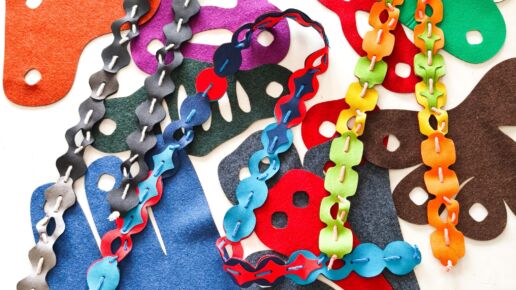
Modularity is hardly a new concept. It has transformed architecture, furniture and industrial design for decades. Applying it to soft textiles, however, opens an entirely different conversation.
Smart Textile Design – SUSTAINABLE INNOVATIONS
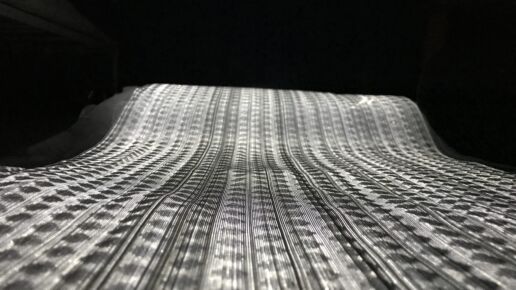
We have always been driven by creativity and curiosity. Our practice evolves through prototypes, never finished, always asking more questions of materials, processes and possibilities.
STUDIO ALICE GIELEN – SUSTAINABLE INNOVATIONS
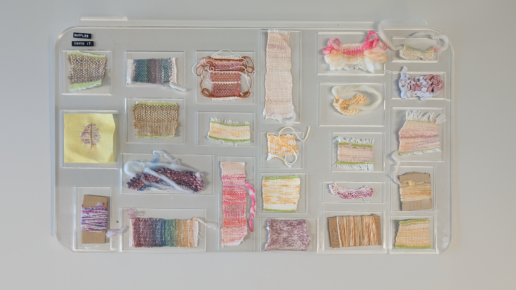
It is an idea that feels increasingly relevant as artificial intelligence and computational design become part of fashion's creative landscape. Perhaps the future is not about humans versus machines. Perhaps it is about learning how to create together.

Leather from the Sea – SUSTAINABLE INNOVATIONS
"Through hands-on experimentation, I explore the potential of new surfaces and alternative forms of leather, aiming to reconnect human life with the natural world as an interconnected fabric."

Maison du Flock – SUSTAINABLE INNOVATIONS
Working with everything from delicate tulle and lace to leather, sequins and other unconventional materials, the studio has transformed flock into a contemporary design language capable of meeting the demands of luxury fashion and Haute Couture.

MUNICH FABRIC START – January 26 closing report
A solid trade show. An optimistic mindset. That sums up the outcome of MUNICH FABRIC START. After three days, the Munich textile fair came to an end yesterday, Thursday, with the integrated show-in-shows BLUEZONE, KEYHOUSE and THE SOURCE. MUNICH FABRIC START concluded with a stable visitor frequency compared to the previous event.

MUNICH FABRIC START – Between Attitude and Sensuality
The future begins where we reimagine it. The overarching theme of PLEASURE stands for fashion as an emotional space, as an expression of attitude and cultural reflection.

KnitForm+ by Jeanne Mora – SUSTAINABLE INNOVATIONS
What matters is how the textile responds: how it regulates volume, distributes pressure, and transitions from flat to three-dimensional states. Process transparency is embedded in the methodology itself.

Cartoon – WEAR YOUR OPTIMISM
Embark on this fashionable journey and discover the new Cartoon collection at our store. Be inspired, mix and match to your heart's content, and wear optimism—every day, for every occasion.

RETRAKT – SUSTAINABLE INNOVATIONS
Performance, in this context, is measured by organisational resilience. RETRAKT applies resilience engineering to help employees anticipate, monitor, respond to, and learn from complex and changing requirements.