

What If the Most Sustainable Product Is the One That Never Stops Being Reinvented?
SUSTAINABLE INNOVATIONS
The fashion and textile industry has spent years trying to answer one question. How do we make products last longer? The answers have largely focused on stronger fibres, better construction and more responsible materials. But what if durability isn’t only about how long a product survives? What if it’s about how many different lives it can live?
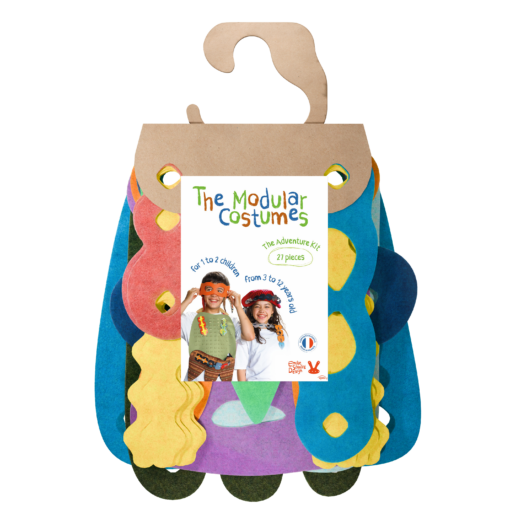
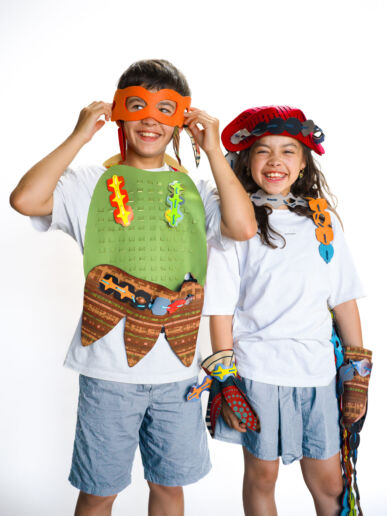
Visitors to the Sustainable Innovation space at Munich Fabric Start will discover a project that challenges exactly that through The Modular Costumes by Emilie Sandré Design.
Designing for Imagination
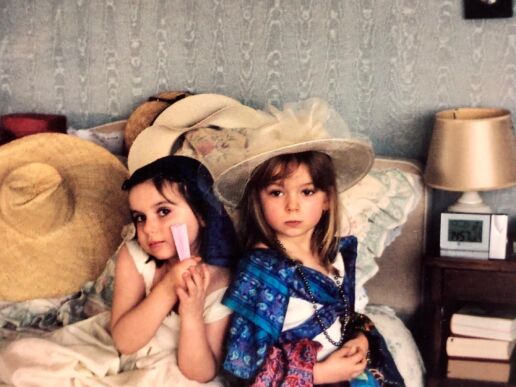
For many of us, dressing up began long before we owned a costume. A scarf became a cape. A belt became a sword. A pair of oversized shoes transformed us into someone entirely different. Designer Emilie Sandré remembers that feeling well.
As a child, she found endless joy in combining scarves, jewellery and accessories from her grandmother’s wardrobe to invent characters of her own. Yet today’s children’s costumes often arrive with the story already written: pirate, princess or knight, leaving little room for imagination. The Modular Costumes were created to change that.
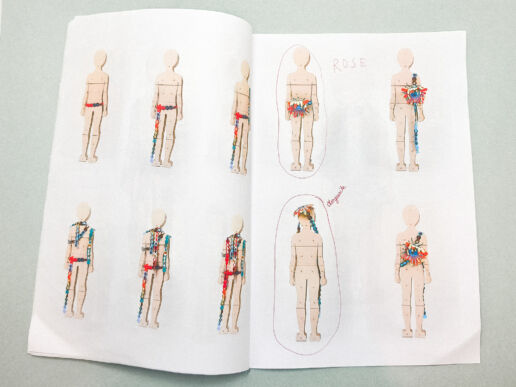
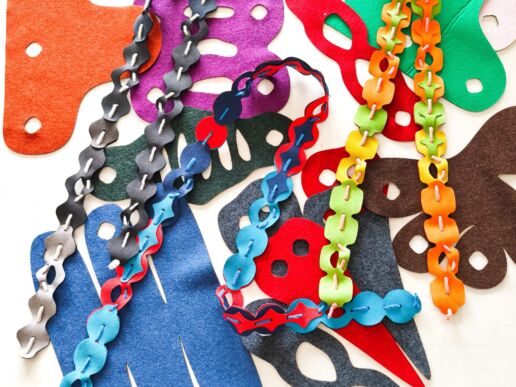
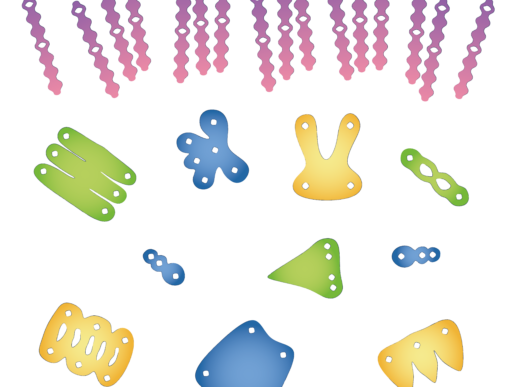
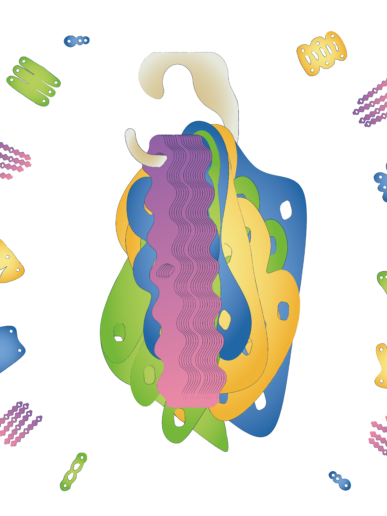
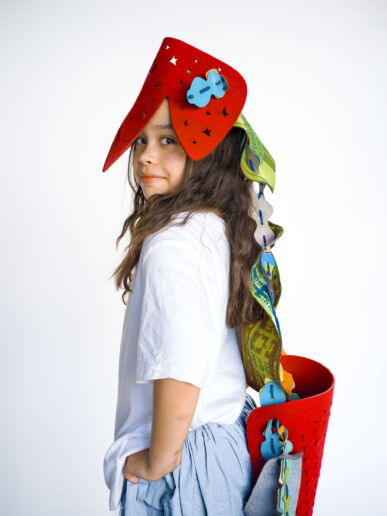
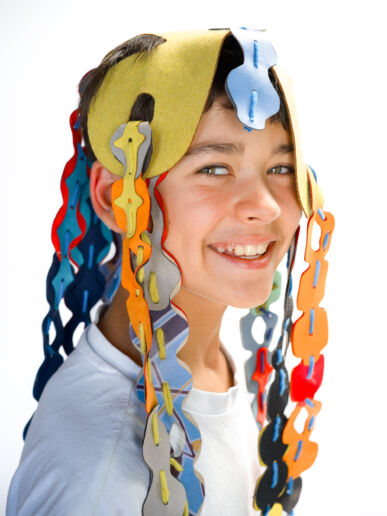
Rather than designing finished costumes, Emilie has developed a system of interchangeable modules and connectors that children assemble themselves. There are no prescribed characters, no fixed narratives and no rules beyond curiosity. Every new combination becomes another opportunity for storytelling.
“I don’t design finished products, I design systems of possibilities where the user becomes the creator.”
Modularity Beyond Function
Modularity is hardly a new concept. It has transformed architecture, furniture and industrial design for decades. Applying it to soft textiles, however, opens an entirely different conversation.
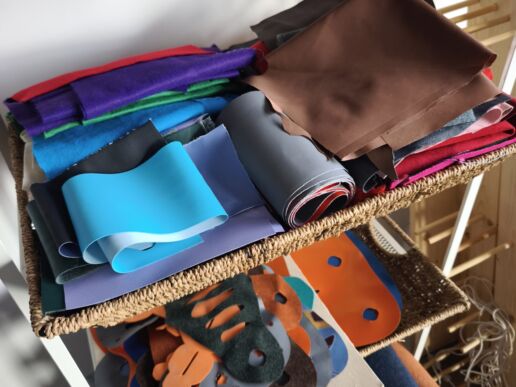
Each component of The Modular Costumes is laser cut in Paris using luxury deadstock fabrics and sample books that would otherwise be difficult to recycle. Yet the project’s greatest contribution isn’t simply material reuse.
It is the idea that products designed for continual reinvention naturally resist becoming obsolete. A costume is no longer a single object with a limited purpose. It becomes an evolving creative system that grows with its user through endless possibilities for assembly.
Innovation, after all, is not always about producing something new. Sometimes it is about allowing one product to become many.
Designing for Play
Perhaps the most compelling aspect of The Modular Costumes is that it places play at the centre of sustainable design.
In a world increasingly shaped by digital experiences, Emilie invites children to engage with materials through touch, experimentation and imagination. The act of getting dressed becomes an act of making, encouraging curiosity rather than consumption. Workshops held in schools, cafés and exhibition spaces extend this philosophy beyond the product itself, creating shared experiences that celebrate creativity and exploration.
Visitors exploring the Sustainable Innovation space at Munich Fabric Start between 14-16 July 2026, will encounter far more than an innovative children’s product. They will discover a different way of thinking about design itself. Because perhaps the greatest form of durability isn’t measured in years. It is measured in possibility.
It is good remember that the products we treasure most are often those that continue to surprise us, which in turn invites us to create, reinvent and imagine them anew long after they first entered our lives.
THIS MIGHT BE ALSO INTERESTING FOR YOU:
Smart Textile Design – SUSTAINABLE INNOVATIONS
We have always been driven by creativity and curiosity. Our practice evolves through prototypes, never finished, always asking more questions of materials, processes and possibilities.
STUDIO ALICE GIELEN – SUSTAINABLE INNOVATIONS
It is an idea that feels increasingly relevant as artificial intelligence and computational design become part of fashion's creative landscape. Perhaps the future is not about humans versus machines. Perhaps it is about learning how to create together.
Leather from the Sea – SUSTAINABLE INNOVATIONS
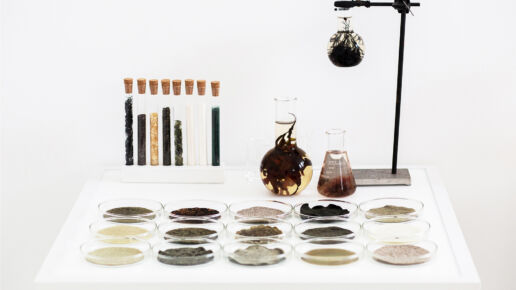
"Through hands-on experimentation, I explore the potential of new surfaces and alternative forms of leather, aiming to reconnect human life with the natural world as an interconnected fabric."
Maison du Flock – SUSTAINABLE INNOVATIONS
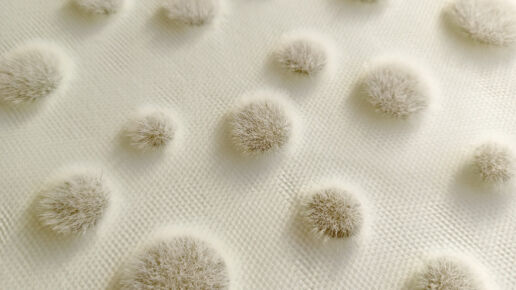
Working with everything from delicate tulle and lace to leather, sequins and other unconventional materials, the studio has transformed flock into a contemporary design language capable of meeting the demands of luxury fashion and Haute Couture.

MUNICH FABRIC START – January 26 closing report
A solid trade show. An optimistic mindset. That sums up the outcome of MUNICH FABRIC START. After three days, the Munich textile fair came to an end yesterday, Thursday, with the integrated show-in-shows BLUEZONE, KEYHOUSE and THE SOURCE. MUNICH FABRIC START concluded with a stable visitor frequency compared to the previous event.
MUNICH FABRIC START – Between Attitude and Sensuality
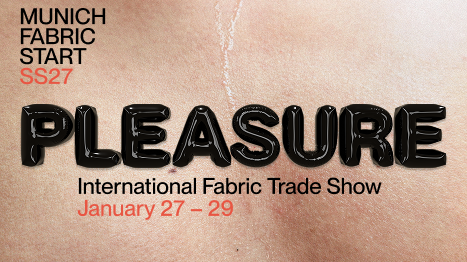
The future begins where we reimagine it. The overarching theme of PLEASURE stands for fashion as an emotional space, as an expression of attitude and cultural reflection.

KnitForm+ by Jeanne Mora – SUSTAINABLE INNOVATIONS
What matters is how the textile responds: how it regulates volume, distributes pressure, and transitions from flat to three-dimensional states. Process transparency is embedded in the methodology itself.

Cartoon – WEAR YOUR OPTIMISM
Embark on this fashionable journey and discover the new Cartoon collection at our store. Be inspired, mix and match to your heart's content, and wear optimism—every day, for every occasion.

RETRAKT – SUSTAINABLE INNOVATIONS
Performance, in this context, is measured by organisational resilience. RETRAKT applies resilience engineering to help employees anticipate, monitor, respond to, and learn from complex and changing requirements.

MATERIA FUTURA – SUSTAINABLE INNOVATIONS
Materia Futura is not proposing a new bio-material category, nor a finished commercial textile. What distinguishes the project is its design-led investigation into the emotional and aesthetic dimensions of bio-based materials, an area often sidelined in sustainability discourse.