

What If Fashion's Next Material Revolution Has Already Been Made?
SUSTAINABLE INNOVATIONS
Fashion has become remarkably good at talking about new materials.
Every season introduces another fibre, another coating, another breakthrough promising to solve fashion’s environmental crisis. We celebrate innovation as though the answer must always begin with something new.
Yet among the innovators exhibiting at Sustainable Innovations space during Munich Fabric Start, taking place from 14-16 July 2026, Sara + Sarah Smart Textile Design invite us to ask a different question.
What if the next material revolution isn’t about inventing something new at all?
What if it begins by looking differently at what already exists?
“We have always been driven by creativity and curiosity. Our practice evolves through prototypes, never finished, always asking more questions of materials, processes and possibilities.”
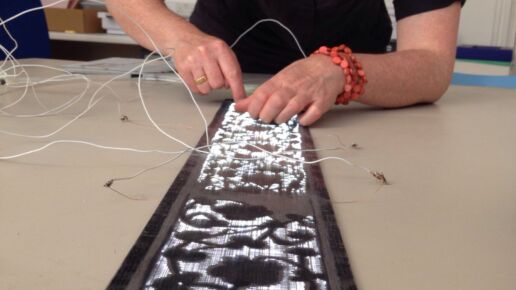
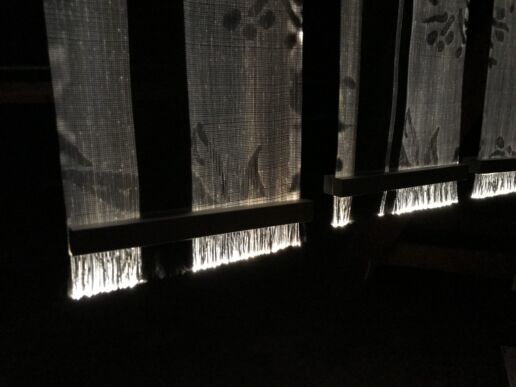
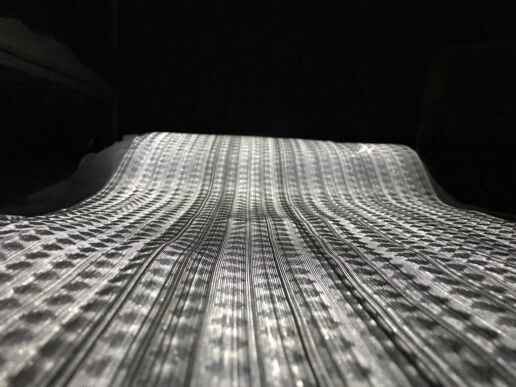
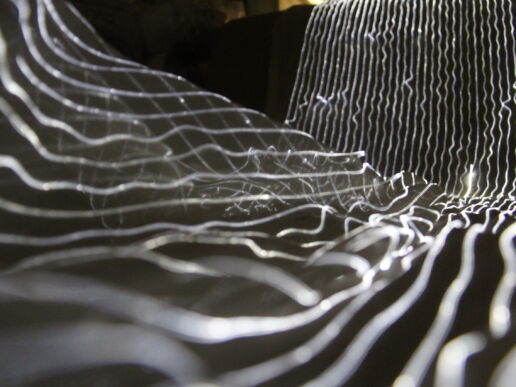
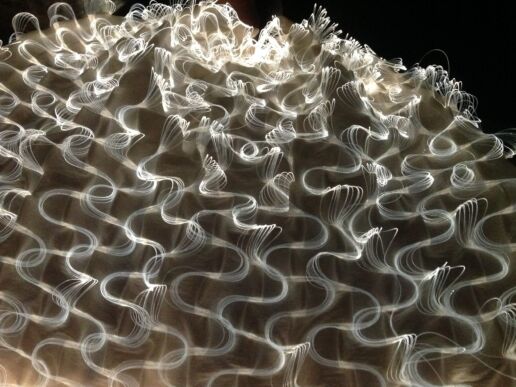
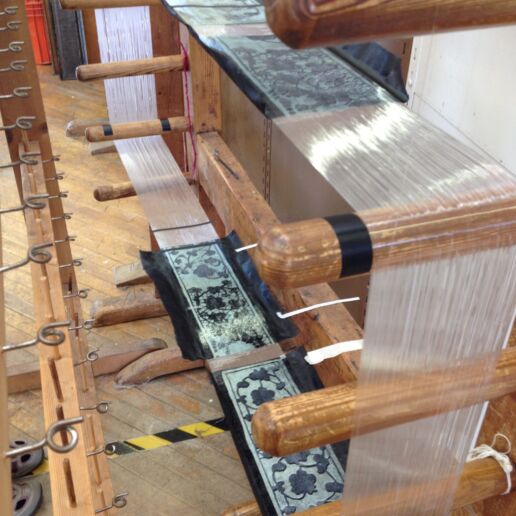
Blurring the Boundaries Between Weaving, Print, Illumination and Technology
At Sustain by MUNIQUE, visitors will encounter Archiving Patterned Light, a decade-long exploration into the relationship between weave, print, light and material innovation. Rather than treating textiles as passive surfaces, Sara + Sarah reveal them as dynamic systems capable of transforming space, perception and atmosphere.
Their work moves seamlessly between handcrafted experimentation and industrial manufacture, creating textiles that respond to light in ways that challenge our expectations of what fabric can become. Cloth evolves into architecture. Surface becomes experience. Material becomes storytelling.
That spirit of exploration lies at the heart of their practice.
As Sara + Sarah explain: “We have always been driven by creativity and curiosity. Our practice evolves through prototypes, never finished, always asking more questions of materials, processes and possibilities.” It is a philosophy that runs through every piece of work they create, where experimentation is not simply part of the process but the process itself.
It is visually striking. But beauty is only part of the story.
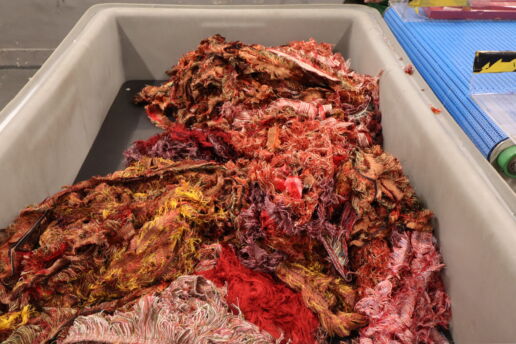
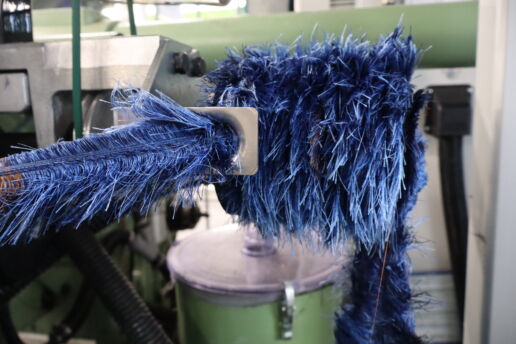
Alongside Archiving Patterned Light, the duo will also present FLOCC, a collaborative material innovation that transforms post-industrial textile waste into natural electrostatic flock fibres for print and surface design.
At first glance, the concept appears simple. Textile waste becomes a new material. Except it isn’t. Because FLOCC demonstrates something the fashion industry still struggles to embrace. Circularity is not recycling. Circularity is redesigning value.
Looking Beyond Waste
Too often, waste is treated as the inevitable consequence of production. Something to manage. Something to minimise. Something to process through increasingly sophisticated recycling technologies.
FLOCC turns that assumption on its head.
Cotton, silk and cellulose waste streams become the raw material for richly textured surfaces that allow colour and pattern to be both seen and felt. Materials once considered the end of a product’s life become the beginning of an entirely new design language.
That distinction matters.
Fashion’s future will not be shaped solely by breakthrough fibres. It will be shaped by our willingness to redesign supply chains, manufacturing systems and commercial models so that existing materials are recognised for the value they already hold.
Innovation, after all, is rarely about creating something from nothing. It is about changing how we see.
Where Heritage Meets the Future
Equally compelling is the way these projects bridge heritage craftsmanship with advanced manufacturing.
Through years of collaboration with MYB Textiles and an ecosystem of manufacturers, recyclers and material specialists, ideas born through experimentation have evolved into scalable production. The result is proof that heritage manufacturing and contemporary innovation are not competing narratives. They are complementary strengths.
Perhaps that is the biggest lesson Sara + Sarah bring to Munich this season. The textile industry often speaks about collaboration as though it were an added benefit of innovation. In reality, collaboration is the innovation.
FLOCC exists because designers, manufacturers, researchers and technical specialists chose to work across disciplines rather than within them. Knowledge travelled. Expertise overlapped. Curiosity became infrastructure.
We look forward to visitors exploring Sara + Sarah Smart Textile Design because they are not offering fascinating projects, they offer a shift in perspective.
Therefore, perhaps the most valuable resource in fashion isn’t the next miracle material waiting to be invented. Perhaps it is the extraordinary potential already sitting within the materials we have yet to recognise.
THIS MIGHT BE ALSO INTERESTING FOR YOU:
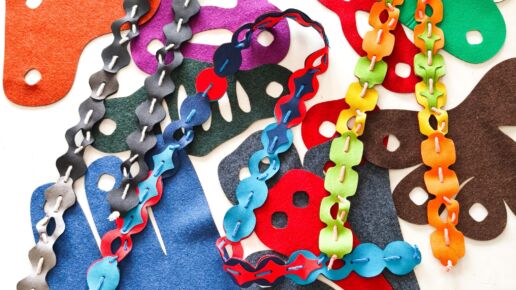
EMELIE SANDRE DESIGN – SUSTAINABLE INNOVATIONS
Modularity is hardly a new concept. It has transformed architecture, furniture and industrial design for decades. Applying it to soft textiles, however, opens an entirely different conversation.
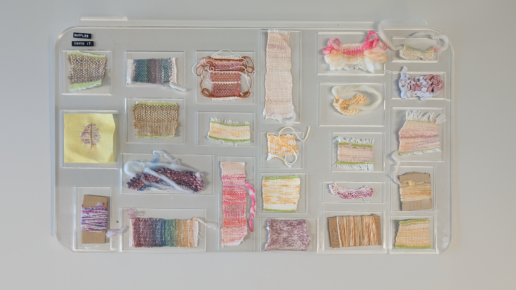
STUDIO ALICE GIELEN – SUSTAINABLE INNOVATIONS
It is an idea that feels increasingly relevant as artificial intelligence and computational design become part of fashion's creative landscape. Perhaps the future is not about humans versus machines. Perhaps it is about learning how to create together.
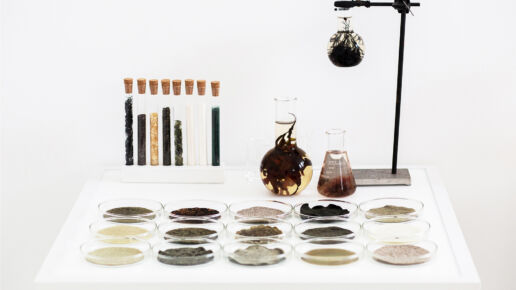
Leather from the Sea – SUSTAINABLE INNOVATIONS
"Through hands-on experimentation, I explore the potential of new surfaces and alternative forms of leather, aiming to reconnect human life with the natural world as an interconnected fabric."
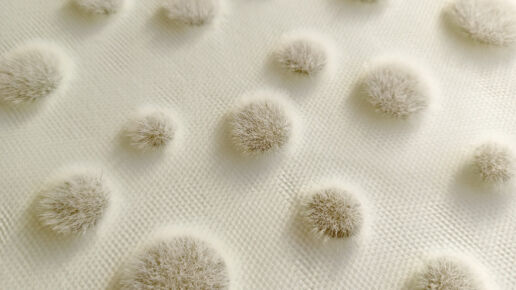
Maison du Flock – SUSTAINABLE INNOVATIONS
Working with everything from delicate tulle and lace to leather, sequins and other unconventional materials, the studio has transformed flock into a contemporary design language capable of meeting the demands of luxury fashion and Haute Couture.

MUNICH FABRIC START – January 26 closing report
A solid trade show. An optimistic mindset. That sums up the outcome of MUNICH FABRIC START. After three days, the Munich textile fair came to an end yesterday, Thursday, with the integrated show-in-shows BLUEZONE, KEYHOUSE and THE SOURCE. MUNICH FABRIC START concluded with a stable visitor frequency compared to the previous event.
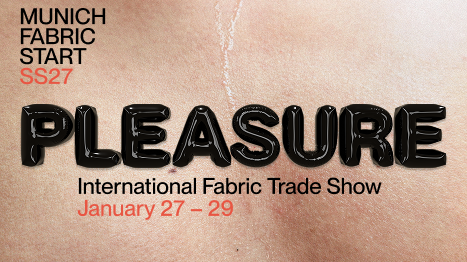
MUNICH FABRIC START – Between Attitude and Sensuality
The future begins where we reimagine it. The overarching theme of PLEASURE stands for fashion as an emotional space, as an expression of attitude and cultural reflection.

KnitForm+ by Jeanne Mora – SUSTAINABLE INNOVATIONS
What matters is how the textile responds: how it regulates volume, distributes pressure, and transitions from flat to three-dimensional states. Process transparency is embedded in the methodology itself.

Cartoon – WEAR YOUR OPTIMISM
Embark on this fashionable journey and discover the new Cartoon collection at our store. Be inspired, mix and match to your heart's content, and wear optimism—every day, for every occasion.

RETRAKT – SUSTAINABLE INNOVATIONS
Performance, in this context, is measured by organisational resilience. RETRAKT applies resilience engineering to help employees anticipate, monitor, respond to, and learn from complex and changing requirements.

MATERIA FUTURA – SUSTAINABLE INNOVATIONS
Materia Futura is not proposing a new bio-material category, nor a finished commercial textile. What distinguishes the project is its design-led investigation into the emotional and aesthetic dimensions of bio-based materials, an area often sidelined in sustainability discourse.