

Sustainability
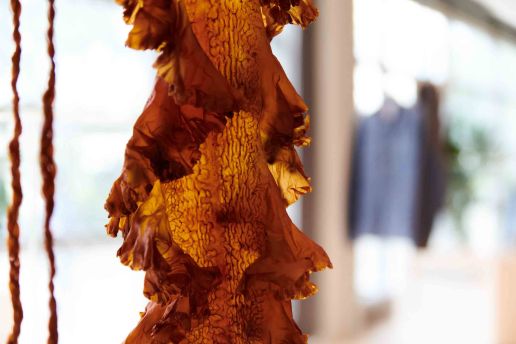
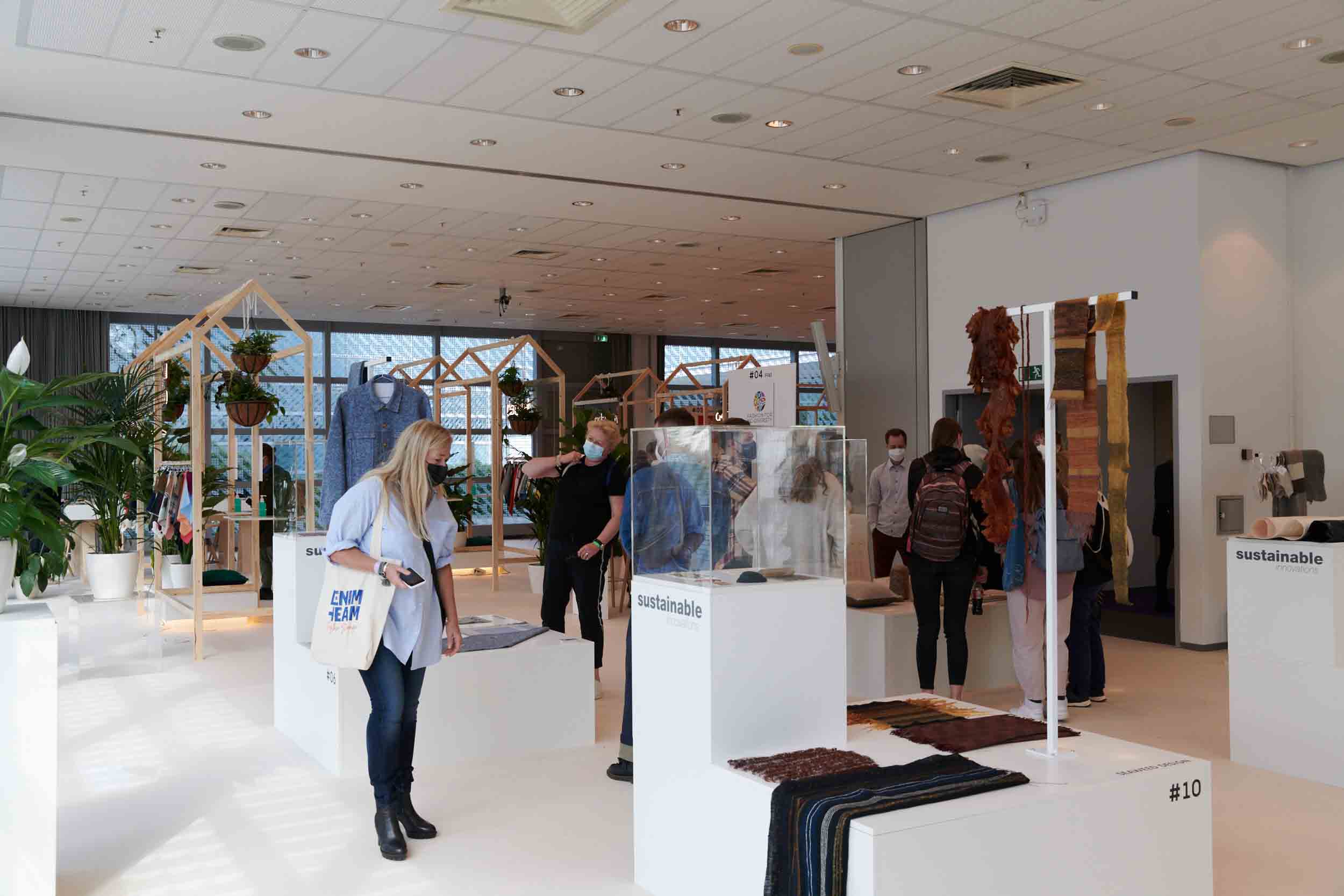
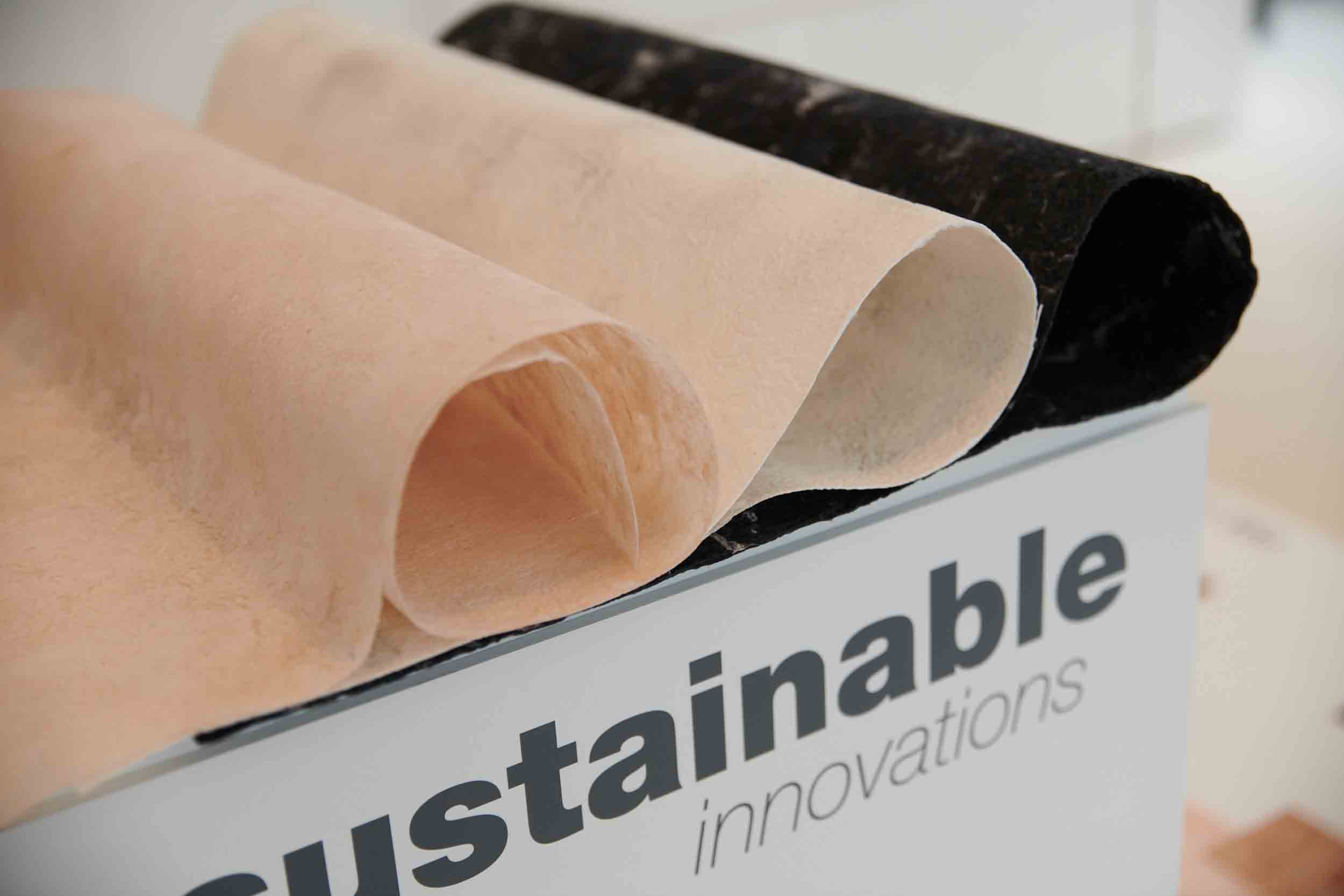
Seaweed Design by Violaine Buet
SUSTAINABLE INNOVATIONS Autumn.Winter 22/23 #6
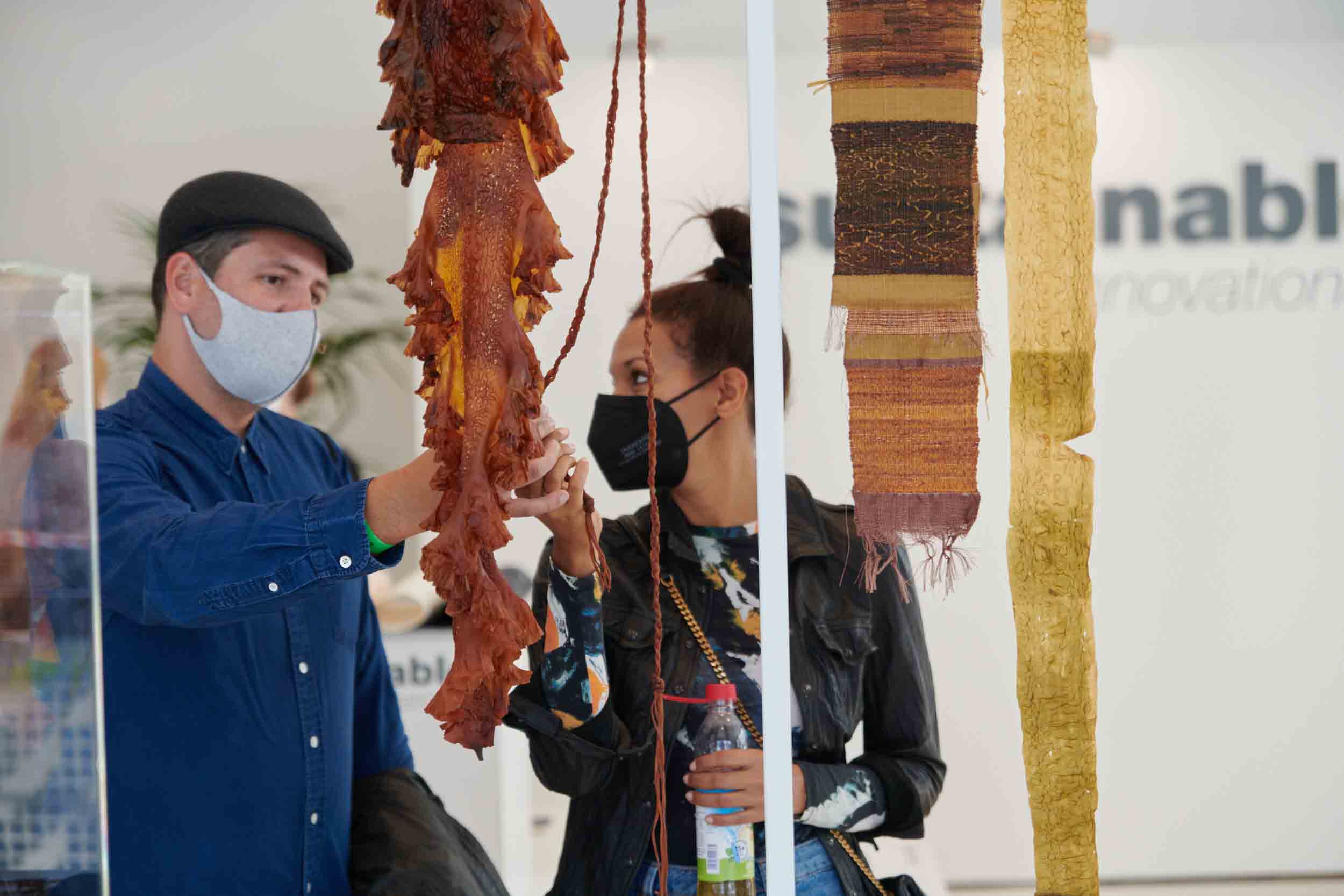
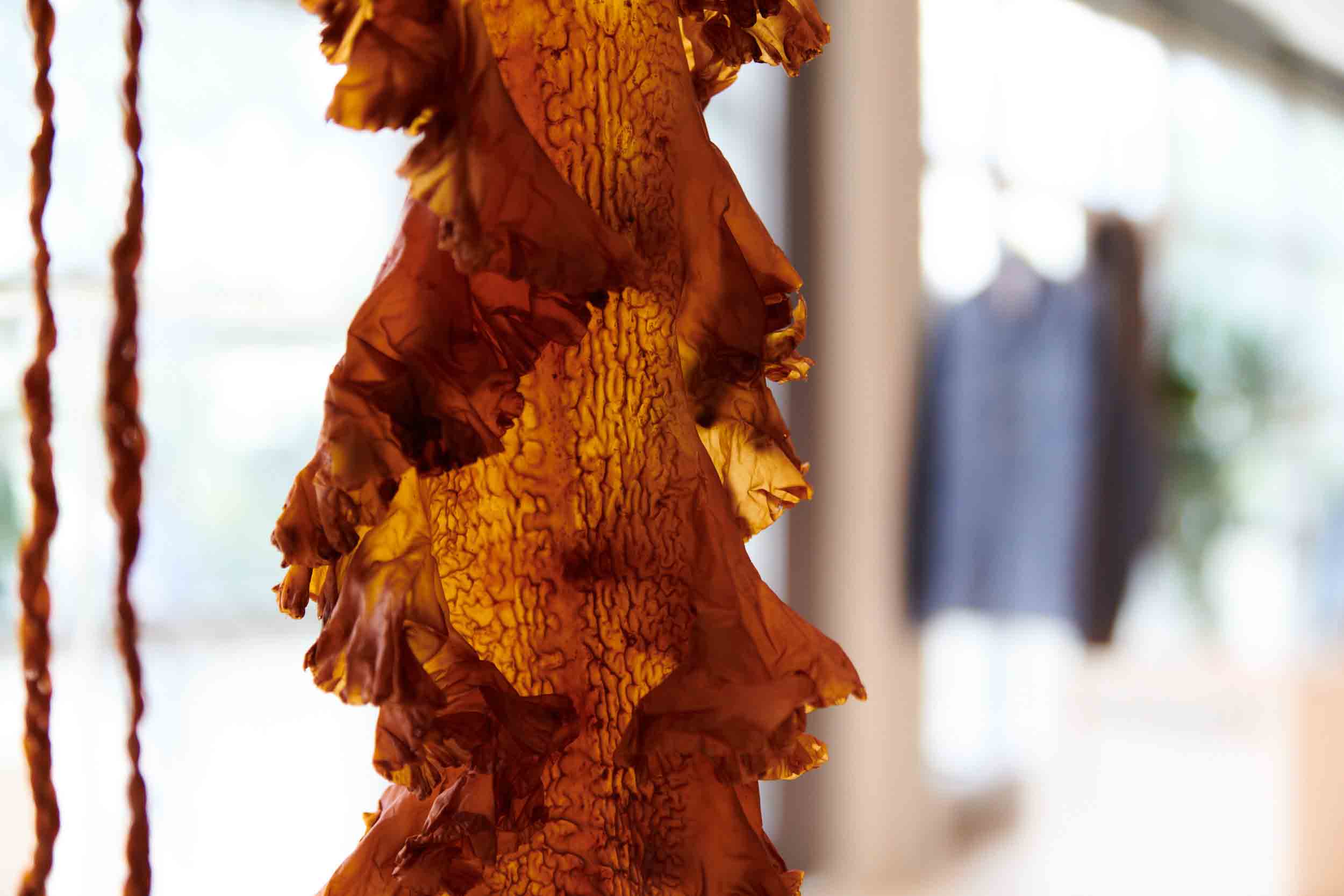
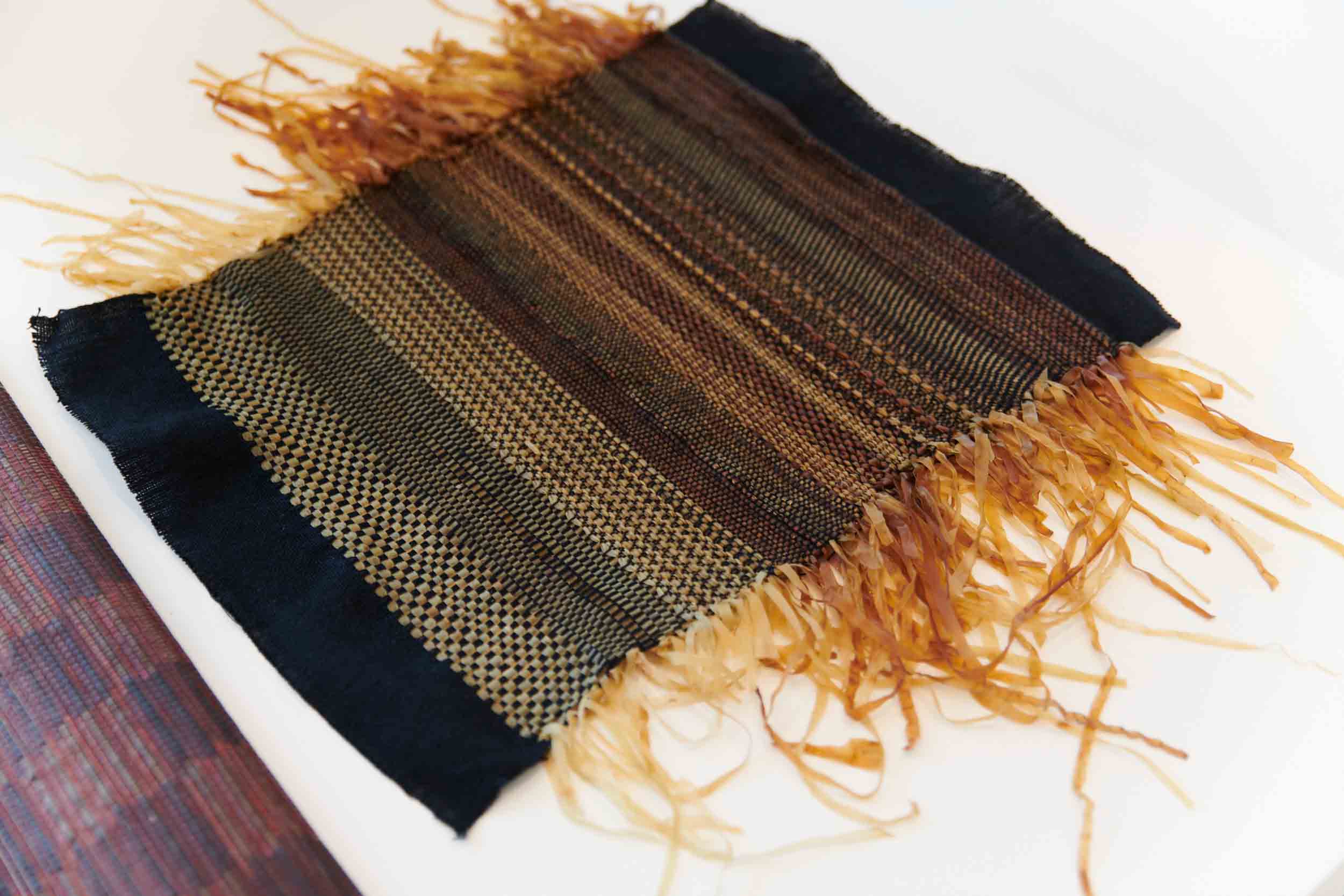
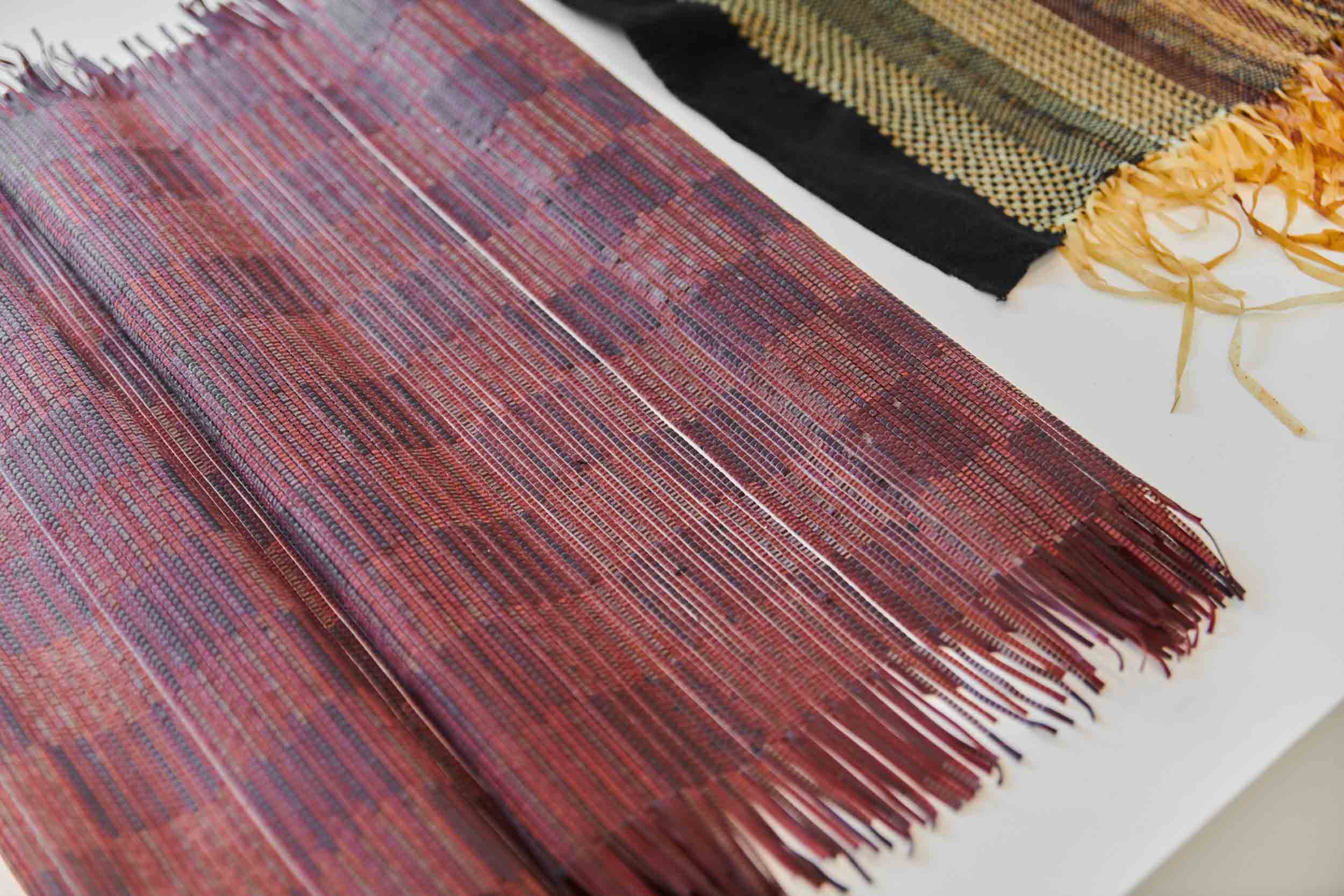
Seaweed Design® by Violaine Buet
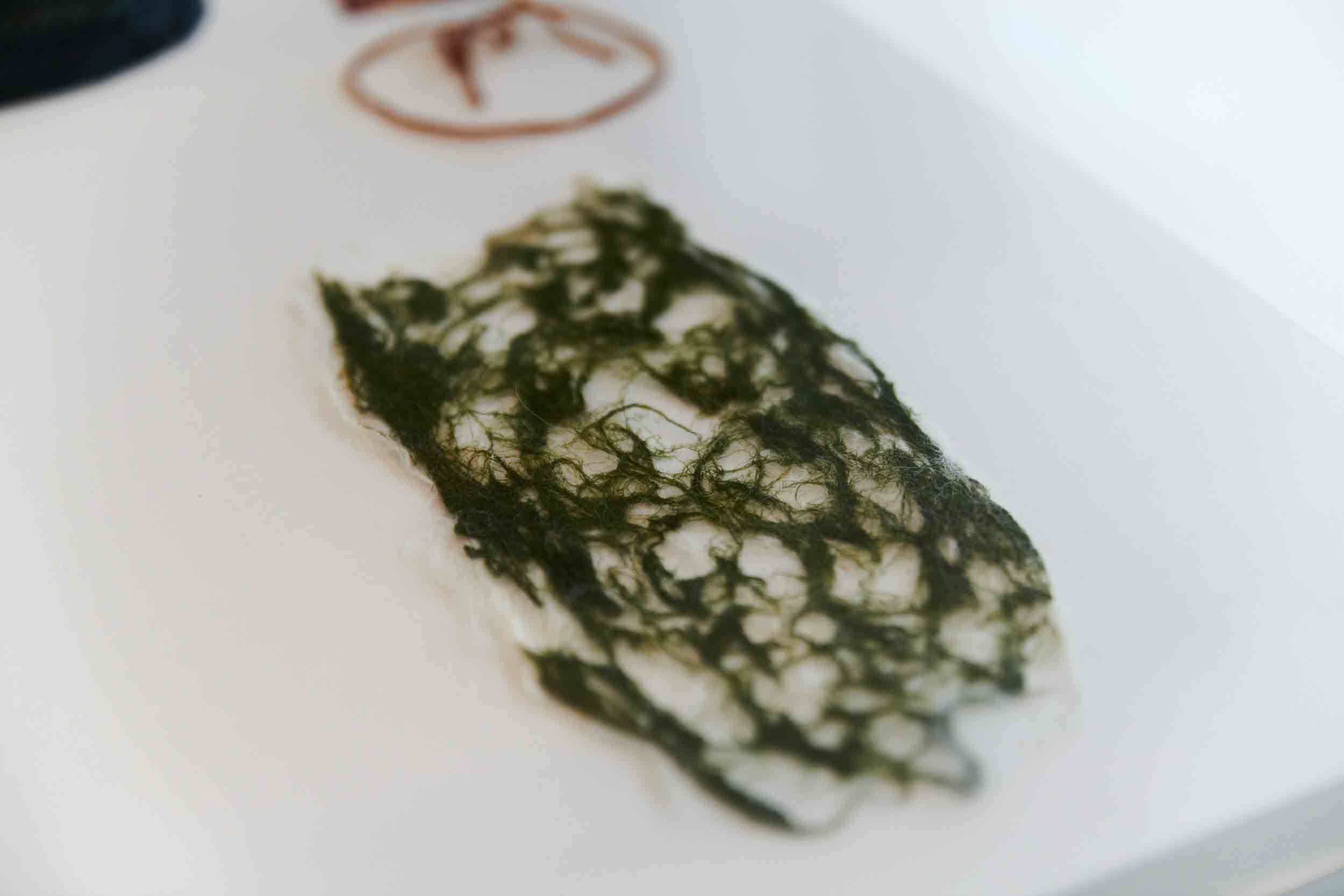
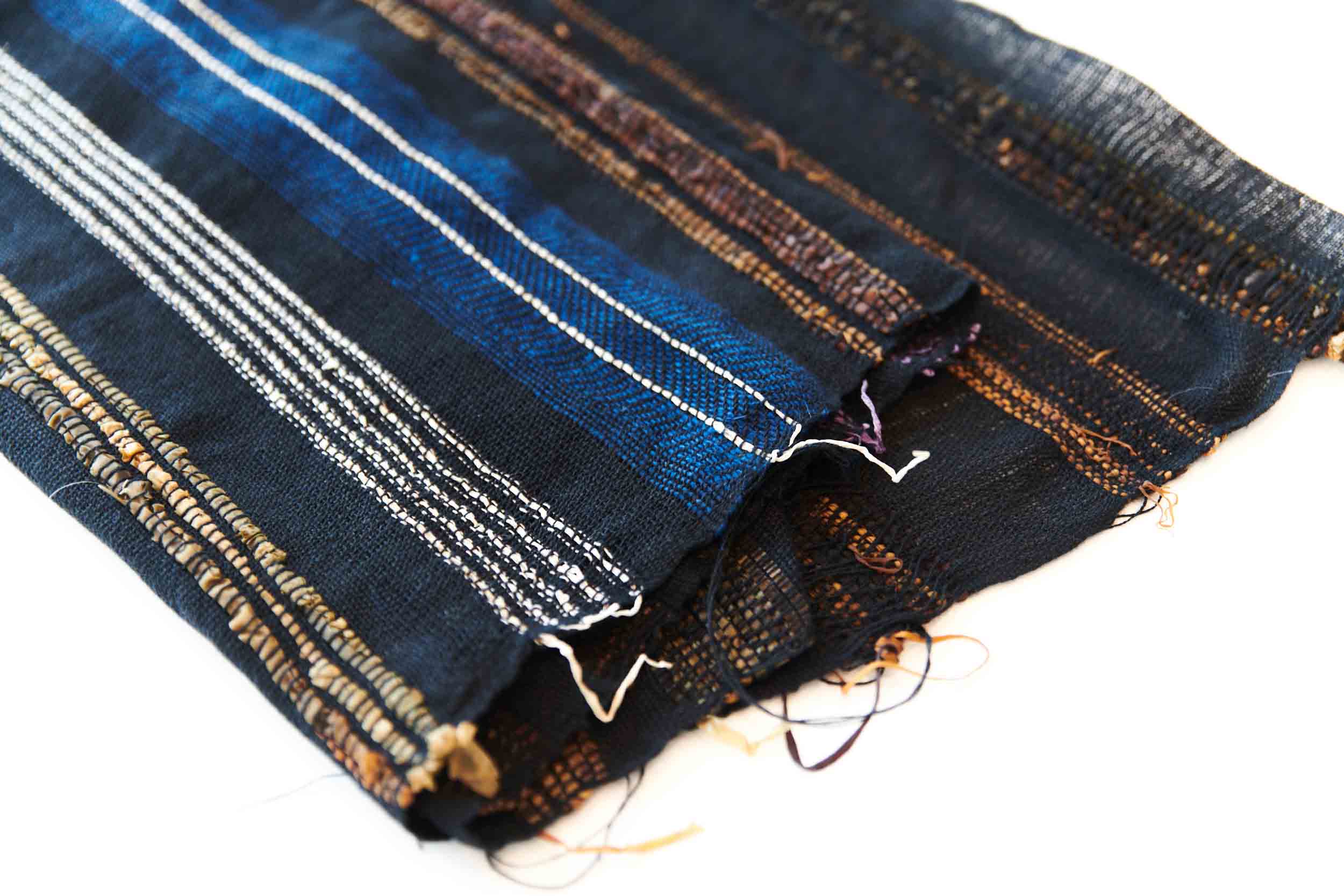
In the beginning, there was her desire to work with a natural, living material. Violaine Buet’s choice intuitively fell on seaweed, the ancient marine plant that formed part of the landscape of her childhood in Brittany. The overarching goal of her efforts: To develop an innovative expertise on seaweed to use it in art, haute couture, scenography and decoration as well as visual merchandising and industrial manufacturing. Because: seaweed can be used in many ways. Whether weaving, dyeing, sewing, printing, embossing, tufting, engraving, braiding or pressing – the possibilities seem almost unlimited.
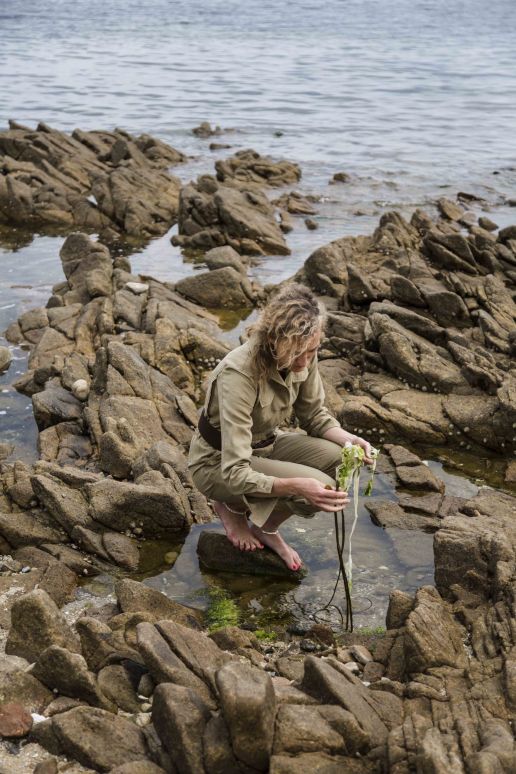
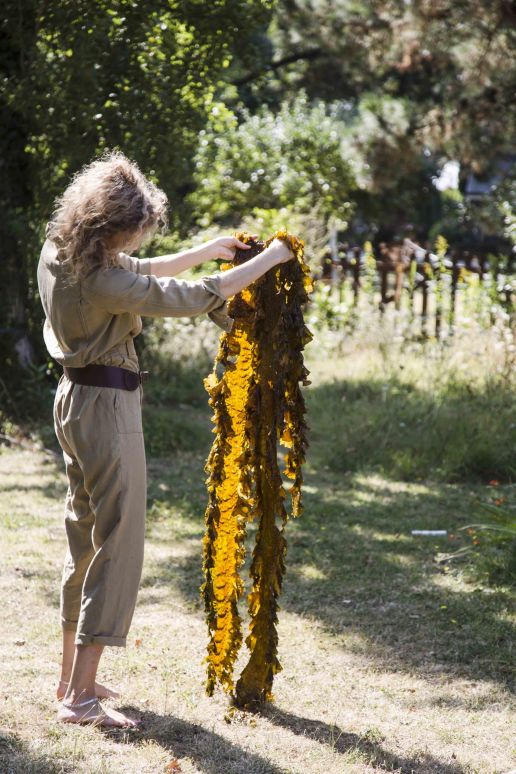
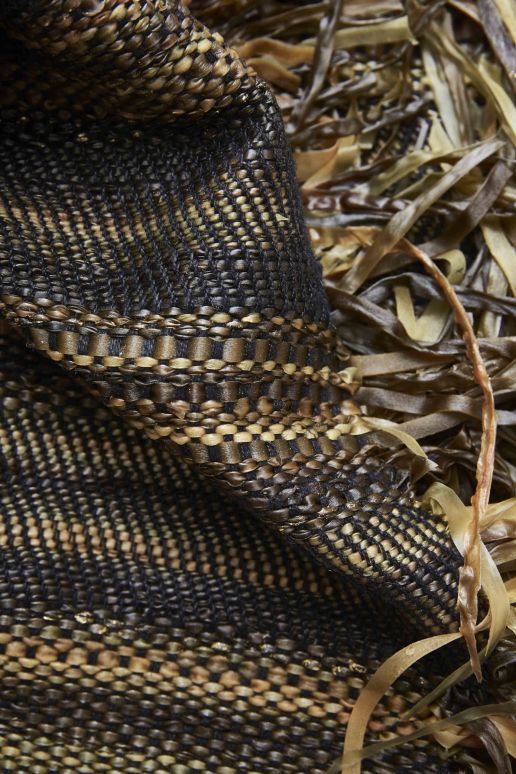
With her craftsmanship as a designer, Violaine Buet explores the aesthetic and technical properties of the material, develops natural dyeing methods with the support of experts in vegetable dyeing and biopolymer researchers. Using interdisciplinary methods, she combines expertise with craftsmanship, inspired by weavers, leather workers, jewelers, tailors, screen printers, gilders and master glaziers. In this way, she not only creates customised textiles from the biodegradable algae, but also walls, landscapes and installations.
“It’s like writing a story with an inevitable factor of time. With seaweed I have to take into account seasons, species, tides, weight, smell, particularities, colour-fade, hydrophilicity and decomposition, all of which change with time. It’s about everything coming together in a kind of balance.”
Violaine Buet

Pre-Loved by Sarmite Polakova
SUSTAINABLE INNOVATIONS Autumn.Winter 22/23 #5
Pre-Loved by Sarmite Polakova
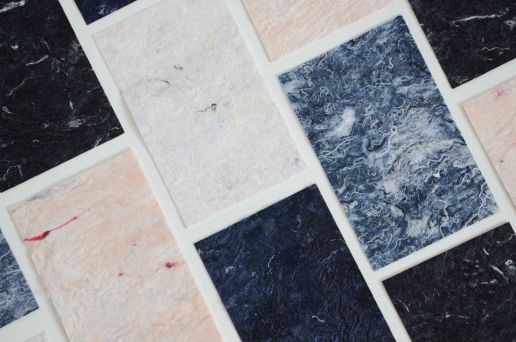
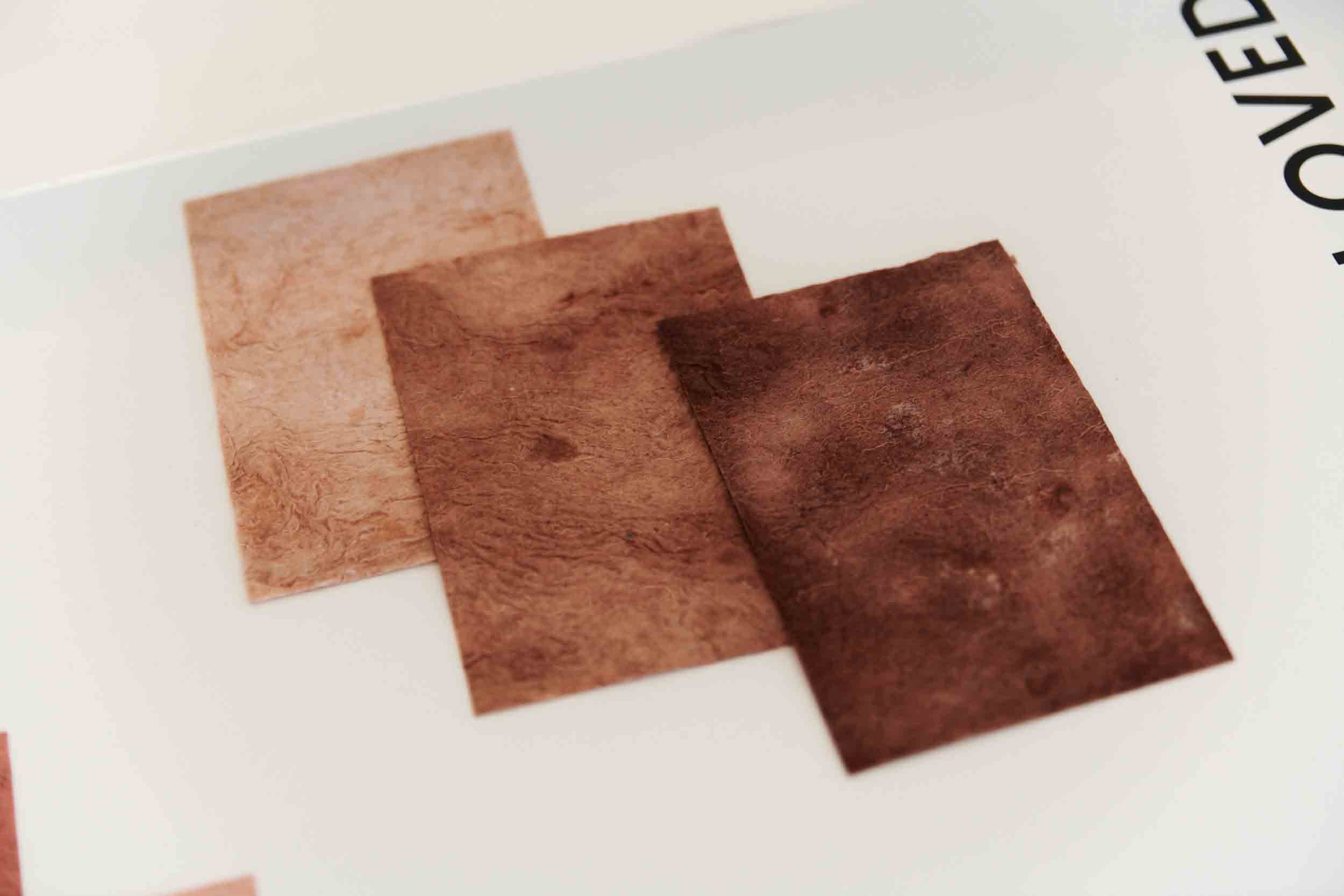
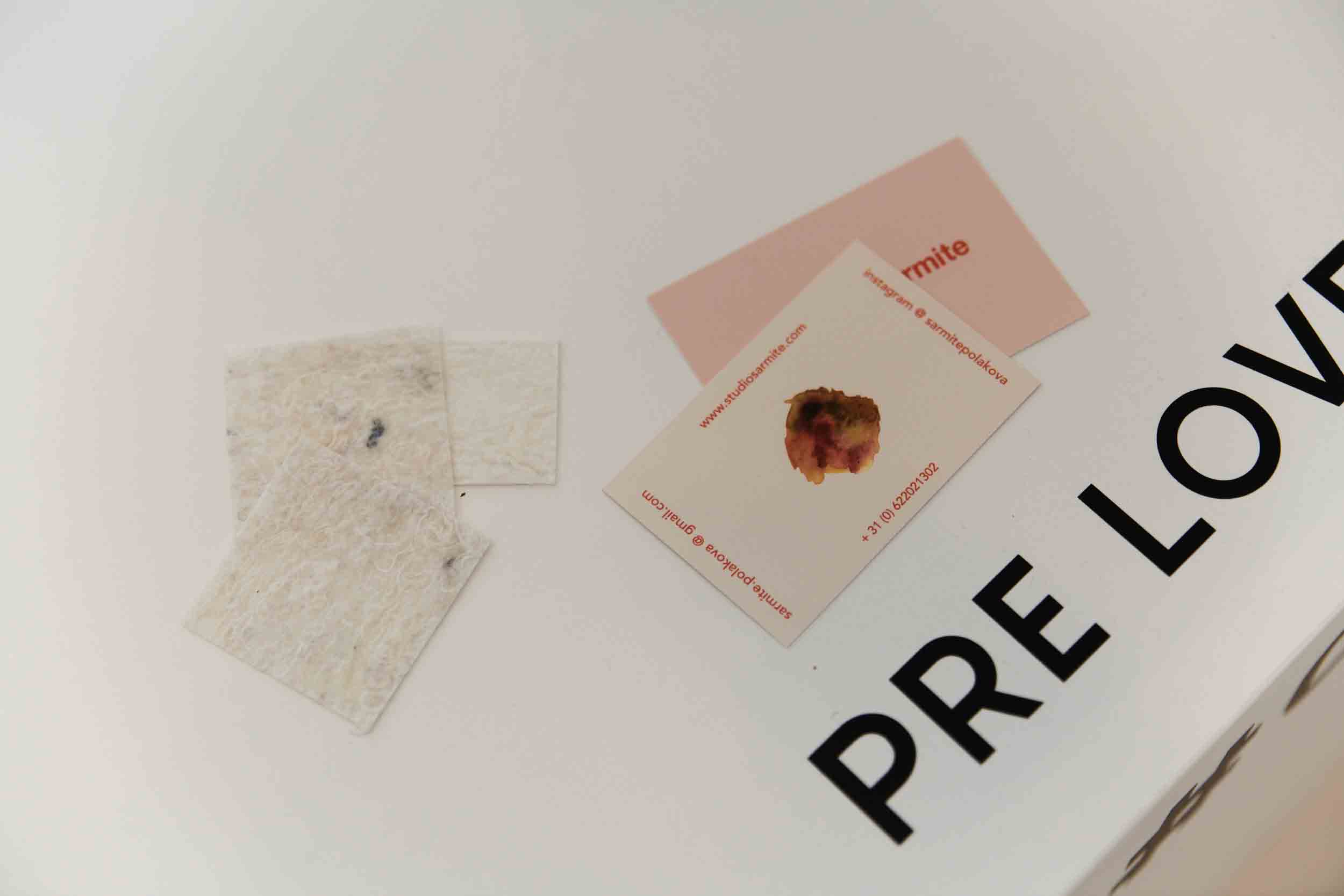
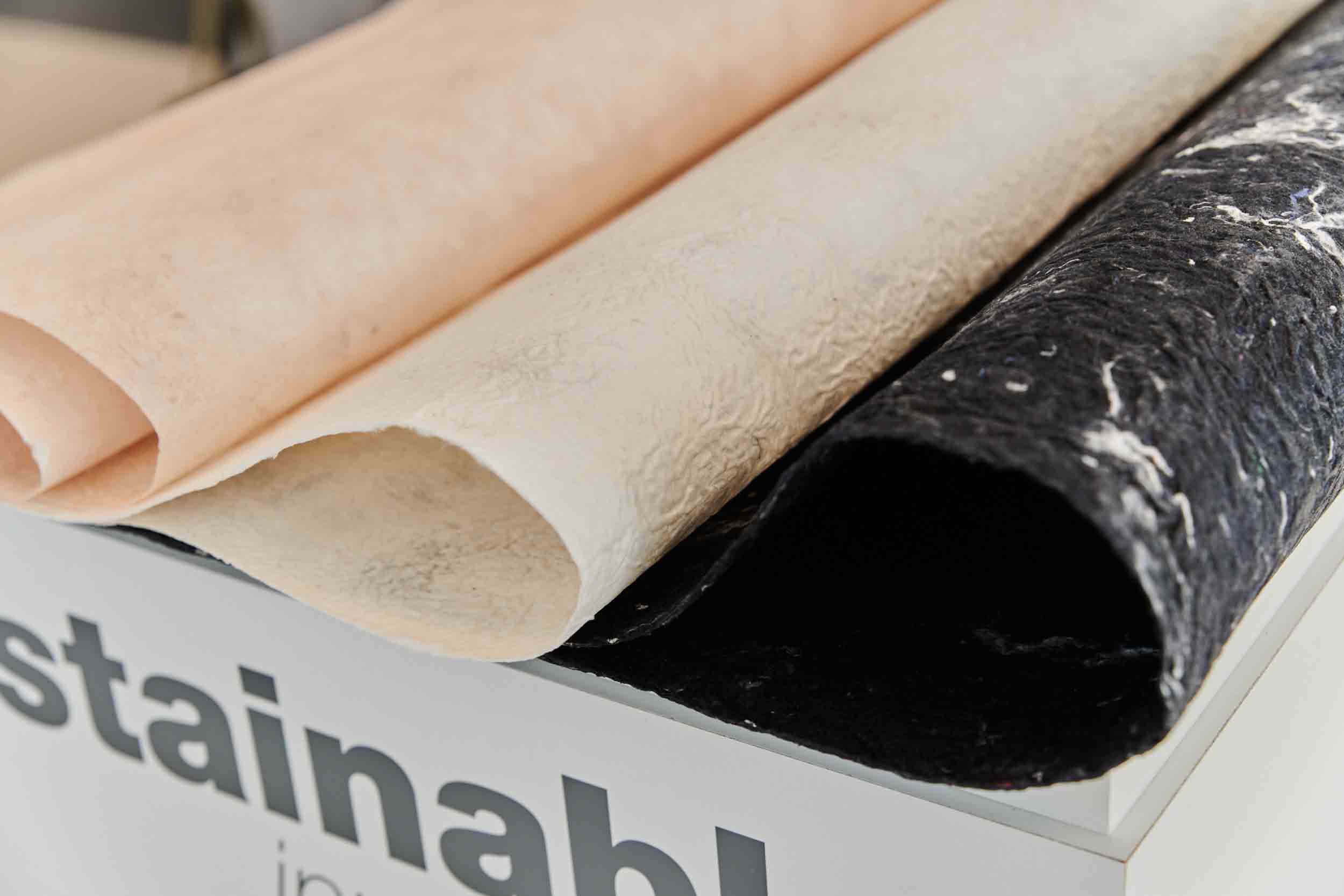
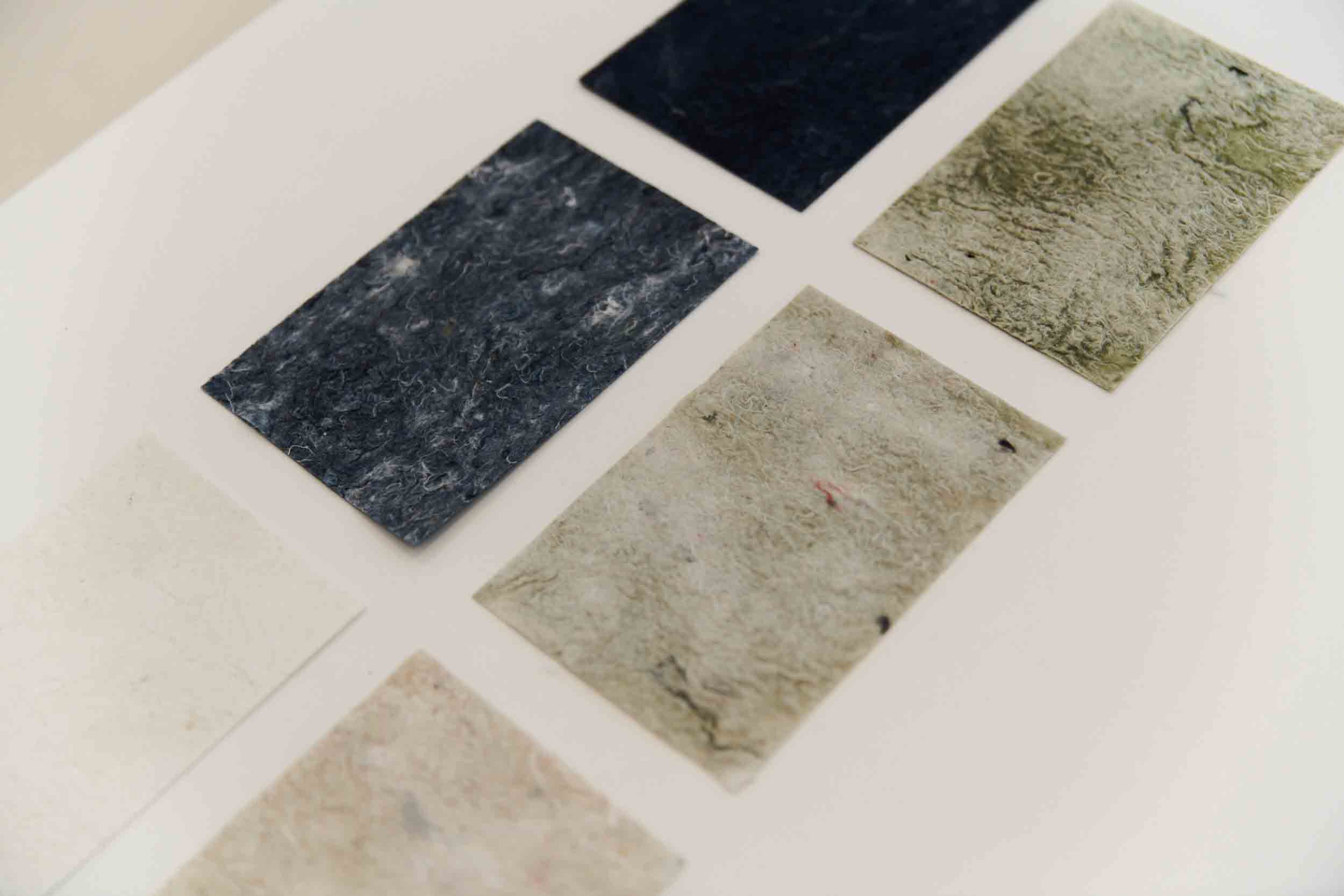
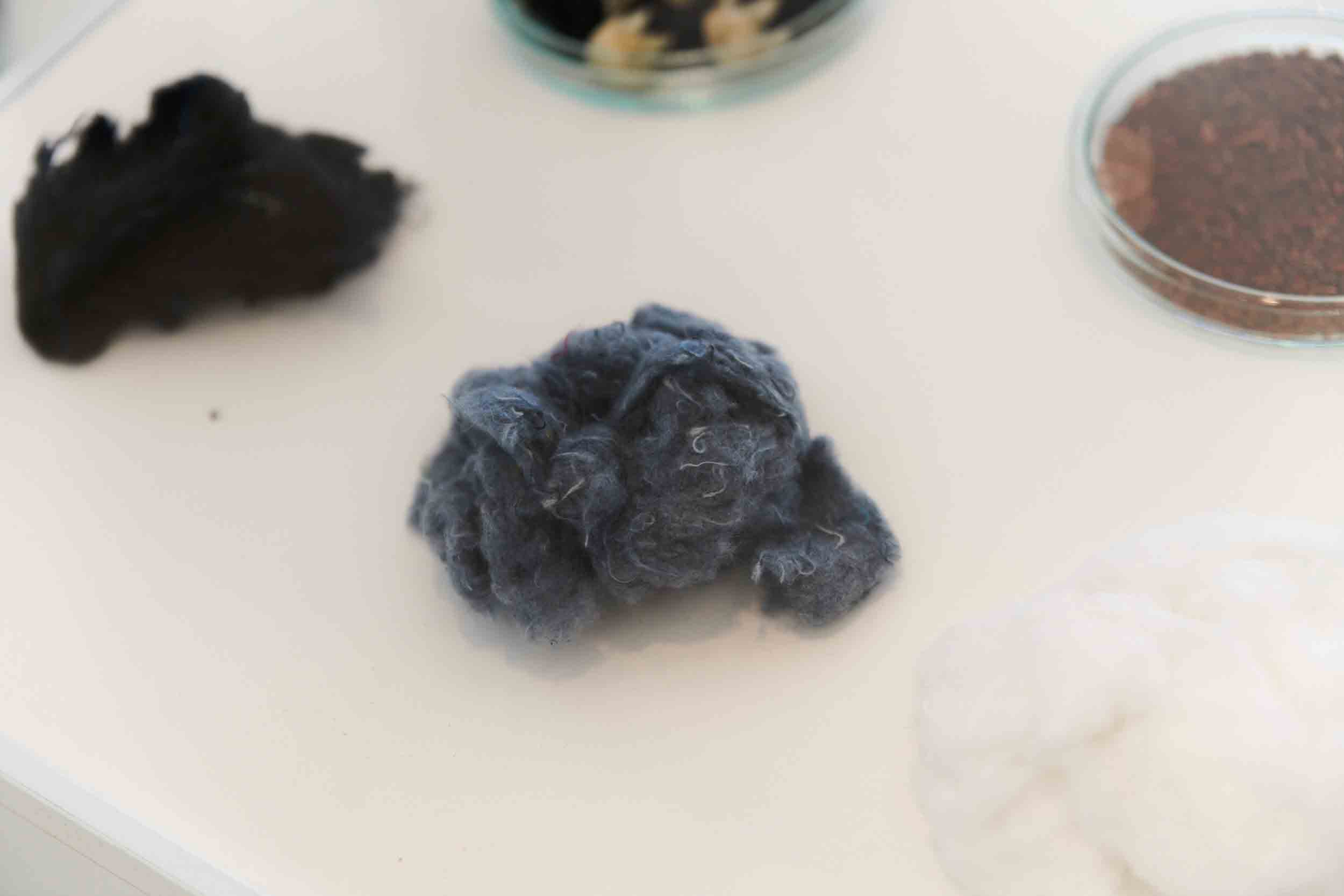
Turning old into new: material and product designer Sarmite Polakova along with designer Mara Maizele have created a completely new textile concept with their biotextile Pre-Loved. Pre-Loved consists of used textile waste and natural binders. With this product, the designers want to question the traditional concept of fabrics and shift the perspective to recycled mixed fibres. Shoddy is the name for the material made from unsaleable and no longer wearable garments. Cotton, polyester and wool: Shoddy consists of a variety of fibers that are combined into a single mass in the recycling process.
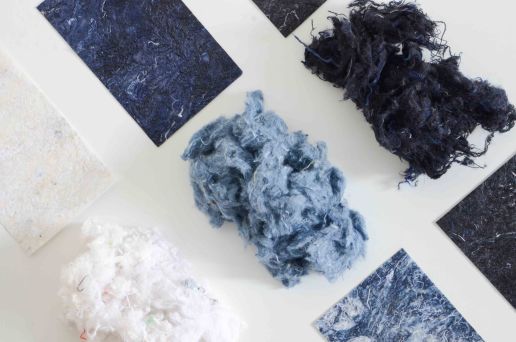
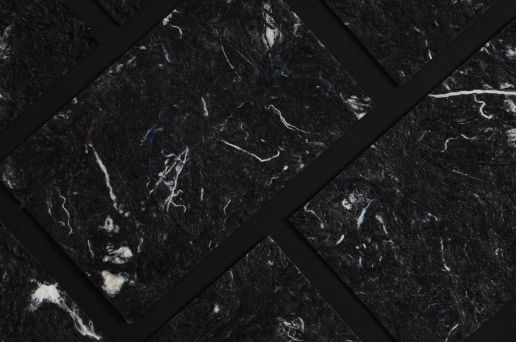
Another special feature is Shoddy’s excellent insulating properties. The biotextile can be used for a wide variety of purposes: in a warming winter coat, in a cosy couch or in a well-insulated house wall. Through colour separation, controlled patterning and even natural dyeing, the fabric also stands out with a unique look. What’s more, the short fibers, which are otherwise unsuitable for spinning yarns, are combined with bioplastics that strengthen the fibers from the inside out and give the material a smooth, leather-like surface. With Shoddy, a whole new kind of man-made fiber is created – Pre-Loved celebrates this new textile identity, bringing a new aesthetic and highlighting the former life of each worn garment through nuances of colour and texture.
“When textile waste meets bio-plastics and together they form a new leather-like material for future fashion applications.”
Sarmite Polakova
Fixing Fashion by Alicia Minaard
SUSTAINABLE INNOVATIONS Autumn.Winter 22/23 #4
Copying Desired - Fixing Fashion by Alicia Minaard
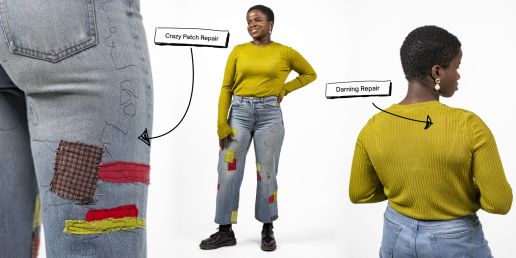
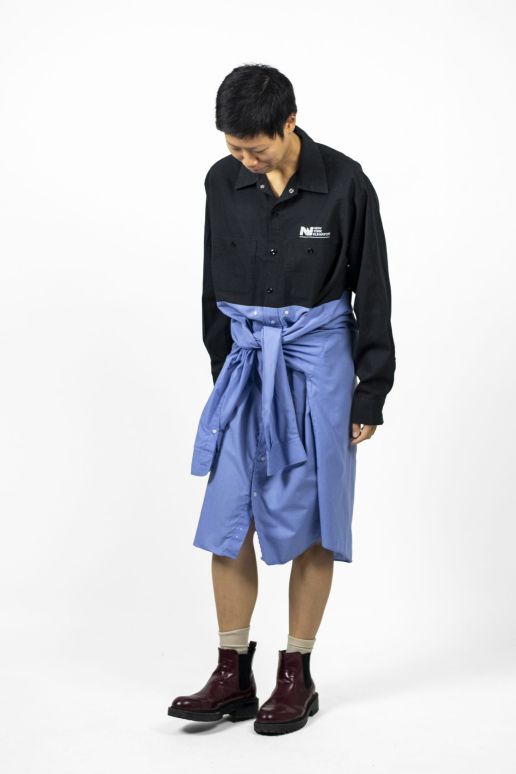
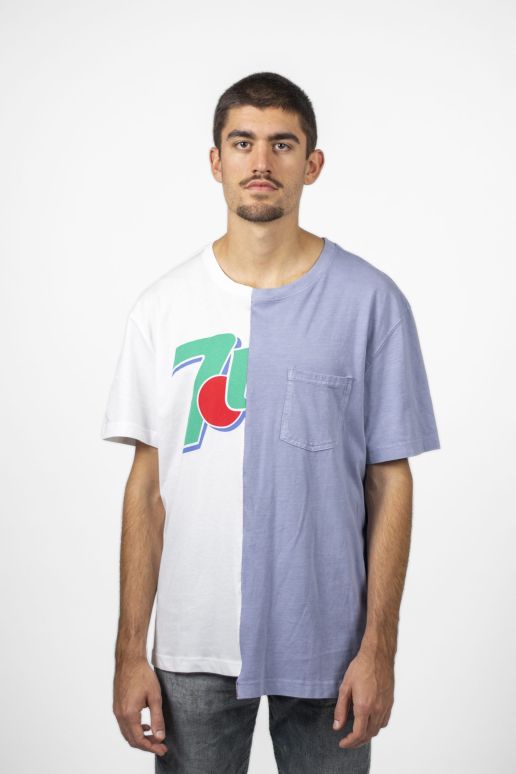
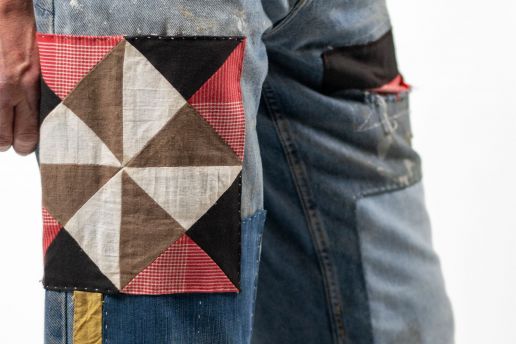
Sharing knowledge, saving clothes: 3.3 years – that’s the average lifespan of one piece of clothing. With good care and a few tricks, clothes can last much longer. The digital platform Fixing Fashion has made it its goal to help those interested in caring for their favourite pieces, repairing them themselves or recycling them. On Fixing Fashion, users can find ideas, tips and instructions for protecting worn clothing with creative approaches. Designer Alicia Minaard prepared for this together with the organisation One Army for over two years: In interviews, workshops and excursions, Minaard’s network researched the best practices and methods for recycling and repairing discarded clothing worldwide – and is now making them available free of charge. The result is a collection that you can’t buy, but should imitate or use as a source of inspiration for your own Fixing Looks.

But the Fixing Fashion team is not only concerned with providing information. Rather, the initiators of the project would like to build up a community that exchanges ideas and supports each other in preserving clothing for longer – and thus, not least, in saving textile waste. By carefully caring for textiles, their lifespan can be increased from 3.3 to 4.5 years. According to the American textile waste volume, this could save 1.22 million tons of waste per year.
“The collection is not for sale. Instead, each look is merely meant to inspire. In a way it is meant to trick people, as if this is a brand but then really it has everything and you need to do it yourself!”
Alicia Minaard
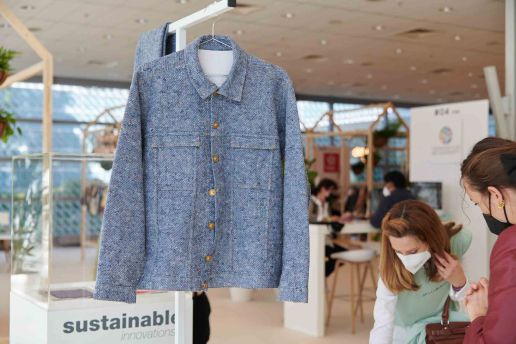
New Blue Circular Denim
SUSTAINABLE INNOVATIONS Autumn.Winter 22/23 #3
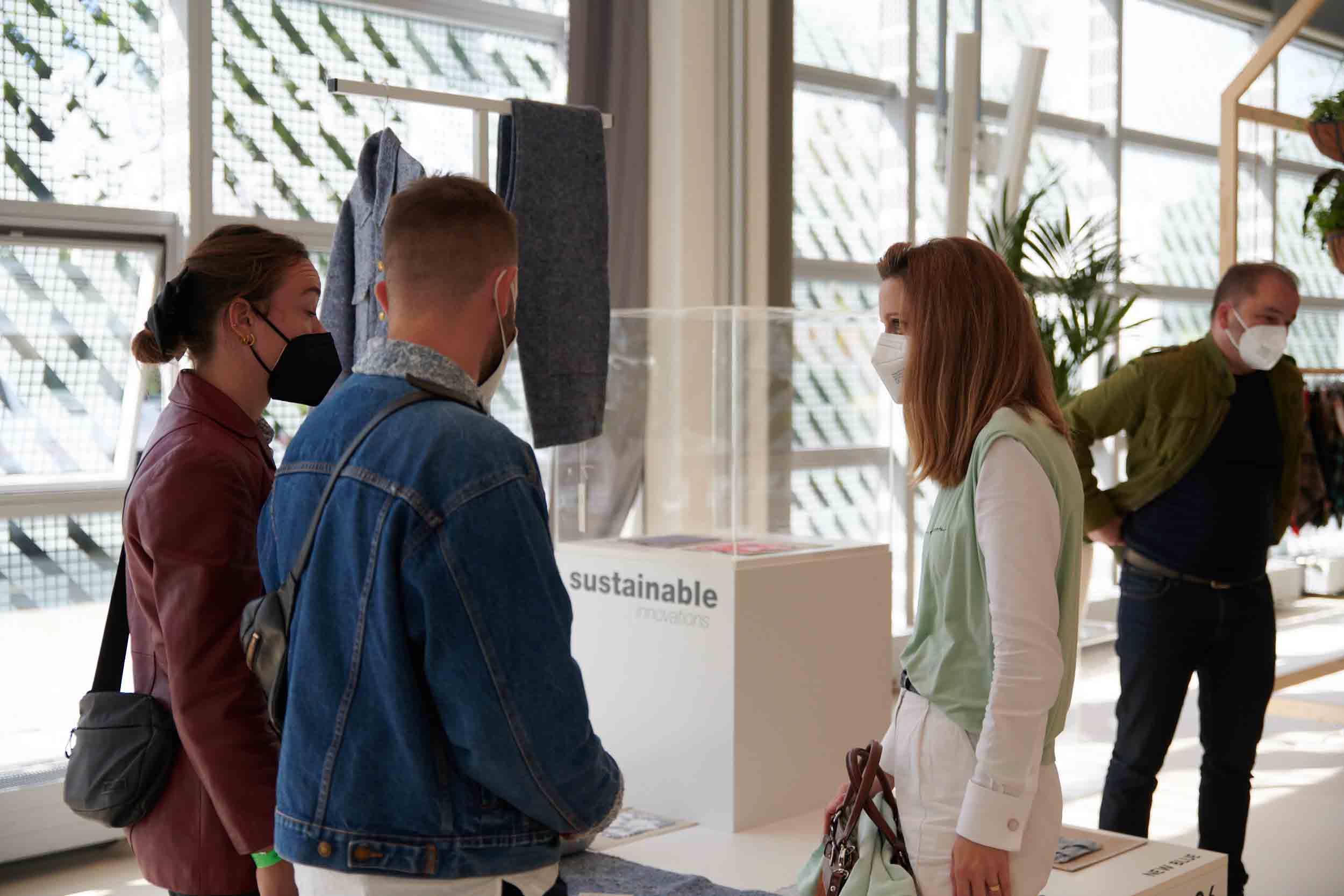
New Blue - A new circular denim material by Tim van der Loo & Sandra Nicoline Nielsen
Buy, wear, throw away – that’s what happens to most clothes. That’s where the principle of a circular economy comes in: Worn clothing can be much more than waste and becomes part of new and continuous material flows.
What began in 2018 as a project for a master’s thesis at the Weißensee Academy of Art in Berlin is currently supported by Re-FREAM, part of the STARTS (Science + Technology + Arts) initiative under the European Commission’s Horizon 2020 research and innovation programme.
“New Blue explores new pathways in circular economy, aesthetics and production. Denim is a ubiquitous material which is loved and used by many. It is also a significant source of waste. The challenge as we see it is to find a way to recirculate old worn out jeans and left over fibers within the system.”
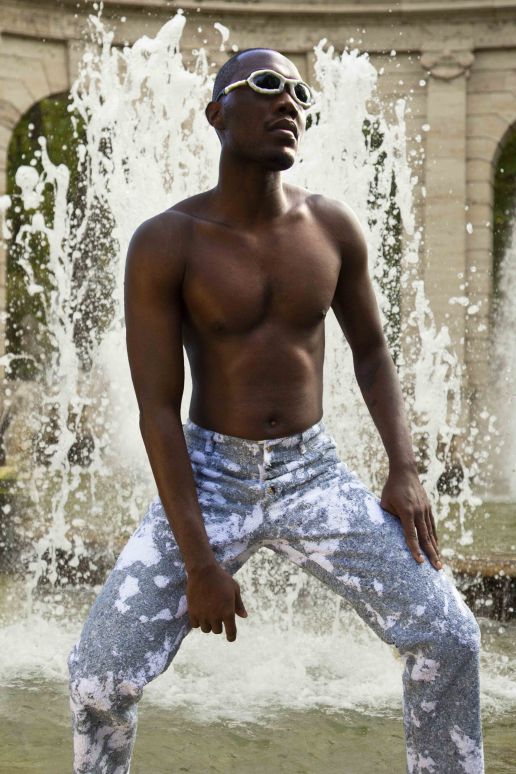
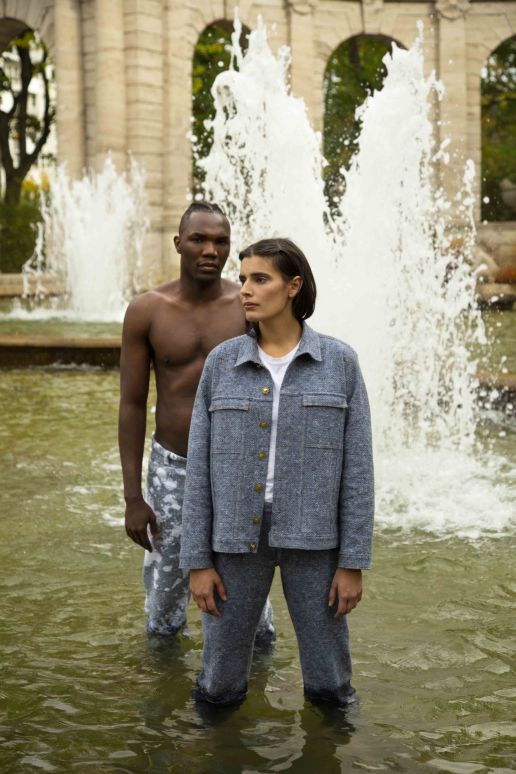
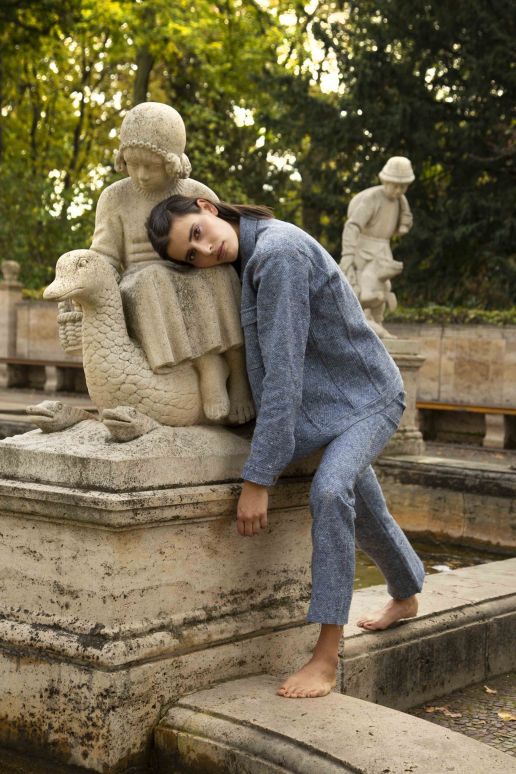
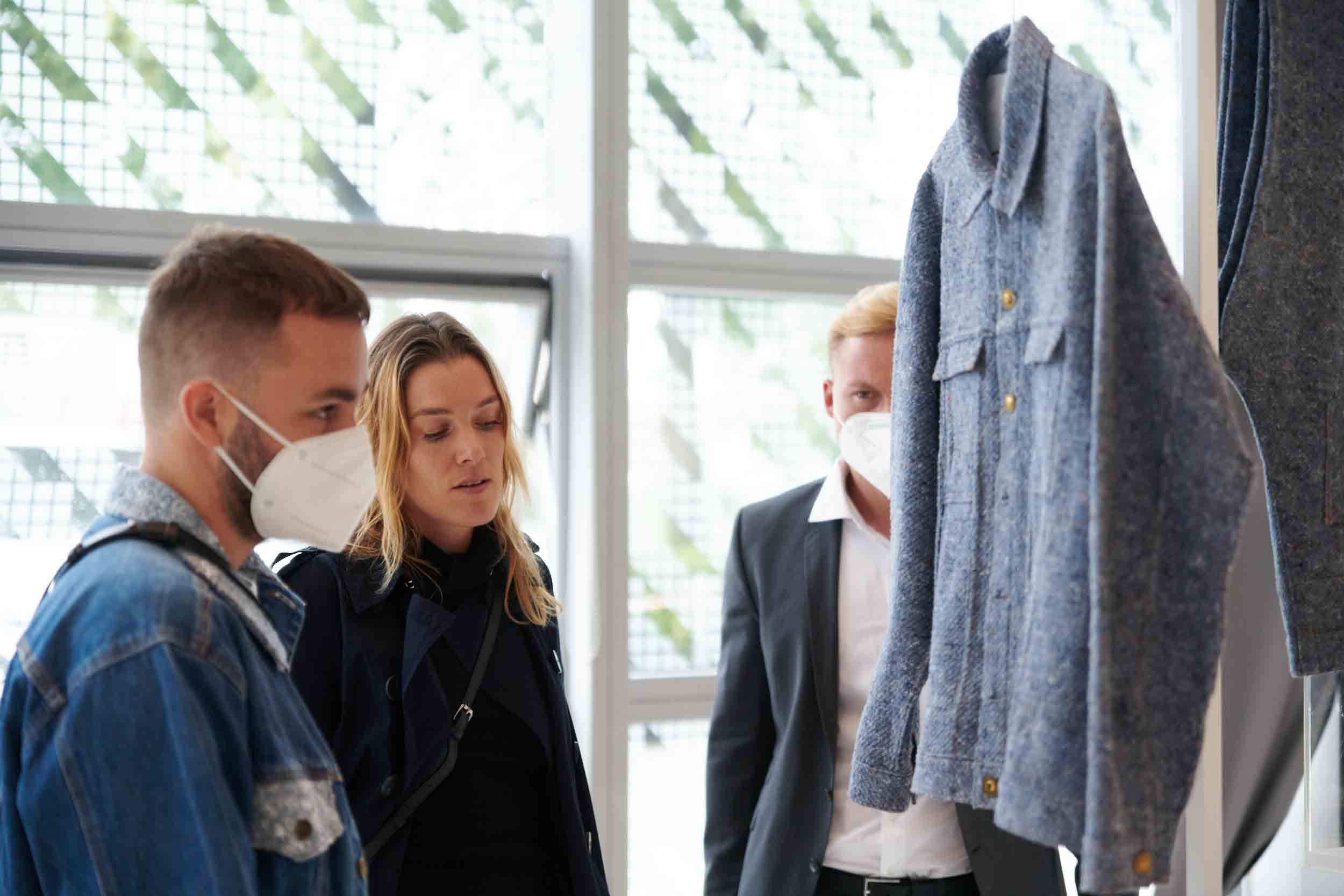
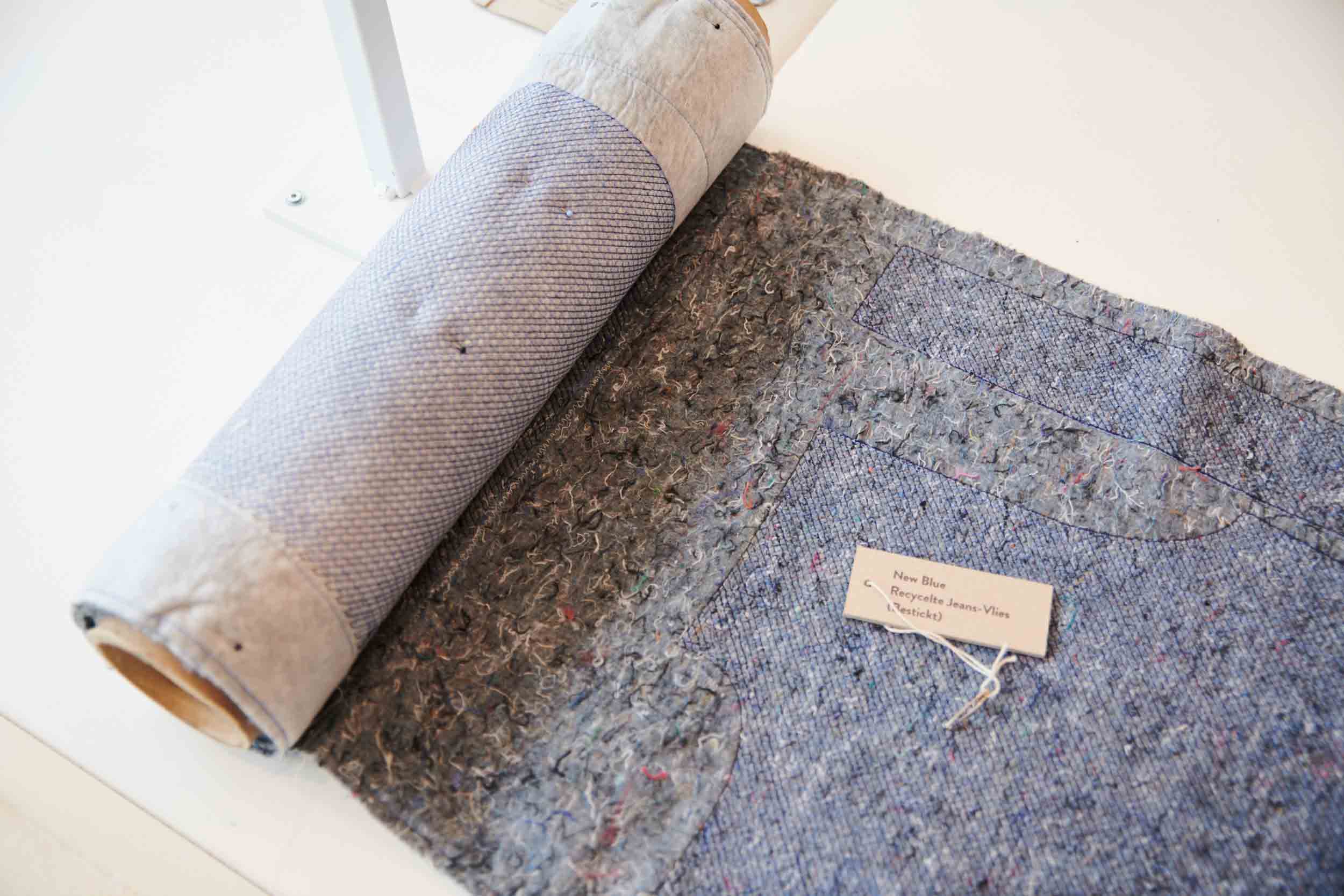
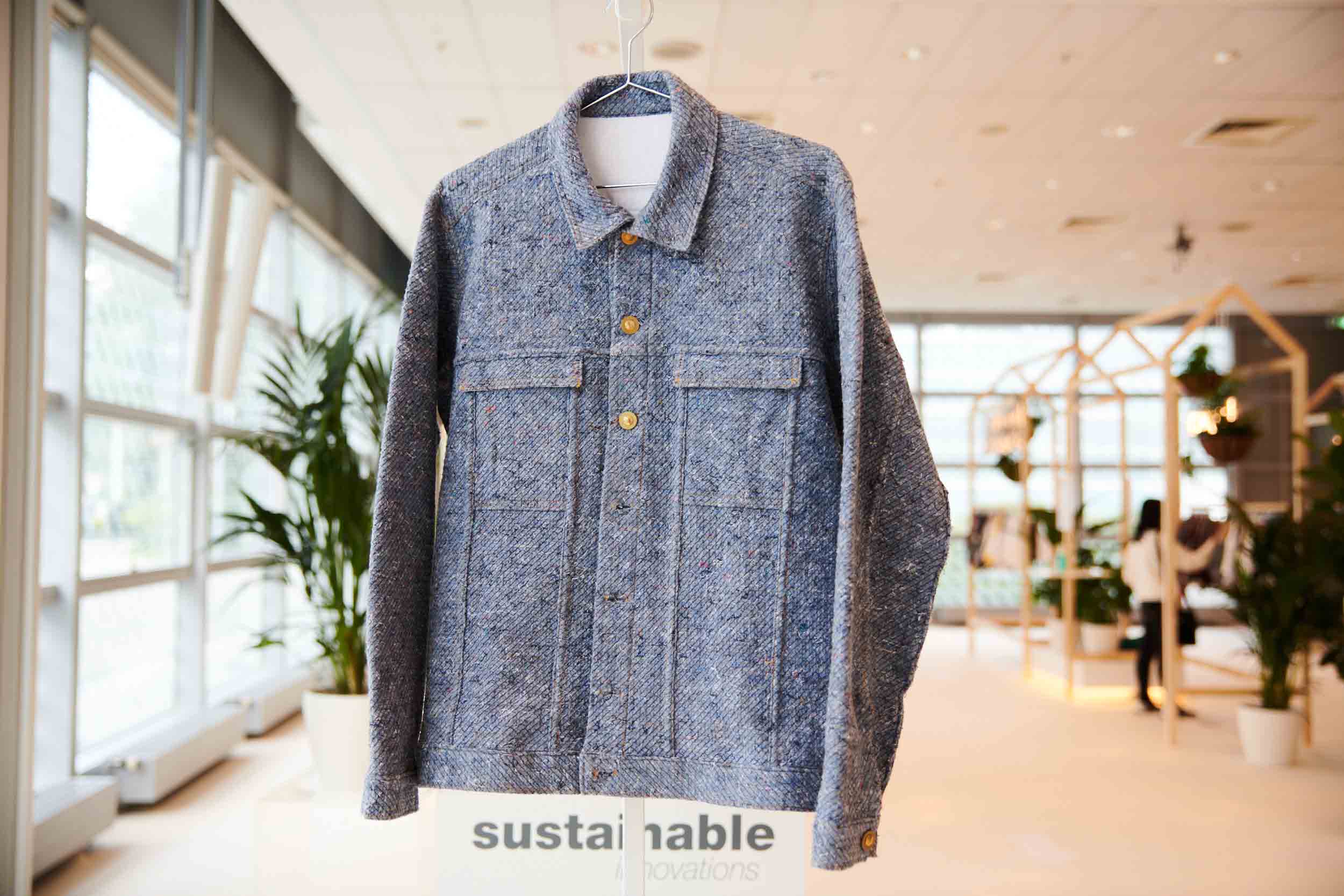
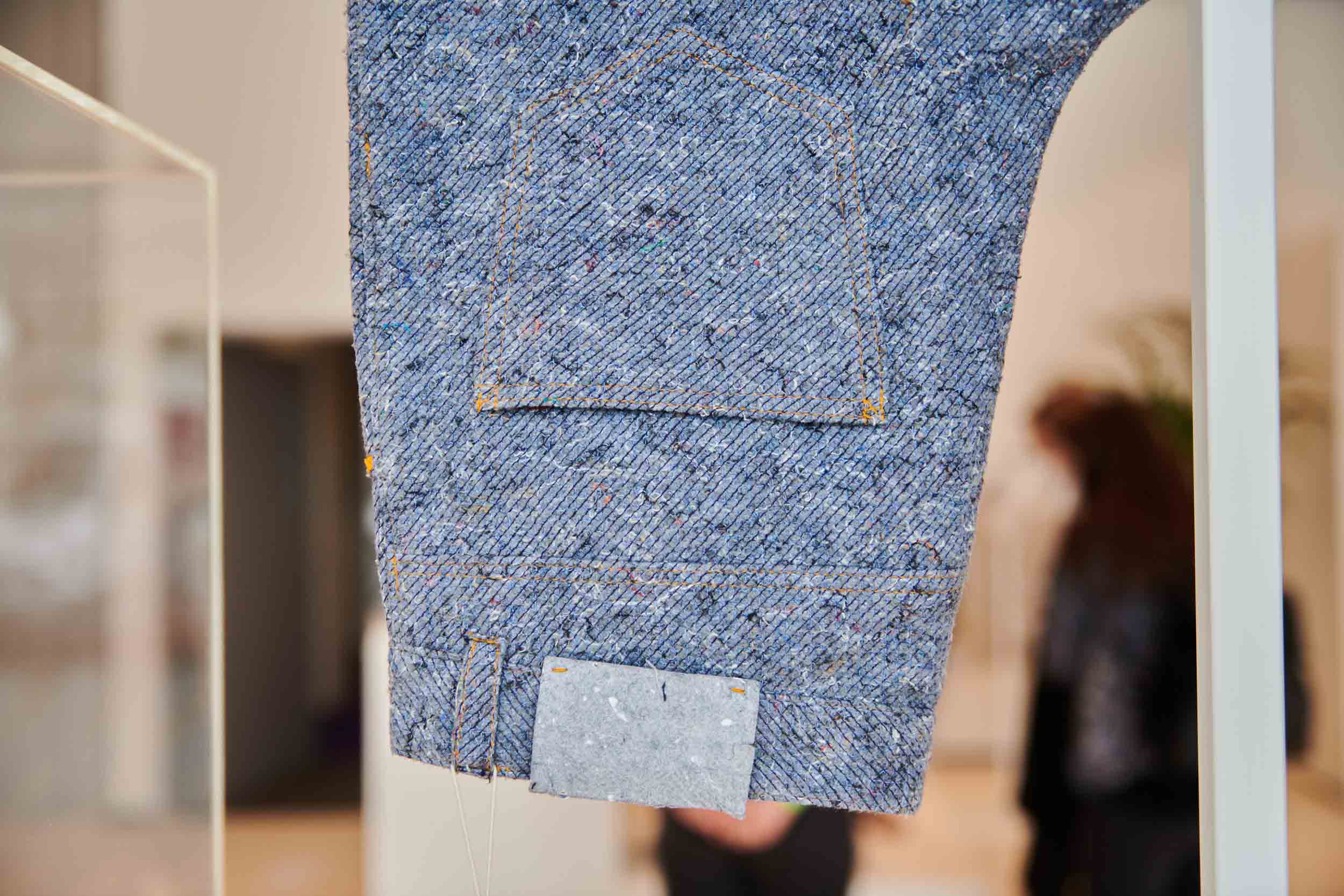
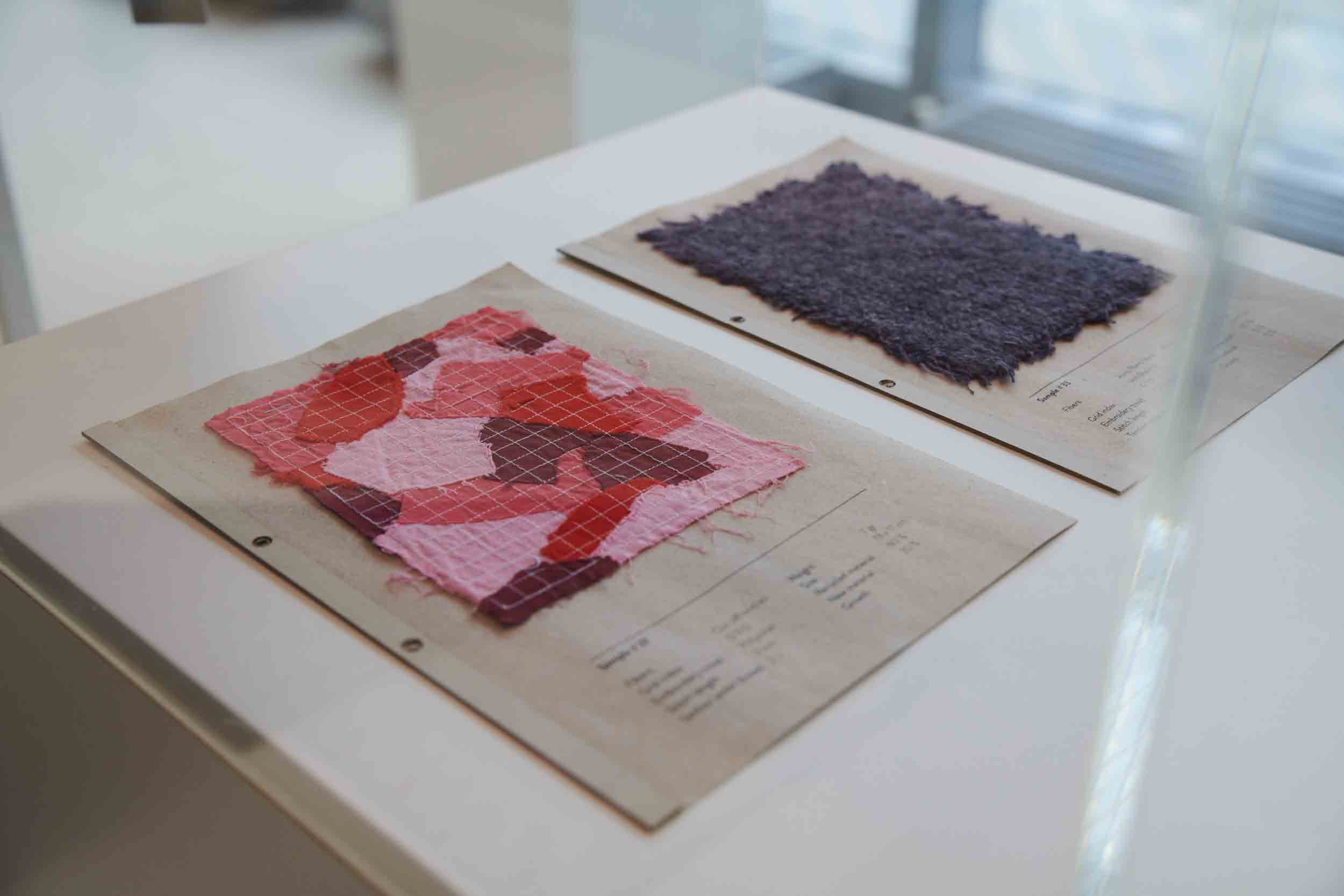
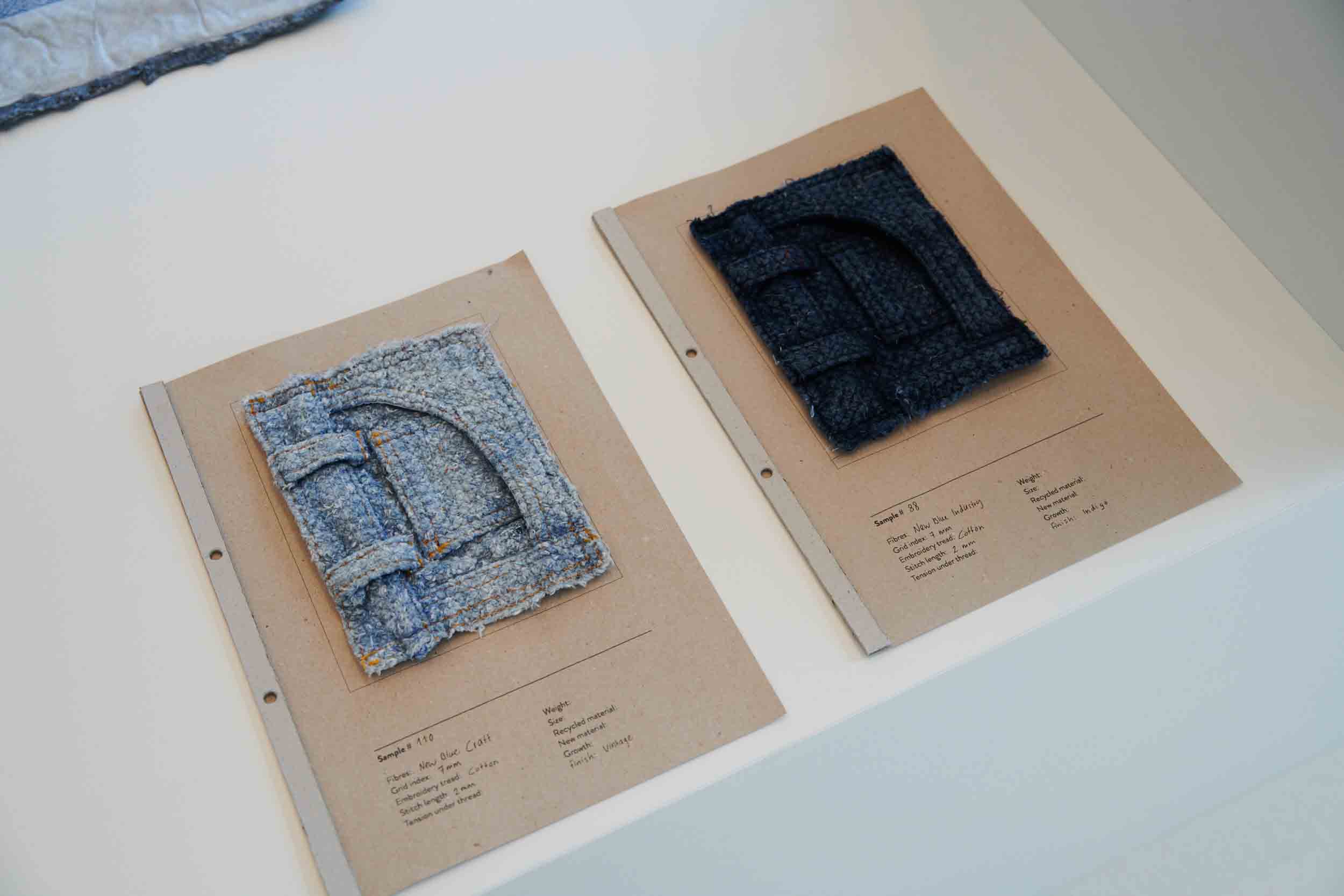
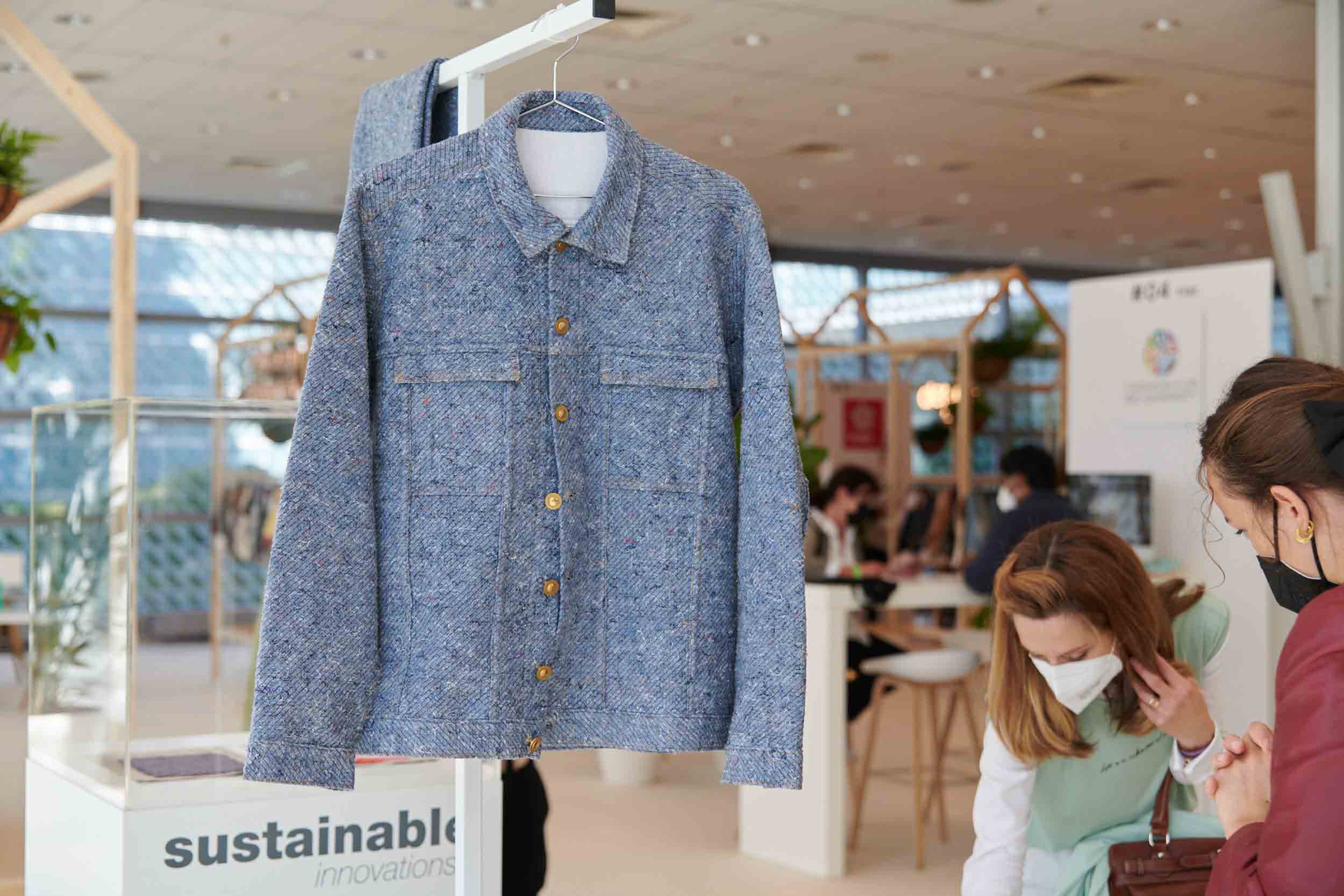
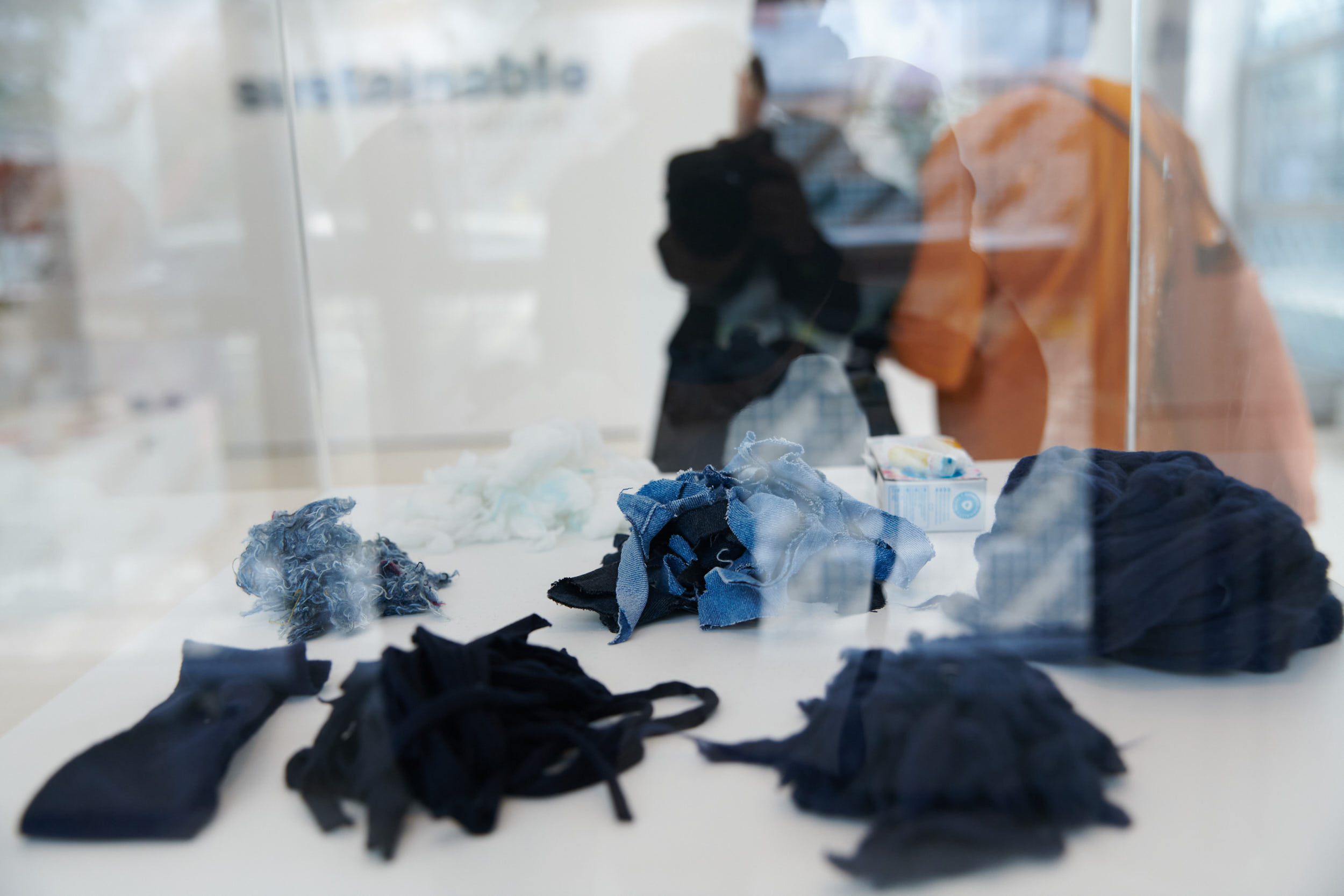
Denim was always considered a particularly durable material – until it lost its integrity due to increasing globalisation and rapid consumption. With New Blue, the new circular denim, material and product designer Tim van der Loo and techno-anthropologist Sandra Nicoline Nielsen want to change that. In their process, jeans as raw material are cut into small fibres and then bonded to form a fleece. Using a new technology using digitally assisted industrial embroidery, the pattern is made directly on the fleece. Through a unique technique, the areas defined by the embroidery remain intact when the fleece is washed, while the non-embroidered parts of the fleece dissolve on contact with water and can eventually be reused as raw material. In this way, New Blue makes circular and waste-free production of denim a reality.
Enschede Textielstad by Annemieke Koster
SUSTAINABLE INNOVATIONS Autumn.Winter 22/23 #2
Enschede Textielstad by Annemieke Koster
Until the 1970s, Enschede in the Netherlands, was one of Europe’s textile strongholds, along with Manchester. Then textile production gradually disappeared from the cityscape because it was much cheaper to produce clothes and textiles in low-wage countries. With this however, traceability, protection of workers and sustainability often fall by the wayside – which is why Enschede Textielstad was born out of Annemieke Koster’s desire to bring back transparency along the textile value chain and revive the city’s former traditions.
“I want to bring textiles back to Enschede and make it a city of textiles again – where professionals who still know the craftsmanship of yesteryear pull their knowledge and find innovative approaches. But then in a new, innovative collaboration.”
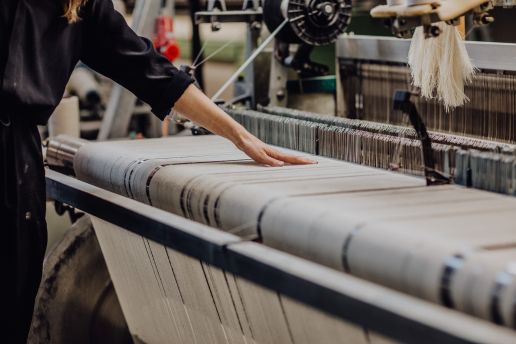
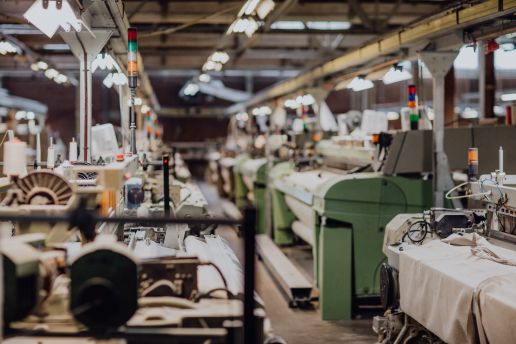
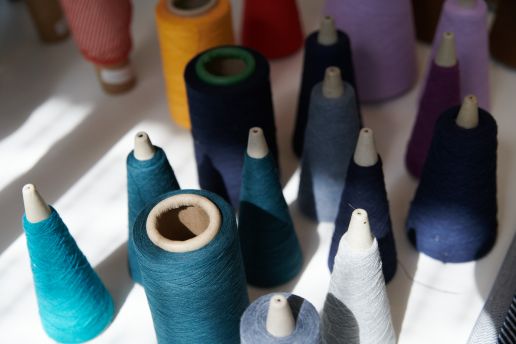
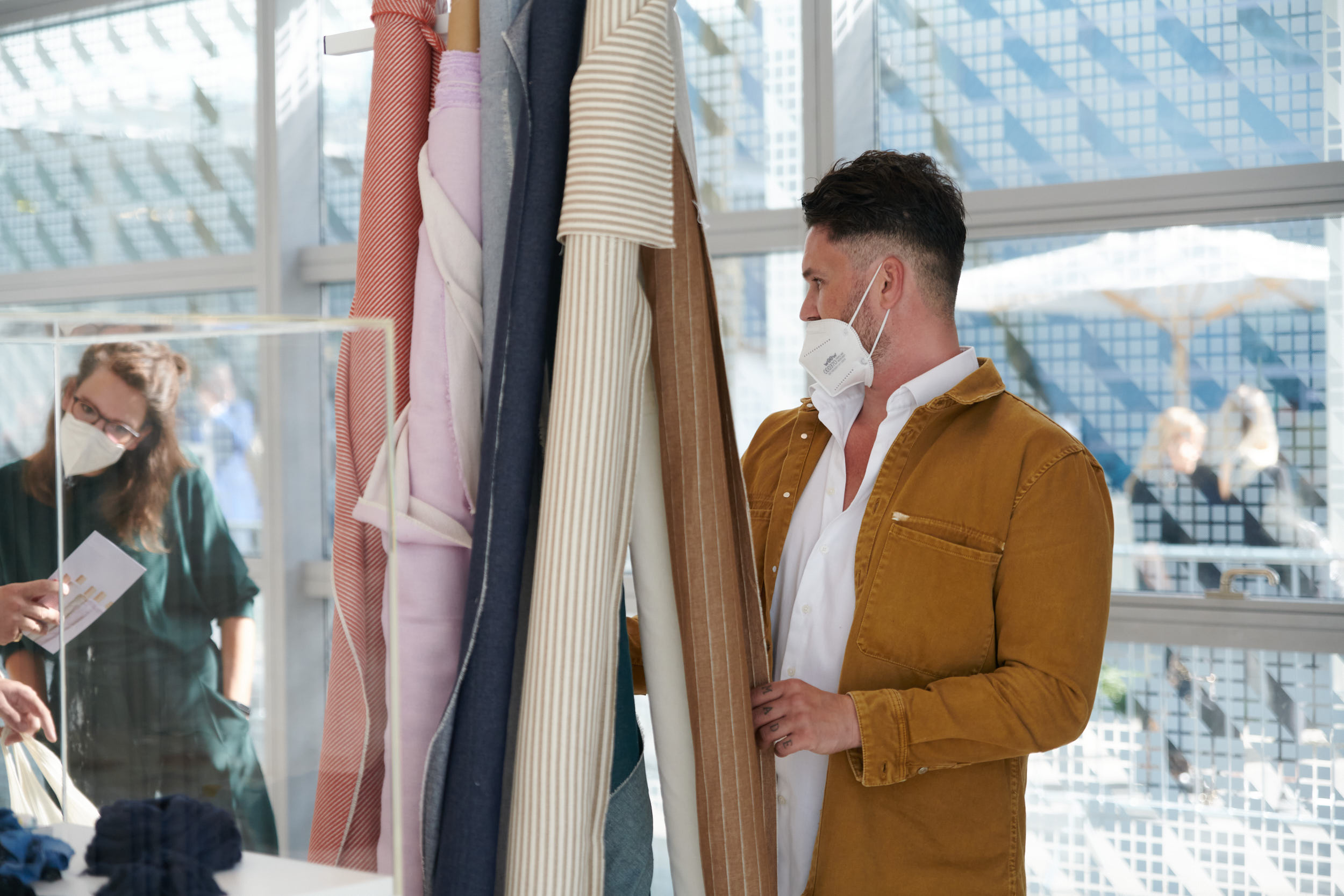
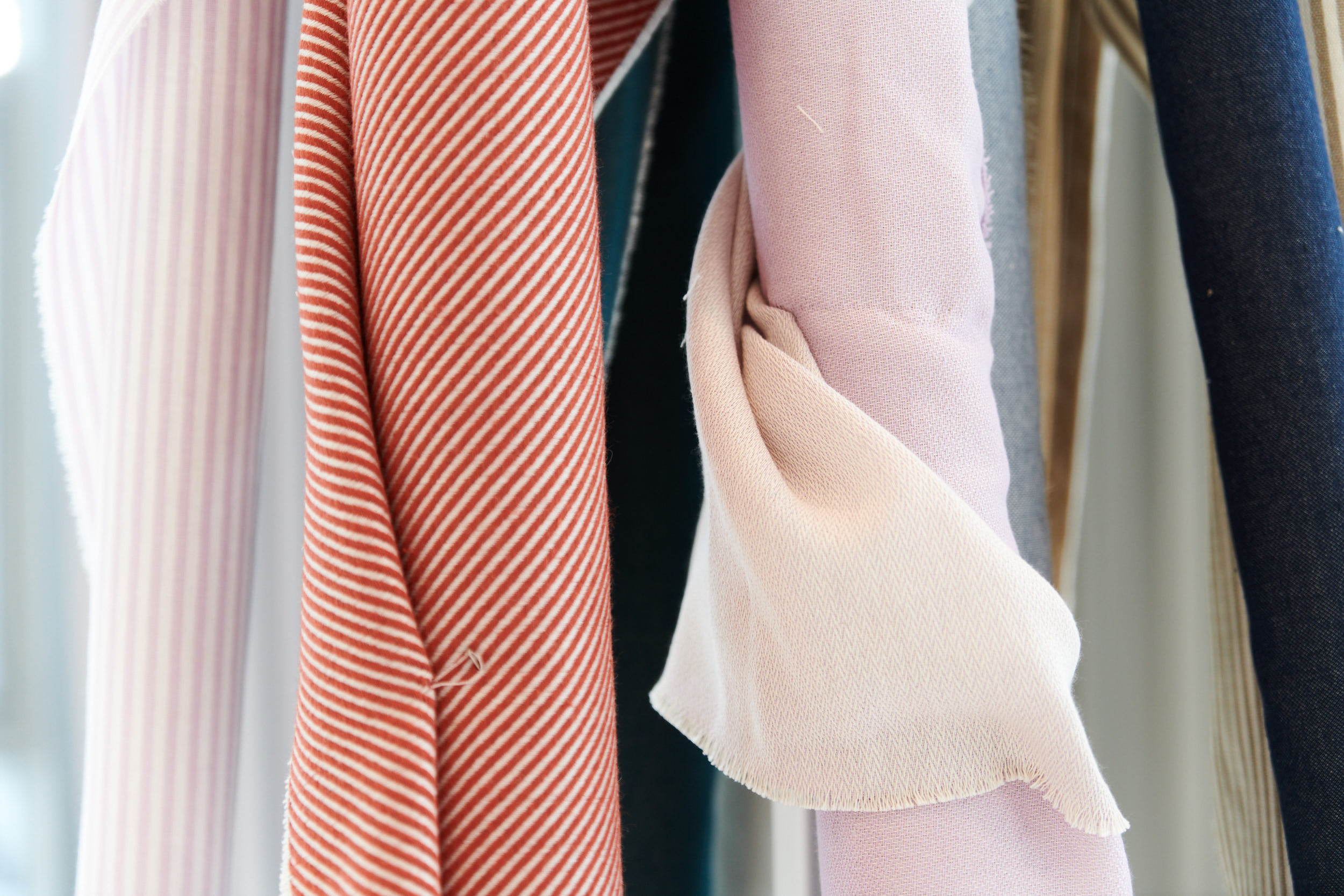
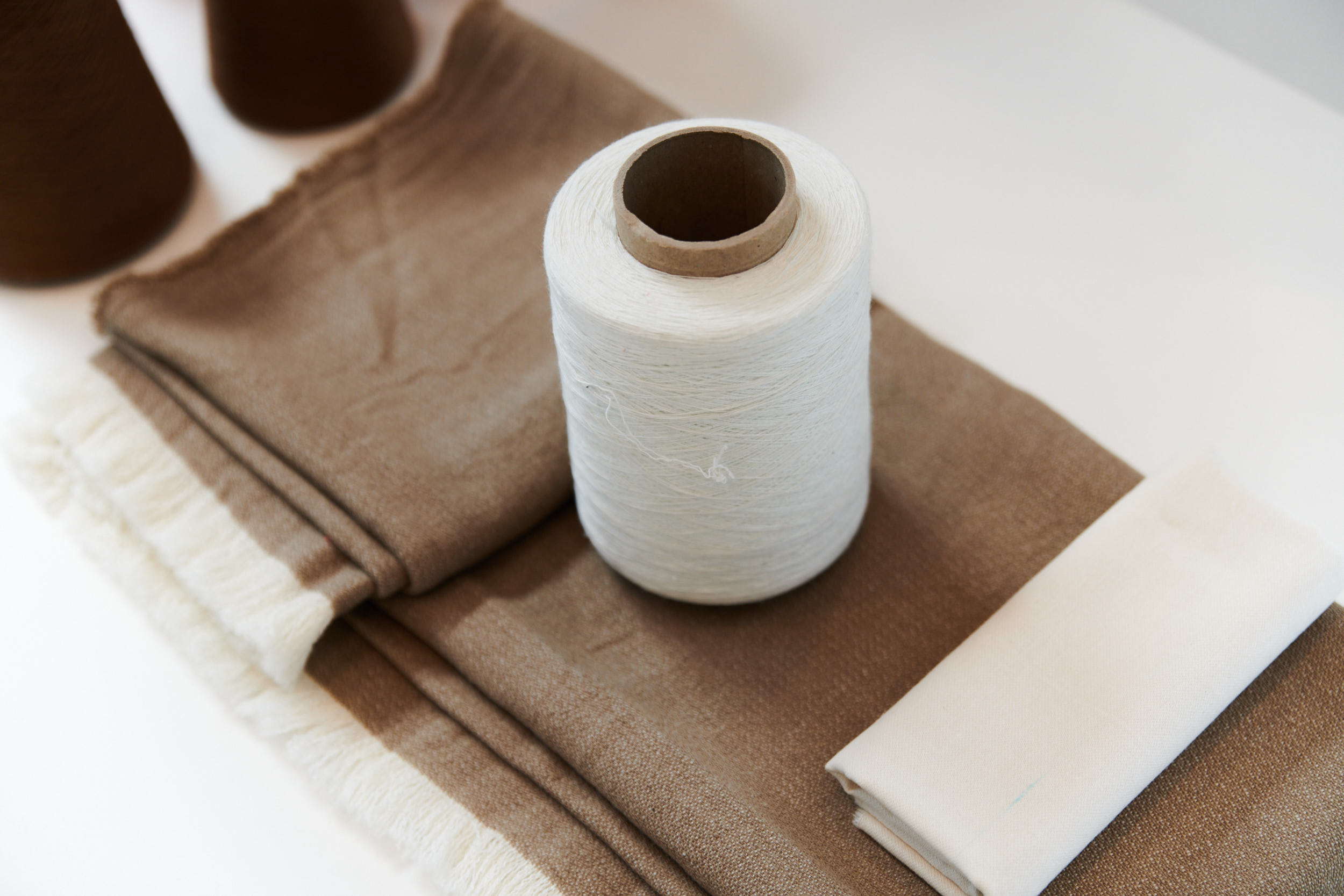
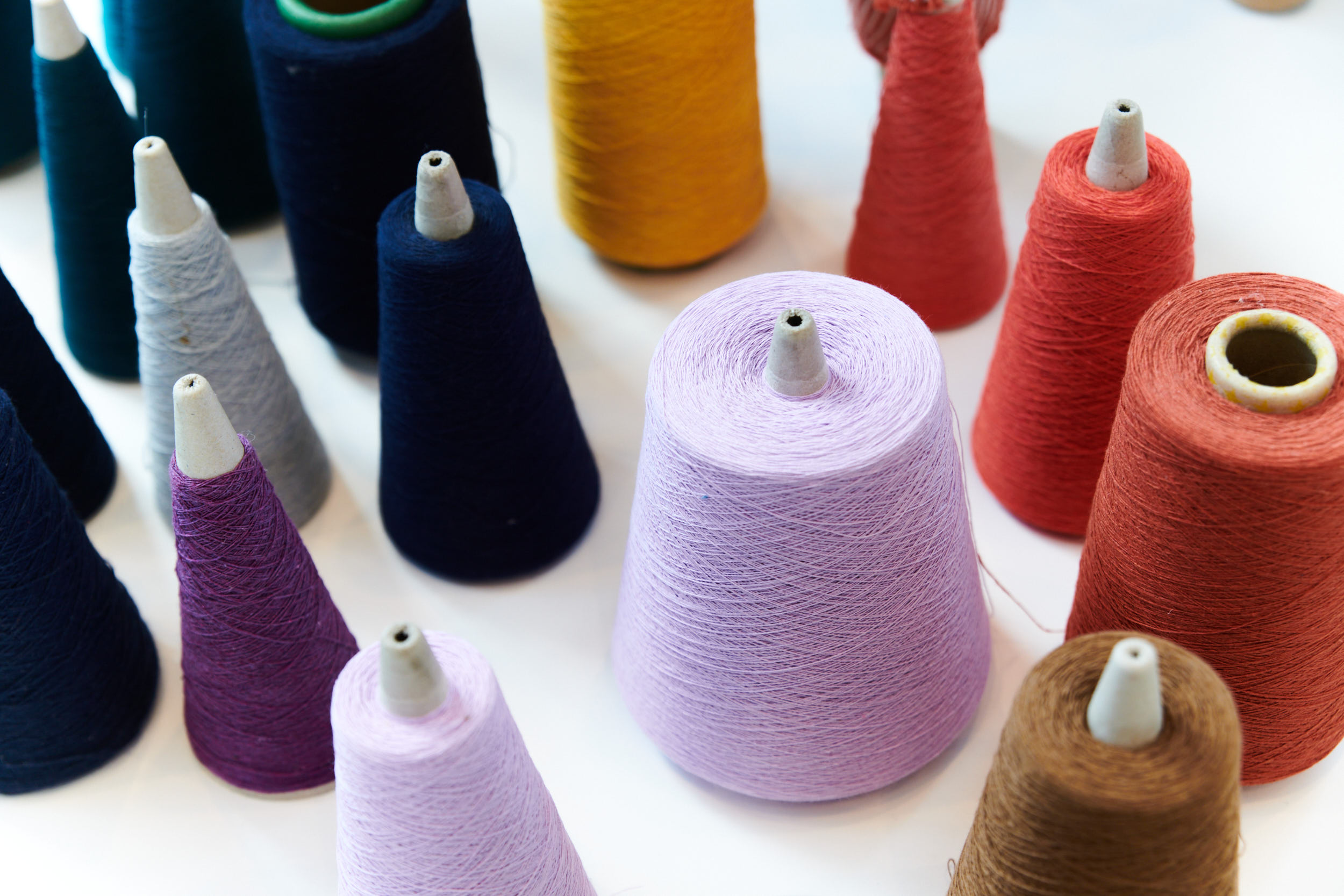
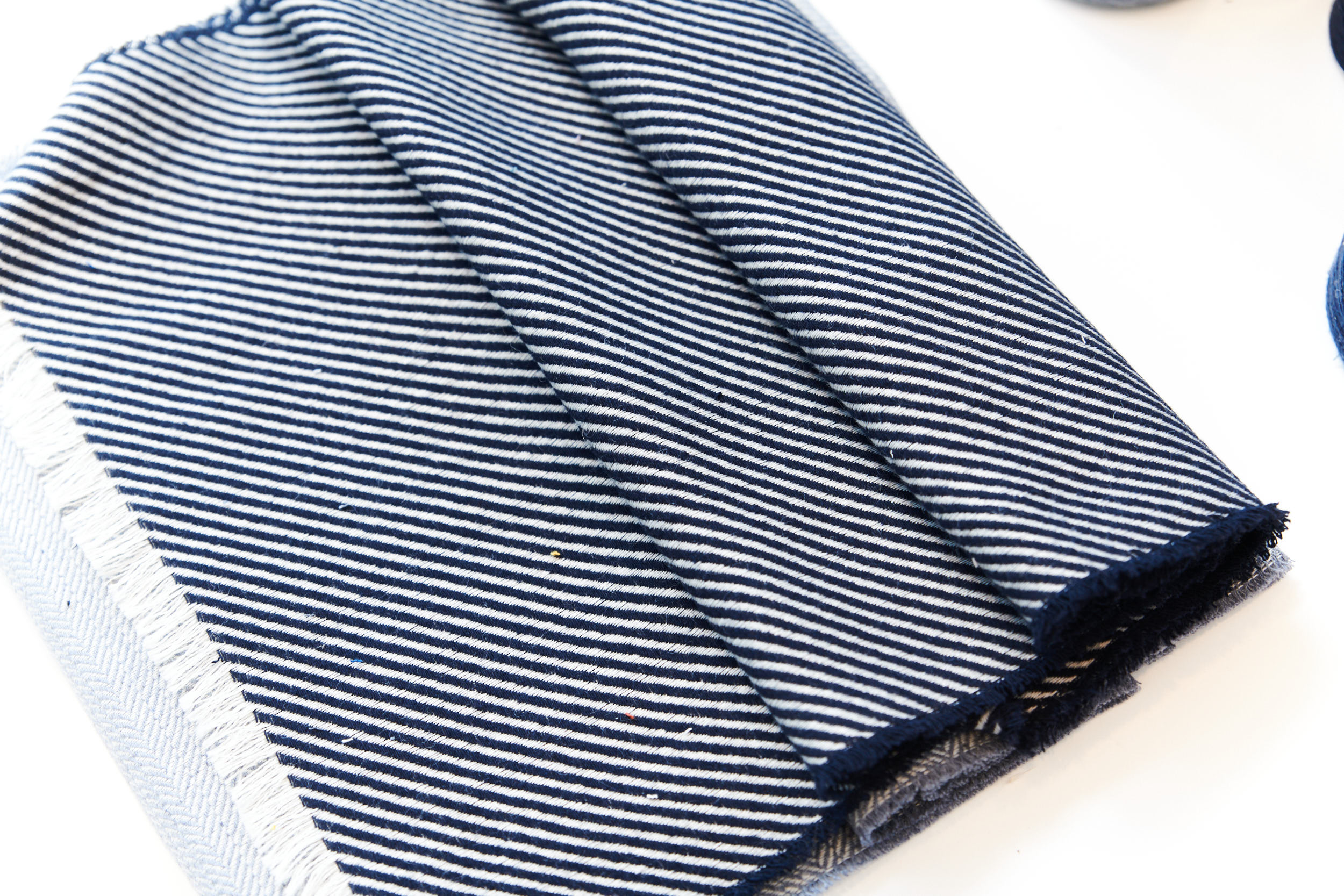
Local, natural, high quality: In the industrial weaving mill Enschede Textielstad, natural and as locally produced as possible yarns and fabrics for fashion and home textiles are created. The basis for this is formed by fair and environmentally friendly raw materials that are sourced exclusively from well-known suppliers: guaranteed Made in Europe – for shorter transportation routes and a smaller environmental footprint. Enschede Textielstad’s offers various options: Readymade fabrics produce bestsellers for direct purchase, Made To Order fabrics are woven but can be customised, or Custom Made fabrics for particularly individual ideas, new fabrics or for recycling product waste – so there is something to suit everyone.

Chiengora instead of Angora
SUSTAINABLE INNOVATIONS Autumn.Winter 22/23 #1
Yarnsustain by Ann Cathrin Schönrock & Franziska Uhl
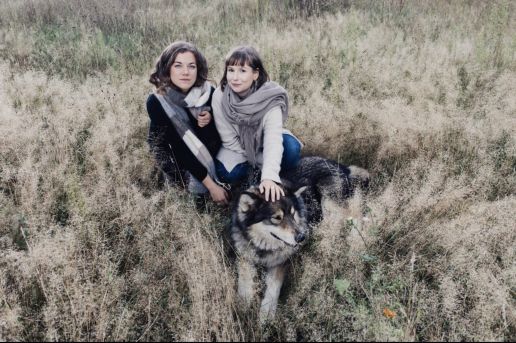
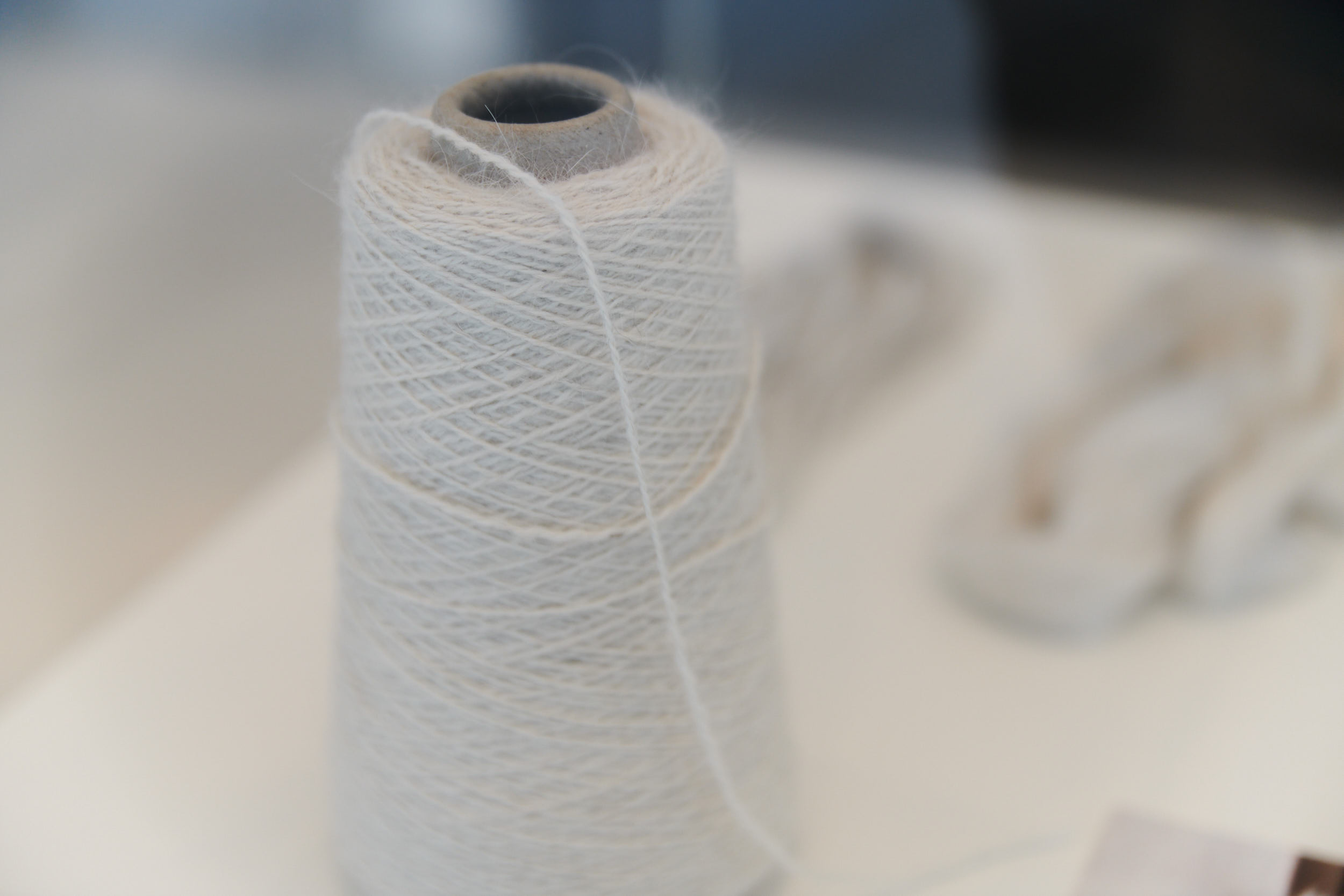
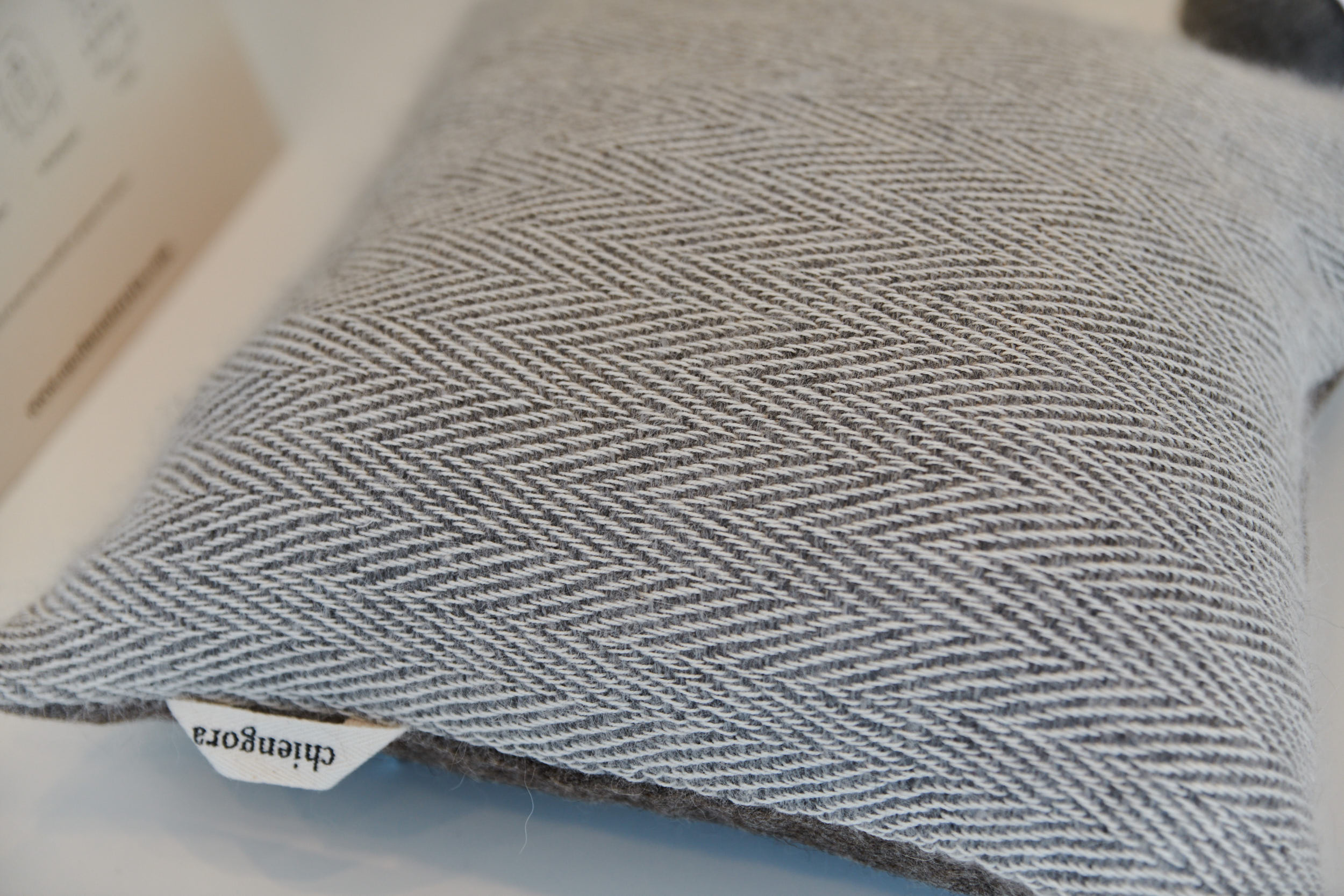
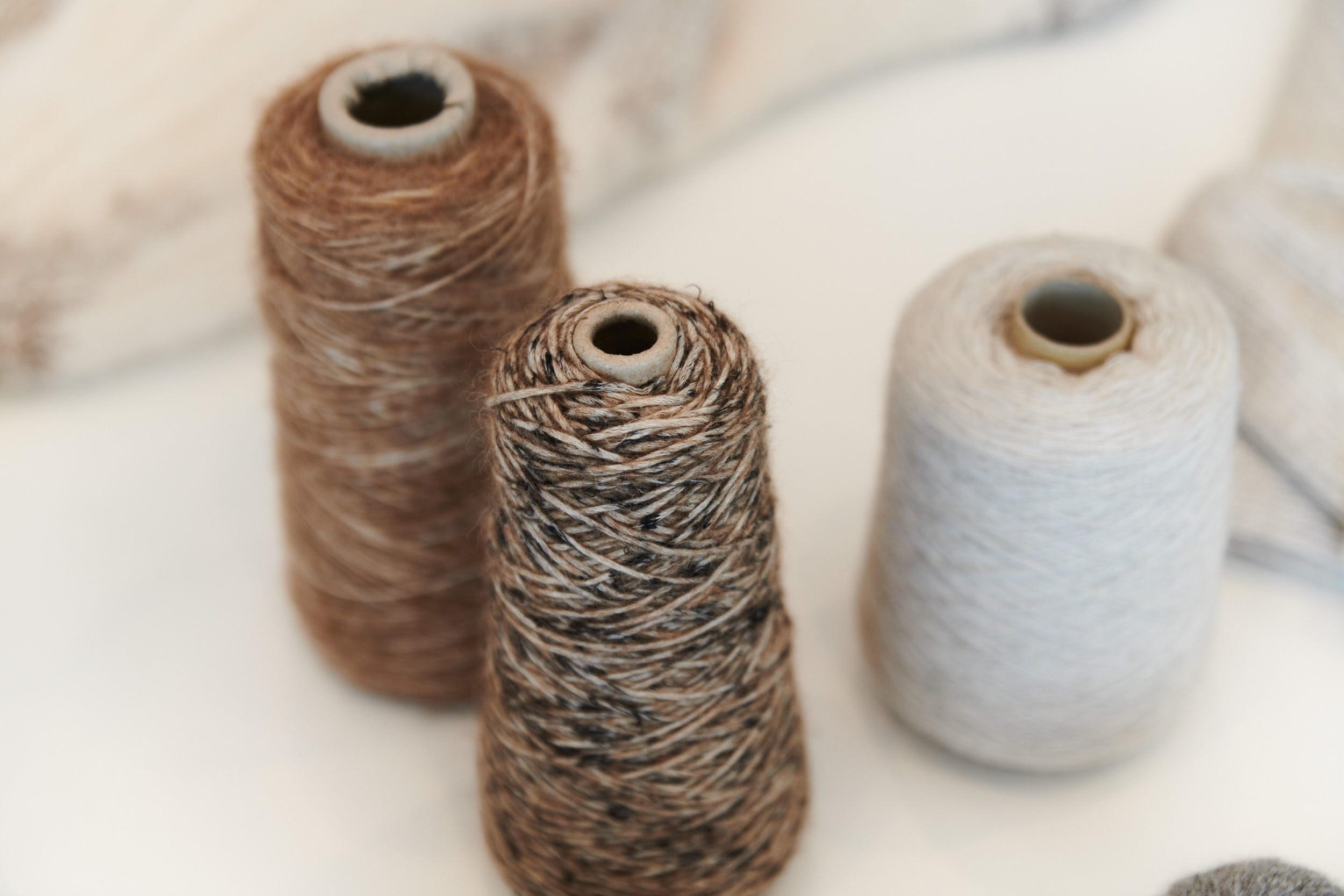
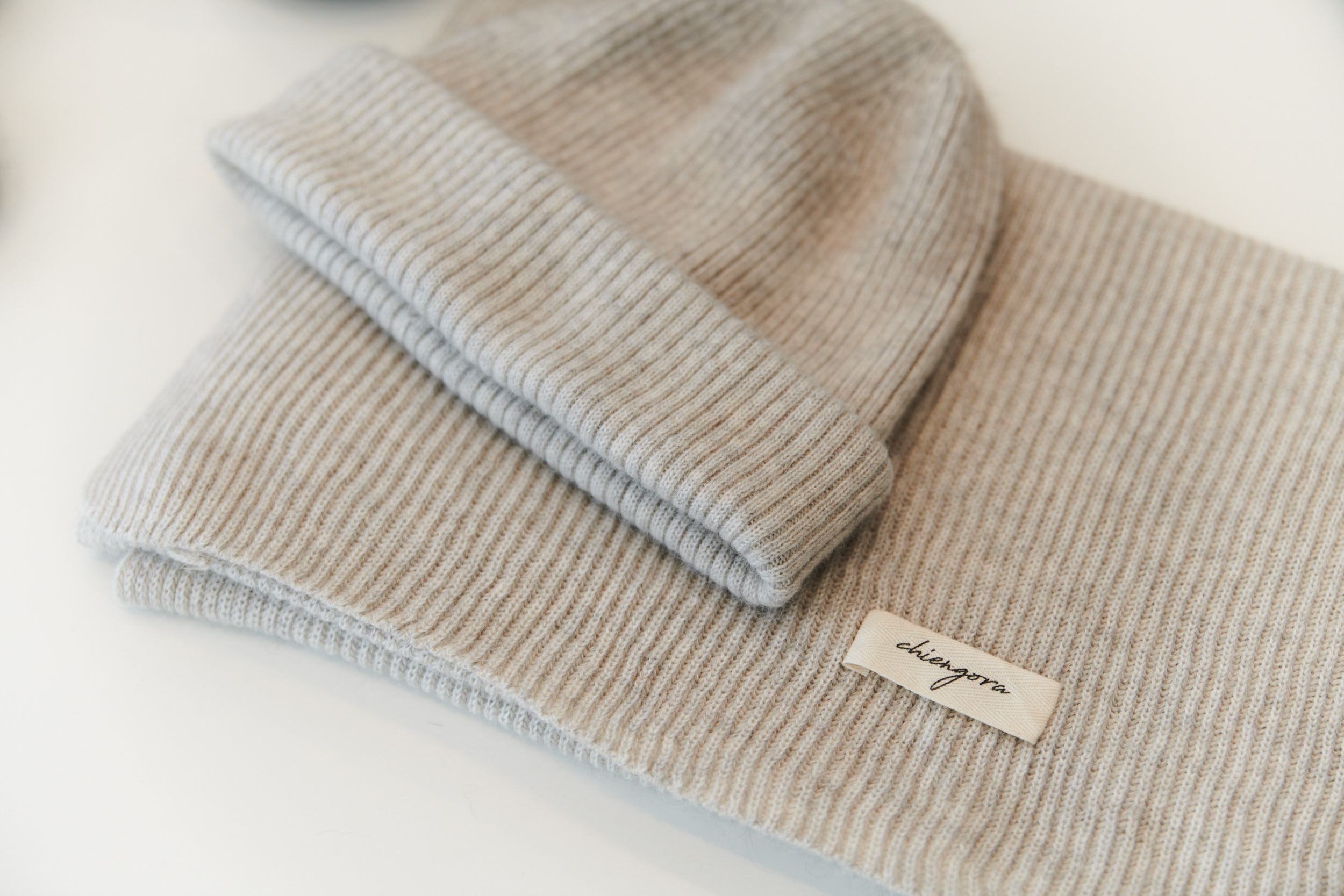
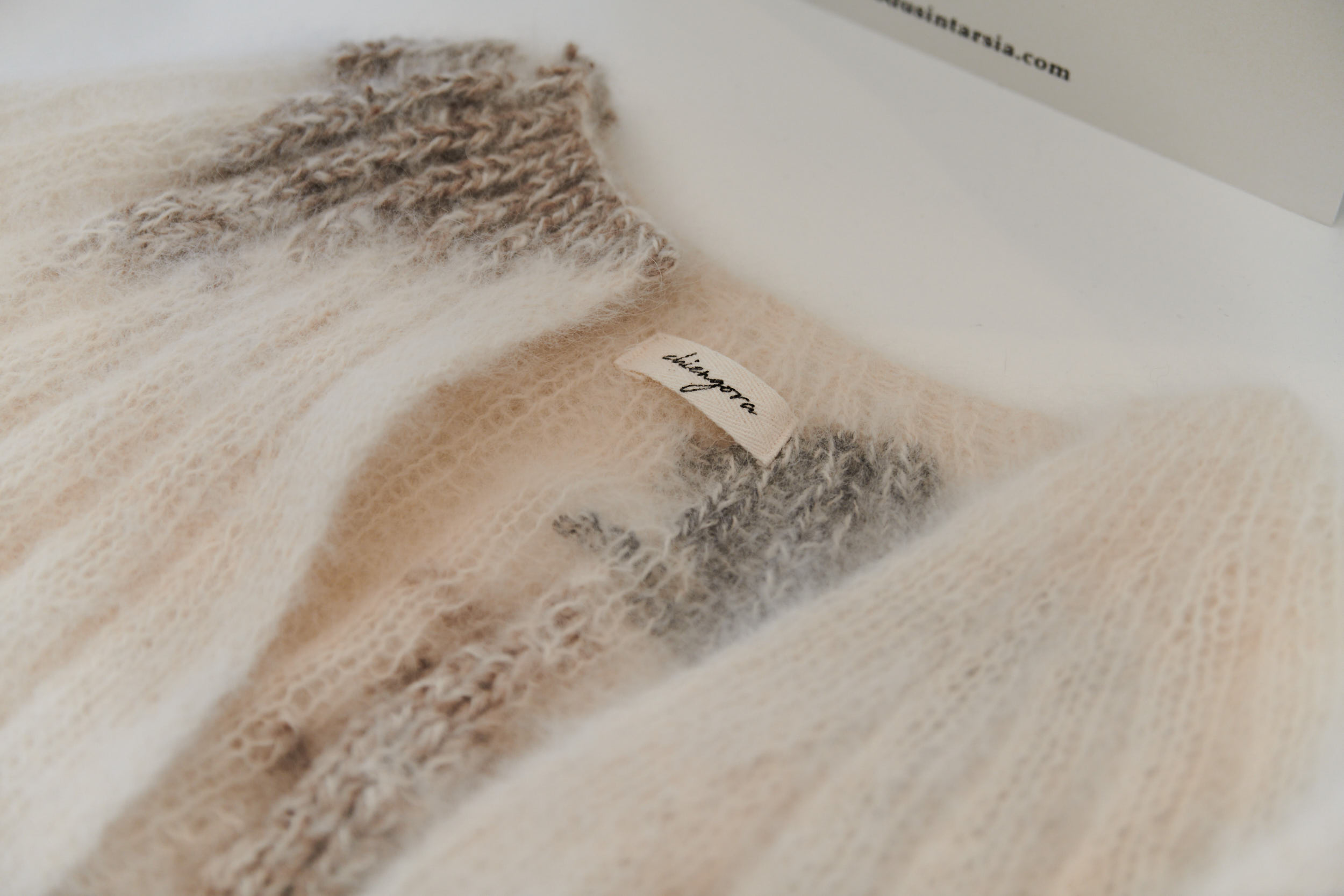
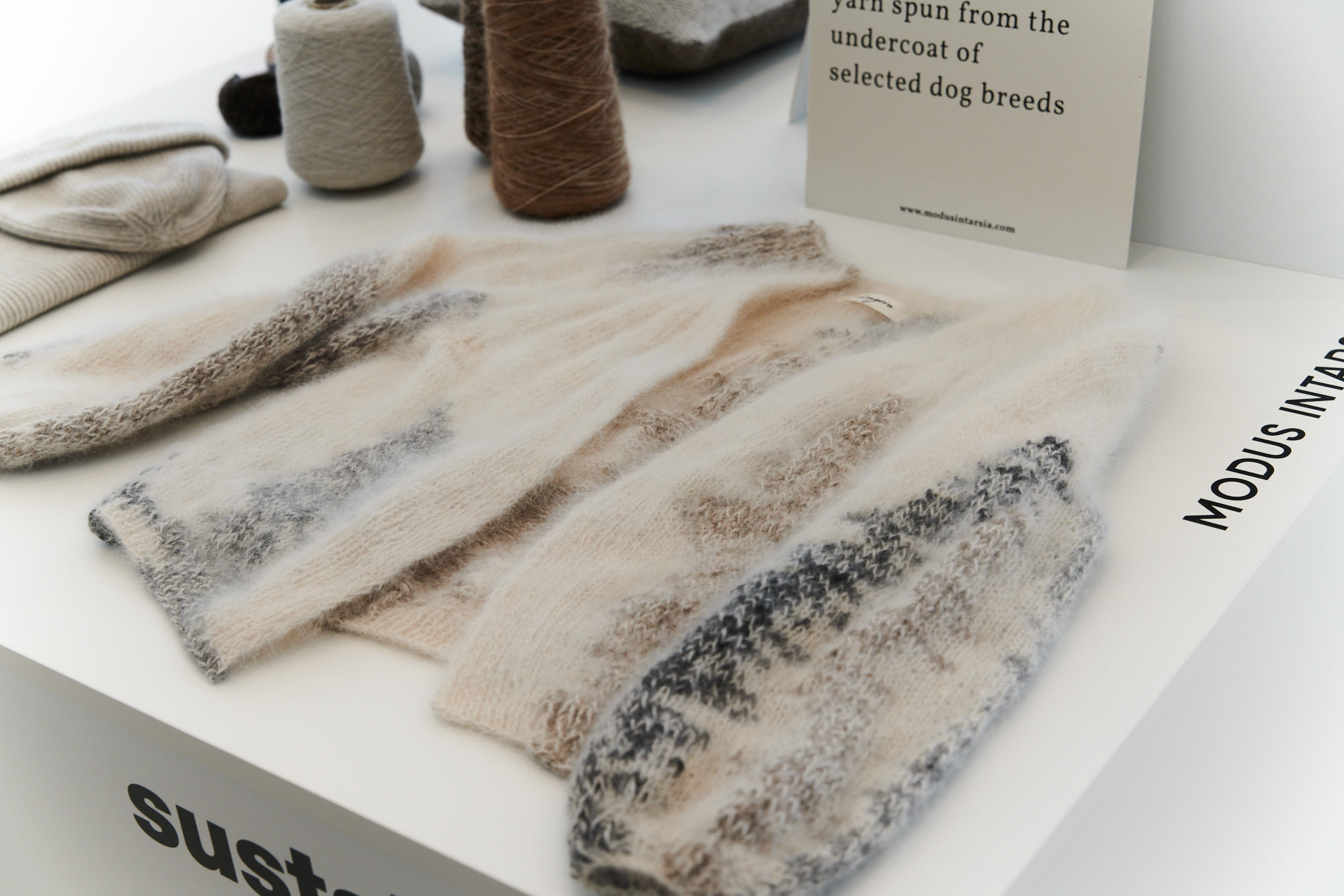
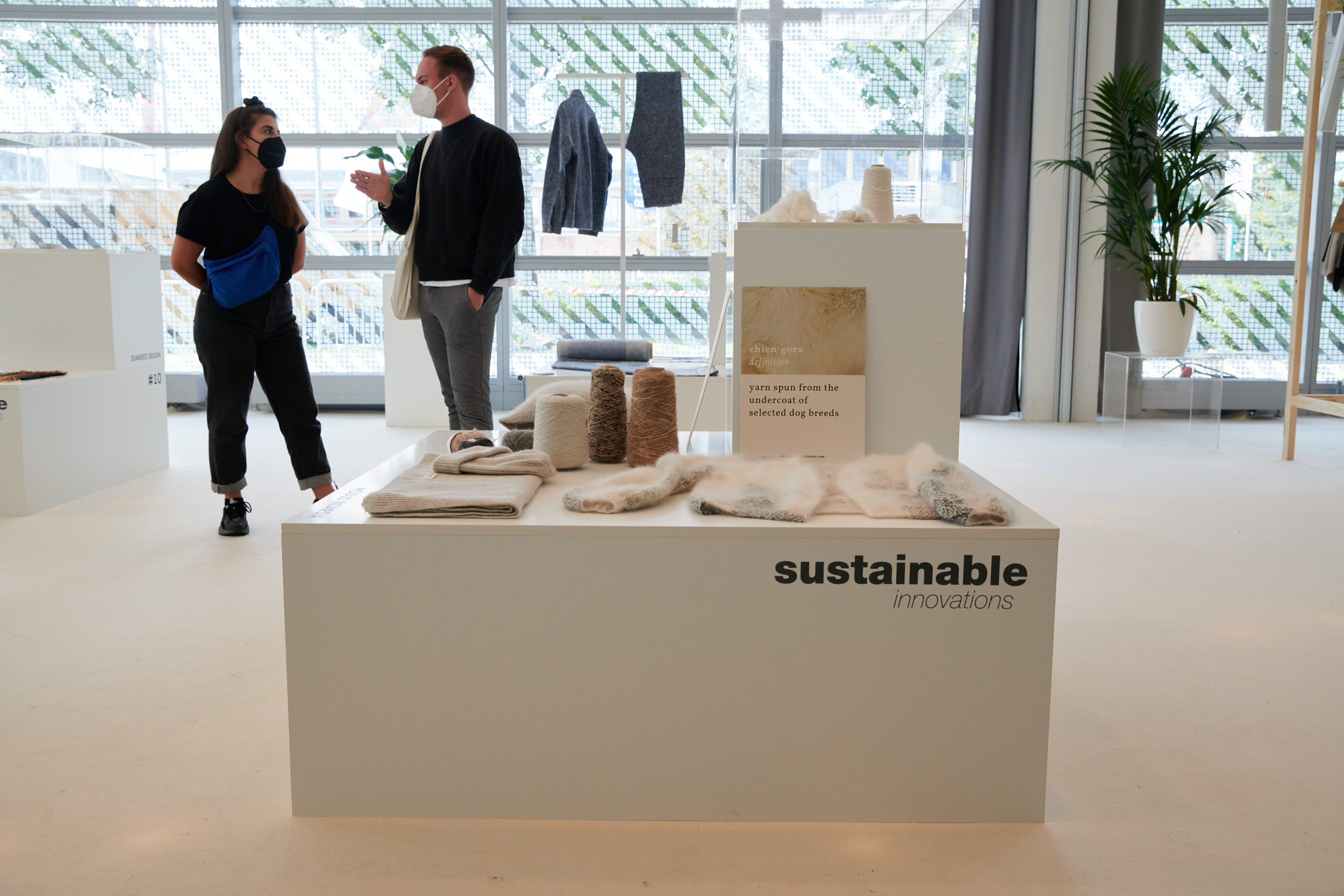
Often, solutions for ethical and sustainable are not used, even when they are the most obvious one. Fashion and knitwear designer Ann Cathrin Schönrock and textile engineer Franziska Uhl have searched the market in vain for sustainable and at the same time high-quality yarns which led the duo to get creative themselves: They founded the company Yarnsustain to revolutionise the fashion and textile industry with yarns and fabrics made from dog hair.
“The wool industry currently imports high-quality fibers from around the world, while the source is often walking directly in front of our faces. With us making this resource available to the textile industry, we are able to correct this systemic error. Pet-based high quality wool enables everyone out there to contribute to a better textile future.“
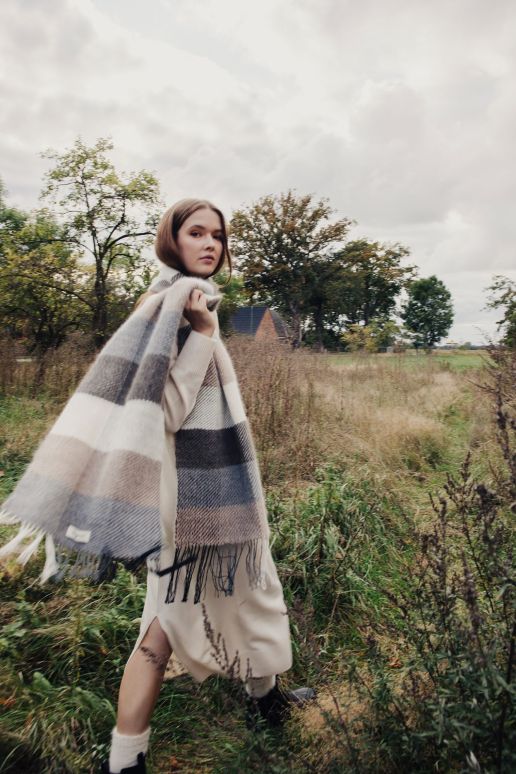

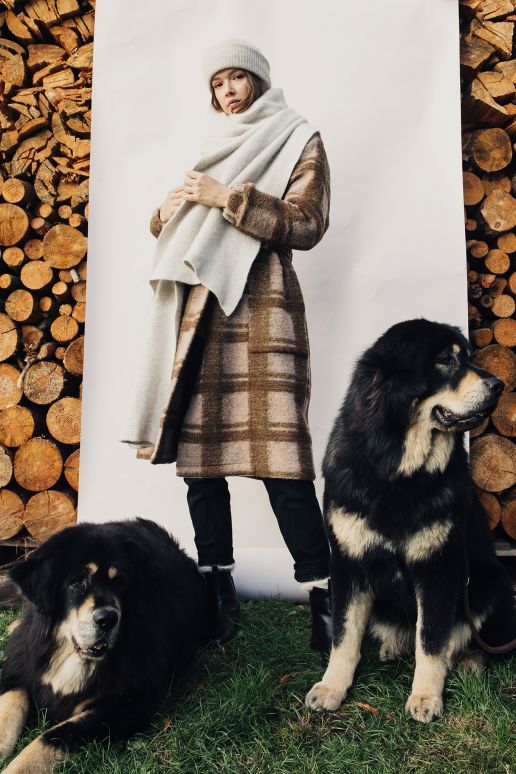
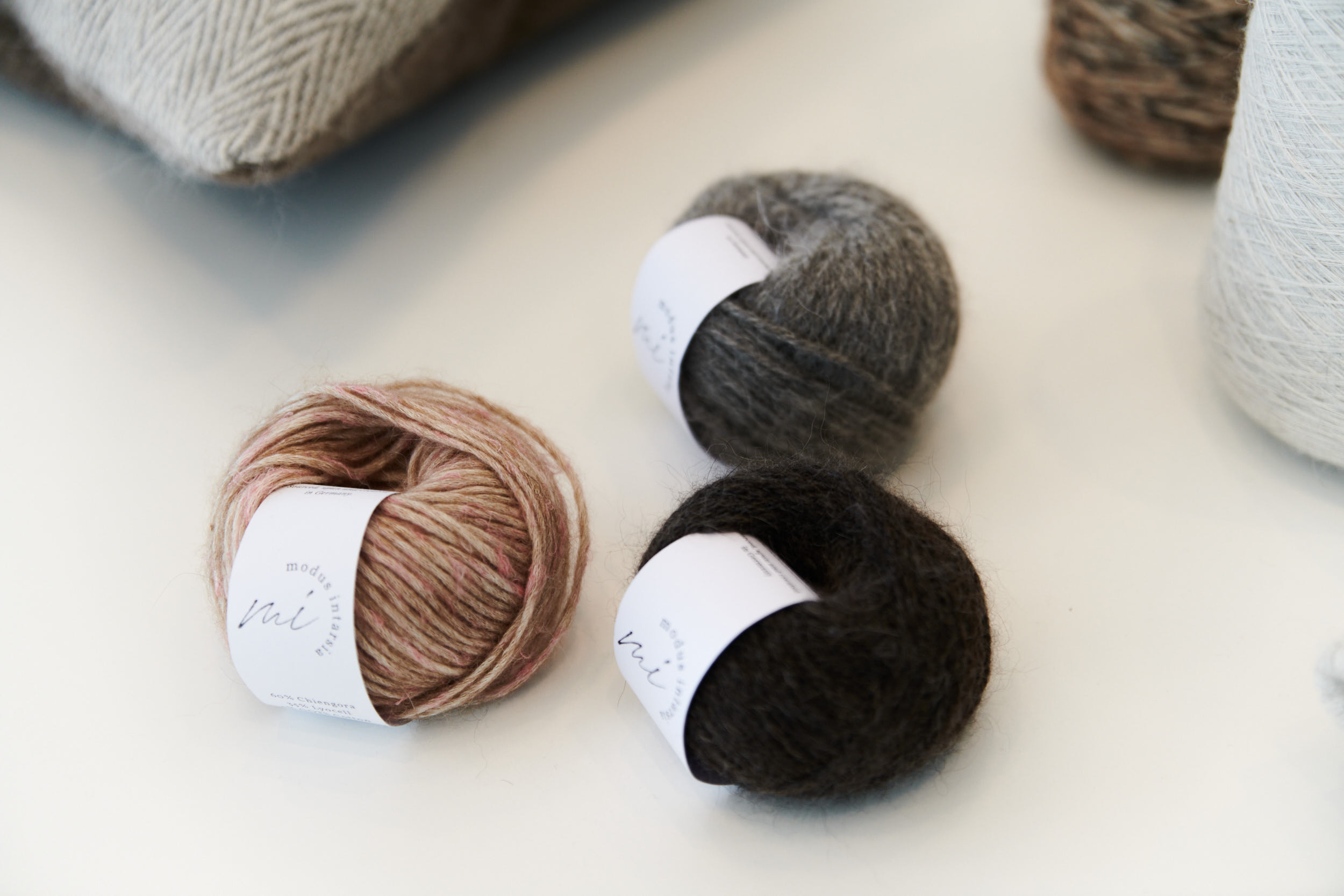
Back in 2017, Ann Cathrin Schönrock, who is a dog owner herself, started working with her dog’s wool – because why shouldn’t this material, which is actually considered waste, also be used for clothing or to fill home textiles? Together with her co-founder Franziska Uhl, she developed the high-quality Chiengora®, a yarn made from the undercoat of long-haired dogs. Support by funds from the German government, the organisation was able to collect more than two tonnes of undercoat this year alone and process it into yarn.
Behind the company are the NGO Saving Lost Resources e.V., Yarnsustain and the brand company modus intarsia. In this triad, the founders contribute to animal welfare, produce high-quality yarns and sell garments made from dog hair – to further promote consumer acceptance and establish garments made from dog hair on the market.



Our Digital Trend Space - Online Now!
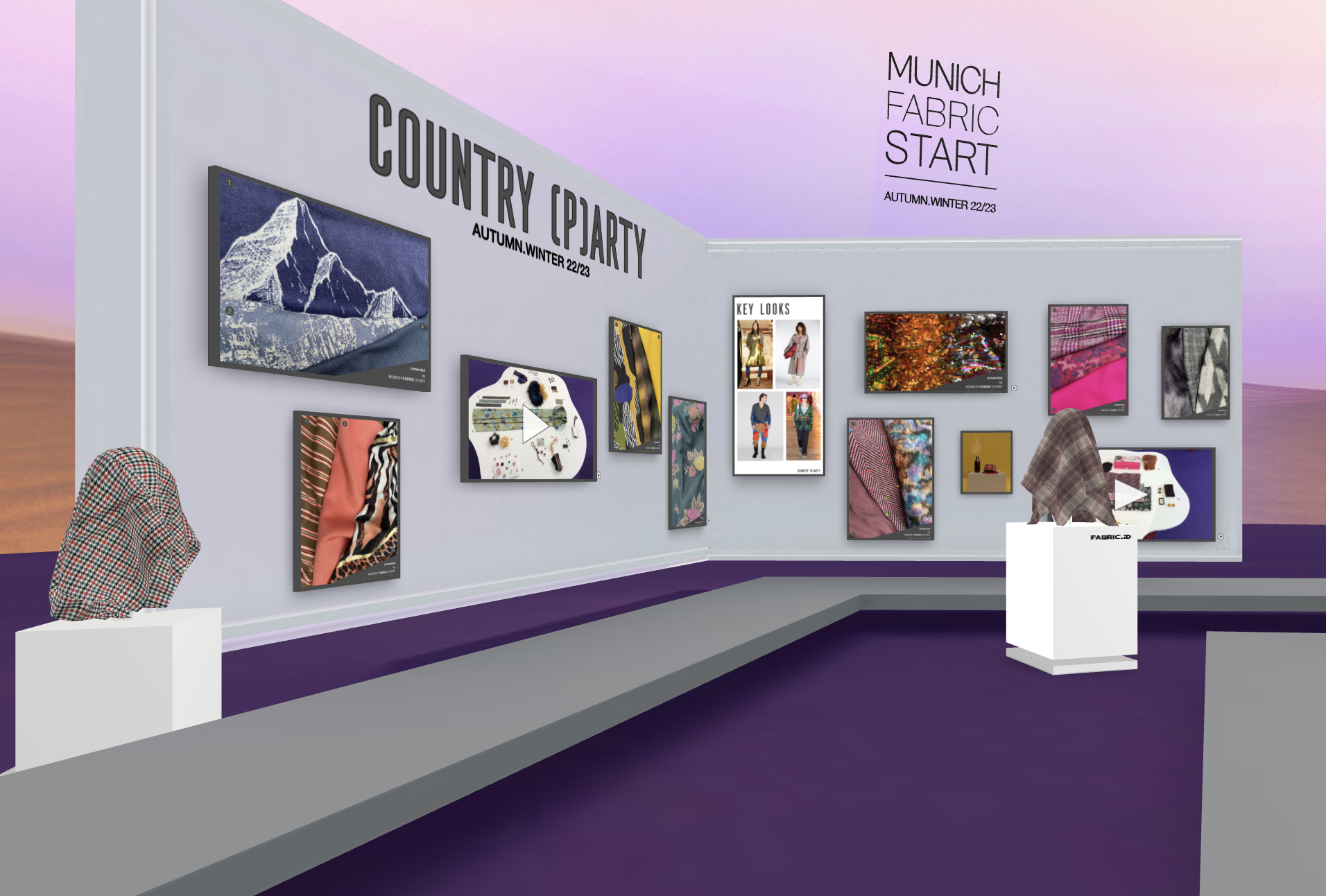
OUR DIGITAL TREND SPACE - NOW ONLINE FOR YOU!
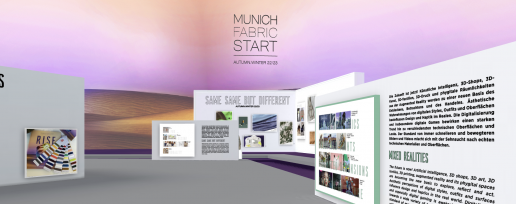
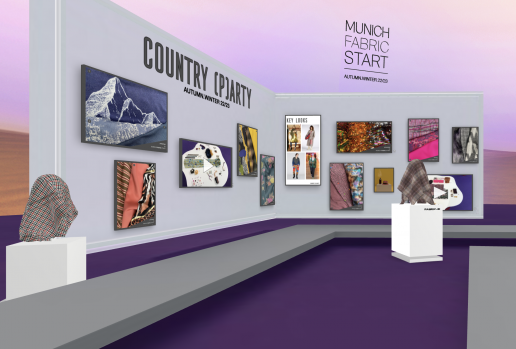
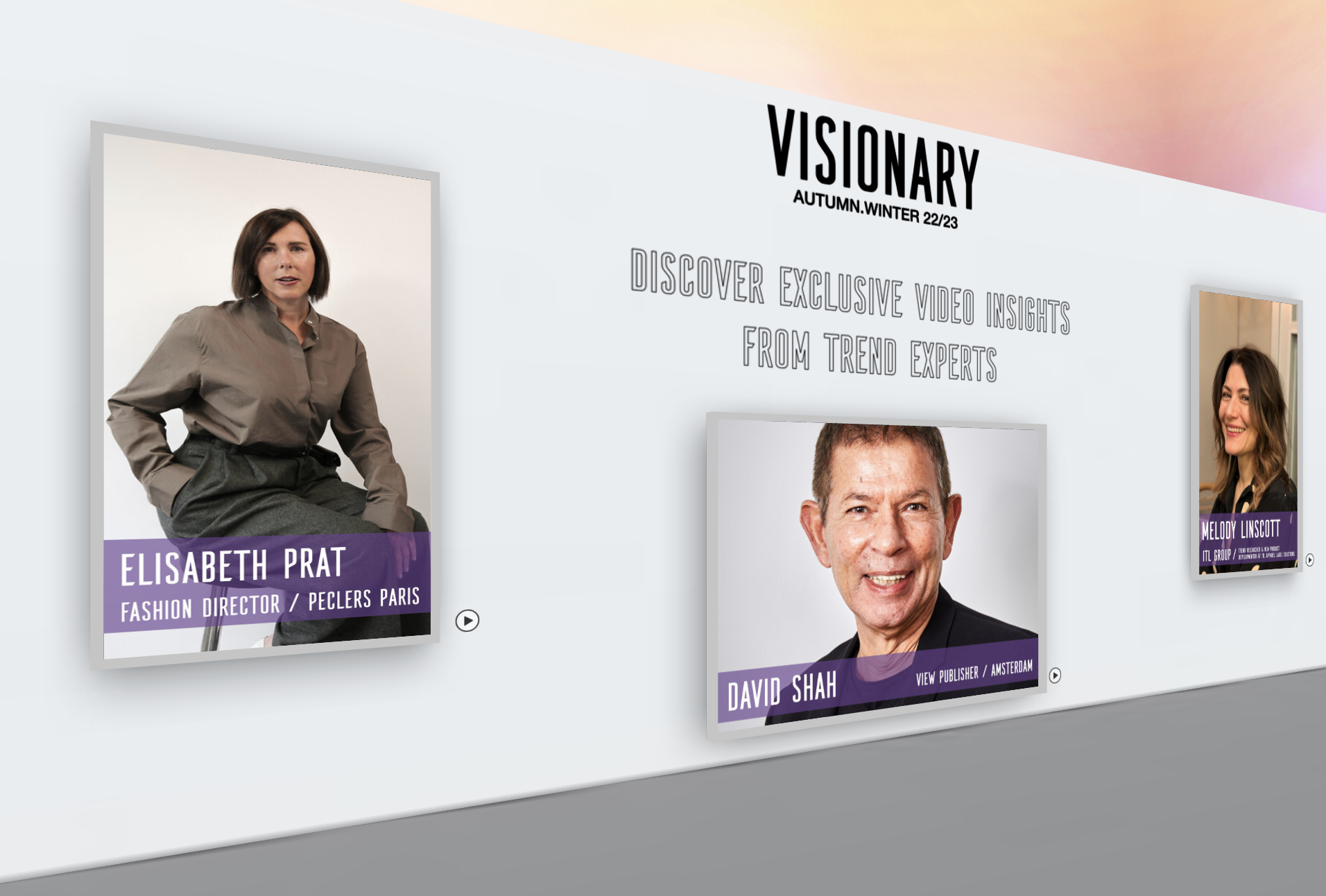
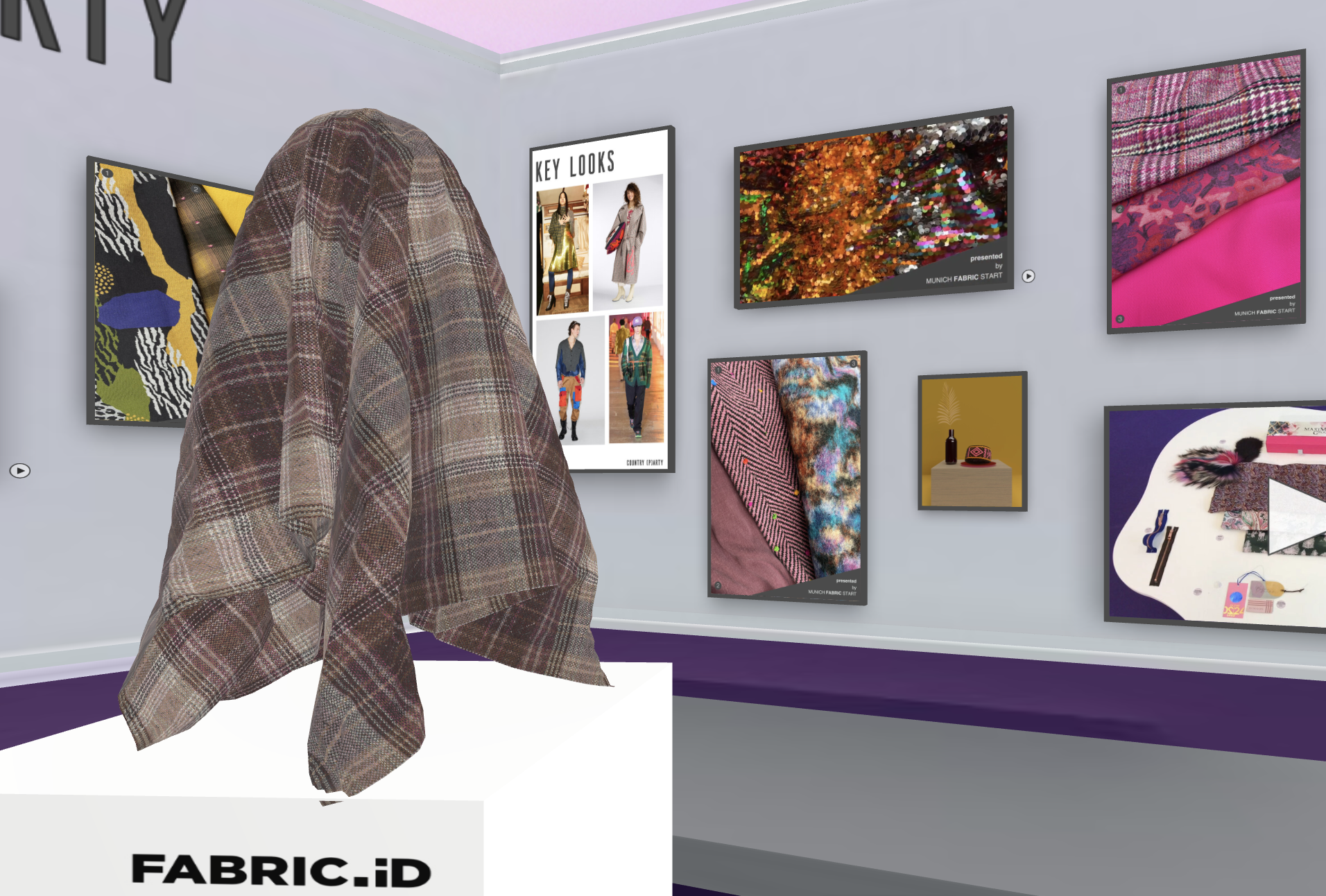
Experience the trend, mood and colour worlds for Autumn.Winter 22/23 in our Digital Trend Space which is now live!
Material examples from our international exhibitors, 3D textiles as well as trend videos and video statements from well-known trend experts such as David Shah, Peclers Paris and the ITL Group are waiting for you:
Important tips before you start:
- Open the Digital Trend Space via your computer or laptop in full screen mode and turn on the sound. Your smartphone is less suitable.
- Use CHROME* or FIREFOX* as your browser, Safari does not support this presentation format optimally.
- Play the videos in the Trend Space one by one, stop it before you click on the next video to avoid duplication of the videos.

We recommend watching our short tutorial video as introduction. You can start your individual tour through the DIGITAL TREND SPACE afterwards or at any time.
SAVE THE DATES – NEXT SHOWS
VIEW PREMIUM SELECTION
30/11 – 01/12/2021
MUNICH FABRIC START
25/01 – 27/01/2022
BLUEZONE
25/01 – 26/01/2022
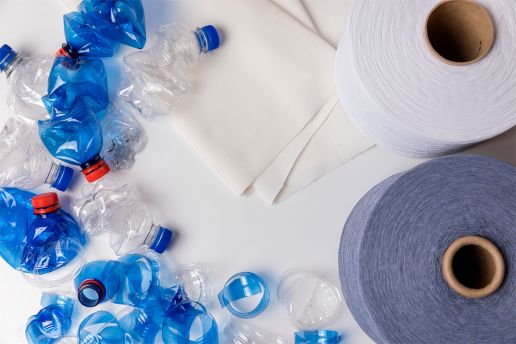
Step into Sustainable Innovations with us
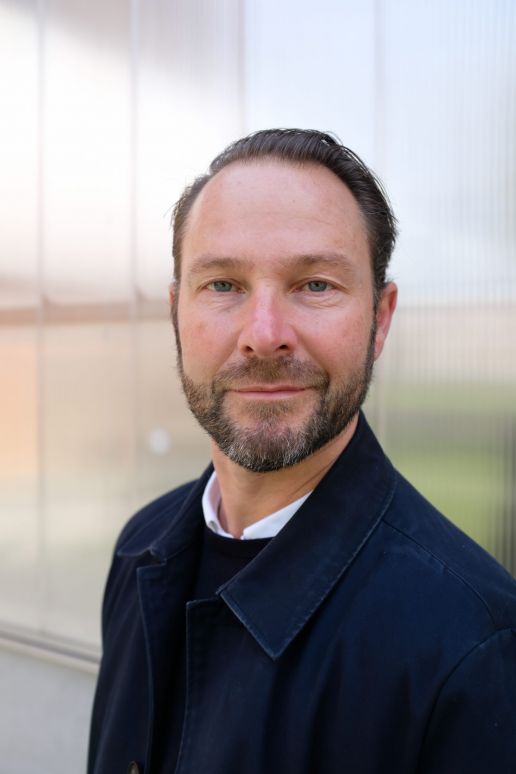
An Interview with Simon Angel, Curator of Sustainable Innovations
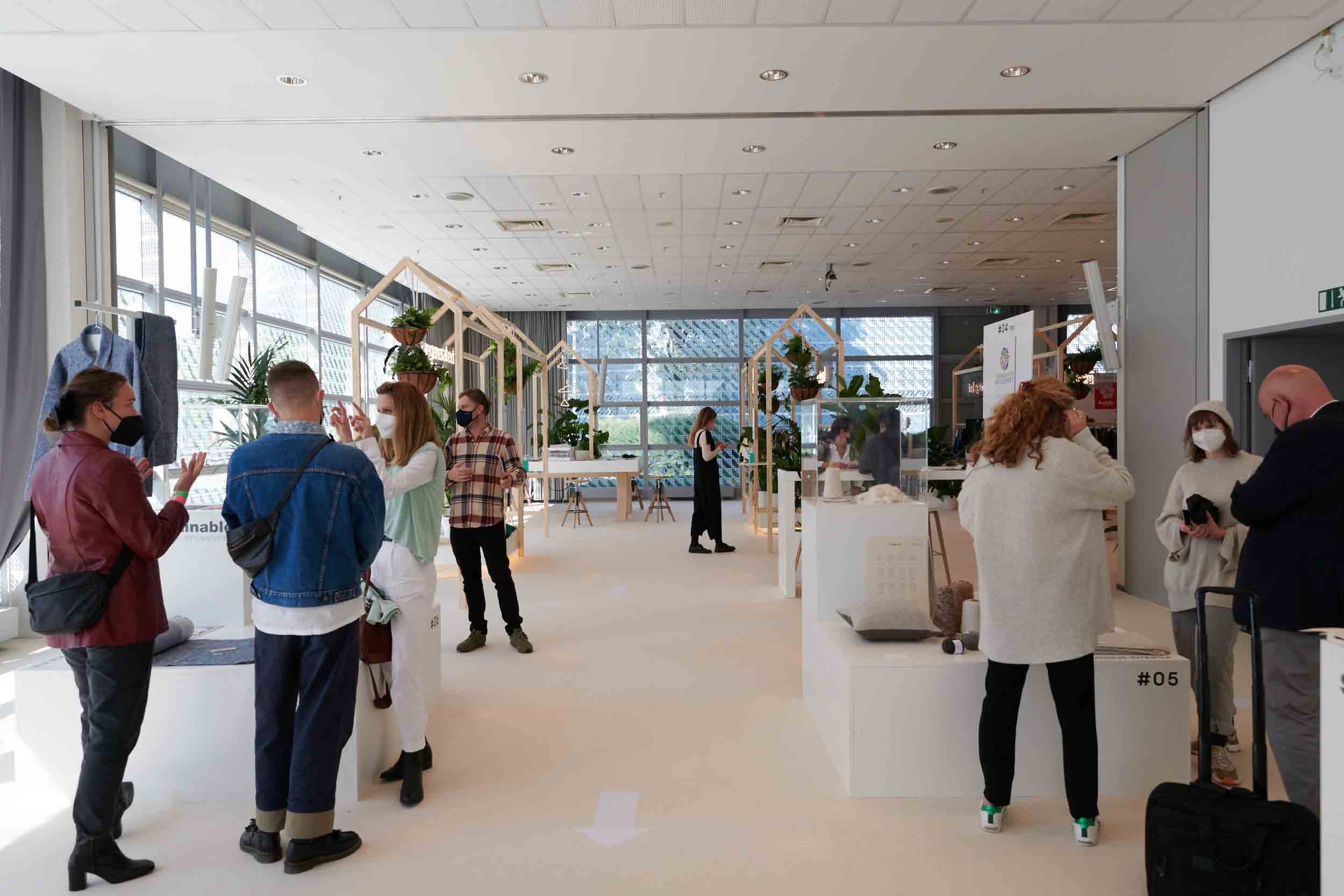
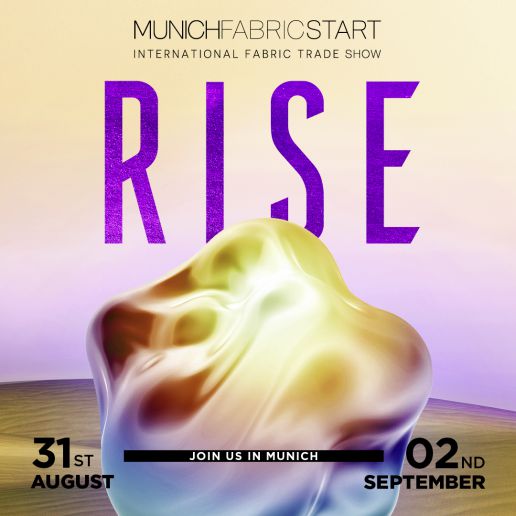
We’re proud to announce the next edition of Sustainable Innovations Forum with soon take place at MUNICH FABRIC START from 31/08 – 02/09/2021 in the MOC, Munich. The inspiring showcase offers sustainable sourcing solutions with a strong focus on alternative design and manufacturing processes. Meant to encourage and support a new way of thinking and approach to sustainable textiles it also provides a unique opportunity for collaboration and conversation.
Holistic, sustainable solutions are presented in the newly designed ReSOURCE X SUSTAINABLE INNOVATIONS area for the first time together at the show. The close interaction of the innovation platforms offers orientation, depth of information and specific application options for the sourcing of future-oriented textiles.
Where will ReSOURCE X SUSTAINABLE INNOVATIONS be found at MUNICH FABRIC START? >> Foyer Hall 4, rooms K3 & K4
The new topic for this season is about scale. What’s it all about exactly?
That’s right. Each edition of our Sustainable Innovations Forum draws attention to innovations that are inspiring and shaping the industry. For the past decade, the focus has been on how designers and smaller brands could enter ‘the bigger system’ and connect with the rest of the industry. Now the focus has shifted and we are entering a new phase –the topic on everyone’s lips this year is what we can call: “Suscalability”. We already have a feeling of how the market can grow, but the questions we’re asking now are: What is the best way to grow? What does growing mean in the content of the future? How can we scale up in a responsible way? Suscalability is made up of sustainability and scalability. Ultimately, it is a balance between conscious consuming and how companies will grow their strategies in a sustainable and challenging way.
So, it’s just about growth?
Among other things, It’s more about the questions: What am I doing for whom? All brands and projects are asking themselves this question in their own context. They want to measure their own craftsmanship and skills. Suscalability is about the value of awareness, about mindful growth. There are three types of growth: horizontal, vertical and multidimensional. Vertical growth is about the product itself. Horizontal growth is about the company’s right to be part of the market. And then there is the multidimensional level, which is about the growth of the value itself and how to integrate that value into the whole production process. Suscalability is a three dimensional concept that includes all three forms. Producers need to make decisions to help them reach this point of growth – that’s the challenge.

Why do we need a different approach to growth?
In the past, most companies only chose between horizontal or vertical growth. After years of growth, the question now is: how big can a brand get while remaining flexible? The scale of a company becomes either a problem or a challenge. Big companies are struggling with how to get smaller again. In my opinion, that is the reason why so many brands are launching sub-brands and collaborations at the moment. This is the only way for bigger companies to descale and deliver again. Being big is the problem – the big brands can no longer create real value from this large scale and therefore cannot break out of this vicious circle.
What do you want to achieve with your selection of brands at Munich Fabric Start’s Sustainable Innovations Forum?
Once again we aimed to capture and feel the heartbeat of the market and the work of the designers. Every project is unique and tells its own story within the larger context about the possibilities of sustainable textiles and approaches. From recycled fabrics to fashion made of dog hair to platforms for recycling and upcycling: the brands are demonstrating exactly what I was just talking about –. how to create value from a textile, how to achieve slow and mindful growth with a sustainable idea and how to earn your place in the fashion industry. But most importantly: How to reconnect the user with the resource in order to restore value. The focus on suscalability aims to encourage Sustainable Innovations visitors to interact, immerse themselves and be inspired. We want to motivate people to get involved and start thinking about new approaches.
MUNICH FABRIC START
Tue, 31/08, 9.30am – 6.30pm
Wed, 01/09, 9.30am – 6.30pm
Thu, 02/09, 9.30am – 4.00pm
MOC Munich
Lilienthalallee 40
80939 Munich
BLUEZONE
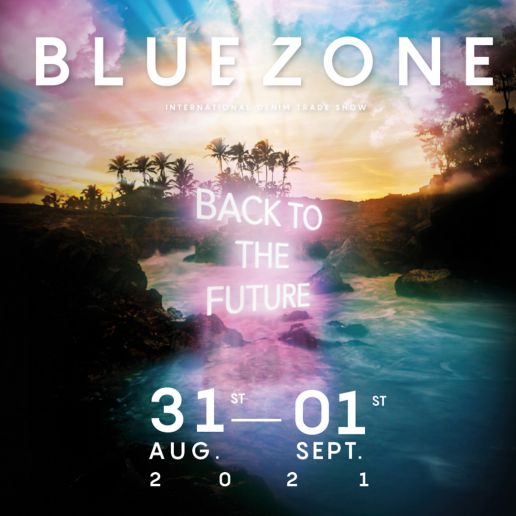
Tue, 31/08, 9.30am – 6.30pm
Wed, 01/09, 9.30am – 6.30pm
Zenith Area
Lilienthalallee 29
80939 Munich
Germany
SAVE THE DATES – NEXT SHOWS
VIEW PREMIUM SELECTION
30/11 – 01/12/2021
MUNICH FABRIC START
25/01 – 27/01/2022
BLUEZONE
25/01 – 26/01/2022
Key Conversations: Consulting on Sustainable Production
Interview with Sustainability Consultant and founder of Cocccon, Chandra Prakash
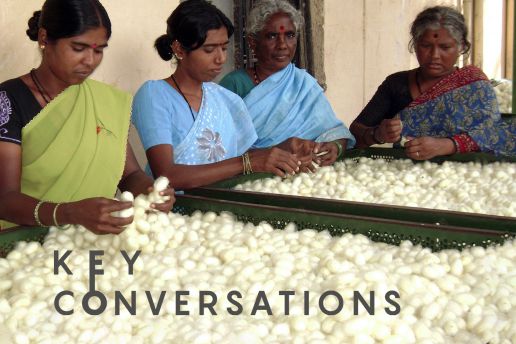
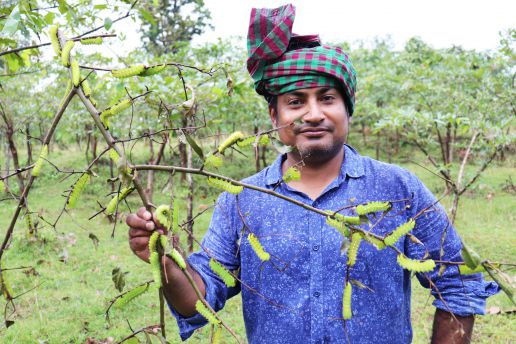
When you meet Chandra Prakash for the first time and ask him ‘What do you do?’, he answers ‘sustainability consultant’ but it only takes one conversation with him to discover that in a moment he goes from working in the fields as an organic farmer to researching and developing sustainable agricultural methods in the production of natural fibers at the India-Nepal border and even more recently, securing the certification process of natural fibers using blockchain technology. Suddenly you realise ‘sustainability consultant’ doesn’t quite sum up the full scope, reach and vast nature of his work. In this interview we scratch the surface to reveal insights into his latest projects, challenges he is facing and his passion for true sustainability.
Can you tell us about your work as a sustainable fashion consultant?
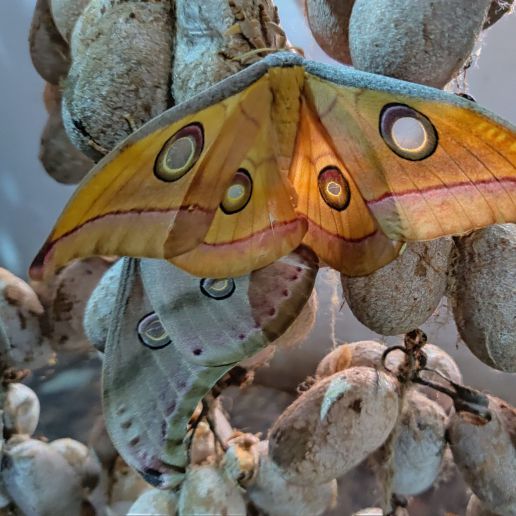
I am deeply engaged with sustainable fashion and have gained invaluable insights on the its complicated supply chain from many perspectives; as an organic farmer, a textile designer, a fashion designer and as an entrepreneur selling textiles and fashion garments as the owner and founder of Cocccon specialising in the production of non-violent silk fashion. The creation and knowledge of short- and long-term sustainability road maps are my strength as a sustainability consultant.
You are currently researching other sustainable fibers and production methods, can you tell us what you are focused on?
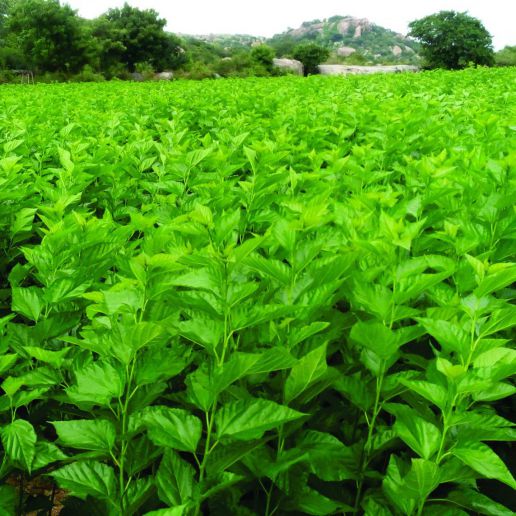
My research is on natural fibers, in particular how they can be grown using as little water as possible and without chemicals. My current project aims to make the most sustainable and luxurious linen, kenaf & sisal fiber production located at the India-Nepal border.
You appeared in the Key Conversations video series with Simon Angel and introduced your latest technology solution to support the certification process for fabrics. Can you tell us more?
The challenges facing certification bodies have been further compromised by COVID-19. Most cotton fields are on isolated or rural terrain which means it is not possible to oversee or control the entire land. Data collection and entry is still based on trust, with no cross-verification methods. In the current system, it is not possible to authenticate the materials in the pre-fiber stages, such as the agricultural processes for growing fibers like cotton, linen etc. The lack of physical visits due to COVID-19 has resulted in the increase of greenwashing.
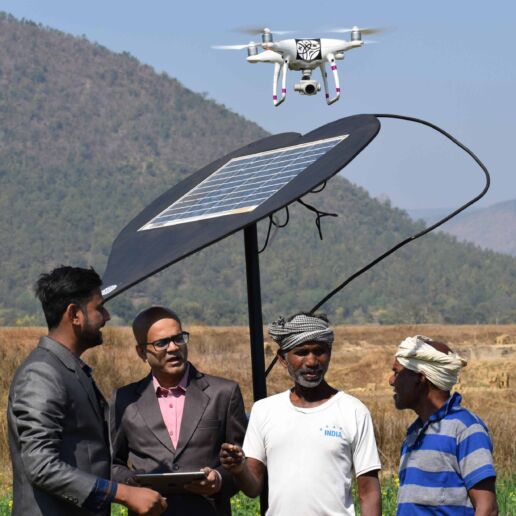
The technology I am currently developing can ensure auditing can be easy, safe and much more reliable. Data can also be collected at the agriculture stage. To ensure authentication, surveillance will be carried out at three different stages. Together, the use of AI technology, Blockchain technology and a smart physical auditing system will make the certification process of an organic product fool-proof.
Watch the Key Conversations episode between Chandra Prakash and Simon Angel here.
Tell us about the biggest challenge you face in the development of this new digital system?
This is very ambitious project. Traceability at raw material stage is supposed to be next to impossible. I took it as a challenge and worked hard on realising it. Connecting different kinds and levels of technology is always a challenge. Let’s just say we are working on it! We will need to work with partners from the fashion Industry including raw material and blockchain experts as well as crucial investors. We are currently looking for a CFO to join us as well.
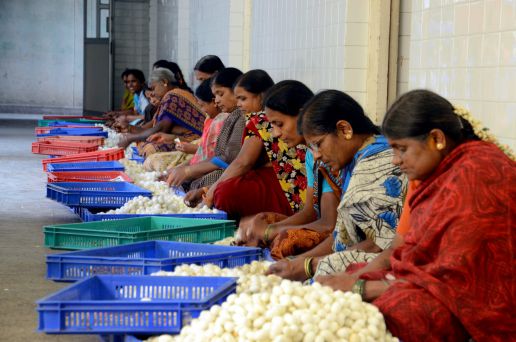
How important is it for brands to offer transparency and traceability to their consumers? i.e adopting blockchain technology.
The number of people willing to buy authentic sustainable garments or fashion accessories has increased drastically. The young adults, teens and children who are protesting at Fridays for Future and climate strikes across the world are our future clients. They want to know who made the clothes they wear. They want to know if everyone was treated well in the supply chain. They want to know if their organic t-shirt is really an organic. Traceability will be the new normal soon. Our AI & machine learning technology can help everyone from brands to end consumers. Using Blockchain can ensure certifications are reliable and authentic.
Germany will introduce new Supply Chain laws with increased focus on human rights. Can your technology help avoid human right violations?
Current regulations have limited say and access to controlling social or human factors during the production stage of raw materials. There are also challenges in checking for forced or child laborer’s at cotton and flax-linen farming. 80% of cotton farmers working in developing nations are from local tribal communities and have no government approved ID cards. On paper, they do not exist, hence regulations are not applied to them. Our IoT based technology can help organise farmers and brands to overcome these challenges. This makes our technology suitable for fool-proof, real time traceability platform from farm to fashion.
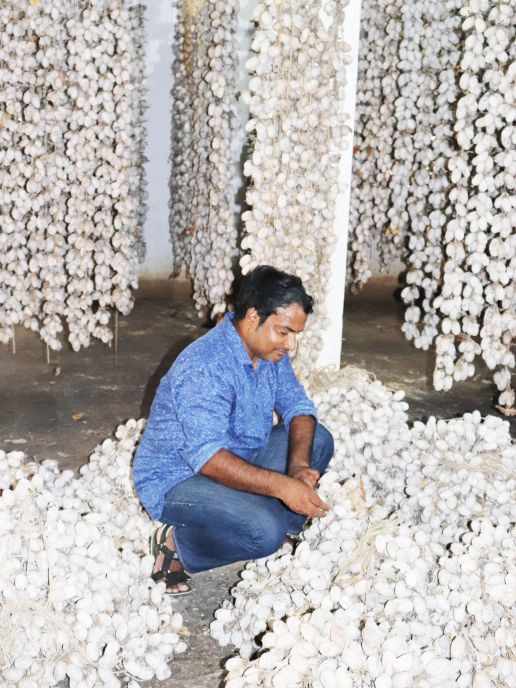
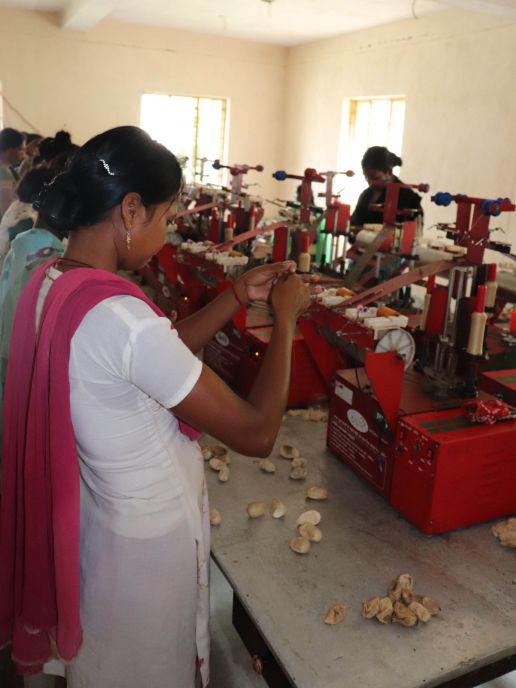
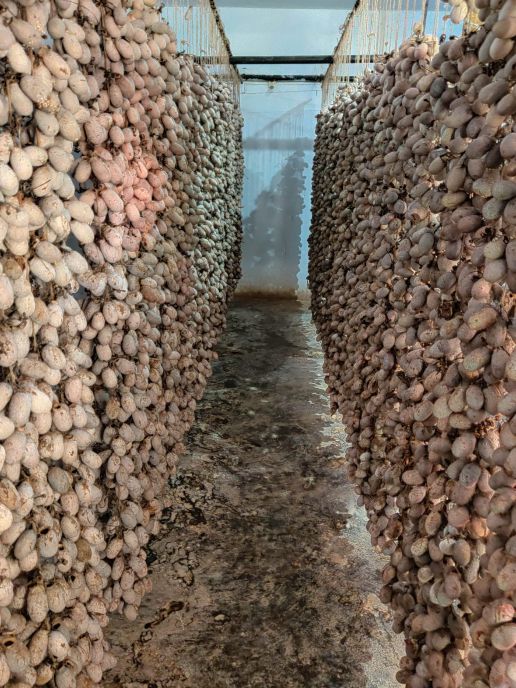
Our thanks to Chandra for his insights and joining us in conversation as part of the Key Conversation series with Sustainable Innovations curator, Simon Angel. If you’re interested in the topics discussed here by Chandra Prakash or to find out how you can support his work you can contact him here: prakash@cocccon.de
Let’s keep the conversation going … did this project spark an idea or do you have any questions? We’d love to hear from you, send us an email to info@munichfabricstart.com
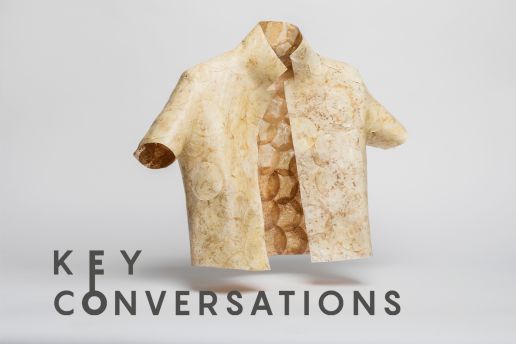
Key Conversations: Seamless Production with Mushroom Mycelium
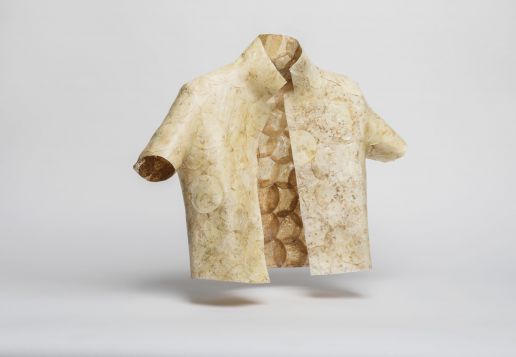
MycoTEX: The sustainable innovation driving seamless production using compostable mushroom mycelium
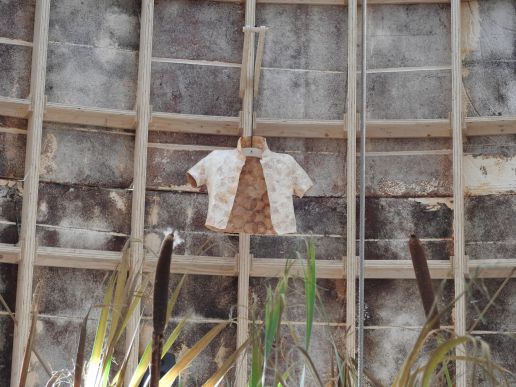
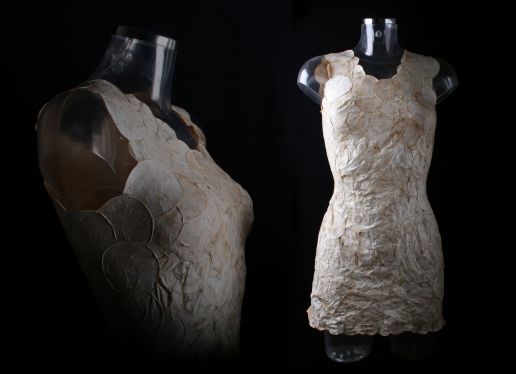
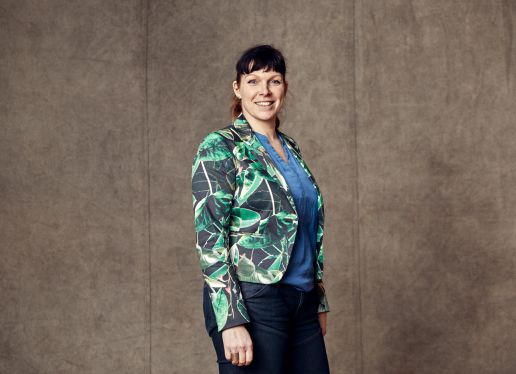
Dutch designer Aniela Hoitink is on a mission to change the way we use textiles. Known as the living material, with MycoTEX Aniela harnesses the organic and living properties of the compostable mushroom roots. Showcased in our forum for Sustainable Innovations in 2018, MycoTEX® is the ground breaking automated seamless manufacturing method allowing for custom-made products made from compostable mushroom roots.
As is the nature of living things, change and progress is a constant. From the early beginnings until now, Aniela takes us on her journey and talks us through the evolution of this sustainable innovation. From founding her own company, NEFFA, to scaling up production of MycoTEX, here’s how Aniela is changing the future of textiles.
How has your work evolved since you exhibited at our innovation hub Keyhouse in 2018 as part of the Sustainable Innovations forum?
Based on feedback we received from brands and consumers, we have changed our growing method and successfully created samples which are smooth and can feature a variety of textures for unique placement options. Now further on, the first reactions from potential customers are very promising. We are working towards the development of a pilot collection over the next 12 months. Even more exciting, we have now established our company NEFFA. We have expanded our team and are raising a first funding round to produce the pilot production.
Have you seen a change in the way companies approach collaborations in the last few years?
The interest in sustainable materials has grown extensively. The goal is to find out how sincere this interest is. Do they really want to start working with your materials and products or are they just filling up their library?
What is the difference between MycoTEX and other (mycelium) materials?
Most companies are interested in developing sustainable materials that fit into the conventional supply chain, as this is the easiest way to make an impact. This conventional production method is based on cutting & sewing and overproduction. This way of production generates a lot of waste, waste that once needed water, nutrients and CO2. Our holistic approach led us to the development of an automated seamless manufacturing method for biomaterials. This allows us to make a bigger impact in terms of sustainability rather than using sustainable materials alone. As our method is not based on cutting & sewing, we do not have this production waste. Furthermore, our supply chain is much more flexible and allows for personalisation at mass production scale.
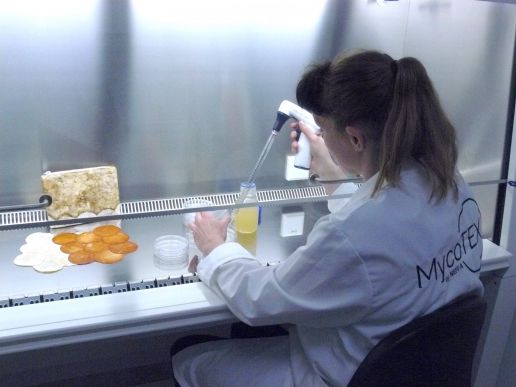
You are now in the process of scaling up the production of MycoTEX, can you share the highs & lows as well as the challenges you face to make this a reality?
Developing any company from scratch is hard but rewarding if you have a vision to follow. For us, the highs are all of the steps we take in the right direction. From finding the right partners who agree with your vision from the very first slide you show, to improving the material and achieving the result you like and more importantly seeing potential customers liking those results too.
The challenge is getting investors on board. A small ROI (return on investment) is something that most investors don’t like. The search to find the right investors takes a long time, trying to find those who are willing to join us and make an impact in the fashion industry. Clients are now used to sourcing sustainable materials and are approaching us for that reason. MycoTEX offers a product made using a seamless manufacturing technology which differs from the usual offer of fabrics by sheet or by meter. It can be challenging to convince them that our method is actually much more sustainable and worth the trouble to work with such an innovation.
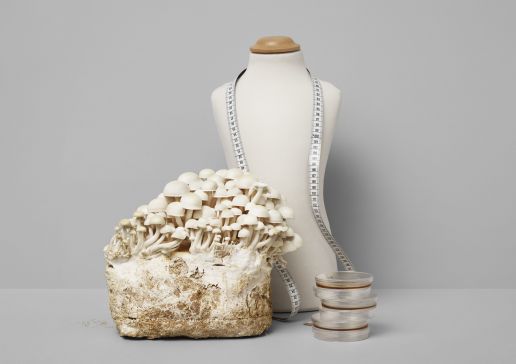
MycoTEX was recently awarded the Solar Impulse Efficient Solution Label, can you tell us what this will do for MycoTEX?
To receive the “Solar Impulse Efficient Solution” Label, MycoTEX was thoroughly assessed by a pool of independent experts according to 5 criteria covering the three main topics of feasibility, environmental impact and profitability. It is an external validation of our solution, which helps in attracting customers and investors, as this is a proof of high standards in profitability and sustainability.
Who is your dream company to collaborate with and why?
We would like to work with innovative companies who are eager to rethink products being made, companies like Alexander McQueen, Martin Margiela or Mugler. Imaging the different shapes you can make if there is no need for seems, not even a shoulder or side seam. Kim Kardashian would be our dream type. Her curvy body is quite a challenge from a pattern-drawing point of view. With our seamless manufacturing method we could create the perfect fitting jacket for her.
Our thanks to Aniela for her insights and joining us in conversation as part of the Key Conversation series with Sustainable Innovations curator, Simon Angel. If you’re interested in a collaboration with Aniela Hoitink, she’d love to hear from you! Find out more here: https://neffa.nl/contact/
Let’s keep the conversation going … did this project spark an idea or do you have any questions? We’d love to hear from you, send us an email to info@munichfabricstart.com