

The AFTERLIFE Project by Oscar Wentz
Pioneering a Playful Rebellion Against Fast Fashion
SUSTAINABLE INNOVATIONS
In an industry swamped by fast fashion and ever-changing trends, Oscar Wentz’s AFTERLIFE project has hit the reset button. The AFTERLIFE project is a rallying cry that puts sustainability front and center. The project is not only turning cast-off clothes into streetwear but it is also challenging us to examine our own consumption habits and rethink what we consider “waste,” in our closet – and ultimately, the world around us.

From Waste to Wonder: A Playful Approach to Serious Change
AFTERLIFE is more than a fashion line; it’s a movement. It started as a response to the drawbacks of fast fashion – cheaply made pieces designed to be worn once and forgotten. Created entirely from pre-existing clothing pieces, the project shines a light on the excessive waste produced by fast fashion. By reimagining and reconstructing these discarded garments, what began as a single initiative has evolved into an entire collection and a growing movement, built on playful and simple designs that encourage people to try their hand at sewing.
Oscar’s design philosophy is encapsulated in his desire to tackle the waste streams of Europe’s textile industry. Rather than ignoring piles of unwanted clothing, he sees them as raw materials brimming with possibility. “As a designer, I am committed to transforming the textile industry’s approach to sustainability by addressing its waste streams head-on,” he explains.
Turning what was once considered “trash” into cherished fashion statements, the collection targets young individuals not only aesthetically but also through the simplicity of its cuts and stitches, encouraging them to engage in making and sewing.
Each piece in the AFTERLIFE collection serves as a testament to what can be achieved when creativity meets responsibility. Oscar offers not only a selection of pre-made repurposed garments but also provides step-by-step instructions on how to recreate these designs at home. His vision extends beyond mere recycling; he aims to inspire a circular economy where sustainability is embedded in every aspect of fashion – from design to consumption.
“As a designer, I am committed to transforming the textile industry’s approach to sustainability by addressing its waste streams head-on.”


But collaboration is key to Oscar’s vision. He works with Sympany, a company dedicated to collecting and redistributing donated clothes, he’s shown how we can harness what we already have instead of churning out new stuff. It is a partnership that gives old garments a second shot at life, which is right in line with Oscar’s goal of making sustainability both practical and fun.
Also, Oscar firmly believes that sewing should be accessible to everyone – even if you’ve never threaded a needle before. That’s why he hosts workshops and provides easy-to-follow tutorials, giving people the confidence to transform their old clothes at home. These hands-on sessions aren’t just about mending seams; they foster a sense of community and bring back the joy of crafting something unique.
He’s also got his eye on a bigger picture: a circular economy where creativity and accountability go hand in hand. By encouraging playful experimentation, Oscar makes the idea of circularity in fashion far less intimidating and the concept of circularity in the textile industry more approachable.
Engage with Oscar Wentz and AFTERLIFE
AFTERLIFE isn’t just about making old clothes look cool; it’s about proving we can create a sustainable, vibrant fashion culture that values originality over mass production. And in Oscar’s world, anyone with a bit of curiosity – and a willingness to pick up a needle and thread – is welcome to join.


THIS MIGHT BE ALSO INTERESTING FOR YOU:

MUNICH FABRIC START – January 26 closing report
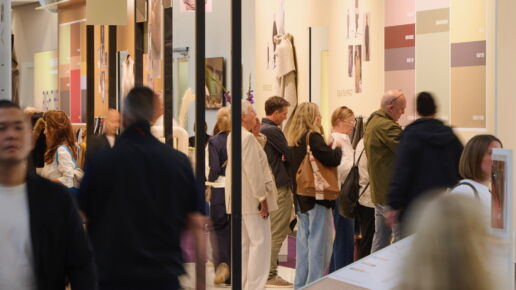
A solid trade show. An optimistic mindset. That sums up the outcome of MUNICH FABRIC START. After three days, the Munich textile fair came to an end yesterday, Thursday, with the integrated show-in-shows BLUEZONE, KEYHOUSE and THE SOURCE. MUNICH FABRIC START concluded with a stable visitor frequency compared to the previous event.
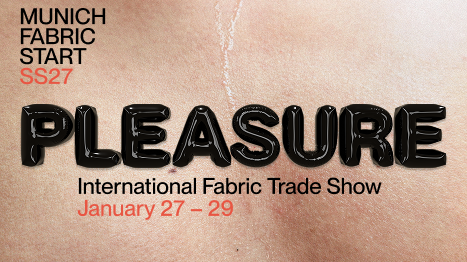
MUNICH FABRIC START – Between Attitude and Sensuality
The future begins where we reimagine it. The overarching theme of PLEASURE stands for fashion as an emotional space, as an expression of attitude and cultural reflection.

KnitForm+ by Jeanne Mora – SUSTAINABLE INNOVATIONS
What matters is how the textile responds: how it regulates volume, distributes pressure, and transitions from flat to three-dimensional states. Process transparency is embedded in the methodology itself.

Cartoon – WEAR YOUR OPTIMISM
Embark on this fashionable journey and discover the new Cartoon collection at our store. Be inspired, mix and match to your heart's content, and wear optimism—every day, for every occasion.

RETRAKT – SUSTAINABLE INNOVATIONS
Performance, in this context, is measured by organisational resilience. RETRAKT applies resilience engineering to help employees anticipate, monitor, respond to, and learn from complex and changing requirements.

MATERIA FUTURA – SUSTAINABLE INNOVATIONS
Materia Futura is not proposing a new bio-material category, nor a finished commercial textile. What distinguishes the project is its design-led investigation into the emotional and aesthetic dimensions of bio-based materials, an area often sidelined in sustainability discourse.
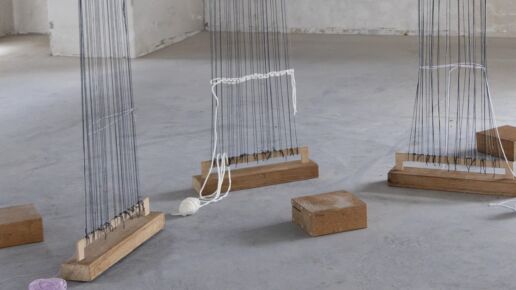
THREADED PROTOCOLS – SUSTAINABLE INNOVATIONS
Threaded Protocols is not a textile innovation in the commercial sense, nor a digital tool disguised as craft. What makes the work distinct is its material investigation into how computational logic originates in textile practice and what is lost when those logics are abstracted into opaque technological systems.
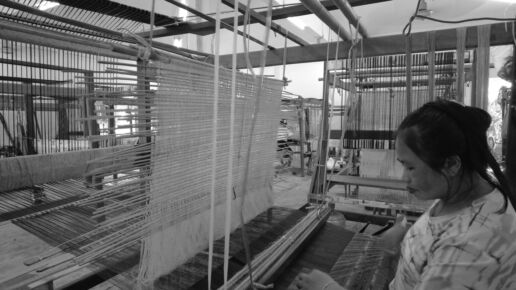
MARIE VILAY – SUSTAINABLE INNOVATIONS
Marie Vilay does not present a new fabric or production technique. What distinguishes her work is a method of reading and translating textile knowledge across cultures, systems, and moments of transition.
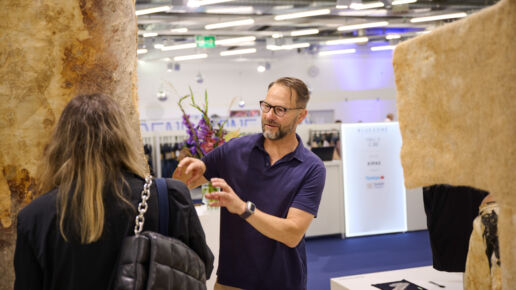
Interview with Simon Angel, Curator of SUSTAINABLE INNOVATIONS
Each season, the Sustainable Innovations forum brings together projects that provoke, inspire, and challenge assumptions. This year is no exception, with work ranging from bio-luxury couture to energy-generating textiles and regenerative materials grown from wetlands.
MUNICH FABRIC START – September 25 closing report
At its 56th edition, MUNICH FABRIC START reinforced its clear positioning. Over two days, the Munich textile trade show brought the fashion industry together with its four show-in-show formats.