

The Textile Industry: What to Expect in the Next Five Years
Guest post by Muchaneta ten Napel, Founder and CEO, Shape Innovate
The textile industry has undergone remarkable changes, shifting from the use of traditional handlooms to state-of-the-art factories that produce enormous amounts of textiles and clothing. With the quickening pace of technological advancements, shifting consumer preferences, and evolving global trends, the landscape of the textile industry is on the brink of even more significant transformations in the upcoming five years.
Sustainability, No Longer a Buzzword
Sustainability has evolved from a catchphrase to a prerequisite in the textile sector. The rising consciousness of consumers regarding their environmental impact has compelled textile producers to adopt eco-friendly practices. As a result, the forthcoming half-decade is expected to herald an era where sustainability is the rule, not the exception.
The focus will be reducing hazardous chemicals, water, and energy in textile production. The industry will place greater emphasis on circular production methods and using recycled materials. Brands will strive to decrease their carbon footprint while maintaining the quality and style of their products, ensuring their entire supply chain adheres to sustainability standards.
Technology, A Key Driver
Technological innovation, a key industry driver, will further shape production processes over the next five years. Automation, artificial intelligence (AI), and the Internet of Things (IoT) will redefine production efficiency. Automation will enhance efficiency, reduce manual labour, and minimise production errors, leading to quicker turnarounds, amplified production capacity, and cost reduction.
AI will enable trend prediction, production optimisation, and quality control enhancement. Textile producers will leverage AI tools to analyse data and make informed sourcing, manufacturing, and distribution decisions. By connecting devices and systems, IoT will provide the following:
- Real-time control and monitoring of production processes.
- Thus improving quality control.
- Reducing waste.
- Boosting productivity.
Demand for luxury and premium textile products will rise over the next five years. An increase in consumer financial stability and an expanding middle class in emerging markets like China and India will drive this trend. In addition, the shift in consumer behaviour due to the COVID-19 pandemic towards prioritising comfort, quality, and durability over fast fashion will likely persist.
The Rise of Local Production
The pandemic also highlighted global supply chains’ vulnerability, causing production and delivery disruptions. The coming years will see a rise in local production as brands seek to reduce dependency on foreign suppliers. This shift towards local production will bring quicker turnarounds, lower transportation costs, reduced carbon footprint, and greater control over the supply chain. It will also stimulate local economies by creating job opportunities and nurturing local textile industries.
However, local production comes with challenges, including potentially higher costs than overseas production and the need for a skilled workforce. Nevertheless, the brands that successfully adapt to these shifts and meet evolving consumer needs will flourish in the upcoming years. In addition, the textile industry’s transformation presents an opportunity to address long-standing issues such as environmental sustainability, ethical production, and supply chain transparency, promising an exciting future.
In conclusion, the textile industry is poised for a significant evolution in the next five years, propelled by consumer behaviour, global trends, and technological advancements.
The textile industry is poised for a significant transformation in the next five years. Its evolution presents an opportunity to address long-standing challenges such as environmental sustainability, ethical production, and supply chain transparency.
All in all, it is an exciting time for the textile industry, and the next five years will undoubtedly shape its future.
Are you interested in more in-depth facts and figures on the new textile economy?
Visit the Shape Innovate Lounge in H5 | 04 or attend the mini-lectures in the Keyhouse.

About the author
Founding editor-in-chief of Shape Innovate, Muchaneta has worked in the fashion industry for over 14 years. She is currently one of the leading influencers speaking and writing about the merger of fashion with technology and wearable technology.
Muchaneta ten Napel | m@shapeinnovate.com
THIS ALSO MIGHT BE INTERESTING FOR YOU
EMELIE SANDRE DESIGN – SUSTAINABLE INNOVATIONS
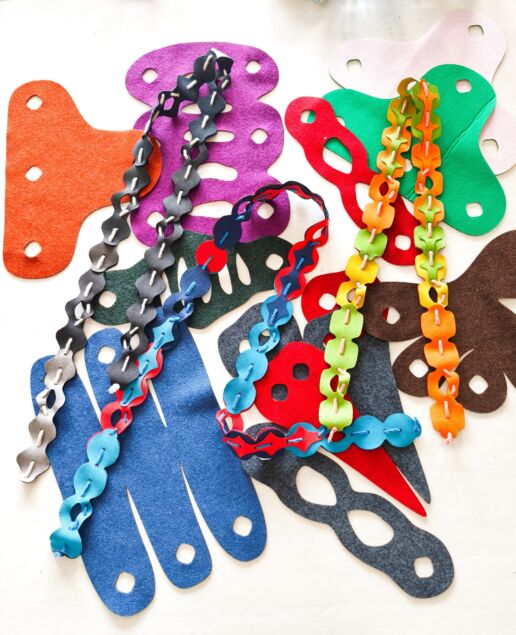
Modularity is hardly a new concept. It has transformed architecture, furniture and industrial design for decades. Applying it to soft textiles, however, opens an entirely different conversation.
Smart Textile Design – SUSTAINABLE INNOVATIONS
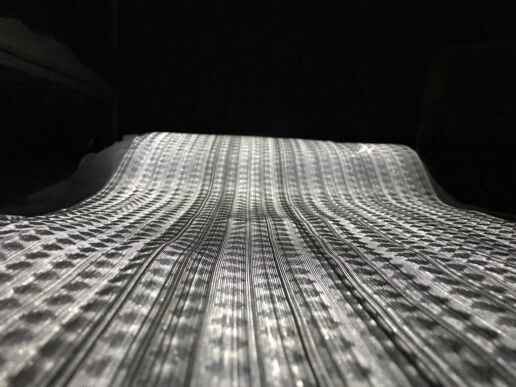
We have always been driven by creativity and curiosity. Our practice evolves through prototypes, never finished, always asking more questions of materials, processes and possibilities.
STUDIO ALICE GIELEN – SUSTAINABLE INNOVATIONS
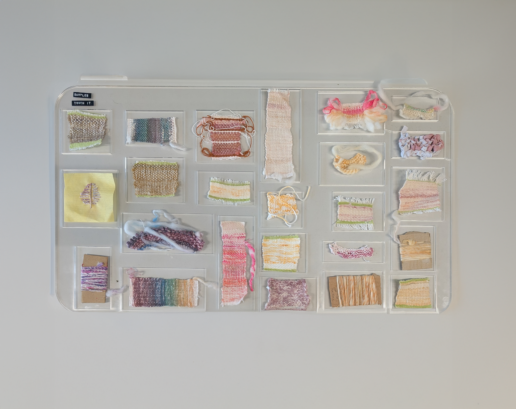
It is an idea that feels increasingly relevant as artificial intelligence and computational design become part of fashion's creative landscape. Perhaps the future is not about humans versus machines. Perhaps it is about learning how to create together.
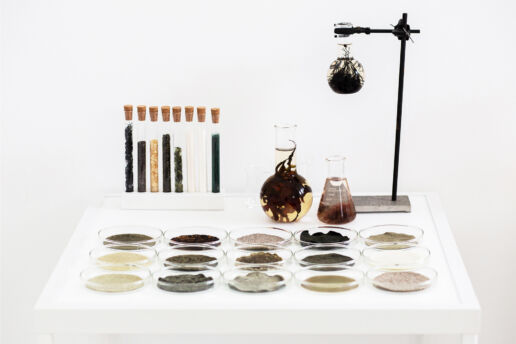
Leather from the Sea – SUSTAINABLE INNOVATIONS
"Through hands-on experimentation, I explore the potential of new surfaces and alternative forms of leather, aiming to reconnect human life with the natural world as an interconnected fabric."
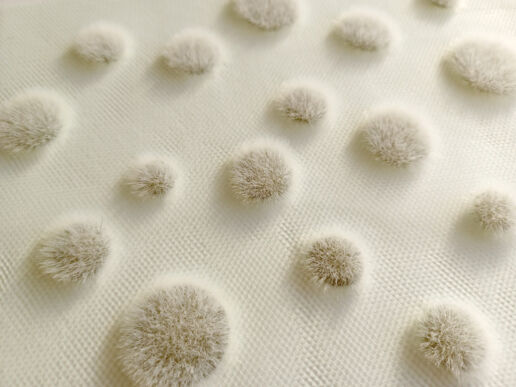
Maison du Flock – SUSTAINABLE INNOVATIONS
Working with everything from delicate tulle and lace to leather, sequins and other unconventional materials, the studio has transformed flock into a contemporary design language capable of meeting the demands of luxury fashion and Haute Couture.

MUNICH FABRIC START – January 26 closing report
A solid trade show. An optimistic mindset. That sums up the outcome of MUNICH FABRIC START. After three days, the Munich textile fair came to an end yesterday, Thursday, with the integrated show-in-shows BLUEZONE, KEYHOUSE and THE SOURCE. MUNICH FABRIC START concluded with a stable visitor frequency compared to the previous event.
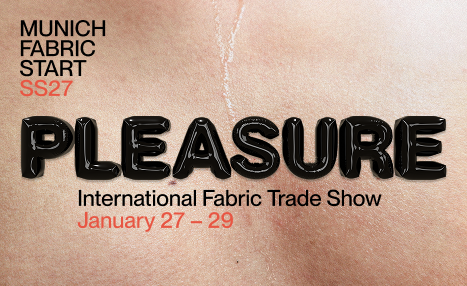
MUNICH FABRIC START – Between Attitude and Sensuality
The future begins where we reimagine it. The overarching theme of PLEASURE stands for fashion as an emotional space, as an expression of attitude and cultural reflection.
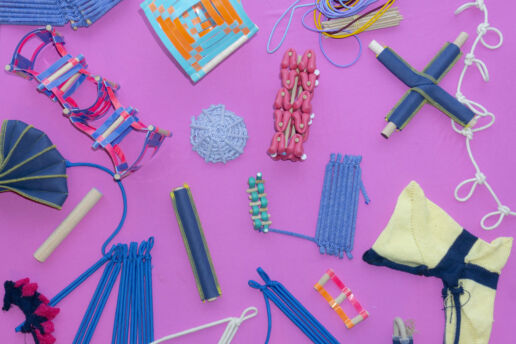
KnitForm+ by Jeanne Mora – SUSTAINABLE INNOVATIONS
What matters is how the textile responds: how it regulates volume, distributes pressure, and transitions from flat to three-dimensional states. Process transparency is embedded in the methodology itself.

Cartoon – WEAR YOUR OPTIMISM
Embark on this fashionable journey and discover the new Cartoon collection at our store. Be inspired, mix and match to your heart's content, and wear optimism—every day, for every occasion.

RETRAKT – SUSTAINABLE INNOVATIONS
Performance, in this context, is measured by organisational resilience. RETRAKT applies resilience engineering to help employees anticipate, monitor, respond to, and learn from complex and changing requirements.