

The Power of Data:
Understanding How Data Tackles Challenges in the Textile Industry
by Muchaneta ten Napel
Data might feel intimidating for the fashion and textile industry, but it holds the power to unlock transparency, boost efficiency, and spark innovation. Traci Kinden, Director at TEXroad Foundation, shares her insights in an interview with Muchaneta ten Napel from Shape Innovate on how small, strategic steps and collaboration can transform data into a force for positive change.
Muchaneta: Let’s start with the big question: why does data seem so intimidating to people in the textile industry?
Traci: Data is such a small word with immense meaning, and everyone interprets it differently. If you don’t see yourself as a “numbers person,” it can feel overwhelming and even scary. A lot of the fear stems from misconceptions about what data is and how it can be used. But I’m determined to change that perspective and show that data can be accessible – and even exciting!
Muchaneta: That’s a great goal. Can you explain what TEXroad does with data to bridge these gaps?
Traci: At TEXroad, we work primarily in post-consumer textile flows. We partner with municipalities and their collection and sorting teams to gather data at every stage – collection, sorting, and processing. This data allows us to evaluate how systems are performing and measure the impact of changes over time. Additionally, we’re involved in EU-funded projects, like PESCO Up, where we develop minimum data requirements for textile recycling chains. Our goal is to make data a shared, standardized language that benefits the entire value chain.
Muchaneta: Speaking of EU-funded projects, what ensures the longevity of such initiatives after their official end?
Traci: EU-funded projects have defined start and end dates, but we strive to make their outcomes scalable and sustainable. For example, in PESCO Up, we’ve developed minimum data requirements for the recycling chain. These are shared across multiple projects to ensure consistency and long-term use. At TEXroad, we also focus on publishing non-sensitive datasets for open access, so the insights remain available to the industry even after the projects conclude.


Muchaneta: What are some of the biggest challenges you’ve faced in promoting data sharing and collaboration?
Traci: One major challenge is the lack of standardization in the industry. For instance, terms like “post-industrial waste” and “pre-consumer waste” are often used interchangeably, leading to confusion. Another hurdle is companies’ hesitancy to share data due to fears of exposing sensitive information. Building trust takes time – our sales cycles can span 12 to 24 months before concrete agreements are made.
Muchaneta: Do you think legislation could help push businesses to share and use data more effectively?
Traci: Legislation has potential, but it needs to be well-designed and adaptable to market realities. It’s crucial for businesses to align their data strategies with their priorities, whether it’s compliance with legislation or operational improvements. Taking small, strategic steps – like understanding what data you have and identifying gaps – can make navigating new policies manageable.
Muchaneta: Can you share a success story where data made a tangible impact?
Traci: Absolutely. I worked with a Dutch textile preprocessor that significantly reduced its material rejection rate – from 25–30% to under 5% – by using data to communicate clear expectations to suppliers. This kind of progress demonstrates how even small-scale data applications can lead to systemic improvements.
“At TEXroad, we aim to answer the “stupid” questions – like how much post-consumer textile waste exists – so businesses can focus on the smarter ones. By improving data quality and accessibility, we’re helping the industry take meaningful steps toward circularity and sustainability.” – Traci Kinden, TEXroad Director
Muchaneta: Transparency is a recurring theme. Why is it so important?
Traci: Transparency builds trust. For instance, many people hesitate to use textile collection bins because they don’t know where their clothing ends up. Data can illuminate these processes, giving people confidence in systems like extended producer responsibility (EPR) schemes. Transparency also enables companies to evaluate their impact and make informed decisions.
Muchaneta: What excites you most about the future of textile data?
Traci: The potential to transform the industry excites me. Better data can level the playing field for SMEs, drive innovation, and address global issues like waste mismanagement. The possibilities are endless if we can improve data quality, accessibility, and speed.
Muchaneta: Finally, what role does TEXroad play in this transformation?
Traci: At TEXroad, we aim to answer the “stupid” questions – like how much post-consumer textile waste exists – so businesses can focus on the smarter ones. By improving data quality and accessibility, we’re helping the industry take meaningful steps toward circularity and sustainability.

Follow along on TEXroad’s journey on data as a key for material use and lifecycle. Learn more on TEXroad’s mission here.
THIS MIGHT BE ALSO INTERESTING FOR YOU
EMELIE SANDRE DESIGN – SUSTAINABLE INNOVATIONS
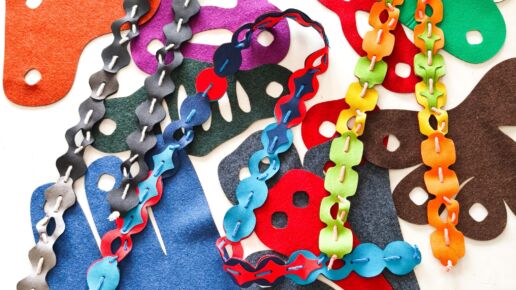
Modularity is hardly a new concept. It has transformed architecture, furniture and industrial design for decades. Applying it to soft textiles, however, opens an entirely different conversation.
Smart Textile Design – SUSTAINABLE INNOVATIONS
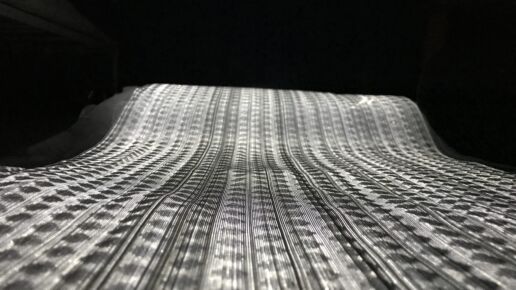
We have always been driven by creativity and curiosity. Our practice evolves through prototypes, never finished, always asking more questions of materials, processes and possibilities.
STUDIO ALICE GIELEN – SUSTAINABLE INNOVATIONS
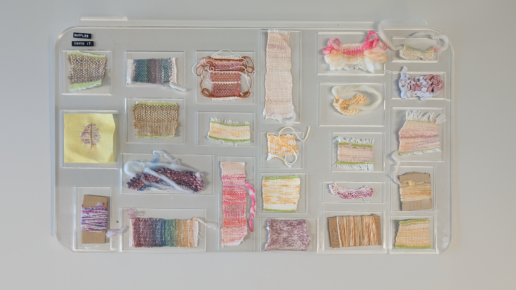
It is an idea that feels increasingly relevant as artificial intelligence and computational design become part of fashion's creative landscape. Perhaps the future is not about humans versus machines. Perhaps it is about learning how to create together.

Leather from the Sea – SUSTAINABLE INNOVATIONS
"Through hands-on experimentation, I explore the potential of new surfaces and alternative forms of leather, aiming to reconnect human life with the natural world as an interconnected fabric."
Maison du Flock – SUSTAINABLE INNOVATIONS
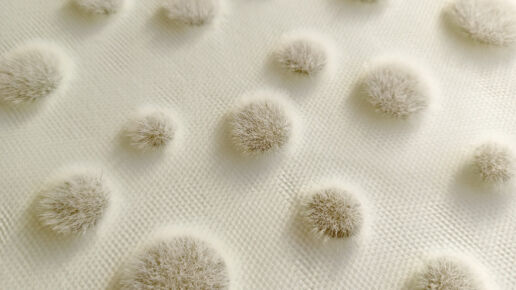
Working with everything from delicate tulle and lace to leather, sequins and other unconventional materials, the studio has transformed flock into a contemporary design language capable of meeting the demands of luxury fashion and Haute Couture.

MUNICH FABRIC START – January 26 closing report
A solid trade show. An optimistic mindset. That sums up the outcome of MUNICH FABRIC START. After three days, the Munich textile fair came to an end yesterday, Thursday, with the integrated show-in-shows BLUEZONE, KEYHOUSE and THE SOURCE. MUNICH FABRIC START concluded with a stable visitor frequency compared to the previous event.

MUNICH FABRIC START – Between Attitude and Sensuality
The future begins where we reimagine it. The overarching theme of PLEASURE stands for fashion as an emotional space, as an expression of attitude and cultural reflection.

KnitForm+ by Jeanne Mora – SUSTAINABLE INNOVATIONS
What matters is how the textile responds: how it regulates volume, distributes pressure, and transitions from flat to three-dimensional states. Process transparency is embedded in the methodology itself.

Cartoon – WEAR YOUR OPTIMISM
Embark on this fashionable journey and discover the new Cartoon collection at our store. Be inspired, mix and match to your heart's content, and wear optimism—every day, for every occasion.

RETRAKT – SUSTAINABLE INNOVATIONS
Performance, in this context, is measured by organisational resilience. RETRAKT applies resilience engineering to help employees anticipate, monitor, respond to, and learn from complex and changing requirements.