

RETRAKT: From Circular Ambition to Operational Reality
SUSTAINABLE INNOVATIONS
RETRAKT is not a new material, fibre, or fabric system. What makes it different is more fundamental: it is a research-based transformation framework designed to help textile and apparel companies actually implement circular economy requirements inside day-to-day operations. At a time when circularity is becoming mandatory under EU legislation, RETRAKT focuses on the gap most companies struggle with: translating regulation into workable processes across design, sourcing, production, and data management.
Developed as part of the research project “Resilient Transformation Management for the Circular Economy in the Textile Industry”, RETRAKT addresses circularity as a socio-technical challenge, not a purely technical one. Its core innovation lies in combining product compliance management, resilience engineering, and employee-centred process design to help companies shift from linear to circular value creation in a structured, realistic way.
“Performance, in this context, is measured by organisational resilience. RETRAKT applies resilience engineering to help employees anticipate, monitor, respond to, and learn from complex and changing requirements.”

Rather than making sustainability claims, RETRAKT starts with regulatory facts. New EU textile legislation, including requirements linked to the EU Textile Strategy 2030, will make circular design, transparency, and traceability legally binding. RETRAKT systematically analyses these laws and translates them into concrete tasks for companies, from material selection and design decisions to supplier communication and data documentation.
Compliance is treated as the backbone of circularity, not an afterthought. Therefore, traceability within RETRAKT is approached through process transparency rather than labels. The project develops methods to document workflows, responsibilities, and decision paths inside companies, supported by a planned Digital Cooperation Platform. This platform is intended to support collaboration across international value chains and to prepare companies for future requirements such as the Digital Product Passport.
In terms of scalability, RETRAKT is not a lab experiment but a practice-oriented research project running from 2025 to 2028, implemented directly within partner companies from the textile and apparel industry. Its scalability lies in its transferability: the procedures, tools, and methods developed are designed to be adapted by other companies and, in the longer term, potentially by other industries facing similar regulatory pressure.
Performance, in this context, is measured by organisational resilience. RETRAKT applies resilience engineering to help employees anticipate, monitor, respond to, and learn from complex and changing requirements. This human-centred approach recognises that circularity will only work if people inside companies are enabled to manage uncertainty and complexity, rather than being overwhelmed by it.
RETRAKT positions itself clearly within the wider industry shift away from voluntary sustainability towards mandatory circular compliance. It is most relevant to brands, manufacturers, and suppliers who recognise that future competitiveness will depend not just on better materials, but on better systems.
Success for RETRAKT is not a single product outcome. It is the creation of a repeatable, resilient model for circular transformation that companies can realistically use.
THIS MIGHT BE ALSO INTERESTING FOR YOU:
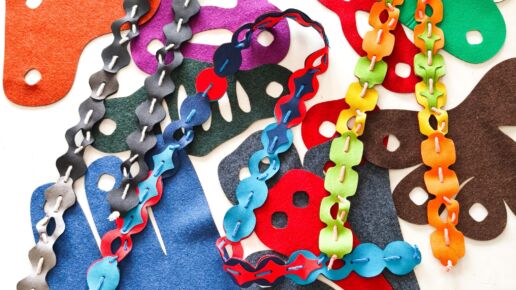
EMELIE SANDRE DESIGN – SUSTAINABLE INNOVATIONS
Modularity is hardly a new concept. It has transformed architecture, furniture and industrial design for decades. Applying it to soft textiles, however, opens an entirely different conversation.
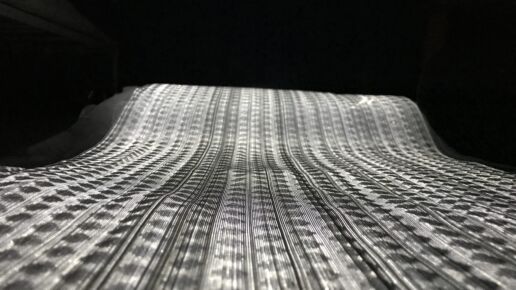
Smart Textile Design – SUSTAINABLE INNOVATIONS
We have always been driven by creativity and curiosity. Our practice evolves through prototypes, never finished, always asking more questions of materials, processes and possibilities.
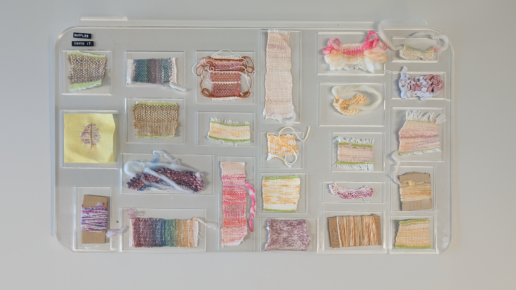
STUDIO ALICE GIELEN – SUSTAINABLE INNOVATIONS
It is an idea that feels increasingly relevant as artificial intelligence and computational design become part of fashion's creative landscape. Perhaps the future is not about humans versus machines. Perhaps it is about learning how to create together.

Leather from the Sea – SUSTAINABLE INNOVATIONS
"Through hands-on experimentation, I explore the potential of new surfaces and alternative forms of leather, aiming to reconnect human life with the natural world as an interconnected fabric."
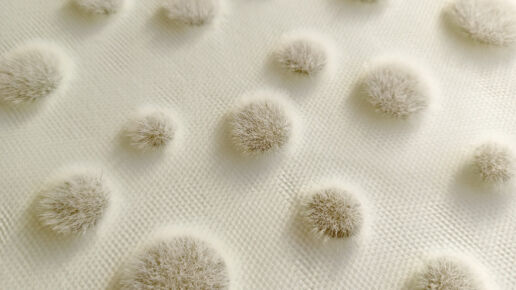
Maison du Flock – SUSTAINABLE INNOVATIONS
Working with everything from delicate tulle and lace to leather, sequins and other unconventional materials, the studio has transformed flock into a contemporary design language capable of meeting the demands of luxury fashion and Haute Couture.

MUNICH FABRIC START – January 26 closing report
A solid trade show. An optimistic mindset. That sums up the outcome of MUNICH FABRIC START. After three days, the Munich textile fair came to an end yesterday, Thursday, with the integrated show-in-shows BLUEZONE, KEYHOUSE and THE SOURCE. MUNICH FABRIC START concluded with a stable visitor frequency compared to the previous event.
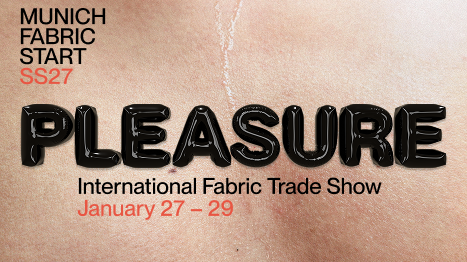
MUNICH FABRIC START – Between Attitude and Sensuality
The future begins where we reimagine it. The overarching theme of PLEASURE stands for fashion as an emotional space, as an expression of attitude and cultural reflection.

KnitForm+ by Jeanne Mora – SUSTAINABLE INNOVATIONS
What matters is how the textile responds: how it regulates volume, distributes pressure, and transitions from flat to three-dimensional states. Process transparency is embedded in the methodology itself.

Cartoon – WEAR YOUR OPTIMISM
Embark on this fashionable journey and discover the new Cartoon collection at our store. Be inspired, mix and match to your heart's content, and wear optimism—every day, for every occasion.

MATERIA FUTURA – SUSTAINABLE INNOVATIONS
Materia Futura is not proposing a new bio-material category, nor a finished commercial textile. What distinguishes the project is its design-led investigation into the emotional and aesthetic dimensions of bio-based materials, an area often sidelined in sustainability discourse.