

Intuition
MARIE VILAY - SUSTAINABLE INNOVATIONS
MARIE VILAY: Reading, Carrying, and Reframing Textile Knowledge
SUSTAINABLE INNOVATIONS
Marie Vilay does not present a new fabric or production technique. What distinguishes her work is a method of reading and translating textile knowledge across cultures, systems, and moments of transition. Her practice asks a question that sits at the edge of innovation: what happens to textile traditions, patterns, and objects when they move between geographies, power structures, and production logics?
“For designers, researchers, and institutions navigating questions of decolonisation, migration, and responsibility, her work offers a different kind of innovation: one rooted in listening, translation, and care rather than optimisation.”
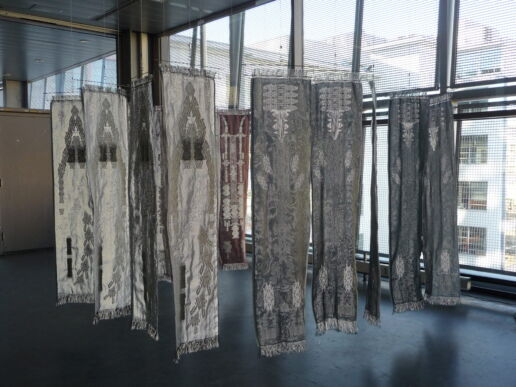
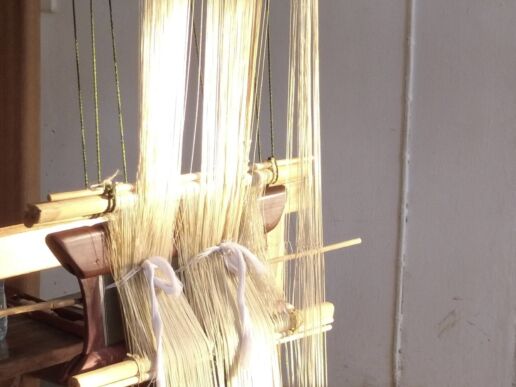
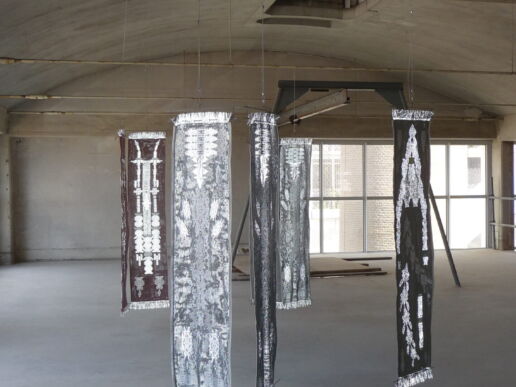
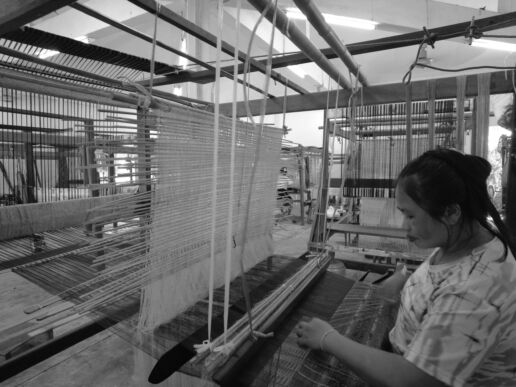
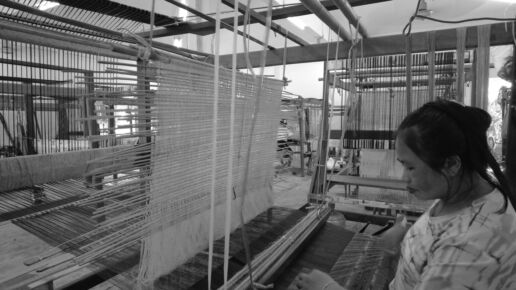
In To Read a Pattern, Vilay investigates how Laotian weaving patterns might persist when removed from their original cultural and social context and placed within European industrial production.
In Laos, weaving is a living, evolving practice, with patterns traditionally passed from mother to daughter. Vilay’s research highlights how colonial history and orientalist framing have shaped how these patterns are perceived in Western contexts, often flattening them into static heritage rather than living knowledge.
Using patterns gathered through field research in Laos and developing new interpretations through industrial processes, she explores whether continuity is possible without extraction or simplification. This work was produced in collaboration with TextielLab and the Textile Museum in Tilburg.
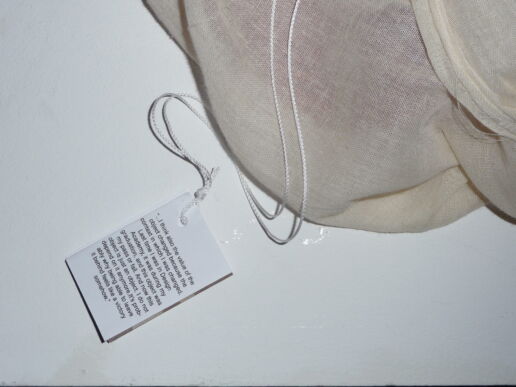
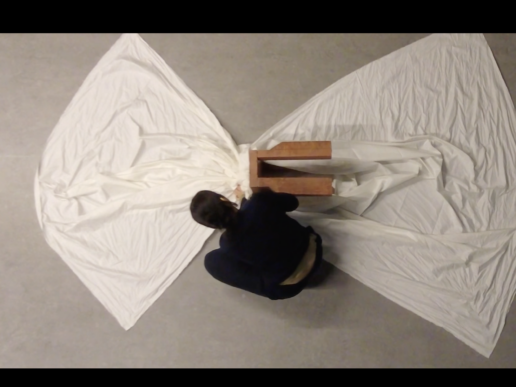
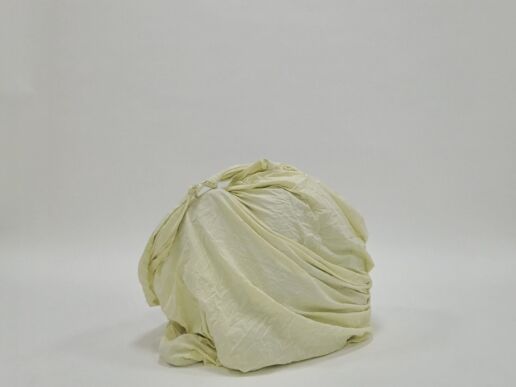
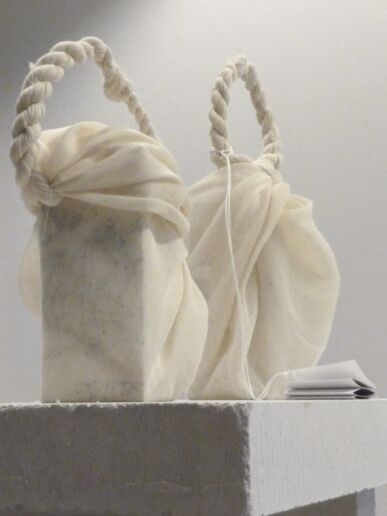
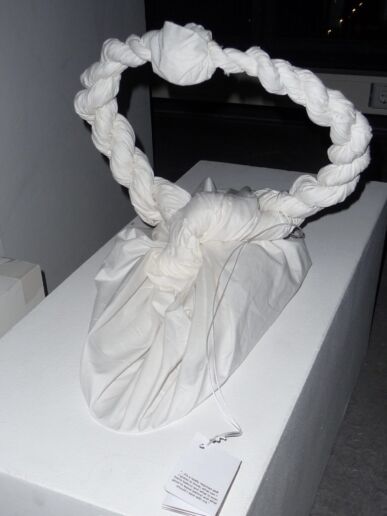
Her second project, A Bindle (in Transition), shifts from production systems to personal and collective movement. A bindle is a simple cloth used to carry essential belongings while travelling. Vilay reinterprets this form as a container for care, memory, and what is left behind. Using graduation projects abandoned by peers as material, she documents stories of departure, uncertainty, and transition, binding objects and narratives together through a universal textile gesture.
Vilay’s work is not designed for immediate commercial application. Its relevance lies elsewhere: in challenging how value, authorship, and continuity are assigned in textile culture. For designers, researchers, and institutions navigating questions of decolonisation, migration, and responsibility, her work offers a different kind of innovation: one rooted in listening, translation, and care rather than optimisation.
THIS MIGHT BE ALSO INTERESTING FOR YOU:

MUNICH FABRIC START – January 26 closing report
A solid trade show. An optimistic mindset. That sums up the outcome of MUNICH FABRIC START. After three days, the Munich textile fair came to an end yesterday, Thursday, with the integrated show-in-shows BLUEZONE, KEYHOUSE and THE SOURCE. MUNICH FABRIC START concluded with a stable visitor frequency compared to the previous event.
MUNICH FABRIC START – Between Attitude and Sensuality
The future begins where we reimagine it. The overarching theme of PLEASURE stands for fashion as an emotional space, as an expression of attitude and cultural reflection.

KnitForm+ by Jeanne Mora – SUSTAINABLE INNOVATIONS
What matters is how the textile responds: how it regulates volume, distributes pressure, and transitions from flat to three-dimensional states. Process transparency is embedded in the methodology itself.

Cartoon – WEAR YOUR OPTIMISM
Embark on this fashionable journey and discover the new Cartoon collection at our store. Be inspired, mix and match to your heart's content, and wear optimism—every day, for every occasion.

RETRAKT – SUSTAINABLE INNOVATIONS
Performance, in this context, is measured by organisational resilience. RETRAKT applies resilience engineering to help employees anticipate, monitor, respond to, and learn from complex and changing requirements.

MATERIA FUTURA – SUSTAINABLE INNOVATIONS
Materia Futura is not proposing a new bio-material category, nor a finished commercial textile. What distinguishes the project is its design-led investigation into the emotional and aesthetic dimensions of bio-based materials, an area often sidelined in sustainability discourse.
THREADED PROTOCOLS – SUSTAINABLE INNOVATIONS
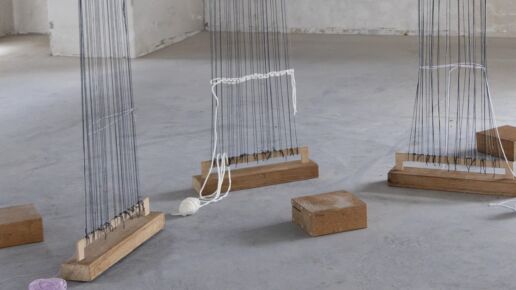
Threaded Protocols is not a textile innovation in the commercial sense, nor a digital tool disguised as craft. What makes the work distinct is its material investigation into how computational logic originates in textile practice and what is lost when those logics are abstracted into opaque technological systems.
MARIE VILAY – SUSTAINABLE INNOVATIONS
Marie Vilay does not present a new fabric or production technique. What distinguishes her work is a method of reading and translating textile knowledge across cultures, systems, and moments of transition.
Interview with Simon Angel, Curator of SUSTAINABLE INNOVATIONS
Each season, the Sustainable Innovations forum brings together projects that provoke, inspire, and challenge assumptions. This year is no exception, with work ranging from bio-luxury couture to energy-generating textiles and regenerative materials grown from wetlands.
MUNICH FABRIC START – September 25 closing report
At its 56th edition, MUNICH FABRIC START reinforced its clear positioning. Over two days, the Munich textile trade show brought the fashion industry together with its four show-in-show formats.

Interview with Simon Angel, Curator of SUSTAINABLE INNOVATIONS
SUSTAINABLE INNOVATIONS 2026:
Interview with Simon Angel, Curator of SUSTAINABLE INNOVATIONS
Guest article by Muchaneta ten Napel
Simon Angel has been curating the Sustainable Innovations Area at KEYHOUSE since 2018. For the January 2026 edition, Sustainable Innovations once again brings together projects that question, provoke, and expand the future of textiles. Register now to attend Sustainable Innovations at KEYHOUSE.
When you curate SUSTAINABLE INNOVATIONS, what tells you a project is genuinely worth platforming, beyond novelty or technical achievement?
Simon Angel: For me, novelty by itself is never enough, I always search behind the curtains, looking for stories, paradoxes, pain, pleasure and purpose. Technical achievement is important, but it is only a starting point. What I look for is whether a project asks an honest question about how we live, make, and value. A project becomes worth platforming when it shows responsibility towards material, culture, and consequence. That responsibility can take many forms. In Marie Vilay’s work, it appears as care for knowledge, authorship, and continuity. In Materia Futura, it emerges as a refusal to accept that sustainability must look deprived or emotionally flat. In Threaded Protocols, it shows up as a quiet but powerful re-examination of how technology itself is constructed. What connects them is not perfection, but intention. They are not trying to impress the industry. They are trying to understand it, and sometimes to gently disturb it; reframing or disrupt the ‘pattern’ of the industry. That is where I feel Sustainable Innovations has its real value.
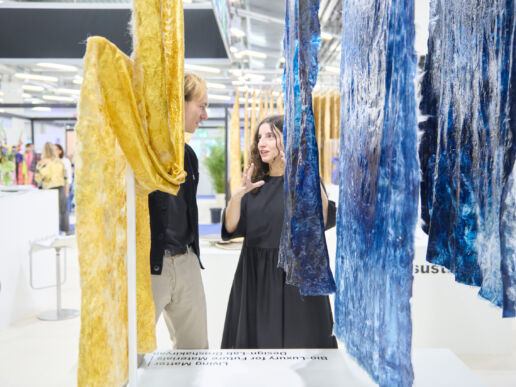
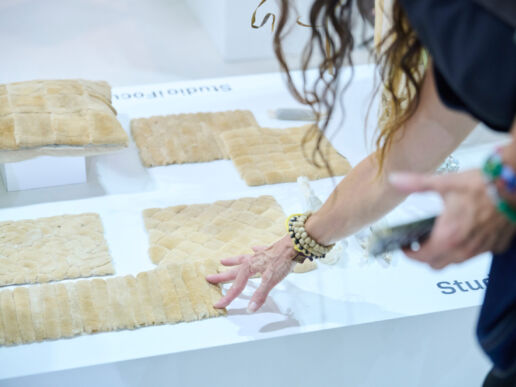
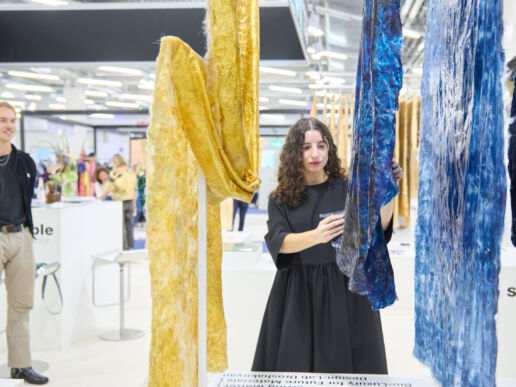
Many of the projects you select are not market-ready products. Why is it important, in your view, for an industry-focused fair to make space for unfinished or exploratory work?
Simon Angel: Because the future does not arrive fully packaged. If we only show what is ready for market, we only ever validate what already fits existing systems. Sustainable Innovations exists precisely to create space for what does not yet fit. Exploratory work allows us to see where thinking is moving before it becomes constrained by commercial frameworks. It is therefore an invitation to explore and to inspire. Projects like Materia Futura or Threaded Protocols are not trying to sell a product. They are offering a shift in perception. They allow the industry to engage with material, technology, and responsibility at a conceptual level before those ideas harden into supply chains and price points. An industry that only looks at finished solutions risks losing its ability to imagine better ones.
Looking at this year’s exhibitors, what do you feel they have in common?
Simon Angel: What they share is a deep awareness that textiles are not neutral. Whether it is Marie Vilay questioning how textile knowledge travels across cultures or Materia Futura reclaiming sensory desire in bio-based materials, each project understands textiles as carriers of history, power, emotion, and choice. They are not interested in materials as surfaces alone. They are interested in materials as systems of meaning. And importantly, none of them treats sustainability as a technical checklist. They treat it as a cultural responsibility. Textile with layers of different understandings, functions and conscious.
Many innovations struggle at the point of scale. What responsibility, if any, do curators and platforms have in addressing that gap?
Simon Angel: We cannot solve scale for innovators, but we can change how scale is understood. Too often, scale is presented as the only measure of success. But some projects are not meant to scale in the conventional sense. Their value lies in how they influence thinking, education, or future processes. As curators, our responsibility is to provide context. To connect exploratory work with industry actors who can interpret, adapt, or carry those ideas forward responsibly. To prevent innovation from being consumed only as trend material. Scale should be a conversation, a question mark maybe, but not a demand.
Across the projects this season, what assumptions about textiles or fashion do you think the industry most needs to unlearn?
Simon Angel: That sustainability must look modest, technical, or restrained. That innovation must be fast. That materials are separate from culture. That efficiency is always progress. The projects being presented should remind us that desire is not the enemy of sustainability. The industry must unlearn the idea that responsibility is a limitation. It is, in fact, a creative force.
If the wider industry took just one lesson from this year’s SUSTAINABLE INNOVATIONS, what would you want it to be?
Simon Angel: That innovation is not only about what we make, but about how we choose to make meaning. Sustainable Innovations is not a showroom of answers. It is an invitation to think differently. To slow down. To notice. To question. To reconnect material with intention. If the industry leaves with a renewed sense of responsibility towards both material and imagination, then the platform is doing its job.

About the author
Founding editor-in-chief of Shape Innovate, Muchaneta has worked in the fashion industry for over 14 years. She is currently one of the leading influencers speaking and writing about the merger of fashion with technology and wearable technology.
Muchaneta ten Napel | m@shapeinnovate.com
THIS MIGHT BE ALSO INTERESTING FOR YOU:
MUNICH FABRIC START – January 26 closing report
A solid trade show. An optimistic mindset. That sums up the outcome of MUNICH FABRIC START. After three days, the Munich textile fair came to an end yesterday, Thursday, with the integrated show-in-shows BLUEZONE, KEYHOUSE and THE SOURCE. MUNICH FABRIC START concluded with a stable visitor frequency compared to the previous event.
MUNICH FABRIC START – Between Attitude and Sensuality
The future begins where we reimagine it. The overarching theme of PLEASURE stands for fashion as an emotional space, as an expression of attitude and cultural reflection.
KnitForm+ by Jeanne Mora – SUSTAINABLE INNOVATIONS
What matters is how the textile responds: how it regulates volume, distributes pressure, and transitions from flat to three-dimensional states. Process transparency is embedded in the methodology itself.
Cartoon – WEAR YOUR OPTIMISM
Embark on this fashionable journey and discover the new Cartoon collection at our store. Be inspired, mix and match to your heart's content, and wear optimism—every day, for every occasion.
RETRAKT – SUSTAINABLE INNOVATIONS
Performance, in this context, is measured by organisational resilience. RETRAKT applies resilience engineering to help employees anticipate, monitor, respond to, and learn from complex and changing requirements.
MATERIA FUTURA – SUSTAINABLE INNOVATIONS
Materia Futura is not proposing a new bio-material category, nor a finished commercial textile. What distinguishes the project is its design-led investigation into the emotional and aesthetic dimensions of bio-based materials, an area often sidelined in sustainability discourse.
THREADED PROTOCOLS – SUSTAINABLE INNOVATIONS
Threaded Protocols is not a textile innovation in the commercial sense, nor a digital tool disguised as craft. What makes the work distinct is its material investigation into how computational logic originates in textile practice and what is lost when those logics are abstracted into opaque technological systems.
MARIE VILAY – SUSTAINABLE INNOVATIONS
Marie Vilay does not present a new fabric or production technique. What distinguishes her work is a method of reading and translating textile knowledge across cultures, systems, and moments of transition.
Interview with Simon Angel, Curator of SUSTAINABLE INNOVATIONS
Each season, the Sustainable Innovations forum brings together projects that provoke, inspire, and challenge assumptions. This year is no exception, with work ranging from bio-luxury couture to energy-generating textiles and regenerative materials grown from wetlands.
MUNICH FABRIC START – September 25 closing report
At its 56th edition, MUNICH FABRIC START reinforced its clear positioning. Over two days, the Munich textile trade show brought the fashion industry together with its four show-in-show formats.
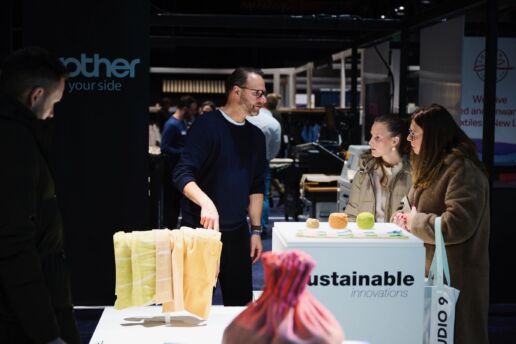
Materials as Agents of Change with Simon Angel
SUSTAINABLE INNOVATIONS 2025: Materials as Agents of Change
Interview with Simon Angel - Guest article by Muchaneta ten Napel
Curator of SUSTAINABLE INNOVATIONS at Munich Fabric Start, Simon Angel, has become a central voice in shaping how the fashion and textile industries engage with change. His role is less about gatekeeping and more about storytelling. He is someone who is continually driven to connect experimental design, science, and industry practice into a broader vision of what the future of textiles could be. Each season, the forum brings together projects that provoke, inspire, and challenge assumptions. This year is no exception, with work ranging from bio-luxury couture to energy-generating textiles and regenerative materials grown from wetlands.
Here, Angel reflects on his curatorial approach, what unites the innovators he spotlights, and the lessons the wider industry should take forward.
What guides your selection for the Sustainable Innovations forum at Munich Fabric Start?
Simon Angel: I tend to follow what I’d call the heartbeat of our shared future. I’m drawn to ideas that question how we live, how we make, and what we value. That’s why you’ll see projects like Wetlands Matters, which asks whether a jacket can actually help re-wild landscapes, or MYC_couture, which shows us that couture can be cultivated with fungi rather than constructed with synthetics. Innovation often blooms at intersections between fashion, materials science, agriculture, and energy. What matters is that each project shines light on a new way to connect design, ecology, and purpose.

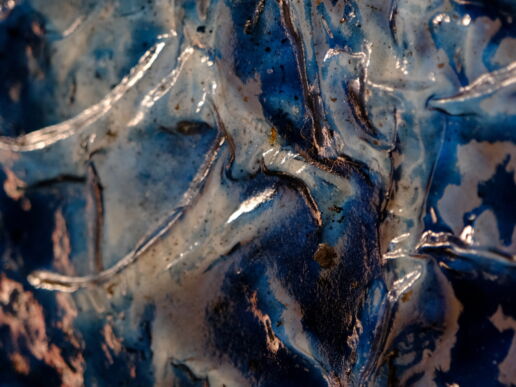
Living matters
Biotexfuture – BioCushion
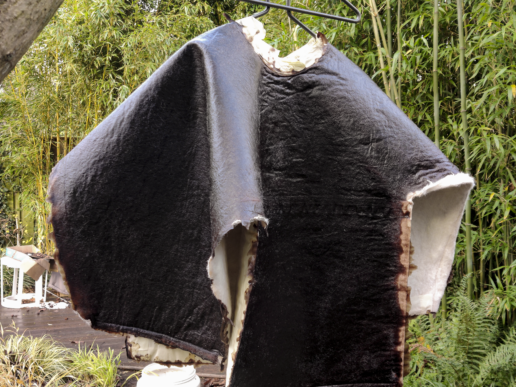
Wetlands Matters
What unites the projects featured this season?
Simon Angel: Two things: poetry and purpose. We need creators who can stir emotion like Plantfur, which transforms cattail waste into fur-like panels that are both tactile and ecological and at the same time we need rigorous problem-solvers who deliver scalable results, like the BIOTEXFUTURE initiative working on bio-based polyester and recyclable spacer fabrics. When those elements come together, the projects become more than exhibits; they become signals of what the industry could look like in ten or twenty years.
Do you sense any trends taking shape across the entries this season?
Simon Angel: What I see is a search for meaningful connection between people, and between materials and purpose. Suntex, for example, doesn’t just provide shade it turns fabric into renewable infrastructure, powering spaces we live in. Living Matter reframes luxury not as excess but as responsibility. These are projects asking: why do we value what we value, and what role can textiles play in helping us live differently? That drive for connection may be the next frontier of innovation.
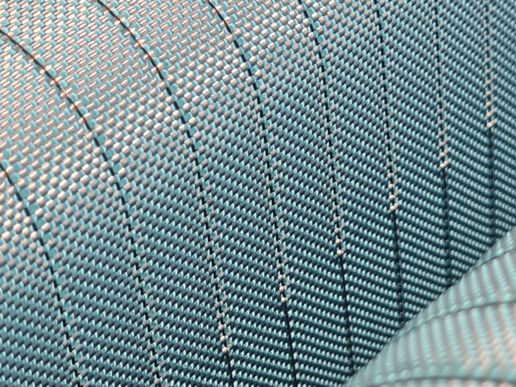
Heliotex
MYC_Couture
Plantfur
What can the industry learn from the Sustainable Innovations forum?
Simon Angel: The forum isn’t about providing ready-made answers. It’s about opening a dialogue. Designers bring unique perspectives on human need and material potential, while industry brings the scale and reach to make change happen. When something like Wetlands Matters or Plantfur is staged next to an industrial research programme like BIOTEXFUTURE, it shows how speculative design and applied science can reinforce one another. That’s when we move from admiration to action.
Looking ahead, how do you see sustainability and textiles evolving together?
Simon Angel: The more immersed I become, the more it boils down to responsibility shared across the system. For me the projects at Sustainable Innovations remind us that awareness can be turned into collective action. It’s time for the industry to let that enthusiasm drive renewal, not just conversation.


About the author
Founding editor-in-chief of Shape Innovate, Muchaneta has worked in the fashion industry for over 14 years. She is currently one of the leading influencers speaking and writing about the merger of fashion with technology and wearable technology.
Muchaneta ten Napel | m@shapeinnovate.com
THIS MIGHT BE ALSO INTERESTING FOR YOU:
MUNICH FABRIC START – January 26 closing report
A solid trade show. An optimistic mindset. That sums up the outcome of MUNICH FABRIC START. After three days, the Munich textile fair came to an end yesterday, Thursday, with the integrated show-in-shows BLUEZONE, KEYHOUSE and THE SOURCE. MUNICH FABRIC START concluded with a stable visitor frequency compared to the previous event.
MUNICH FABRIC START – Between Attitude and Sensuality
The future begins where we reimagine it. The overarching theme of PLEASURE stands for fashion as an emotional space, as an expression of attitude and cultural reflection.
KnitForm+ by Jeanne Mora – SUSTAINABLE INNOVATIONS
What matters is how the textile responds: how it regulates volume, distributes pressure, and transitions from flat to three-dimensional states. Process transparency is embedded in the methodology itself.
Cartoon – WEAR YOUR OPTIMISM
Embark on this fashionable journey and discover the new Cartoon collection at our store. Be inspired, mix and match to your heart's content, and wear optimism—every day, for every occasion.
RETRAKT – SUSTAINABLE INNOVATIONS
Performance, in this context, is measured by organisational resilience. RETRAKT applies resilience engineering to help employees anticipate, monitor, respond to, and learn from complex and changing requirements.
MATERIA FUTURA – SUSTAINABLE INNOVATIONS
Materia Futura is not proposing a new bio-material category, nor a finished commercial textile. What distinguishes the project is its design-led investigation into the emotional and aesthetic dimensions of bio-based materials, an area often sidelined in sustainability discourse.
THREADED PROTOCOLS – SUSTAINABLE INNOVATIONS
Threaded Protocols is not a textile innovation in the commercial sense, nor a digital tool disguised as craft. What makes the work distinct is its material investigation into how computational logic originates in textile practice and what is lost when those logics are abstracted into opaque technological systems.
MARIE VILAY – SUSTAINABLE INNOVATIONS
Marie Vilay does not present a new fabric or production technique. What distinguishes her work is a method of reading and translating textile knowledge across cultures, systems, and moments of transition.
Interview with Simon Angel, Curator of SUSTAINABLE INNOVATIONS
Each season, the Sustainable Innovations forum brings together projects that provoke, inspire, and challenge assumptions. This year is no exception, with work ranging from bio-luxury couture to energy-generating textiles and regenerative materials grown from wetlands.
MUNICH FABRIC START – September 25 closing report
At its 56th edition, MUNICH FABRIC START reinforced its clear positioning. Over two days, the Munich textile trade show brought the fashion industry together with its four show-in-show formats.
Plantfur – by Studio iFOCUS
Plantfur – by Studio iFocus
SUSTAINABLE INNOVATIONS
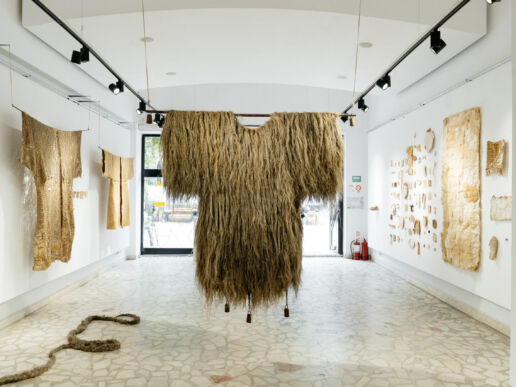
Peatlands, which are often called the “lungs of the earth,”, are delicate ecosystems that are under a lot of stress. These carbon-rich soils in the Netherlands are at risk of collapsing because of centuries of draining and intensive farming. When they do, they release emissions into the air. This environmental crisis is not only a call to fix things, for designer Iris Veentjer; it is also a chance to rethink the future of materials.
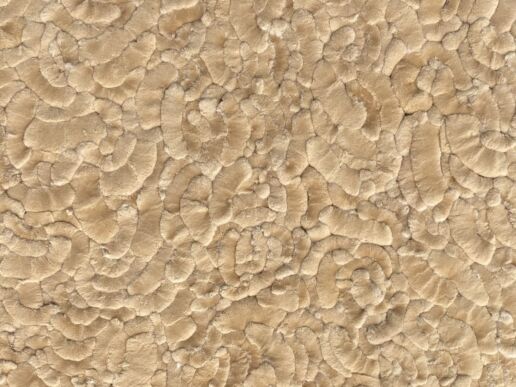
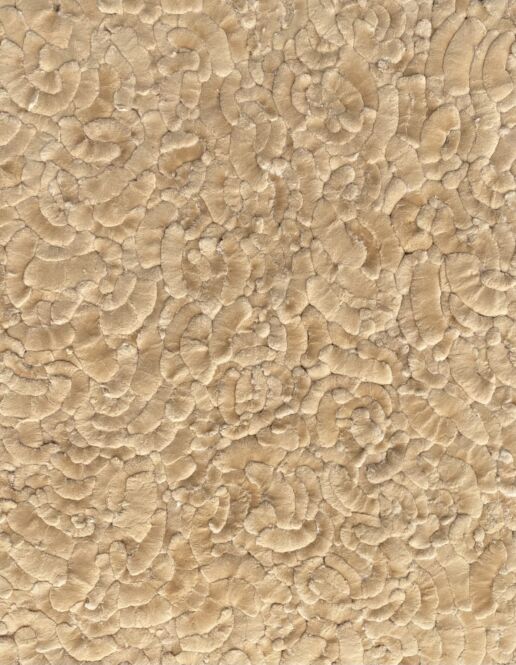
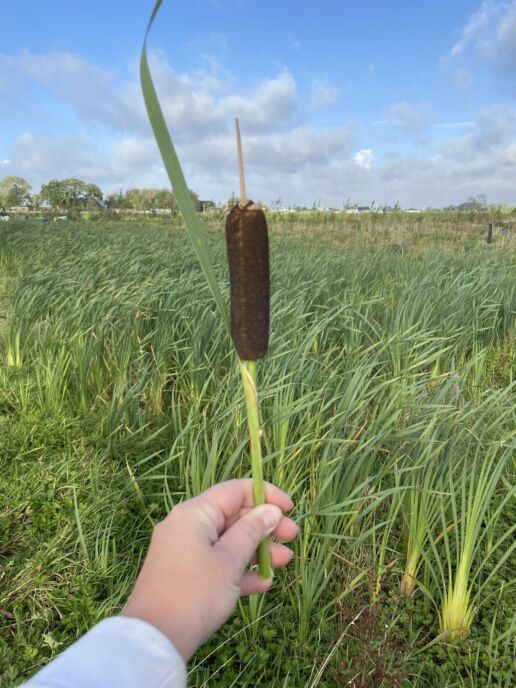
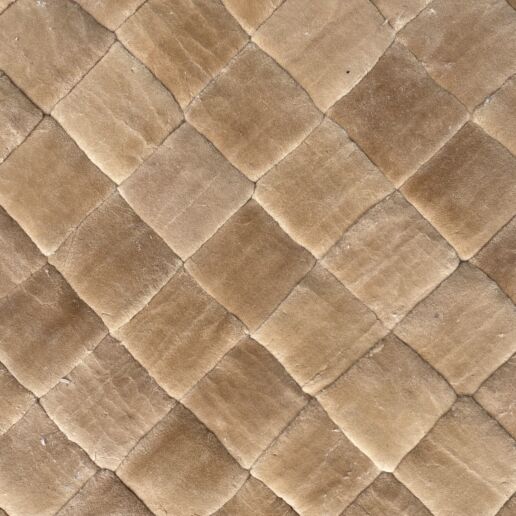
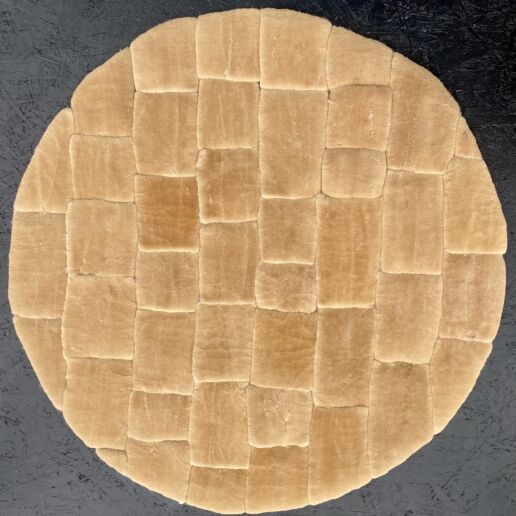
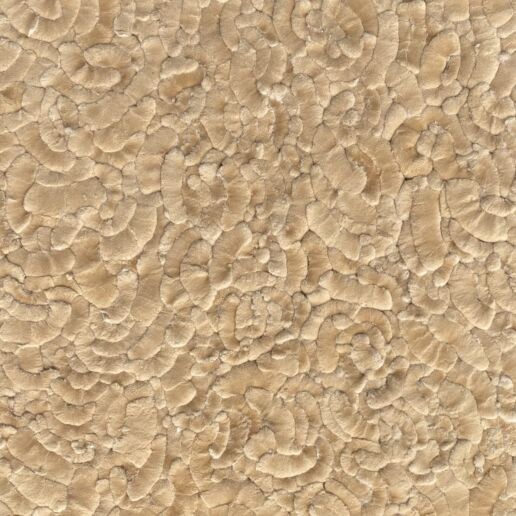
Veentjer’s practice has turned her attention to cattails, a plant that grows well in waterlogged soils and has the potential to change both landscapes and textiles. Plantfur, a surface material made from the cigar-shaped seed heads of the cattail, is the main focus of this research. These spikes are usually thrown away as agricultural waste, but they are collected before they spread too much and turned into panels that look like fur. Each cigar has its own size, so when they are put together, they make striated surfaces that are naturally beautiful. Not only is the material a more environmentally friendly alternative to animal fur and petroleum-based synthetics, but it also gives farmers a crop that helps reduce emissions.
“Harvesting cattail cigars earlier prevents their invasive spread and transforms waste into value.”
Iris Veentjer
The fact that SUSTAINABLE INNOVATIONS forum is featuring the project this season shows how important it is. Plantfur shows that sustainability can mean more than just doing less harm. Plantfur makes important points for the fashion and textile industries. What if wetlands were used to grow fur instead of factory farms? What if farming worked with climate resilience instead of against it?
Plantfur doesn’t just replace old materials; it makes a new way to use them based on ecological reciprocity. This is a very important lesson to learn. People won’t just judge the textiles of the future by how they feel on the skin; they’ll also judge them by how they work in ecosystems. Veentjer’s work shows that luxury and sustainability don’t have to be at odds with each other. They can be redefined together with materials that are both beautiful and good for the environment.
H2 | SI
THIS MIGHT BE ALSO INTERESTING FOR YOU:
MUNICH FABRIC START – January 26 closing report
A solid trade show. An optimistic mindset. That sums up the outcome of MUNICH FABRIC START. After three days, the Munich textile fair came to an end yesterday, Thursday, with the integrated show-in-shows BLUEZONE, KEYHOUSE and THE SOURCE. MUNICH FABRIC START concluded with a stable visitor frequency compared to the previous event.
MUNICH FABRIC START – Between Attitude and Sensuality
The future begins where we reimagine it. The overarching theme of PLEASURE stands for fashion as an emotional space, as an expression of attitude and cultural reflection.
KnitForm+ by Jeanne Mora – SUSTAINABLE INNOVATIONS
What matters is how the textile responds: how it regulates volume, distributes pressure, and transitions from flat to three-dimensional states. Process transparency is embedded in the methodology itself.
Cartoon – WEAR YOUR OPTIMISM
Embark on this fashionable journey and discover the new Cartoon collection at our store. Be inspired, mix and match to your heart's content, and wear optimism—every day, for every occasion.
RETRAKT – SUSTAINABLE INNOVATIONS
Performance, in this context, is measured by organisational resilience. RETRAKT applies resilience engineering to help employees anticipate, monitor, respond to, and learn from complex and changing requirements.
MATERIA FUTURA – SUSTAINABLE INNOVATIONS
Materia Futura is not proposing a new bio-material category, nor a finished commercial textile. What distinguishes the project is its design-led investigation into the emotional and aesthetic dimensions of bio-based materials, an area often sidelined in sustainability discourse.
THREADED PROTOCOLS – SUSTAINABLE INNOVATIONS
Threaded Protocols is not a textile innovation in the commercial sense, nor a digital tool disguised as craft. What makes the work distinct is its material investigation into how computational logic originates in textile practice and what is lost when those logics are abstracted into opaque technological systems.
MARIE VILAY – SUSTAINABLE INNOVATIONS
Marie Vilay does not present a new fabric or production technique. What distinguishes her work is a method of reading and translating textile knowledge across cultures, systems, and moments of transition.
Interview with Simon Angel, Curator of SUSTAINABLE INNOVATIONS
Each season, the Sustainable Innovations forum brings together projects that provoke, inspire, and challenge assumptions. This year is no exception, with work ranging from bio-luxury couture to energy-generating textiles and regenerative materials grown from wetlands.
MUNICH FABRIC START – September 25 closing report
At its 56th edition, MUNICH FABRIC START reinforced its clear positioning. Over two days, the Munich textile trade show brought the fashion industry together with its four show-in-show formats.

MUNICH FABRIC START & BLUEZONE - Essence of Innovative Design & Smart Strategies in Challenging Times
Essence of Innovative Design & Smart Strategies
in Challenging Times
CLOSING REPORT
MUNICH FABRIC START | BLUEZONE | KEYHOUSE | THE SOURCE
The international fabric trade show MUNICH FABRIC START came to a close. Together with THE SOURCE, BLUEZONE, and KEYHOUSE, it remains one of the most important fabric shows for the European fashion industry. In a challenging market environment, the organizers once again succeeded in bringing together key decision-makers and leading industry experts in Munich on January 21 and 22, 2025. 625 international exhibitors presented around 1,200 collections, showcasing the latest fabric trends and material innovations from the leading suppliers of fabrics and trims for SPRING.SUMMER 26.
MUNICH FABRIC START & THE SOURCE: “Highly Professional Research“
FLORESCENCE: The seasonal key theme of MUNICH FABRIC START describes the phase in which plants reach their full bloom and is used as a general metaphor for the process of blossoming. It can refer to new ideas, the unfolding of creativity, or even one’s own personality.
FLORESCENCE is divided into five trend themes: Betterverse, Unorthodox, Inventing Paradise, Fragile, and Lasting, which Volker Orthmann and Katharina Majorek as o/m collective and part of the MUNICH FABRIC START trend team, have described in their trend forecast for SPRING.SUMMER 2026 as follows:
“The new trends address the courage for innovation while simultaneously celebrating the fascination with timeless beauty. They explore how artificial intelligence and new technologies can influence and improve our relationship with the body, nature, and fashion. At the same time, the associated impact on information and consumer behaviour is questioned and confronted with a critical attitude and individuality. The contrast between strength and fragility, romance and modernity forms another key focus, reflecting current moods and translating them into fashion aspects. The final concept emphasizes classic elements, which, through new interpretations, cleverly link the future and the past.”

“Two action-packed days of the trade show have come to an end, and we draw a cautiously positive conclusion. We received good feedback from both visitors and exhibitors: we are focusing on the right topics and, with our various show-in-show concepts, bringing together the key players to develop new market strategies and drive forward innovation topics.“
Sebastian Klinder, Managing Director MUNICH FABRIC START
“The market is ambivalent. There is a desire for something new, but not everyone is willing to take risks. With strong leading themes like FLORESCENCE, THE CORE, and TECHKNOWLEDGE, we aim to break through this hesitation, provide a pool of inspiration, and create impulses that encourage bold decisions.”
Frank Junker, Creative Director & Partner MUNICH FABRIC START


Ambivalent market: security mindset versus desire for new ideas
In a price-sensitive, cautious environment, consumer behaviour resembles a careful blossoming: “Customers know exactly what they want—at what price and for which product. They are conducting highly professional research. Over the two days, they have a tight schedule, leaving little time to look around. Customers are focused on safety,” summarizes Oliver Schnitzler, Founder & CEO of LOOMSEVEN agency, with collections like Almodo, Eusebio, Pontetorto, SMI, and Tessilgodi, reflecting the current situation. Everything that is easy to understand and not too extravagant works, which is also confirmed by Michael Berner, CEO of Berner and Sohn & Fabric House agency, with collections like Altinyildiz, Arché, Infinity, Lanificio Fratelli Balli, and Pontoglio: “It’s moving away from plains and becoming more decorative again. Linen blends set the tone. Jerseys are also in demand for Summer 2026, but only if they are special. Customers are uncertain about prints: What is a modern pattern? Muted, washed-out, and delicate designs are currently doing well with us. The market is very tense and extremely price-sensitive. Therefore, one has to create attractive offers.”
“We particularly liked the innovative fancy items with embroidery, eyelet embroidery and voile as well as shimmering effects on plain fabrics. Light, flowing, feminine fabrics in powder shades will also be important for summer,” says Annette Schrewe, Head of Design at Betty Barclay. Fancies were also the first step for Drykorn: “We started with the Fancies. I can already say something about that: we looked for modern florals and natures as well as graphic designs and have already found them. We have seen interesting new ideas. This is very important to us,” summarizes Angela Kunst, Head of Product and Design.

BLUEZONE: Love & Attention
The next evolution of denim: At BLUEZONE in the Zenith Area, around 70 international denim mills presented their latest developments for denim and sportswear. The key theme THE CORE focuses on trends such as Collab Now, Deconstruct & Reconstruct, Phat Flavour, Green Minimalists, and Second Hand Trends. We will delve into the fusion of tradition and technology of denim creativity and innovation. Here, a new energy of sustainability, fabric innovations, industry trends, insights into the ever-evolving denim market, and cutting-edge processes arise to shape denim’s next evolution techniques. “We live in an abundance market, which means, conversely, we must be braver than ever, instead of freezing in fear. Brands need to be desirable. They must evoke love. It’s all about love & attention. Creating Lovemarks is not just a task for brands, but for all players along the value chain,” said Tilmann Wröbel, BLUEZONE trend researcher and owner of Monsieur-T Denim Lifestyle Studio. Collaborations like ISKO x bluesign, Evlox x Lamosa, Lycra x C&A, and Sharabati x Sashiko Denim are just some of the many ways to evoke emotions. This focus on emotion was also emphasized by Hans-Peter Hiemer: “Technologies need emotion,” stressed the Style3D/Assyst CEO in his presentation. 3D and AI are the solution to translating ideas into consumer needs within a digital product cycle from design to distribution.
Join in, try out, inspire. This is what a successful collaboration looks like, and how to engage people, as demonstrated by the Denim Masterclasses of ENDRIME® X BROTHER X ISKO™ X COATS, led by denim designer and lecturer Mohsin Sajid, whose workshops were very well received.
When it comes to awakening and stirring emotions, David Shah is the one to do it. In his keynote “Quantum Fashion” about the philosophy of design, the trend forecaster and publisher created a bridge between political and economic constraints, rich and poor, old and young, as well as cultural clashes, design accidents, and highlights. He also misses the feel-good factor of fashion and warns against quantum fashion, which only speeds up the cycle even further. Innovations outpace themselves. Perhaps we should look more to the past than the future. Exnovation instead of innovation? Shah provided the fascinated audience with many thought-provoking insights.


Activator KEYHOUSE
“Good in talking, not in doing“, was David Shah’s harsh criticism of everything related to sustainability. And many market participants share this view. This makes what happened at KEYHOUSE all the more exciting: mass-market meets startups and innovators. Integrated into BLUEZONE, KEYHOUSE was not only a focal point but also an activator. Over the course of two days, exactly the right people came together here: large fashion brands with high volumes were engaged in intensive conversations with pioneers and innovators. How can textile-to-textile recycling become scalable for the mass market? Which sustainable material developments, processes, and techniques provide new alternatives? Which new technologies bring not only efficiency but also emotion? These were some of the central questions that exhibitors and visitors addressed, not only during the lectures but also at the exhibition stands.
“BLUEZONE and KEYHOUSE together in one hall is the perfect match. The synergies are amazing. From the core of BLUEZONE, the sustainable innovations spread out into the industry. We are the pearl with BLUEZONE as its shell, at the heart of the industry,” summarizes Simon Angel, the curator of the forum.

“As a denim designer, I visit BLUEZONE to look for the latest trends, fabrics, materials, and innovations. The trend areas are fantastic because they showcase how innovations like laser treatments, washes, and styles can be implemented. We always attend BLUEZONE, as the trade show is also important for networking.”
Anna Weber, Designerin Denim & Flats, Luisa Cerano (Visitor)
“We have fixed appointments with ISKO and Bossa – everything else we do spontaneously. The Kesselhaus has always been nice. Now that all the companies are gathered in one hall, it feels like there’s more going on.”
Sabine Schweneker, Design HAKA, MAC (Visitor)
“The KEYHOUSE is the best. It’s great for the customers to get inspired and see lots of examples. We are doing our best to promote textile to textile recycling and encourage brands to get ready. The big players need to get more familiar and need to think in a bigger picture. We need to get beyond capsule collections to drive the infrastructure forward.“
Hélène Smits, Head of Business Development & Partnerships, LOOPER Textile Co. (Exhibitor)


Over the course of the two days, more than 50 high-profile trend forecasters, pioneers, and well-known industry experts discussed the central topics of the industry in around 50 talks and panels across three stages. The comprehensive trade show programme was rounded off by the MUNIQUE NIGHT. Approximately 1,200 guests ended the first day of the show with drinks, snacks, networking, and music.
After two days of the trade show, the textile exhibition closed with a 4% increase in visitors compared to the last MUNICH FABRIC START. Among the brands present on-site were designers, product managers, and buyers from adidas, Aigner, A Kind of Guise, Akris, Alberto, Alpha Jeans, Angels, Anna van Toor, Armedangels, Atelier Gardeur, Baldessarini, BASF, Best Secret, Betty Barclay, Black Palms The Label, Brax, BMW, Bogner, Bugatti, Burda, C&A, Calida, Calzedonia, Carhartt, Cecil, Ceres, Cinque, Comma, Coop, Digel, Drykorn, Escada, Gerry Weber, HEAD Sport, Herrlicher, Hessnatur, Holy Fashion Group, HSE, Hugo Boss, IB Company, Joop!, Lagerfeld, Lanius, Lodenfrey, Luisa Cerano, MAC, Marc Aurel, Marc Cain, Marc O’Polo, Mey, More&More, Olymp, Oui, Pangaia, Peek & Cloppenburg, Prada, Riani, s.Oliver, Schoeller, Schumacher, Seidensticker. The visitors came from 58 countries, with the majority located in Germany, Austria, and Switzerland, as well as Italy, the Netherlands, Czech Republic, Poland, Greece, the UK, and Portugal.


MORE QUOTES FROM VISITORS:
“For our collection, we are specifically looking for new denims at BLUEZONE and have found some great innovations. At MUNICH FABRIC START, we were inspired by prints for new basic items and jacquards to elevate our standards.”
Andrea Sefl, Product Management Womenswear, Atelier Gardeur
“We’re looking for things that are innovative and will move us forward fashion-wise. The trade show here in Munich is one of the most important denim platforms for us. Here, we get a great cross-section of exhibitors we work with. MUNICH FABRIC START and BLUEZONE are important trade shows and a strong local institution.”
Michael Seiter, Head of Denim, Holy Fashion Group
“We were particularly impressed by the innovative fancy items with embroidery, eyelet stitching, voile, and shimmering effects on solids. For the summer, light, flowing, feminine qualities in powder tones will be important. We also really like vibrant royal blue. The colour worlds in the trend forums at MUNICH FABRIC START were really well executed. However, the prints are still not quite right for us. What we’ve seen so far was too light, too romantic, too playful, or childish. We need them to be clearer and more easily understandable.”
Annette Schrewe, Head of Design, Betty Barclay
“For Spring/Summer ’26, we are focusing on muted pastels and neutral tones. We are looking for new blends of viscose-Tencel-linen or viscose-linen. Many high-quality collections are not even available yet. The trade show scene is shifting more and more to Milan, which is unfortunate for us. In terms of timing in collection development, we are so early that we don’t even have the chance to go to Milan.”
Birgit Kastner, Head of Design, Marc O‘Polo


MORE QUOTES FROM EXHIBITORS:
„All natural fibres like cotton-linen with viscose work really well. For the German market, with stretch – because they are still doing tight trousers. In this case it’s cotton-linen-nylon mixes. New and innovative are shiny laminées or lurex prints on linen. We had two successful days with clients like Hugo Boss, Windsor, Cambio, Luisa Cerano, Riani, Brax, MAC and Baldessarini, just to name a few.”
Simone Bellucci, CEO, Bellucci
“Our customers value our product because it‘s from Europe. They are especially looking for organic and recycled qualities in cotton and polyester. We launched a new Beachwear and Sportswear collection. In these times, it is important to be able to offer the right qualities in combination with stock and service.”
Marc Puigderrajols Bassols, Sales Team, Tejidos Rebés
“How can materials be returned to the cycle, and how can they remain in the cycle? These are the central questions that many still lack answers to. With our rings, sliders, hooks, and buckles, we offer a solution. They are made from a sustainable bio-based material that is both compostable and recyclable. Despite this, the products are extremely durable and washable. Our modular, repairable buckles in neon yellow are a big hit, as well as our lingerie series.”
Sarah Jankowsky, COO & Co-Founder, Valupa
“We are pleased because important customers like Marc Cain, Gardeur, Peter Hahn, and the workwear provider S-Gard attended. However, it has been rather quite overall. Particularly in demand for SS 26 are silicone labels in neon pink and orange, neoprene emblems with embossing, and grosgrain straps with silicone lettering, preferably in a turquoise/blue palette.“
Heike Taubeneck, Sales Representative, Bornemann-Etiketten
“We offer a huge assortment, so picking out individual trends isn’t easy. If I have to choose, I’d highlight these three: tie-dye, purple as a strong trend color, and large-scale patterns. The first day of the trade show went very well, while the second was quieter. Overall, we’re satisfied. However, we would prefer if the trade show continued to run over three days.“
Dennis van Os, Sales Representative, Nooteboom Textiles
“The trends are diverse: Calm Minimals in shades of blue with a Riviera vibe – small-scale and easy to interpret – are a big hit. At the same time, oversized, colorful, arty prints with lots of yellow are in high demand. Stripes remain a key trend, now with a hand-painted, retro flair. We’re also showcasing animal prints in bold contrast colors as well as boho and
cowboy-inspired designs. There’s a lot of talk about florals, but the question is, which flower? Orchids? Abstract, brushed flowers with textured backgrounds? Multicolored or two-toned? Opinions on this vary quite a bit.”
Elisa Ostländer, Designerin / Inhaberin, Lica Design Studio
“Printed florals in great variety – that’s what Liberty is known for like no other. There isn’t a clear trend, but our theme ‘Floral Rebellion,’ featuring abstract floral prints from the 60s, 70s, and 80s, is gaining traction. These work best in bold colors, but also in more understated tones. Stripes remain important as well. All of our key customers were here, especially the classic shirt providers like Seidensticker and Olymp, as well as Drykorn.”
Mats Buschjost, Junior Sales Manager, Fashion & Friends für Liberty
“We launched our new project ‘Manifattura Italia – where else’ here. This season was primarily about showcasing the collection for the first time, understanding what customers need, and assessing the project’s potential in the German market. Germany remains very price-sensitive, and customers are cautious when it comes to trying something new. The concept is solid, and the German market is tough – which is exactly why we wanted to kick things off together with MUNICH FABRIC START.”
Luca Balugani, Owner, Bureau 31 für Manifattura Italia – where else
“The market is very tense and extremely price-sensitive, so you need to create tailored offers. For instance, we’ve included the Turkish manufacturer Palmiye for the third season now – highly innovative and super successful. We are incredibly satisfied with MUNICH FABRIC START – I can honestly say that everyone was here.”
Michael Berner, CEO, Agentur Berner und Sohn & Fabric House


THE NEXT TRADE SHOW DATES FOR AUTUMN.WINTER 26/27


MUNICH FABRIC START, BLUEZONE, KEYHOUSE & THE SOURCE
02 + 03 SEPTMEBR 2025
MOC & Zenith Area Munich
Discover more industry-changing innovations at our upcoming trade shows:
MUNICH FABRIC START – January 26 closing report
A solid trade show. An optimistic mindset. That sums up the outcome of MUNICH FABRIC START. After three days, the Munich textile fair came to an end yesterday, Thursday, with the integrated show-in-shows BLUEZONE, KEYHOUSE and THE SOURCE. MUNICH FABRIC START concluded with a stable visitor frequency compared to the previous event.
MUNICH FABRIC START – Between Attitude and Sensuality
The future begins where we reimagine it. The overarching theme of PLEASURE stands for fashion as an emotional space, as an expression of attitude and cultural reflection.
KnitForm+ by Jeanne Mora – SUSTAINABLE INNOVATIONS
What matters is how the textile responds: how it regulates volume, distributes pressure, and transitions from flat to three-dimensional states. Process transparency is embedded in the methodology itself.
Cartoon – WEAR YOUR OPTIMISM
Embark on this fashionable journey and discover the new Cartoon collection at our store. Be inspired, mix and match to your heart's content, and wear optimism—every day, for every occasion.
RETRAKT – SUSTAINABLE INNOVATIONS
Performance, in this context, is measured by organisational resilience. RETRAKT applies resilience engineering to help employees anticipate, monitor, respond to, and learn from complex and changing requirements.
MATERIA FUTURA – SUSTAINABLE INNOVATIONS
Materia Futura is not proposing a new bio-material category, nor a finished commercial textile. What distinguishes the project is its design-led investigation into the emotional and aesthetic dimensions of bio-based materials, an area often sidelined in sustainability discourse.
THREADED PROTOCOLS – SUSTAINABLE INNOVATIONS
Threaded Protocols is not a textile innovation in the commercial sense, nor a digital tool disguised as craft. What makes the work distinct is its material investigation into how computational logic originates in textile practice and what is lost when those logics are abstracted into opaque technological systems.
MARIE VILAY – SUSTAINABLE INNOVATIONS
Marie Vilay does not present a new fabric or production technique. What distinguishes her work is a method of reading and translating textile knowledge across cultures, systems, and moments of transition.
Interview with Simon Angel, Curator of SUSTAINABLE INNOVATIONS
Each season, the Sustainable Innovations forum brings together projects that provoke, inspire, and challenge assumptions. This year is no exception, with work ranging from bio-luxury couture to energy-generating textiles and regenerative materials grown from wetlands.
MUNICH FABRIC START – September 25 closing report
At its 56th edition, MUNICH FABRIC START reinforced its clear positioning. Over two days, the Munich textile trade show brought the fashion industry together with its four show-in-show formats.

Kantamanto Social Club
Kantamanto Social Club – Pioneering Regenerative Fashion with
Daan Sonnemans & Anabel Poh
SUSTAINABLE INNOVATIONS

A revolution is unfolding.
Kantamanto Social Club was born from inspiration brought about by the vibrant, bustling markets of Kantamanto, Ghana. Co-founders Anabel Poh and Daan Sonnemans’ objective was to transform the global fashion landscape through amplifying the practices of communities that the fashion and textile industry often overlook. The club’s initiative goes beyond mere sustainability – it’s about reshaping power dynamics in an industry that usually doesn’t empower marginalised communities.
Kantamanto Social Club’s Vision of a Circular Fashion Future
The mission of Kantamanto Social Club is clear: to empower communities in the Global South. It aims to shine a spotlight on communities, particularly those whose circular and regenerative practices have been undervalued for too long. “The core of this project centres on the inherently sustainable communities of the Global South, which have practiced regenerative methods for generations,” explained Daan. Rather than viewing these communities as recipients of Western “aid” or “guidance,” the Social Club positions them as leaders in sustainable fashion.
By focusing on a philosophy that brings traditionally marginalised voices into global discussions on environmental and economic sustainability, the club has taken on the responsibility to empower artisans who are transforming discarded textiles from the Global North into high-value fashion items. They are doing this by providing a platform that showcases the artisan’s potential, creativity, resilience and ability to demonstrate how sustainable practices can counteract global consumption excesses.
Daan poses a crucial question, “How, at the brink of collapse, can we turn the tide and transition the fashion industry towards a regenerative model?” Through these efforts, Sonnemans challenges industry norms, advocating for systemic change that prioritises ecological and social integrity.
Creating Bridges Through Art and Advocacy
Forging tangible connections between local artisans and the global stage, Kantamanto Social Club’s voice can be heard through exhibitions, storytelling, and collaborative research initiatives. These platforms not only underscore the creative potential of upcycled fashion but also offer critical commentary on the prevailing norms of production and consumption in the fashion industry. This approach sets the stage for a deeper exploration into sustainable practices.
Building on this foundation, a significant aspect of the club’s work will focus on sustainability education as a next step. Through workshops, the club will inspire and train the next generation of designers, embedding sustainable thinking right from the start of their careers. Furthermore, the club will facilitate cultural exchanges that elevate the work of Kantamanto’s creatives, giving them the international recognition they deserve. Daan poses a crucial question, “How, at the brink of collapse, can we turn the tide and transition the fashion industry towards a regenerative model?” Through these efforts, Sonnemans challenges industry norms, advocating for systemic change that prioritises ecological and social integrity.
Beyond sparking a creative resurgence, the Kantamanto Social Club actively engages in policy advocacy, influencing global strategies on waste management and sustainable practices. Their initiatives serve as a call to action, urging the international community to reconsider the values and interactions that define the fashion industry. This holistic approach ensures that the impact of their advocacy resonates beyond artistic circles, reaching into the realms of global policy and practical change.
Engage with Kantamanto Social Club
Whether you’re a designer, policy-maker, or curious observer, the Kantamanto Social Club invites you to reimagine the fashion industry—one that’s built on equity, regeneration, and genuine respect for the planet and its people. So if you are looking to dive deeper into the transformative projects of the Kantamanto Social Club or to engage with their ongoing initiatives, you can find out more via their website.


A statement on recent events
“On the night of January 1, 2025, and into the morning of the 2nd, a devastating fire swept through the Kantamanto Market, destroying as many as two-thirds of it. Over 10,000 people—tailors, retailers, kayayei, and artisans—have been affected, losing their businesses and livelihoods.
To us Kantamanto is more than a market—it has become a global symbol of resilience, transforming unwanted textiles from across the world into something meaningful. It stands as a testament to sustainable fashion and the incredible creativity of its community.
Now is the time to stand in solidarity with Kantamanto. Together, we must support this community as they rebuild. We are launching a targeted fundraising campaign for the upcyclers we work with directly. But for now, any and all support is urgently needed and can be provided by donating to The OR Foundation’s fire relief fund, which is being used to directly aid relief efforts. Support here”
THIS MIGHT BE ALSO INTERESTING FOR YOU:
MUNICH FABRIC START – January 26 closing report
A solid trade show. An optimistic mindset. That sums up the outcome of MUNICH FABRIC START. After three days, the Munich textile fair came to an end yesterday, Thursday, with the integrated show-in-shows BLUEZONE, KEYHOUSE and THE SOURCE. MUNICH FABRIC START concluded with a stable visitor frequency compared to the previous event.
MUNICH FABRIC START – Between Attitude and Sensuality
The future begins where we reimagine it. The overarching theme of PLEASURE stands for fashion as an emotional space, as an expression of attitude and cultural reflection.
KnitForm+ by Jeanne Mora – SUSTAINABLE INNOVATIONS
What matters is how the textile responds: how it regulates volume, distributes pressure, and transitions from flat to three-dimensional states. Process transparency is embedded in the methodology itself.
Cartoon – WEAR YOUR OPTIMISM
Embark on this fashionable journey and discover the new Cartoon collection at our store. Be inspired, mix and match to your heart's content, and wear optimism—every day, for every occasion.
RETRAKT – SUSTAINABLE INNOVATIONS
Performance, in this context, is measured by organisational resilience. RETRAKT applies resilience engineering to help employees anticipate, monitor, respond to, and learn from complex and changing requirements.
MATERIA FUTURA – SUSTAINABLE INNOVATIONS
Materia Futura is not proposing a new bio-material category, nor a finished commercial textile. What distinguishes the project is its design-led investigation into the emotional and aesthetic dimensions of bio-based materials, an area often sidelined in sustainability discourse.
THREADED PROTOCOLS – SUSTAINABLE INNOVATIONS
Threaded Protocols is not a textile innovation in the commercial sense, nor a digital tool disguised as craft. What makes the work distinct is its material investigation into how computational logic originates in textile practice and what is lost when those logics are abstracted into opaque technological systems.
MARIE VILAY – SUSTAINABLE INNOVATIONS
Marie Vilay does not present a new fabric or production technique. What distinguishes her work is a method of reading and translating textile knowledge across cultures, systems, and moments of transition.
Interview with Simon Angel, Curator of SUSTAINABLE INNOVATIONS
Each season, the Sustainable Innovations forum brings together projects that provoke, inspire, and challenge assumptions. This year is no exception, with work ranging from bio-luxury couture to energy-generating textiles and regenerative materials grown from wetlands.
MUNICH FABRIC START – September 25 closing report
At its 56th edition, MUNICH FABRIC START reinforced its clear positioning. Over two days, the Munich textile trade show brought the fashion industry together with its four show-in-show formats.
Curiosity, Courage and Craftmanship
Curiosity, Courage and Craftmanship
Interview with Simon Angel - Guest article by Muchaneta ten Napel
Clothes Encounters and Warmly Related Relevance
With “FLORECSENCE” as the guiding principle of MUNICH FABRIC START and TECHKNOWLEDGE for the KEYHOUSE, Simon Angel, curator of Sustainable Innovations, highlights how the projects he has chosen can redefine what’s next in fashion by challenging us to think beyond quick fixes and instead embrace a deeper, more holistic approach to sustainability.
Simon, how did you approach curating this season’s Sustainable Innovations exhibit at Munich Fabric Start?
Simon Angel: Well, I wanted the projects included in the Sustainable Innovations exhibit to signal a major shift in the textile industry. The projects I selected this season challenge us to rethink everything from raw materials to end products and production processes, whilst emphasising on sustainability as an ongoing dialogue; it sparks a broader conversation about the future of our industry, urging everyone in the textile community to consider more responsible and imaginative approaches.
Could you elaborate on how year’s philosophy manifests in the exhibited projects?
Simon Angel: Certainly! This year’s philosophy is deeply embedded in each project I’ve selected for the exhibit, particularly emphasising sustainable practices that integrate seamlessly with innovative design. Take Shushanik Droshakiryan’s “PSYCHEDELIC TEXTILES.” Her work pushes the boundaries by harnessing techniques inspired by microbiology and chemistry. Her work serves as a powerful call to action for the industry to rethink the way materials are sourced, valued, and ultimately returned to the environment. By focusing on the end-of-life phase of materials, she underscores the necessity of designing within a circular economy framework, envisioning a future where environmental stewardship and fashion innovation are seamlessly integrated.

Milou – photo credit Lieke Bielderman
Studio Nicky Vollebregt’s “Pollia,” “HIGHLIGHT,” and “Uncover” projects are also featured. How do they fit into this narrative?
Simon Angel: Studio Nicky Vollebregt’s projects demonstrate a holistic approach to textile innovation by exploring colour reflection, material transparency, and transformative finishing techniques. The studio isn’t just making visually striking fabrics; it’s probing our concepts of light, colour, and texture, and questioning how small interventions in the material creation process can have far-reaching environmental and usability impacts. It’s a reminder that sustainability and aesthetic appeal aren’t mutually exclusive.
Can you discuss how Daan Sonnemans’s & Anabel Poh’s”Kantamanto Social Club” enhances the themes of this exhibit?
Simon Angel: Daan Sonnemans and Anabel Poh address a critical aspect of sustainability: the human and social dimension. With “Katamanto Social Club,” he focuses on community engagement and ethical labour practices, integrating cultural heritage with environmentally responsible production. I feel that this project goes beyond material innovation because it reminds us that sustainability isn’t just about new materials or recycling; its core is about the people and communities behind the products. In a way you can call his this project a sustainable process-intervention.
Can you tell us about Milou Voorwinden’s “Explorations in 3D weaving”?
Simon Angel: Milou’s work is an excellent example of how reimagining a fundamental technique can open up entirely new possibilities. In “Explorations in 3D weaving,” she looks at the loom not just as a tool for flat textiles but as a platform for sculptural, structural forms. By combining different fibres and experimenting with density, she creates fabrics with varying properties – some rigid, some flexible. These explorations challenge the binary thinking of “fabric vs. structure,” showing how textiles can be engineered in ways that minimise material waste while expanding design potential. Her design-principle brings a shift in the design-pattern-production cycle.

Shushanik

Oscar

Nicky – Pollia
credit Patty van den Elshout i.o.v. TextielMuseum
Wool matters” by Beatriz Isca is another project drawing attention. How does it fit into this year’s theme?
Simon Angel: Beatriz’s “Wool matters” project underscores the value of a raw material we often take for granted. By spotlighting the processes of sourcing, cleaning, and transforming wool, she shows how something as ancient as wool can be reinterpreted for modern, eco-conscious lifestyles. She not only showcases wool’s versatility; she reveals the stories, heritage, and communities behind the fibre. I am hopeful that her perspective will encourage us to consider the entire life cycle of our materials – and the people involved – before we even start to design.
Lastly, Oscar Wentz’s AFTERLIFE “REWORK AND RETHINK YOUR OWN TRASH” project stands out. Can you shed some light on this?
Simon Angel: Oscar’s AFTERLIFE project is a bold statement on waste and consumer culture. Through upcycling discarded clothes and materials, he creates street-style garments that demonstrate how a simple change in perspective can spark a larger conversation about responsibility and resource use. It’s the perfect example of how a hands-on, interventionist approach can galvanise people to embrace more circular practices.

Beatriz – Wool matters
How do you see these innovations in the exhibition influencing the future of the textile industry?
Simon Angel: These projects collectively represent a significant shift to question what’s possible and to look at sustainability as an ongoing dialogue rather than a final box to tick. Each project showcased in the Sustainable Innovation exhibit challenges existing paradigms, pushing us closer to a world where textiles are created with both people and the planet in mind.
Thank you for sharing these insights, Simon. It’s clear that this season’s Sustainable Innovation exhibit goes beyond showcasing new materials – it’s about sparking a broader conversation on the future of our industry.
Simon Angel: My pleasure. I’m thrilled for everyone to experience these projects and be part of the conversation. I believe that it is through collective curiosity and willingness to experiment that we’ll drive real, lasting sustainable innovation.
We look forward to seeing the exhibit and witnessing how these pioneering ideas will shape what’s next in textile design.
Simon Angel: Thank you. Don’t forget to visit us at the Keyhouse in Hall 7 – we can’t wait to show you how these interventions are rewriting the future of fashion and textiles.
About the author
Founding editor-in-chief of Shape Innovate, Muchaneta has worked in the fashion industry for over 14 years. She is currently one of the leading influencers speaking and writing about the merger of fashion with technology and wearable technology.
Muchaneta ten Napel | m@shapeinnovate.com
THIS MIGHT BE ALSO INTERESTING FOR YOU:
MUNICH FABRIC START – January 26 closing report
A solid trade show. An optimistic mindset. That sums up the outcome of MUNICH FABRIC START. After three days, the Munich textile fair came to an end yesterday, Thursday, with the integrated show-in-shows BLUEZONE, KEYHOUSE and THE SOURCE. MUNICH FABRIC START concluded with a stable visitor frequency compared to the previous event.
MUNICH FABRIC START – Between Attitude and Sensuality
The future begins where we reimagine it. The overarching theme of PLEASURE stands for fashion as an emotional space, as an expression of attitude and cultural reflection.
KnitForm+ by Jeanne Mora – SUSTAINABLE INNOVATIONS
What matters is how the textile responds: how it regulates volume, distributes pressure, and transitions from flat to three-dimensional states. Process transparency is embedded in the methodology itself.
Cartoon – WEAR YOUR OPTIMISM
Embark on this fashionable journey and discover the new Cartoon collection at our store. Be inspired, mix and match to your heart's content, and wear optimism—every day, for every occasion.
RETRAKT – SUSTAINABLE INNOVATIONS
Performance, in this context, is measured by organisational resilience. RETRAKT applies resilience engineering to help employees anticipate, monitor, respond to, and learn from complex and changing requirements.
MATERIA FUTURA – SUSTAINABLE INNOVATIONS
Materia Futura is not proposing a new bio-material category, nor a finished commercial textile. What distinguishes the project is its design-led investigation into the emotional and aesthetic dimensions of bio-based materials, an area often sidelined in sustainability discourse.
THREADED PROTOCOLS – SUSTAINABLE INNOVATIONS
Threaded Protocols is not a textile innovation in the commercial sense, nor a digital tool disguised as craft. What makes the work distinct is its material investigation into how computational logic originates in textile practice and what is lost when those logics are abstracted into opaque technological systems.
MARIE VILAY – SUSTAINABLE INNOVATIONS
Marie Vilay does not present a new fabric or production technique. What distinguishes her work is a method of reading and translating textile knowledge across cultures, systems, and moments of transition.
Interview with Simon Angel, Curator of SUSTAINABLE INNOVATIONS
Each season, the Sustainable Innovations forum brings together projects that provoke, inspire, and challenge assumptions. This year is no exception, with work ranging from bio-luxury couture to energy-generating textiles and regenerative materials grown from wetlands.
MUNICH FABRIC START – September 25 closing report
At its 56th edition, MUNICH FABRIC START reinforced its clear positioning. Over two days, the Munich textile trade show brought the fashion industry together with its four show-in-show formats.

The AFTERLIFE Project by Oscar Wentz
The AFTERLIFE Project by Oscar Wentz
Pioneering a Playful Rebellion Against Fast Fashion
SUSTAINABLE INNOVATIONS
In an industry swamped by fast fashion and ever-changing trends, Oscar Wentz’s AFTERLIFE project has hit the reset button. The AFTERLIFE project is a rallying cry that puts sustainability front and center. The project is not only turning cast-off clothes into streetwear but it is also challenging us to examine our own consumption habits and rethink what we consider “waste,” in our closet – and ultimately, the world around us.

From Waste to Wonder: A Playful Approach to Serious Change
AFTERLIFE is more than a fashion line; it’s a movement. It started as a response to the drawbacks of fast fashion – cheaply made pieces designed to be worn once and forgotten. Created entirely from pre-existing clothing pieces, the project shines a light on the excessive waste produced by fast fashion. By reimagining and reconstructing these discarded garments, what began as a single initiative has evolved into an entire collection and a growing movement, built on playful and simple designs that encourage people to try their hand at sewing.
Oscar’s design philosophy is encapsulated in his desire to tackle the waste streams of Europe’s textile industry. Rather than ignoring piles of unwanted clothing, he sees them as raw materials brimming with possibility. “As a designer, I am committed to transforming the textile industry’s approach to sustainability by addressing its waste streams head-on,” he explains.
Turning what was once considered “trash” into cherished fashion statements, the collection targets young individuals not only aesthetically but also through the simplicity of its cuts and stitches, encouraging them to engage in making and sewing.
Each piece in the AFTERLIFE collection serves as a testament to what can be achieved when creativity meets responsibility. Oscar offers not only a selection of pre-made repurposed garments but also provides step-by-step instructions on how to recreate these designs at home. His vision extends beyond mere recycling; he aims to inspire a circular economy where sustainability is embedded in every aspect of fashion – from design to consumption.
“As a designer, I am committed to transforming the textile industry’s approach to sustainability by addressing its waste streams head-on.”


But collaboration is key to Oscar’s vision. He works with Sympany, a company dedicated to collecting and redistributing donated clothes, he’s shown how we can harness what we already have instead of churning out new stuff. It is a partnership that gives old garments a second shot at life, which is right in line with Oscar’s goal of making sustainability both practical and fun.
Also, Oscar firmly believes that sewing should be accessible to everyone – even if you’ve never threaded a needle before. That’s why he hosts workshops and provides easy-to-follow tutorials, giving people the confidence to transform their old clothes at home. These hands-on sessions aren’t just about mending seams; they foster a sense of community and bring back the joy of crafting something unique.
He’s also got his eye on a bigger picture: a circular economy where creativity and accountability go hand in hand. By encouraging playful experimentation, Oscar makes the idea of circularity in fashion far less intimidating and the concept of circularity in the textile industry more approachable.
Engage with Oscar Wentz and AFTERLIFE
AFTERLIFE isn’t just about making old clothes look cool; it’s about proving we can create a sustainable, vibrant fashion culture that values originality over mass production. And in Oscar’s world, anyone with a bit of curiosity – and a willingness to pick up a needle and thread – is welcome to join.


THIS MIGHT BE ALSO INTERESTING FOR YOU:
MUNICH FABRIC START – January 26 closing report
A solid trade show. An optimistic mindset. That sums up the outcome of MUNICH FABRIC START. After three days, the Munich textile fair came to an end yesterday, Thursday, with the integrated show-in-shows BLUEZONE, KEYHOUSE and THE SOURCE. MUNICH FABRIC START concluded with a stable visitor frequency compared to the previous event.
MUNICH FABRIC START – Between Attitude and Sensuality
The future begins where we reimagine it. The overarching theme of PLEASURE stands for fashion as an emotional space, as an expression of attitude and cultural reflection.
KnitForm+ by Jeanne Mora – SUSTAINABLE INNOVATIONS
What matters is how the textile responds: how it regulates volume, distributes pressure, and transitions from flat to three-dimensional states. Process transparency is embedded in the methodology itself.
Cartoon – WEAR YOUR OPTIMISM
Embark on this fashionable journey and discover the new Cartoon collection at our store. Be inspired, mix and match to your heart's content, and wear optimism—every day, for every occasion.
RETRAKT – SUSTAINABLE INNOVATIONS
Performance, in this context, is measured by organisational resilience. RETRAKT applies resilience engineering to help employees anticipate, monitor, respond to, and learn from complex and changing requirements.
MATERIA FUTURA – SUSTAINABLE INNOVATIONS
Materia Futura is not proposing a new bio-material category, nor a finished commercial textile. What distinguishes the project is its design-led investigation into the emotional and aesthetic dimensions of bio-based materials, an area often sidelined in sustainability discourse.
THREADED PROTOCOLS – SUSTAINABLE INNOVATIONS
Threaded Protocols is not a textile innovation in the commercial sense, nor a digital tool disguised as craft. What makes the work distinct is its material investigation into how computational logic originates in textile practice and what is lost when those logics are abstracted into opaque technological systems.
MARIE VILAY – SUSTAINABLE INNOVATIONS
Marie Vilay does not present a new fabric or production technique. What distinguishes her work is a method of reading and translating textile knowledge across cultures, systems, and moments of transition.
Interview with Simon Angel, Curator of SUSTAINABLE INNOVATIONS
Each season, the Sustainable Innovations forum brings together projects that provoke, inspire, and challenge assumptions. This year is no exception, with work ranging from bio-luxury couture to energy-generating textiles and regenerative materials grown from wetlands.
MUNICH FABRIC START – September 25 closing report
At its 56th edition, MUNICH FABRIC START reinforced its clear positioning. Over two days, the Munich textile trade show brought the fashion industry together with its four show-in-show formats.

WOOL MATTERS BY BEATRIZ ISCA
WOOL MATTERS BY BEATRIZ ISCA
Unraveling the Threads of Change
SUSTAINABLE INNOVATIONS
Although wool has been transformed into a global industry, so much of Europe’s wool still ends up discarded each year – overlooked, undervalued, and dismissed as waste. However, Beatriz Isca sees wool through a different lens and ‘Wool Matters’ stands as a powerful reminder of how much we can learn from something as seemingly simple as wool.
Wool Matters is the master’s thesis project of the multidisciplinary designer Beatriz. ‘It began with a belief in wool’s power to manifest the intricate connections between land, animals, and people. Beatriz discovered wool’s capacity as a universal language, transcending social, generational, and cultural barriers, and serving as a bridge that connects diverse lives and stories. Her work in ‘Wool Matters’ adopts a post-humanistic lens to understand the symbiotic relationships between people, animals and land. Aware of human and non-human actors in wool’s ecosystem, she has engaged with different actors in the local wool landscape to uncover opportunities and address gaps. She is highlighting wool’s inherent worth, with the hope to encourage a more circular, respectful approach to textiles—one that sees humans, animals, and the environment as interconnected parts of a shared ecosystem.
“The devaluation of local wool in Europe reflects the anthropocentric view and the unsustainable ways of living of modern society, that perpetuates the celebration of capitalism at the cost of ecological degradation and social exploitation,” she says. Looking beyond traditional profit-driven industries and focusing on local and craft-based practices, Beatriz aims to redefine our relationship with wool—and, in turn, with nature.
When it comes to community-centric sustainable practices, Beatriz advocates for a shift back to natural rhythms—those governed by seasons and the meticulous pace of handcrafting—encouraging a more humane and ecologically mindful way of living. Her mission extends beyond mere dialogue; it’s about crafting a vision that repositions decision-making into the hands of local communities. By involving designers more deeply in societal roles, Beatriz believes in empowering communities to challenge and reshape the structures that define our world.
“The devaluation of local wool in Europe reflects the anthropocentric view and the unsustainable ways of living of modern society, that perpetuates the celebration of capitalism at the cost of ecological degradation and social exploitation.”


Pushing for collaboration, Beatriz, a researcher and a communicator, is not just raising awareness but also fostering tangible connections. Through craft-based practices, she amplifies the value of local wool, urging citizens to partake actively. Her workshops and collaborations are not just about crafting with wool; they invite participants to feel, reflect, and react to the broader implications of consumption and production that surround this ancient material.
Bringing ‘Wool Matters’ to Munich meant searching for local collaborations which resulted in weaver Lukas Gschnitzer and local yarns from Rauwerk will be part of the project’s presentation, showcasing the value of local wool. Rauwerk firmly believes in working with, and not against, Mother Nature. Their yarn comes from local Merino sheep and is spun at a family run mill just south of Munich.
Engage with Beatriz Isca’s Vision

THIS MIGHT BE ALSO INTERESTING FOR YOU:
MUNICH FABRIC START – January 26 closing report
A solid trade show. An optimistic mindset. That sums up the outcome of MUNICH FABRIC START. After three days, the Munich textile fair came to an end yesterday, Thursday, with the integrated show-in-shows BLUEZONE, KEYHOUSE and THE SOURCE. MUNICH FABRIC START concluded with a stable visitor frequency compared to the previous event.
MUNICH FABRIC START – Between Attitude and Sensuality
The future begins where we reimagine it. The overarching theme of PLEASURE stands for fashion as an emotional space, as an expression of attitude and cultural reflection.
KnitForm+ by Jeanne Mora – SUSTAINABLE INNOVATIONS
What matters is how the textile responds: how it regulates volume, distributes pressure, and transitions from flat to three-dimensional states. Process transparency is embedded in the methodology itself.
Cartoon – WEAR YOUR OPTIMISM
Embark on this fashionable journey and discover the new Cartoon collection at our store. Be inspired, mix and match to your heart's content, and wear optimism—every day, for every occasion.
RETRAKT – SUSTAINABLE INNOVATIONS
Performance, in this context, is measured by organisational resilience. RETRAKT applies resilience engineering to help employees anticipate, monitor, respond to, and learn from complex and changing requirements.
MATERIA FUTURA – SUSTAINABLE INNOVATIONS
Materia Futura is not proposing a new bio-material category, nor a finished commercial textile. What distinguishes the project is its design-led investigation into the emotional and aesthetic dimensions of bio-based materials, an area often sidelined in sustainability discourse.
THREADED PROTOCOLS – SUSTAINABLE INNOVATIONS
Threaded Protocols is not a textile innovation in the commercial sense, nor a digital tool disguised as craft. What makes the work distinct is its material investigation into how computational logic originates in textile practice and what is lost when those logics are abstracted into opaque technological systems.
MARIE VILAY – SUSTAINABLE INNOVATIONS
Marie Vilay does not present a new fabric or production technique. What distinguishes her work is a method of reading and translating textile knowledge across cultures, systems, and moments of transition.
Interview with Simon Angel, Curator of SUSTAINABLE INNOVATIONS
Each season, the Sustainable Innovations forum brings together projects that provoke, inspire, and challenge assumptions. This year is no exception, with work ranging from bio-luxury couture to energy-generating textiles and regenerative materials grown from wetlands.
MUNICH FABRIC START – September 25 closing report
At its 56th edition, MUNICH FABRIC START reinforced its clear positioning. Over two days, the Munich textile trade show brought the fashion industry together with its four show-in-show formats.

From Flat to Fantastic
From Flat to Fantastic:
The Evolution of Textile Design with Milou Voorwinden
SUSTAINABLE INNOVATIONS
Imagine a future where textiles go beyond flat fabrics – where they emerge from the loom as complete, seamless, and sustainable creations, tailored to individual needs – that’s precisely what Milou Voorwinden is bringing to life with her innovative explorations in woven form.
Instead of settling for flat, static materials, she’s tapping into cutting-edge technology to create three-dimensional fabrics that push us to reimagine what textiles can do – and what they can mean to us. “From the first moment I sat behind a loom, I was amazed by the endless possibilities of woven textiles. The yarn, weave structures and each row of thread you insert, all can have a different effect on the properties and the aesthetics of the final fabric”, explained Milou.
Driven to constantly reinvent traditional techniques, Milou, a graduate of ArtEZ University of the Arts, not only holds a Master’s degree from the Piet Zwart Institute, but is currently also pursuing a PhD at Delft University of Technology, where she focuses on the methods and processes of woven textile design to support the creation of textile-forms.
What sets Milou apart is her fierce commitment to zero-waste production which fits in with the direction of where the industry is headed, where sustainability is as much a necessity as it is a choice. For Milou, fabric isn’t just fabric – it’s an adaptable, form-fitting medium that can respond to our evolving needs without compromising on sustainability. Her approach to on-demand, localised manufacturing of textiles ensures that excess is out, and efficiency is in. For Milou it isn’t just about Innovation; but it’s also a revolution.
“From the first moment I sat behind a loom, I was amazed by the endless possibilities of woven textiles. The yarn, weave structures and each row of thread you insert, all can have a different effect on the properties and the aesthetics of the final fabric.”

credit: Lieke Bielderman

Milou’s Collaborative Journey
The artworks and samples on display in this exhibition serve as technical studies for the textile-form products Milou develops. They represent the foundation of her approach, bridging the gap between conceptual experimentation and real-world application.
One such application is her collaboration with Holly McQuillan to develop zero-waste 3D-woven trousers. This project exemplifies how technical exploration in weaving can lead to entirely new paradigms in garment design, pushing the boundaries of form, functionality, and sustainability.
Additionally, Milou worked with TU Delft graduates Jordan Groskamp and Barbara Vroom to design and create zero-waste jeans and a jacket, respectively. These projects were developed in partnership with the denim weaving mill Diamond Denim, under supervision of Holly McQuillan and mentored by Mohsin Sajid. These collaborations highlight the power of combining innovative weaving techniques with the expertise of industry leaders to produce garments that are as sustainable as they are forward-thinking.
Engage with Milou’s World
Interested in delving deeper into Milou’s innovative work in textile design? She welcomes you to explore, learn, and perhaps engage with the evolving landscape of textile design. Whether you are a designer, industry professional, or just keenly interested, Milou’s projects provide a window into a future where sustainability and functionality converge beautifully.

credit: Lieke Bielderman

credit: Lieke Bielderman

credit: Lieke Bielderman

THIS MIGHT BE ALSO INTERESTING FOR YOU:
MUNICH FABRIC START – January 26 closing report
A solid trade show. An optimistic mindset. That sums up the outcome of MUNICH FABRIC START. After three days, the Munich textile fair came to an end yesterday, Thursday, with the integrated show-in-shows BLUEZONE, KEYHOUSE and THE SOURCE. MUNICH FABRIC START concluded with a stable visitor frequency compared to the previous event.
MUNICH FABRIC START – Between Attitude and Sensuality
The future begins where we reimagine it. The overarching theme of PLEASURE stands for fashion as an emotional space, as an expression of attitude and cultural reflection.
KnitForm+ by Jeanne Mora – SUSTAINABLE INNOVATIONS
What matters is how the textile responds: how it regulates volume, distributes pressure, and transitions from flat to three-dimensional states. Process transparency is embedded in the methodology itself.
Cartoon – WEAR YOUR OPTIMISM
Embark on this fashionable journey and discover the new Cartoon collection at our store. Be inspired, mix and match to your heart's content, and wear optimism—every day, for every occasion.
RETRAKT – SUSTAINABLE INNOVATIONS
Performance, in this context, is measured by organisational resilience. RETRAKT applies resilience engineering to help employees anticipate, monitor, respond to, and learn from complex and changing requirements.
MATERIA FUTURA – SUSTAINABLE INNOVATIONS
Materia Futura is not proposing a new bio-material category, nor a finished commercial textile. What distinguishes the project is its design-led investigation into the emotional and aesthetic dimensions of bio-based materials, an area often sidelined in sustainability discourse.
THREADED PROTOCOLS – SUSTAINABLE INNOVATIONS
Threaded Protocols is not a textile innovation in the commercial sense, nor a digital tool disguised as craft. What makes the work distinct is its material investigation into how computational logic originates in textile practice and what is lost when those logics are abstracted into opaque technological systems.
MARIE VILAY – SUSTAINABLE INNOVATIONS
Marie Vilay does not present a new fabric or production technique. What distinguishes her work is a method of reading and translating textile knowledge across cultures, systems, and moments of transition.
Interview with Simon Angel, Curator of SUSTAINABLE INNOVATIONS
Each season, the Sustainable Innovations forum brings together projects that provoke, inspire, and challenge assumptions. This year is no exception, with work ranging from bio-luxury couture to energy-generating textiles and regenerative materials grown from wetlands.
MUNICH FABRIC START – September 25 closing report
At its 56th edition, MUNICH FABRIC START reinforced its clear positioning. Over two days, the Munich textile trade show brought the fashion industry together with its four show-in-show formats.