

New Materials
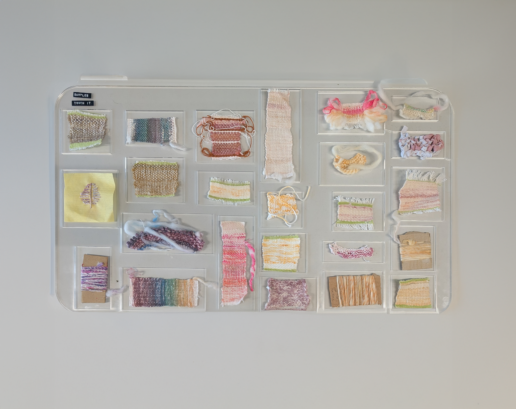
STUDIO ALICE GIELEN - SUSTAINABLE INNOVATIONS
What If Designers Could Decide Colour Before the Yarn Even Exists?
SUSTAINABLE INNOVATIONS
Both the fashion and textile industry often celebrates creativity. Yet many of the industry’s creative decisions are made long before a designer ever begins designing. Colour being one of them. The thing is, by the time a designer selects yarn, someone else has already determined the available colours, sequences and combinations. Choice exists, but only within boundaries.
Moving Creativity Upstream
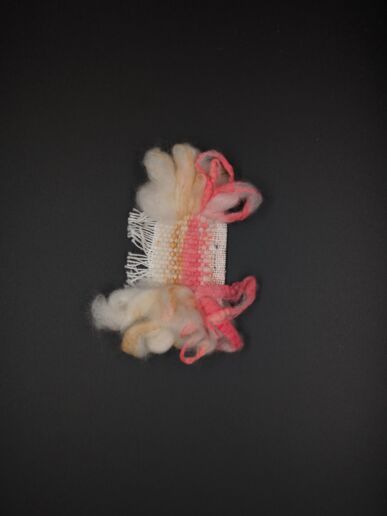
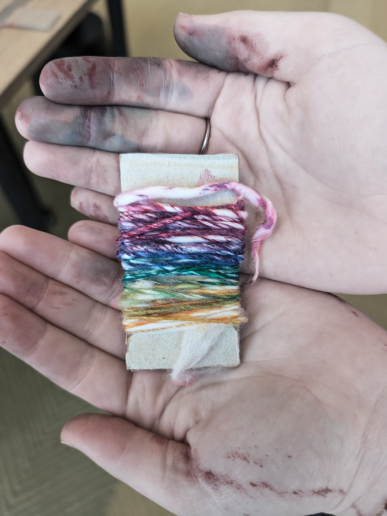
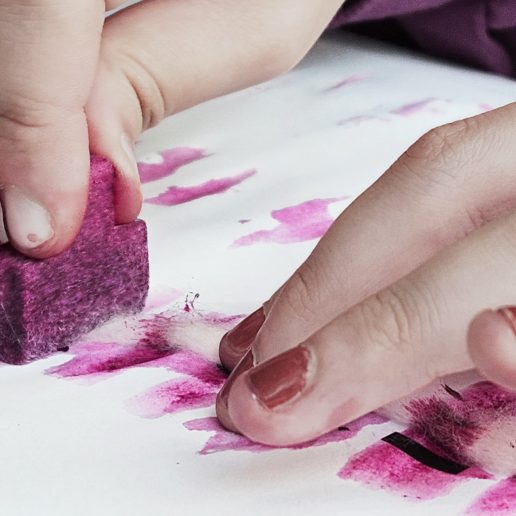
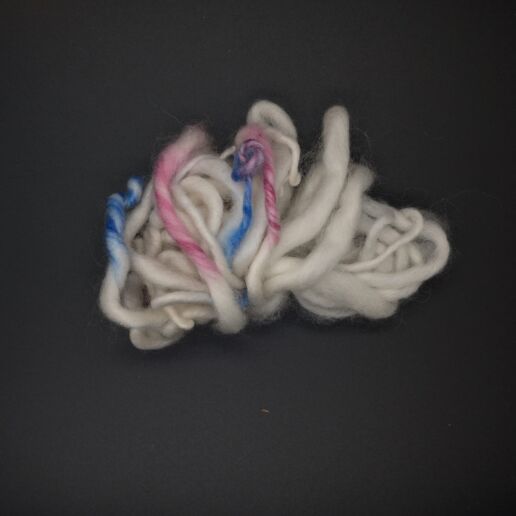
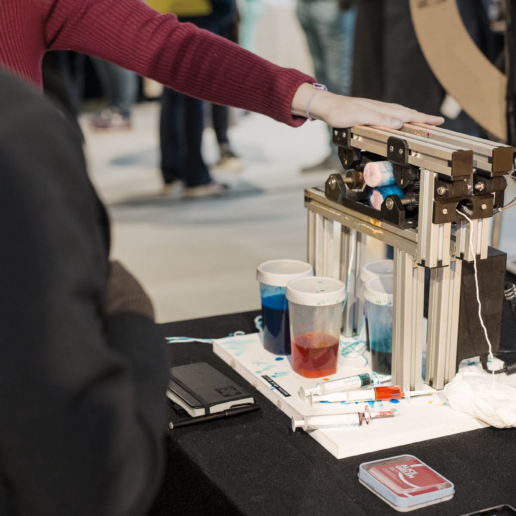
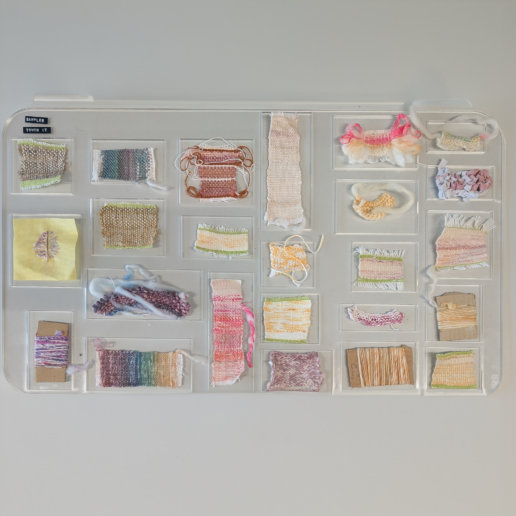
Studio Alice Gielen, the Sliver Fiber Printer reimagines one of textile production’s earliest stages. Instead of colouring yarn after it has been spun, the system applies dye directly onto loose fibre, known as sliver, before spinning takes place. This allows designers to programme colour sequences, gradients, mathematical patterns or even Morse code into the material itself before the yarn has been created. Better still, those sequences can be adjusted live, turning colour development into an active dialogue between designer, machine and material. The technology is impressive.The shift in creative ownership is even more significant.
Rethinking the Relationship Between Humans and Machines
Many of us know that it is automation is often framed as something that replaces human creativity. Studio Alice Gielen proposes something altogether different.
Rather than viewing machines as tools that simply execute instructions, the Sliver Fiber Printer creates space for collaboration. Programmed logic, material behaviour and human intuition influence one another throughout the making process, allowing unexpected outcomes to become part of the design itself.
As Alice explains: “I aim to contribute to a growing discourse that views machines not merely as tools of production but as partners in the creative process, capable of influencing both the method and the art of making.”
It is an idea that feels increasingly relevant as artificial intelligence and computational design become part of fashion’s creative landscape. Perhaps the future is not about humans versus machines. Perhaps it is about learning how to create together.
“I aim to contribute to a growing discourse that views machines not merely as tools of production but as partners in the creative process, capable of influencing both the method and the art of making.”
A Different Way to Build Textile Systems
The Sliver Fiber Printer does more than expand creative possibilities.
By moving colour decisions to an earlier stage in the production process, it gives independent designers, craftspeople and small studios greater control over experimentation while supporting small-batch production through a closed-loop, zero-water-waste dyeing process. Rather than relying on industrial forecasting to determine available yarns, designers become authors of their own material language.
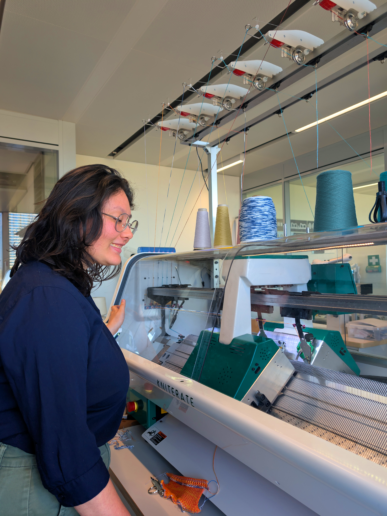
This philosophy is brought to life through KI MONO, a knitted garment inspired by Japanese kasuri and ikat traditions, where algorithmic colour sequences become wearable expressions of both cultural heritage and computational design. It demonstrates that innovation can honour tradition while simultaneously expanding its possibilities.
Visitors exploring the Sustainable Innovation space at Munich Fabric Start between 14-16 July 2026, will discover a project that asks a deceptively simple question will encounter more than a new textile machine.
They will encounter a new way of thinking about authorship. Because perhaps the future of textile innovation isn’t simply about making better materials. Perhaps it is about giving designers back the freedom to shape them from the very beginning.
THIS MIGHT BE ALSO INTERESTING FOR YOU
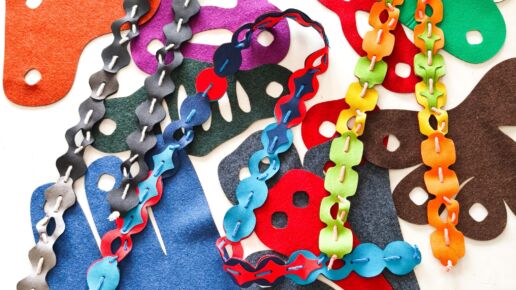
EMELIE SANDRE DESIGN – SUSTAINABLE INNOVATIONS
Modularity is hardly a new concept. It has transformed architecture, furniture and industrial design for decades. Applying it to soft textiles, however, opens an entirely different conversation.
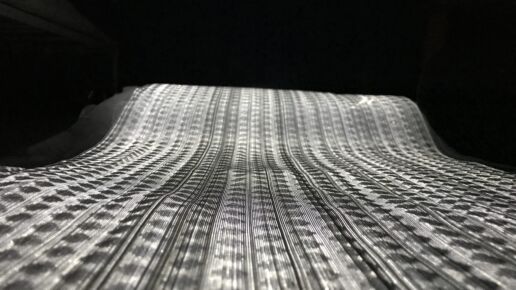
Smart Textile Design – SUSTAINABLE INNOVATIONS
We have always been driven by creativity and curiosity. Our practice evolves through prototypes, never finished, always asking more questions of materials, processes and possibilities.
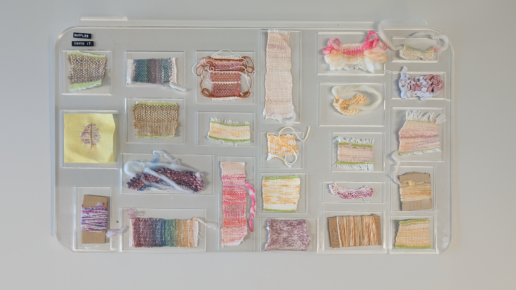
STUDIO ALICE GIELEN – SUSTAINABLE INNOVATIONS
It is an idea that feels increasingly relevant as artificial intelligence and computational design become part of fashion's creative landscape. Perhaps the future is not about humans versus machines. Perhaps it is about learning how to create together.
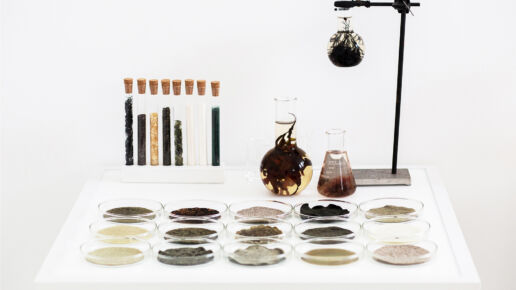
Leather from the Sea – SUSTAINABLE INNOVATIONS
"Through hands-on experimentation, I explore the potential of new surfaces and alternative forms of leather, aiming to reconnect human life with the natural world as an interconnected fabric."
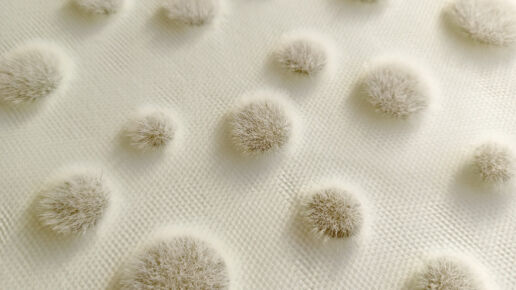
Maison du Flock – SUSTAINABLE INNOVATIONS
Working with everything from delicate tulle and lace to leather, sequins and other unconventional materials, the studio has transformed flock into a contemporary design language capable of meeting the demands of luxury fashion and Haute Couture.

MUNICH FABRIC START – January 26 closing report
A solid trade show. An optimistic mindset. That sums up the outcome of MUNICH FABRIC START. After three days, the Munich textile fair came to an end yesterday, Thursday, with the integrated show-in-shows BLUEZONE, KEYHOUSE and THE SOURCE. MUNICH FABRIC START concluded with a stable visitor frequency compared to the previous event.
MUNICH FABRIC START – Between Attitude and Sensuality
The future begins where we reimagine it. The overarching theme of PLEASURE stands for fashion as an emotional space, as an expression of attitude and cultural reflection.

KnitForm+ by Jeanne Mora – SUSTAINABLE INNOVATIONS
What matters is how the textile responds: how it regulates volume, distributes pressure, and transitions from flat to three-dimensional states. Process transparency is embedded in the methodology itself.

Cartoon – WEAR YOUR OPTIMISM
Embark on this fashionable journey and discover the new Cartoon collection at our store. Be inspired, mix and match to your heart's content, and wear optimism—every day, for every occasion.

RETRAKT – SUSTAINABLE INNOVATIONS
Performance, in this context, is measured by organisational resilience. RETRAKT applies resilience engineering to help employees anticipate, monitor, respond to, and learn from complex and changing requirements.


Cartoon - WEAR YOUR OPTIMISM
WEAR YOUR OPTIMISM
The new CARTOON collection as a fashionable journey around the world
Fashion can’t change the world – but it can lift our spirits in seconds and give us strength. This is precisely the idea behind Cartoon. With its new collection, the brand invites women to wear fashion as an expression of joie de vivre, individuality, and optimism. WEAR YOUR OPTIMISM is more than just a slogan – it’s an attitude.
Inspiration from around the world
The new collection is a fashionable bucket list of special places – each destination tells its own story and translates its character into fashion. Places inspire with their colors, vibes, and lifestyle. Cartoon picks up on precisely these impressions and transforms them into wearable looks with personality.
London & Cornwall kick off the journey with urban coolness: leopard prints meet color blocking, bold tones meet modern cuts.
The journey continues to Provence and Paris, where feminine lightness takes center stage. Delicate shades blend with bold highlights, stripes meet effortless Parisian elegance.
Summery prints and fresh colors dominate on the Amalfi Coast. Inspired by lemon groves and the incomparable dolce far niente feeling, looks are created that immediately evoke a holiday mood.
The stopover in Dubai brings sandy shades, airy fabrics, and clean lines. Comfort and elegance go hand in hand here—ideal for warm days.
Cape Town rounds off the collection: urban cool meets nature. Relaxed, modern silhouettes reflect a casual lifestyle and show how versatile the Cartoon collection is.
Embark on this fashionable journey and discover the new Cartoon collection at our store. Be inspired, mix and match to your heart’s content, and wear optimism – every day, for every occasion.
Discover the new collection
WEAR YOUR OPTIMISM.


The MUNICH FABRIC START team is delighted about the long-standing cooperation with CARTOON and would like to thank them once again for equipping our team with beautiful outfits!
THIS MIGHT BE ALSO INTERESTING FOR YOU
EMELIE SANDRE DESIGN – SUSTAINABLE INNOVATIONS
Modularity is hardly a new concept. It has transformed architecture, furniture and industrial design for decades. Applying it to soft textiles, however, opens an entirely different conversation.
Smart Textile Design – SUSTAINABLE INNOVATIONS
We have always been driven by creativity and curiosity. Our practice evolves through prototypes, never finished, always asking more questions of materials, processes and possibilities.
STUDIO ALICE GIELEN – SUSTAINABLE INNOVATIONS
It is an idea that feels increasingly relevant as artificial intelligence and computational design become part of fashion's creative landscape. Perhaps the future is not about humans versus machines. Perhaps it is about learning how to create together.
Leather from the Sea – SUSTAINABLE INNOVATIONS
"Through hands-on experimentation, I explore the potential of new surfaces and alternative forms of leather, aiming to reconnect human life with the natural world as an interconnected fabric."
Maison du Flock – SUSTAINABLE INNOVATIONS
Working with everything from delicate tulle and lace to leather, sequins and other unconventional materials, the studio has transformed flock into a contemporary design language capable of meeting the demands of luxury fashion and Haute Couture.
MUNICH FABRIC START – January 26 closing report
A solid trade show. An optimistic mindset. That sums up the outcome of MUNICH FABRIC START. After three days, the Munich textile fair came to an end yesterday, Thursday, with the integrated show-in-shows BLUEZONE, KEYHOUSE and THE SOURCE. MUNICH FABRIC START concluded with a stable visitor frequency compared to the previous event.
MUNICH FABRIC START – Between Attitude and Sensuality
The future begins where we reimagine it. The overarching theme of PLEASURE stands for fashion as an emotional space, as an expression of attitude and cultural reflection.
KnitForm+ by Jeanne Mora – SUSTAINABLE INNOVATIONS
What matters is how the textile responds: how it regulates volume, distributes pressure, and transitions from flat to three-dimensional states. Process transparency is embedded in the methodology itself.
Cartoon – WEAR YOUR OPTIMISM
Embark on this fashionable journey and discover the new Cartoon collection at our store. Be inspired, mix and match to your heart's content, and wear optimism—every day, for every occasion.
RETRAKT – SUSTAINABLE INNOVATIONS
Performance, in this context, is measured by organisational resilience. RETRAKT applies resilience engineering to help employees anticipate, monitor, respond to, and learn from complex and changing requirements.
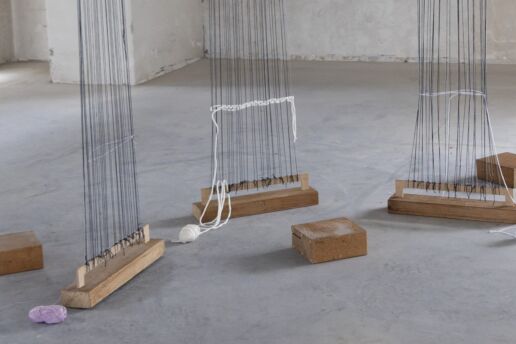
THREADED PROTOCOLS - SUSTAINABLE INNOVATIONS
THREADED PROTOCOLS:
When Weaving Becomes Computation Again
Explore these innovative projects at the Sustainable Innovations Forum in the Keyhouse in Hall 2
Threaded Protocols is not a textile innovation in the commercial sense, nor a digital tool disguised as craft. What makes the work distinct is its material investigation into how computational logic originates in textile practice and what is lost when those logics are abstracted into opaque technological systems.
Developed by artist and researcher Floor Berkhout, Threaded Protocols explores the structural relationship between weaving and computing. Both rely on binary decisions, pattern execution, and logical sequencing. Historically, the loom was the first computer. Threaded Protocols returns to this origin, using textile-making to expose the physical, gestural nature of computation that contemporary digital infrastructures have largely hidden.
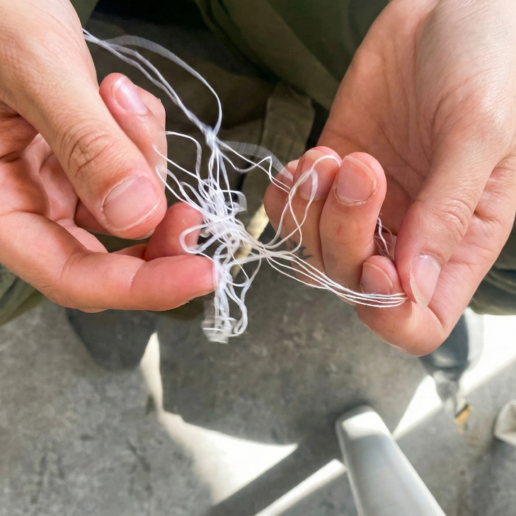
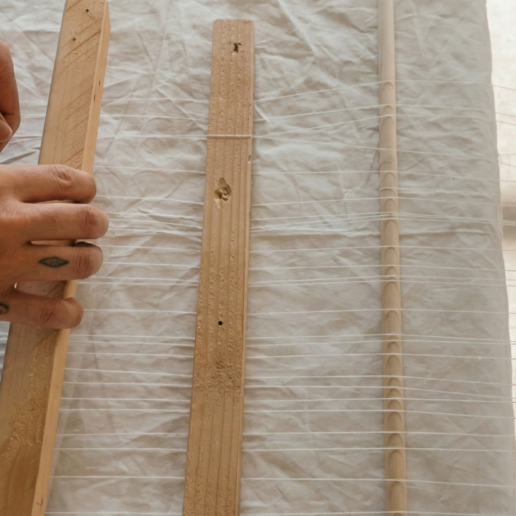
Berkhout’s practice operates as a critical technical practice, working through craft methodologies to understand how protocols function materially. In Threaded Protocols, each crossing of threads becomes a binary operation: in front or behind, zero or one. Meaning emerges slowly, through repetition and attention, rather than speed or optimisation. This slowness is deliberate. It draws from perma-computing principles, which question the inevitability of fast, extractive technological progress and its influence on both digital systems and the textile industry.
The project also foregrounds the gendered history of both textile labour and computation, from 19th-century weaving rooms to the women who worked as “computers” in the mid-20th century. By re-embedding computation in the hands, Threaded Protocols seeks to reclaim agency that has been stripped away through industrialisation and black-box technologies.
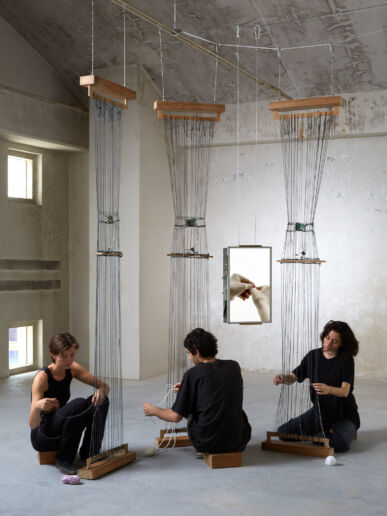
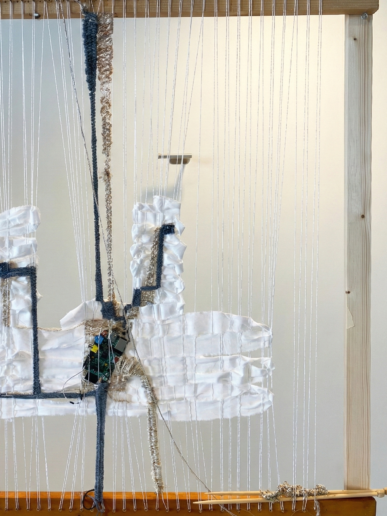
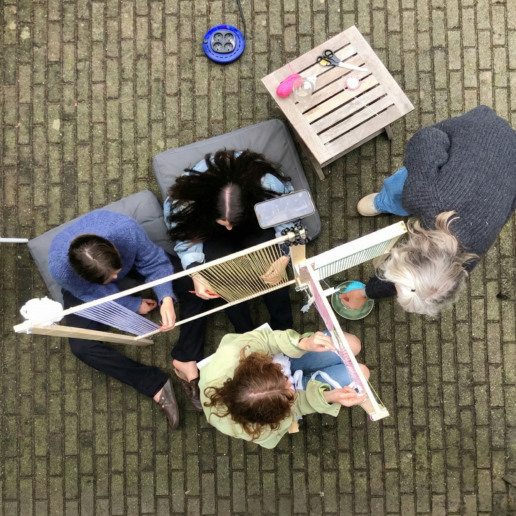
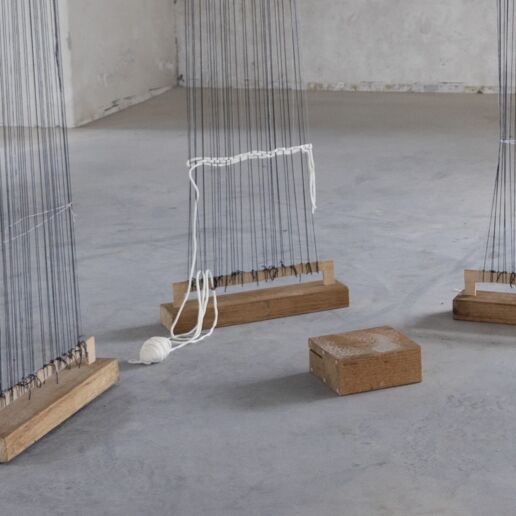
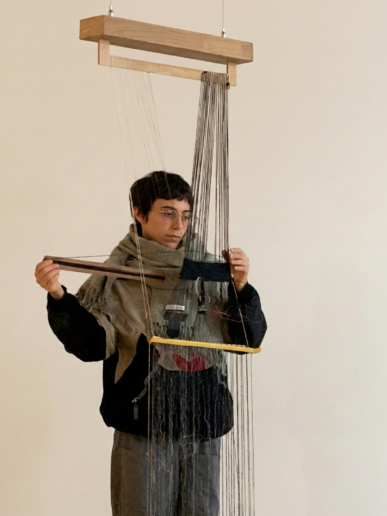
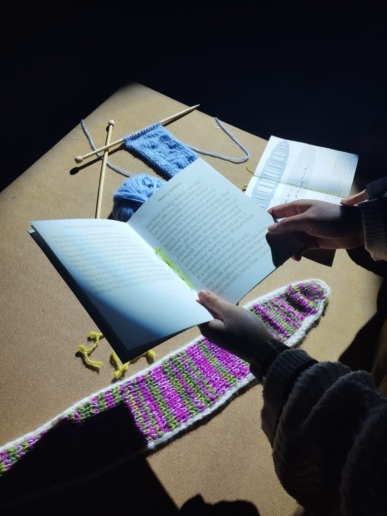
Threaded Protocols is presented as process-driven research and interactive installation, not as a scalable product or material solution. Its relevance lies in how it reframes technology as something made, touched, and shaped by human choice, rather than an abstract, neutral system.
For designers, technologists, and researchers, Threaded Protocols offers a reminder that systems which appear precise and objective are always political, always designed, and always traceable back to material decisions. In a landscape dominated by efficiency, Berkhout’s work insists on another value: the right to build meaning slowly.
The detailed explorer finds a bonus: her work is also touching theme’s of emancipation, gender-equality, historic manipulation…
Any input you think is helpful to create a dedicated article about your project:
https://materialprotocols.site/presskit/
https://materialprotocols.site/research&¬es/
THIS MIGHT BE ALSO INTERESTING FOR YOU
EMELIE SANDRE DESIGN – SUSTAINABLE INNOVATIONS
Modularity is hardly a new concept. It has transformed architecture, furniture and industrial design for decades. Applying it to soft textiles, however, opens an entirely different conversation.
Smart Textile Design – SUSTAINABLE INNOVATIONS
We have always been driven by creativity and curiosity. Our practice evolves through prototypes, never finished, always asking more questions of materials, processes and possibilities.
STUDIO ALICE GIELEN – SUSTAINABLE INNOVATIONS
It is an idea that feels increasingly relevant as artificial intelligence and computational design become part of fashion's creative landscape. Perhaps the future is not about humans versus machines. Perhaps it is about learning how to create together.
Leather from the Sea – SUSTAINABLE INNOVATIONS
"Through hands-on experimentation, I explore the potential of new surfaces and alternative forms of leather, aiming to reconnect human life with the natural world as an interconnected fabric."
Maison du Flock – SUSTAINABLE INNOVATIONS
Working with everything from delicate tulle and lace to leather, sequins and other unconventional materials, the studio has transformed flock into a contemporary design language capable of meeting the demands of luxury fashion and Haute Couture.
MUNICH FABRIC START – January 26 closing report
A solid trade show. An optimistic mindset. That sums up the outcome of MUNICH FABRIC START. After three days, the Munich textile fair came to an end yesterday, Thursday, with the integrated show-in-shows BLUEZONE, KEYHOUSE and THE SOURCE. MUNICH FABRIC START concluded with a stable visitor frequency compared to the previous event.
MUNICH FABRIC START – Between Attitude and Sensuality
The future begins where we reimagine it. The overarching theme of PLEASURE stands for fashion as an emotional space, as an expression of attitude and cultural reflection.
KnitForm+ by Jeanne Mora – SUSTAINABLE INNOVATIONS
What matters is how the textile responds: how it regulates volume, distributes pressure, and transitions from flat to three-dimensional states. Process transparency is embedded in the methodology itself.
Cartoon – WEAR YOUR OPTIMISM
Embark on this fashionable journey and discover the new Cartoon collection at our store. Be inspired, mix and match to your heart's content, and wear optimism—every day, for every occasion.
RETRAKT – SUSTAINABLE INNOVATIONS
Performance, in this context, is measured by organisational resilience. RETRAKT applies resilience engineering to help employees anticipate, monitor, respond to, and learn from complex and changing requirements.
MARIE VILAY - SUSTAINABLE INNOVATIONS
MARIE VILAY: Reading, Carrying, and Reframing Textile Knowledge
SUSTAINABLE INNOVATIONS
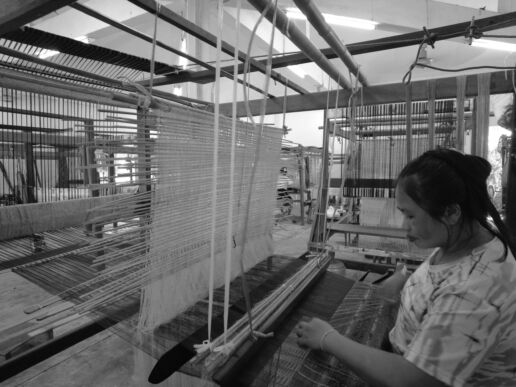
Marie Vilay does not present a new fabric or production technique. What distinguishes her work is a method of reading and translating textile knowledge across cultures, systems, and moments of transition. Her practice asks a question that sits at the edge of innovation: what happens to textile traditions, patterns, and objects when they move between geographies, power structures, and production logics?
“For designers, researchers, and institutions navigating questions of decolonisation, migration, and responsibility, her work offers a different kind of innovation: one rooted in listening, translation, and care rather than optimisation.”
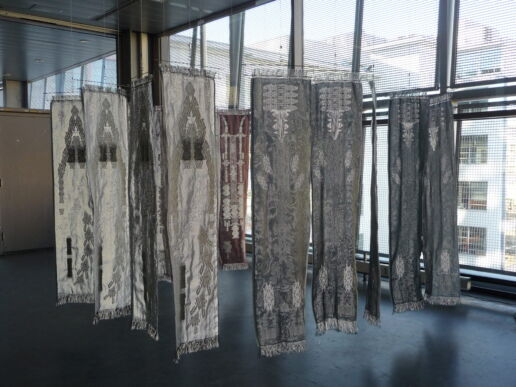
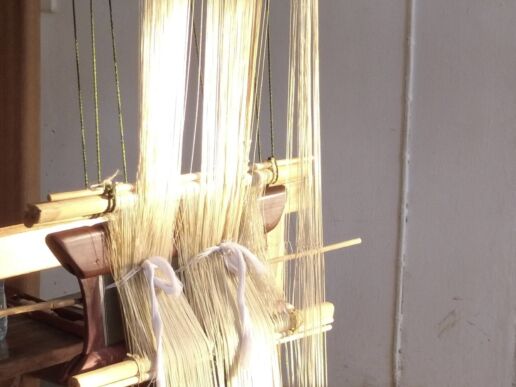
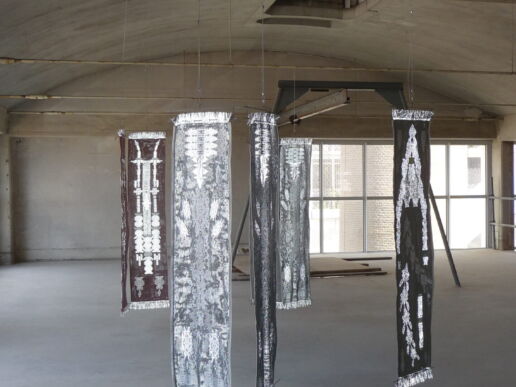
In To Read a Pattern, Vilay investigates how Laotian weaving patterns might persist when removed from their original cultural and social context and placed within European industrial production.
In Laos, weaving is a living, evolving practice, with patterns traditionally passed from mother to daughter. Vilay’s research highlights how colonial history and orientalist framing have shaped how these patterns are perceived in Western contexts, often flattening them into static heritage rather than living knowledge.
Using patterns gathered through field research in Laos and developing new interpretations through industrial processes, she explores whether continuity is possible without extraction or simplification. This work was produced in collaboration with TextielLab and the Textile Museum in Tilburg.
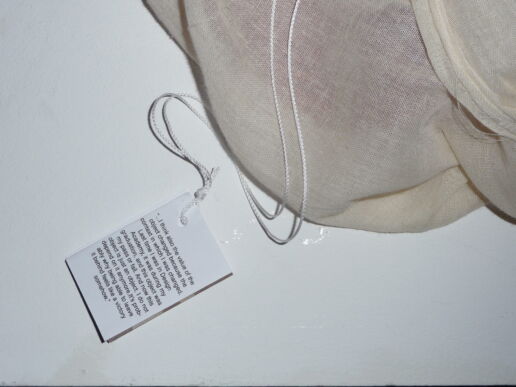
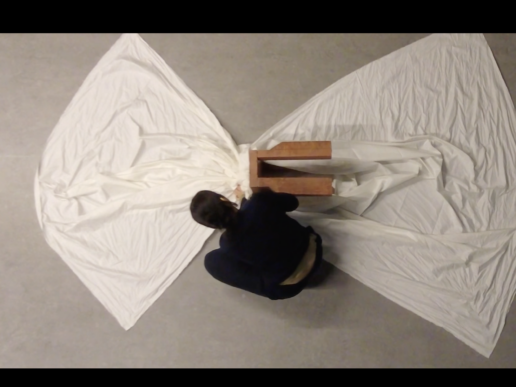
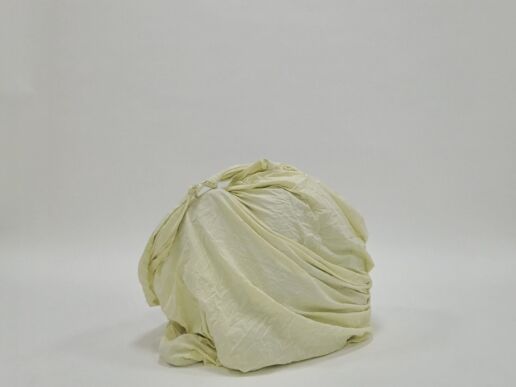
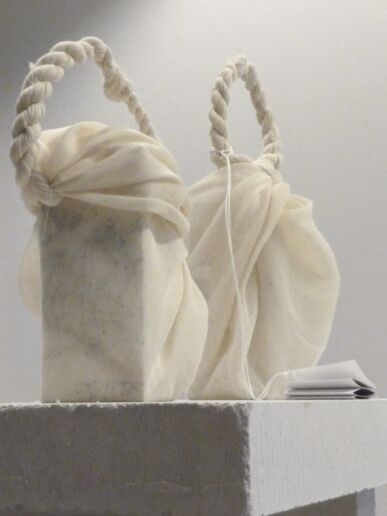
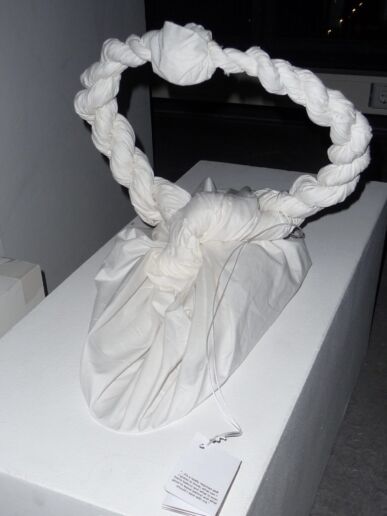
Her second project, A Bindle (in Transition), shifts from production systems to personal and collective movement. A bindle is a simple cloth used to carry essential belongings while travelling. Vilay reinterprets this form as a container for care, memory, and what is left behind. Using graduation projects abandoned by peers as material, she documents stories of departure, uncertainty, and transition, binding objects and narratives together through a universal textile gesture.
Vilay’s work is not designed for immediate commercial application. Its relevance lies elsewhere: in challenging how value, authorship, and continuity are assigned in textile culture. For designers, researchers, and institutions navigating questions of decolonisation, migration, and responsibility, her work offers a different kind of innovation: one rooted in listening, translation, and care rather than optimisation.
THIS MIGHT BE ALSO INTERESTING FOR YOU:
EMELIE SANDRE DESIGN – SUSTAINABLE INNOVATIONS
Modularity is hardly a new concept. It has transformed architecture, furniture and industrial design for decades. Applying it to soft textiles, however, opens an entirely different conversation.
Smart Textile Design – SUSTAINABLE INNOVATIONS
We have always been driven by creativity and curiosity. Our practice evolves through prototypes, never finished, always asking more questions of materials, processes and possibilities.
STUDIO ALICE GIELEN – SUSTAINABLE INNOVATIONS
It is an idea that feels increasingly relevant as artificial intelligence and computational design become part of fashion's creative landscape. Perhaps the future is not about humans versus machines. Perhaps it is about learning how to create together.
Leather from the Sea – SUSTAINABLE INNOVATIONS
"Through hands-on experimentation, I explore the potential of new surfaces and alternative forms of leather, aiming to reconnect human life with the natural world as an interconnected fabric."
Maison du Flock – SUSTAINABLE INNOVATIONS
Working with everything from delicate tulle and lace to leather, sequins and other unconventional materials, the studio has transformed flock into a contemporary design language capable of meeting the demands of luxury fashion and Haute Couture.
MUNICH FABRIC START – January 26 closing report
A solid trade show. An optimistic mindset. That sums up the outcome of MUNICH FABRIC START. After three days, the Munich textile fair came to an end yesterday, Thursday, with the integrated show-in-shows BLUEZONE, KEYHOUSE and THE SOURCE. MUNICH FABRIC START concluded with a stable visitor frequency compared to the previous event.
MUNICH FABRIC START – Between Attitude and Sensuality
The future begins where we reimagine it. The overarching theme of PLEASURE stands for fashion as an emotional space, as an expression of attitude and cultural reflection.
KnitForm+ by Jeanne Mora – SUSTAINABLE INNOVATIONS
What matters is how the textile responds: how it regulates volume, distributes pressure, and transitions from flat to three-dimensional states. Process transparency is embedded in the methodology itself.
Cartoon – WEAR YOUR OPTIMISM
Embark on this fashionable journey and discover the new Cartoon collection at our store. Be inspired, mix and match to your heart's content, and wear optimism—every day, for every occasion.
RETRAKT – SUSTAINABLE INNOVATIONS
Performance, in this context, is measured by organisational resilience. RETRAKT applies resilience engineering to help employees anticipate, monitor, respond to, and learn from complex and changing requirements.
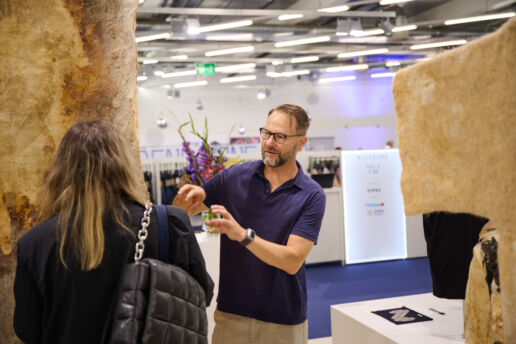
Interview with Simon Angel, Curator of SUSTAINABLE INNOVATIONS
SUSTAINABLE INNOVATIONS 2026:
Interview with Simon Angel, Curator of SUSTAINABLE INNOVATIONS
Guest article by Muchaneta ten Napel
Simon Angel has been curating the Sustainable Innovations Area at KEYHOUSE since 2018. For the January 2026 edition, Sustainable Innovations once again brings together projects that question, provoke, and expand the future of textiles. Register now to attend Sustainable Innovations at KEYHOUSE.
When you curate SUSTAINABLE INNOVATIONS, what tells you a project is genuinely worth platforming, beyond novelty or technical achievement?
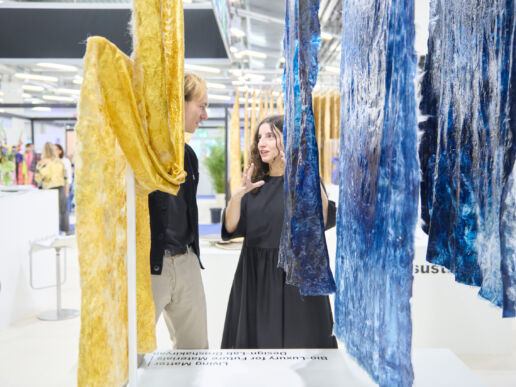
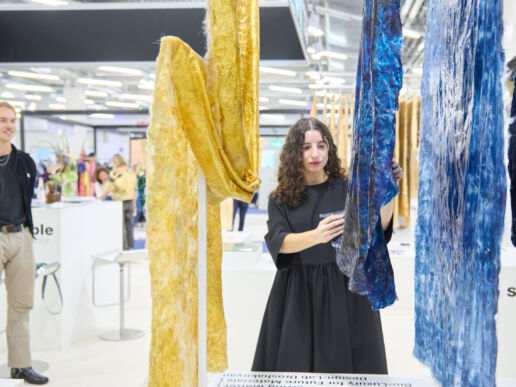
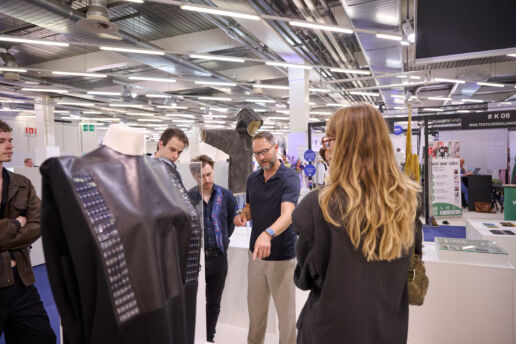
Simon Angel: For me, novelty by itself is never enough, I always search behind the curtains, looking for stories, paradoxes, pain, pleasure and purpose. Technical achievement is important, but it is only a starting point. What I look for is whether a project asks an honest question about how we live, make, and value. A project becomes worth platforming when it shows responsibility towards material, culture, and consequence. That responsibility can take many forms. In Marie Vilay’s work, it appears as care for knowledge, authorship, and continuity. In Materia Futura, it emerges as a refusal to accept that sustainability must look deprived or emotionally flat. In Threaded Protocols, it shows up as a quiet but powerful re-examination of how technology itself is constructed. What connects them is not perfection, but intention. They are not trying to impress the industry. They are trying to understand it, and sometimes to gently disturb it; reframing or disrupt the ‘pattern’ of the industry. That is where I feel Sustainable Innovations has its real value.
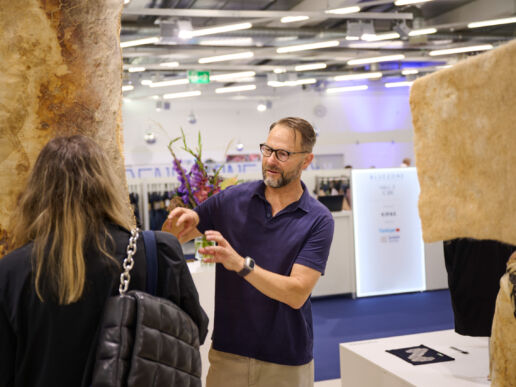
Many of the projects you select are not market-ready products. Why is it important, in your view, for an industry-focused fair to make space for unfinished or exploratory work?
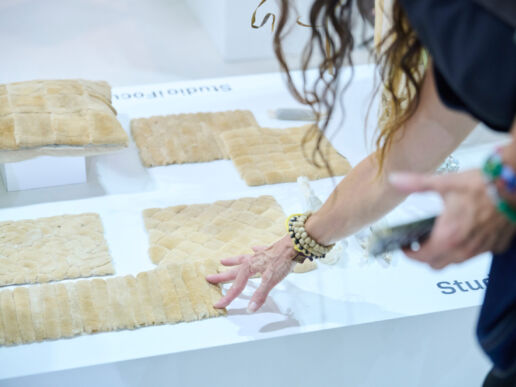
Simon Angel: Because the future does not arrive fully packaged. If we only show what is ready for market, we only ever validate what already fits existing systems. Sustainable Innovations exists precisely to create space for what does not yet fit. Exploratory work allows us to see where thinking is moving before it becomes constrained by commercial frameworks. It is therefore an invitation to explore and to inspire. Projects like Materia Futura or Threaded Protocols are not trying to sell a product. They are offering a shift in perception. They allow the industry to engage with material, technology, and responsibility at a conceptual level before those ideas harden into supply chains and price points. An industry that only looks at finished solutions risks losing its ability to imagine better ones.
Looking at this year’s exhibitors, what do you feel they have in common?
Simon Angel: What they share is a deep awareness that textiles are not neutral. Whether it is Marie Vilay questioning how textile knowledge travels across cultures or Materia Futura reclaiming sensory desire in bio-based materials, each project understands textiles as carriers of history, power, emotion, and choice. They are not interested in materials as surfaces alone. They are interested in materials as systems of meaning. And importantly, none of them treats sustainability as a technical checklist. They treat it as a cultural responsibility. Textile with layers of different understandings, functions and conscious.
Many innovations struggle at the point of scale. What responsibility, if any, do curators and platforms have in addressing that gap?
Simon Angel: We cannot solve scale for innovators, but we can change how scale is understood. Too often, scale is presented as the only measure of success. But some projects are not meant to scale in the conventional sense. Their value lies in how they influence thinking, education, or future processes. As curators, our responsibility is to provide context. To connect exploratory work with industry actors who can interpret, adapt, or carry those ideas forward responsibly. To prevent innovation from being consumed only as trend material. Scale should be a conversation, a question mark maybe, but not a demand.
Across the projects this season, what assumptions about textiles or fashion do you think the industry most needs to unlearn?
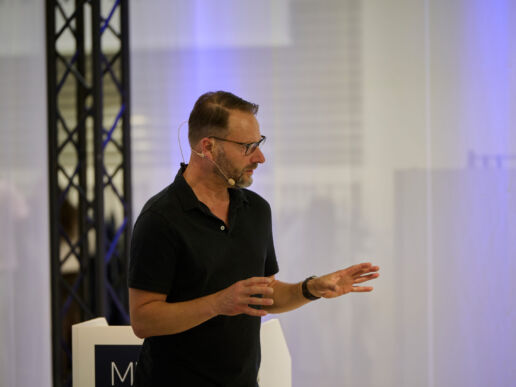
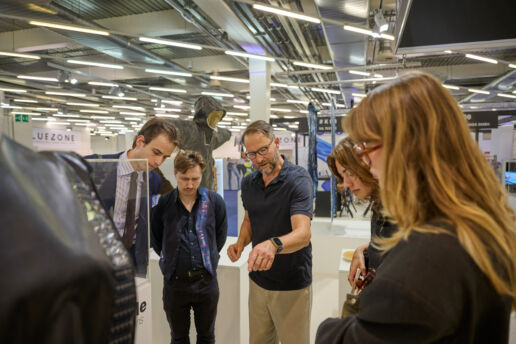
Simon Angel: That sustainability must look modest, technical, or restrained. That innovation must be fast. That materials are separate from culture. That efficiency is always progress. The projects being presented should remind us that desire is not the enemy of sustainability. The industry must unlearn the idea that responsibility is a limitation. It is, in fact, a creative force.
If the wider industry took just one lesson from this year’s SUSTAINABLE INNOVATIONS, what would you want it to be?
Simon Angel: That innovation is not only about what we make, but about how we choose to make meaning. Sustainable Innovations is not a showroom of answers. It is an invitation to think differently. To slow down. To notice. To question. To reconnect material with intention. If the industry leaves with a renewed sense of responsibility towards both material and imagination, then the platform is doing its job.

About the author
Founding editor-in-chief of Shape Innovate, Muchaneta has worked in the fashion industry for over 14 years. She is currently one of the leading influencers speaking and writing about the merger of fashion with technology and wearable technology.
Muchaneta ten Napel | m@shapeinnovate.com
THIS MIGHT BE ALSO INTERESTING FOR YOU:
EMELIE SANDRE DESIGN – SUSTAINABLE INNOVATIONS
Modularity is hardly a new concept. It has transformed architecture, furniture and industrial design for decades. Applying it to soft textiles, however, opens an entirely different conversation.
Smart Textile Design – SUSTAINABLE INNOVATIONS
We have always been driven by creativity and curiosity. Our practice evolves through prototypes, never finished, always asking more questions of materials, processes and possibilities.
STUDIO ALICE GIELEN – SUSTAINABLE INNOVATIONS
It is an idea that feels increasingly relevant as artificial intelligence and computational design become part of fashion's creative landscape. Perhaps the future is not about humans versus machines. Perhaps it is about learning how to create together.
Leather from the Sea – SUSTAINABLE INNOVATIONS
"Through hands-on experimentation, I explore the potential of new surfaces and alternative forms of leather, aiming to reconnect human life with the natural world as an interconnected fabric."
Maison du Flock – SUSTAINABLE INNOVATIONS
Working with everything from delicate tulle and lace to leather, sequins and other unconventional materials, the studio has transformed flock into a contemporary design language capable of meeting the demands of luxury fashion and Haute Couture.
MUNICH FABRIC START – January 26 closing report
A solid trade show. An optimistic mindset. That sums up the outcome of MUNICH FABRIC START. After three days, the Munich textile fair came to an end yesterday, Thursday, with the integrated show-in-shows BLUEZONE, KEYHOUSE and THE SOURCE. MUNICH FABRIC START concluded with a stable visitor frequency compared to the previous event.
MUNICH FABRIC START – Between Attitude and Sensuality
The future begins where we reimagine it. The overarching theme of PLEASURE stands for fashion as an emotional space, as an expression of attitude and cultural reflection.
KnitForm+ by Jeanne Mora – SUSTAINABLE INNOVATIONS
What matters is how the textile responds: how it regulates volume, distributes pressure, and transitions from flat to three-dimensional states. Process transparency is embedded in the methodology itself.
Cartoon – WEAR YOUR OPTIMISM
Embark on this fashionable journey and discover the new Cartoon collection at our store. Be inspired, mix and match to your heart's content, and wear optimism—every day, for every occasion.
RETRAKT – SUSTAINABLE INNOVATIONS
Performance, in this context, is measured by organisational resilience. RETRAKT applies resilience engineering to help employees anticipate, monitor, respond to, and learn from complex and changing requirements.
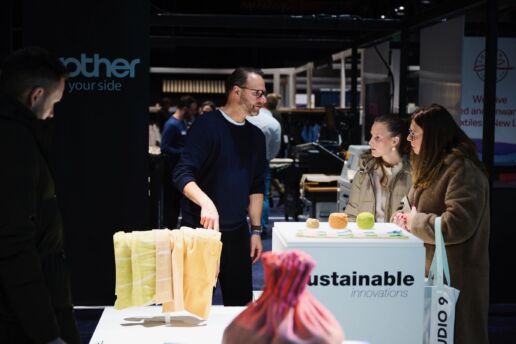
Materials as Agents of Change with Simon Angel
SUSTAINABLE INNOVATIONS 2025: Materials as Agents of Change
Interview with Simon Angel - Guest article by Muchaneta ten Napel
Curator of SUSTAINABLE INNOVATIONS at Munich Fabric Start, Simon Angel, has become a central voice in shaping how the fashion and textile industries engage with change. His role is less about gatekeeping and more about storytelling. He is someone who is continually driven to connect experimental design, science, and industry practice into a broader vision of what the future of textiles could be. Each season, the forum brings together projects that provoke, inspire, and challenge assumptions. This year is no exception, with work ranging from bio-luxury couture to energy-generating textiles and regenerative materials grown from wetlands.
Here, Angel reflects on his curatorial approach, what unites the innovators he spotlights, and the lessons the wider industry should take forward.
What guides your selection for the Sustainable Innovations forum at Munich Fabric Start?
Simon Angel: I tend to follow what I’d call the heartbeat of our shared future. I’m drawn to ideas that question how we live, how we make, and what we value. That’s why you’ll see projects like Wetlands Matters, which asks whether a jacket can actually help re-wild landscapes, or MYC_couture, which shows us that couture can be cultivated with fungi rather than constructed with synthetics. Innovation often blooms at intersections between fashion, materials science, agriculture, and energy. What matters is that each project shines light on a new way to connect design, ecology, and purpose.

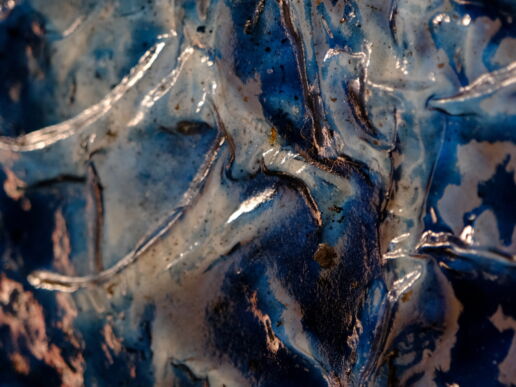
Living matters
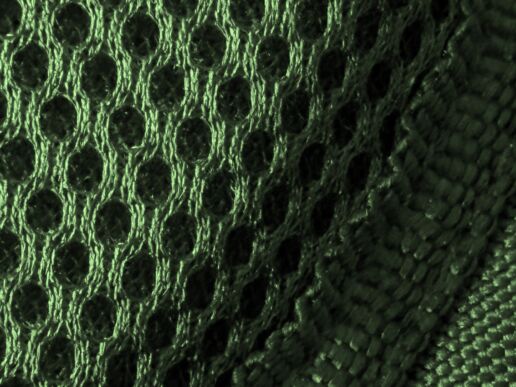
Biotexfuture – BioCushion
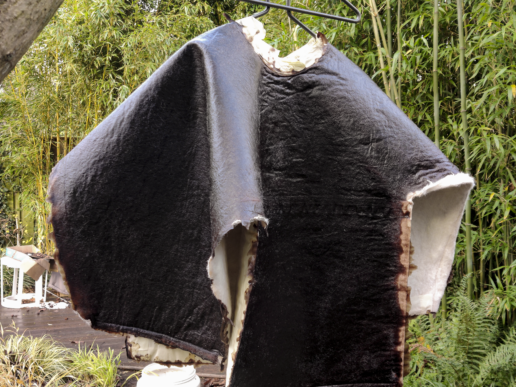
Wetlands Matters
What unites the projects featured this season?
Simon Angel: Two things: poetry and purpose. We need creators who can stir emotion like Plantfur, which transforms cattail waste into fur-like panels that are both tactile and ecological and at the same time we need rigorous problem-solvers who deliver scalable results, like the BIOTEXFUTURE initiative working on bio-based polyester and recyclable spacer fabrics. When those elements come together, the projects become more than exhibits; they become signals of what the industry could look like in ten or twenty years.
Do you sense any trends taking shape across the entries this season?
Simon Angel: What I see is a search for meaningful connection between people, and between materials and purpose. Suntex, for example, doesn’t just provide shade it turns fabric into renewable infrastructure, powering spaces we live in. Living Matter reframes luxury not as excess but as responsibility. These are projects asking: why do we value what we value, and what role can textiles play in helping us live differently? That drive for connection may be the next frontier of innovation.
Heliotex
MYC_Couture
Plantfur
What can the industry learn from the Sustainable Innovations forum?
Simon Angel: The forum isn’t about providing ready-made answers. It’s about opening a dialogue. Designers bring unique perspectives on human need and material potential, while industry brings the scale and reach to make change happen. When something like Wetlands Matters or Plantfur is staged next to an industrial research programme like BIOTEXFUTURE, it shows how speculative design and applied science can reinforce one another. That’s when we move from admiration to action.
Looking ahead, how do you see sustainability and textiles evolving together?
Simon Angel: The more immersed I become, the more it boils down to responsibility shared across the system. For me the projects at Sustainable Innovations remind us that awareness can be turned into collective action. It’s time for the industry to let that enthusiasm drive renewal, not just conversation.


About the author
Founding editor-in-chief of Shape Innovate, Muchaneta has worked in the fashion industry for over 14 years. She is currently one of the leading influencers speaking and writing about the merger of fashion with technology and wearable technology.
Muchaneta ten Napel | m@shapeinnovate.com
THIS MIGHT BE ALSO INTERESTING FOR YOU:
EMELIE SANDRE DESIGN – SUSTAINABLE INNOVATIONS
Modularity is hardly a new concept. It has transformed architecture, furniture and industrial design for decades. Applying it to soft textiles, however, opens an entirely different conversation.
Smart Textile Design – SUSTAINABLE INNOVATIONS
We have always been driven by creativity and curiosity. Our practice evolves through prototypes, never finished, always asking more questions of materials, processes and possibilities.
STUDIO ALICE GIELEN – SUSTAINABLE INNOVATIONS
It is an idea that feels increasingly relevant as artificial intelligence and computational design become part of fashion's creative landscape. Perhaps the future is not about humans versus machines. Perhaps it is about learning how to create together.
Leather from the Sea – SUSTAINABLE INNOVATIONS
"Through hands-on experimentation, I explore the potential of new surfaces and alternative forms of leather, aiming to reconnect human life with the natural world as an interconnected fabric."
Maison du Flock – SUSTAINABLE INNOVATIONS
Working with everything from delicate tulle and lace to leather, sequins and other unconventional materials, the studio has transformed flock into a contemporary design language capable of meeting the demands of luxury fashion and Haute Couture.
MUNICH FABRIC START – January 26 closing report
A solid trade show. An optimistic mindset. That sums up the outcome of MUNICH FABRIC START. After three days, the Munich textile fair came to an end yesterday, Thursday, with the integrated show-in-shows BLUEZONE, KEYHOUSE and THE SOURCE. MUNICH FABRIC START concluded with a stable visitor frequency compared to the previous event.
MUNICH FABRIC START – Between Attitude and Sensuality
The future begins where we reimagine it. The overarching theme of PLEASURE stands for fashion as an emotional space, as an expression of attitude and cultural reflection.
KnitForm+ by Jeanne Mora – SUSTAINABLE INNOVATIONS
What matters is how the textile responds: how it regulates volume, distributes pressure, and transitions from flat to three-dimensional states. Process transparency is embedded in the methodology itself.
Cartoon – WEAR YOUR OPTIMISM
Embark on this fashionable journey and discover the new Cartoon collection at our store. Be inspired, mix and match to your heart's content, and wear optimism—every day, for every occasion.
RETRAKT – SUSTAINABLE INNOVATIONS
Performance, in this context, is measured by organisational resilience. RETRAKT applies resilience engineering to help employees anticipate, monitor, respond to, and learn from complex and changing requirements.
AUTUMN.WINTER 26/27 FABRIC HIGHLIGHTS & MATERIAL NOVELTIES – PART X
FABRIC HIGHLIGHTS & MATERIAL NOVELTIES FOR AUTUMN.WINTER 26/27 – PART X
Mitwill Textiles Europe
At the upcoming MUNICH FABRIC START, around 500 international suppliers will present their material innovations for all apparel segments in the FABRICS Area. The complete product portfolio of fashionable woven and knitted fabrics made of wool, cotton, silk, blends and functional fibres will be presented here. For the Autumn.Winter 26/27 season, we present some new products and highlights from international producers in our FABRICS blog posts:
S2G XR brings textile into a new dimension — live from Munich Fabric Start
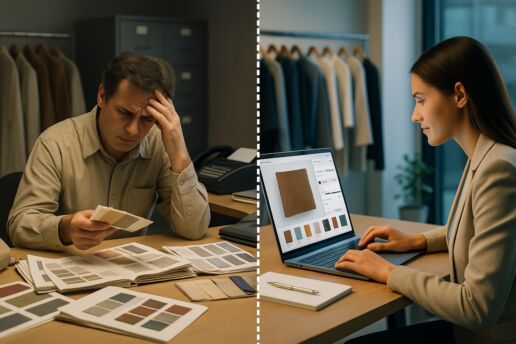
At the heart of Munich Fabric Start, an unprecedented textile experience awaits you. For the first time in Germany, S2G XR (Style 2 Garment eXtended Reality) will present a live demo of its 3D textile configurator at booth A4.20 Not a teaser. Not a promotional video. A real, testable demo. And a very concrete preview of what is about to become the new standard for textile sourcing in Europe
The 3D configurator: a game-changing tool at your fingertips
At the Mitwill booth, you are in control: apply your prints live onto 3D garments, instantly view the final result in 360°, and configure a full product — no technical knowledge required.
In just a few clicks, you’ll experience a faster, smoother, more visual way to source textiles, built to meet the actual challenges of today’s market. And most importantly: you’re fully autonomous. No demo assistant. No tutorial. You test, you create, you decide. It’s your collection, your vision, your rhythm.


What this changes for the industry
This innovation is not just cosmetic. It addresses very real challenges: reducing lead times, eliminating slow communication loops, minimizing the environmental impact of prototyping and gaining in accuracy.
Digital textile sourcing, as envisioned by S2G XR, becomes a competitive advantage for brands and a true collaboration space for every link in the value chain.
In a market where speed, sustainability and transparency are becoming the norm, this platform offers a new way of working — without compromising on quality.
S2G XR: a platform born in Europe, built for textile professionals
Developed as part of the Eurostars program, S2G XR is the result of a unique alliance between three complementary players: Mitwill Textiles Europe for its textile expertise and product development support, SkalUP for its digital innovation and immersive 3D showroom and JAGGS for its brand vision and strategic marketing expertise.
This collaboration reflects a bold ambition: bringing next-gen tools to European textile manufacturers, while boosting visibility and autonomy for emerging brands.
Meet Mitwill in Munich and experience it for yourself
For two days, S2G XR invites all textile professionals to come and try the platform for themselves at booth A4 20.
Meet the team and discover the future of textile. Live. Unfiltered.
THIS MIGHT BE ALSO INTERESTING FOR YOU
EMELIE SANDRE DESIGN – SUSTAINABLE INNOVATIONS
Modularity is hardly a new concept. It has transformed architecture, furniture and industrial design for decades. Applying it to soft textiles, however, opens an entirely different conversation.
Smart Textile Design – SUSTAINABLE INNOVATIONS
We have always been driven by creativity and curiosity. Our practice evolves through prototypes, never finished, always asking more questions of materials, processes and possibilities.
STUDIO ALICE GIELEN – SUSTAINABLE INNOVATIONS
It is an idea that feels increasingly relevant as artificial intelligence and computational design become part of fashion's creative landscape. Perhaps the future is not about humans versus machines. Perhaps it is about learning how to create together.
Leather from the Sea – SUSTAINABLE INNOVATIONS
"Through hands-on experimentation, I explore the potential of new surfaces and alternative forms of leather, aiming to reconnect human life with the natural world as an interconnected fabric."
Maison du Flock – SUSTAINABLE INNOVATIONS
Working with everything from delicate tulle and lace to leather, sequins and other unconventional materials, the studio has transformed flock into a contemporary design language capable of meeting the demands of luxury fashion and Haute Couture.
MUNICH FABRIC START – January 26 closing report
A solid trade show. An optimistic mindset. That sums up the outcome of MUNICH FABRIC START. After three days, the Munich textile fair came to an end yesterday, Thursday, with the integrated show-in-shows BLUEZONE, KEYHOUSE and THE SOURCE. MUNICH FABRIC START concluded with a stable visitor frequency compared to the previous event.
MUNICH FABRIC START – Between Attitude and Sensuality
The future begins where we reimagine it. The overarching theme of PLEASURE stands for fashion as an emotional space, as an expression of attitude and cultural reflection.
KnitForm+ by Jeanne Mora – SUSTAINABLE INNOVATIONS
What matters is how the textile responds: how it regulates volume, distributes pressure, and transitions from flat to three-dimensional states. Process transparency is embedded in the methodology itself.
Cartoon – WEAR YOUR OPTIMISM
Embark on this fashionable journey and discover the new Cartoon collection at our store. Be inspired, mix and match to your heart's content, and wear optimism—every day, for every occasion.
RETRAKT – SUSTAINABLE INNOVATIONS
Performance, in this context, is measured by organisational resilience. RETRAKT applies resilience engineering to help employees anticipate, monitor, respond to, and learn from complex and changing requirements.

BLUEZONE NEWS FOR SEPTEMBER 2025 - PART VI
BLUEZONE NEWS
HIGHLIGHTS & NOVELTIES FROM DENIM MILLS IN MUNICH
DNM DENIM
At BLUEZONE, some 50 international Denim- and sportswear suppliers will present their most recent Denim novelties and innovations. Hall 2 will become the blue hotspot again. Parallel to MUNICH FABRIC START with THE SOURCE and KEYHOUSE, the Zenith area will become the hub of the international denim community with an all-round relevant event program.
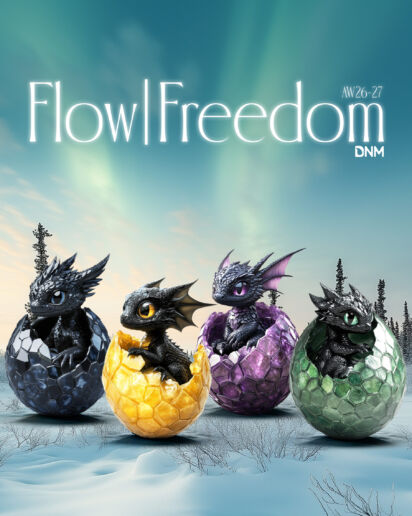
FLOW | FREEDOM
At DNM Denim, the journey continues. Inspired by nature’s cycles and guided by Flow Theory, the company moves from Challenge to Focus, and now to Freedom—the phase where potential becomes power.
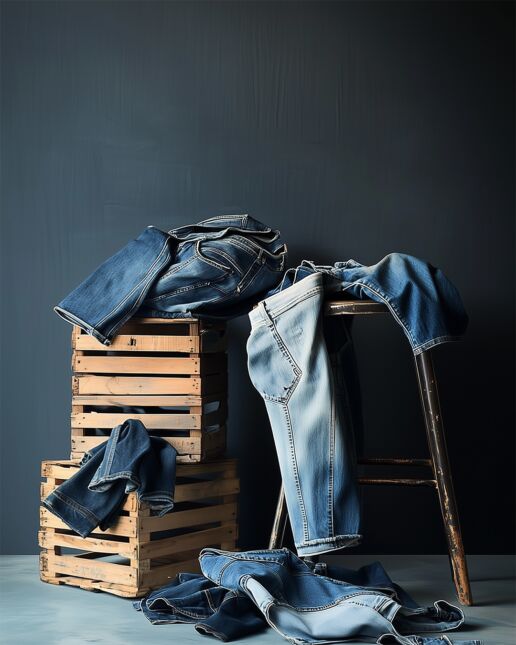
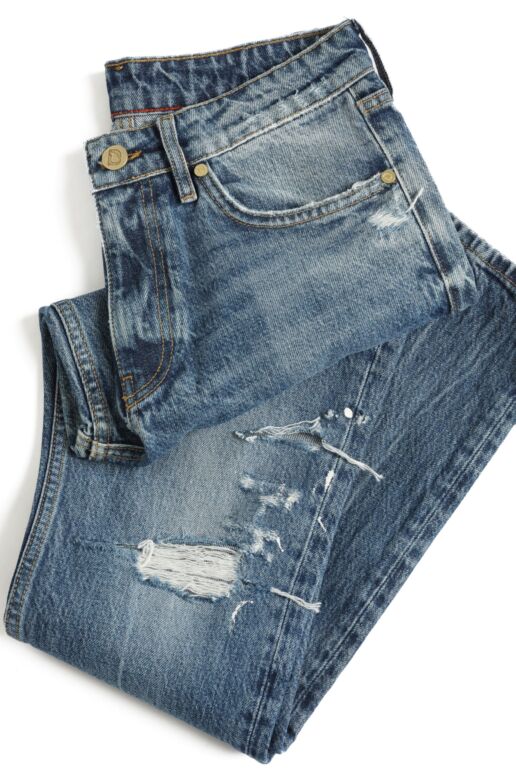
The AW 26-27 Collection brings denim to a new level of comfort and style. With rich colours, unique textures, and thoughtful constructions, it empowers you to express your style freely. Every piece reflects the season’s trends while keeping individuality at the heart of design.
Respect for nature remains at the core of the process. By using solar energy and cogeneration systems, DNM Denim reduces carbon emissions, while their Life Cycle Assessment (LCA) studies provide transparent monitoring of environmental impact. All water is recycled, minimizing waste and conserving resources.
With strengthened production capacity, the company continues to honour the planet while offering denim that celebrates freedom, comfort, and sustainability.
The story that started with Challenge, moved through Focus, and now culminates in Freedom is not an ending—it’s a new beginning. The Flow continues.
“At DNM Denim, the journey continues. Inspired by nature’s cycles and guided by Flow Theory, the company moves from Challenge to Focus, and now to Freedom—the phase where potential becomes power.”
Join DNM DENIM at their booth in H2 | B 07 and discover their latest innovations.
THIS MIGHT BE ALSO INTERESTING FOR YOU
EMELIE SANDRE DESIGN – SUSTAINABLE INNOVATIONS
Modularity is hardly a new concept. It has transformed architecture, furniture and industrial design for decades. Applying it to soft textiles, however, opens an entirely different conversation.
Smart Textile Design – SUSTAINABLE INNOVATIONS
We have always been driven by creativity and curiosity. Our practice evolves through prototypes, never finished, always asking more questions of materials, processes and possibilities.
STUDIO ALICE GIELEN – SUSTAINABLE INNOVATIONS
It is an idea that feels increasingly relevant as artificial intelligence and computational design become part of fashion's creative landscape. Perhaps the future is not about humans versus machines. Perhaps it is about learning how to create together.
Leather from the Sea – SUSTAINABLE INNOVATIONS
"Through hands-on experimentation, I explore the potential of new surfaces and alternative forms of leather, aiming to reconnect human life with the natural world as an interconnected fabric."
Maison du Flock – SUSTAINABLE INNOVATIONS
Working with everything from delicate tulle and lace to leather, sequins and other unconventional materials, the studio has transformed flock into a contemporary design language capable of meeting the demands of luxury fashion and Haute Couture.
MUNICH FABRIC START – January 26 closing report
A solid trade show. An optimistic mindset. That sums up the outcome of MUNICH FABRIC START. After three days, the Munich textile fair came to an end yesterday, Thursday, with the integrated show-in-shows BLUEZONE, KEYHOUSE and THE SOURCE. MUNICH FABRIC START concluded with a stable visitor frequency compared to the previous event.
MUNICH FABRIC START – Between Attitude and Sensuality
The future begins where we reimagine it. The overarching theme of PLEASURE stands for fashion as an emotional space, as an expression of attitude and cultural reflection.
KnitForm+ by Jeanne Mora – SUSTAINABLE INNOVATIONS
What matters is how the textile responds: how it regulates volume, distributes pressure, and transitions from flat to three-dimensional states. Process transparency is embedded in the methodology itself.
Cartoon – WEAR YOUR OPTIMISM
Embark on this fashionable journey and discover the new Cartoon collection at our store. Be inspired, mix and match to your heart's content, and wear optimism—every day, for every occasion.
RETRAKT – SUSTAINABLE INNOVATIONS
Performance, in this context, is measured by organisational resilience. RETRAKT applies resilience engineering to help employees anticipate, monitor, respond to, and learn from complex and changing requirements.
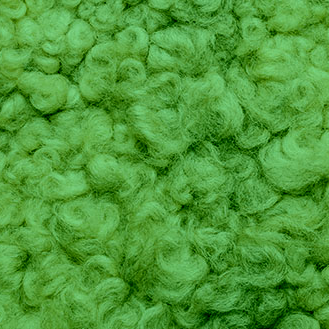
BIOTEXFUTURE: How to Make Textiles from Fossils
BIOTEXFUTURE: How to Make Textiles from Fossils
One of fashion’s biggest contradictions is that it relies on fossil fuels. Polyester, nylon, and acrylic make up most of the world’s fibres, which means that most clothes today start out as crude oil. adidas and RWTH Aachen University are leading the German project BIOTEXFUTURE, which wants to end that dependence.
The program is a group of businesses and universities working together to find scalable, bio-based alternatives. It is funded by the Federal Ministry of Education and Research. Part of the SUSTAINABLE INNOVATIONS forum at Munich Fabric start, three main projects will be featured:
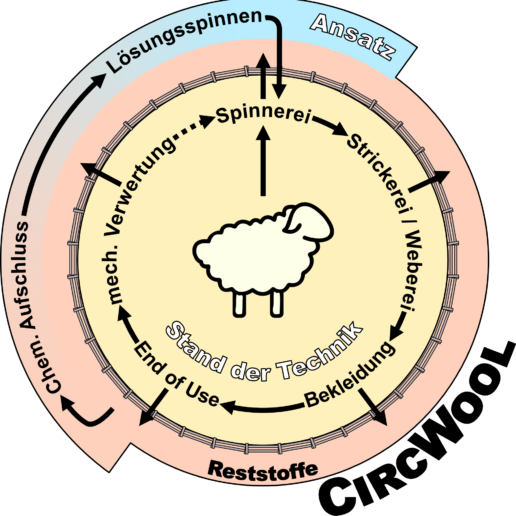
- CircWool: a process that uses a solvent to restore wool fibres without lowering their quality.
- BioPETex: a bio-based polyester that works just as well as regular PET.
- BioCushion: a type of spacer fabric that can be recycled and used in shoes and clothes. It is both strong and circular.
These projects are not meant to be one-time tests; they are meant to be useful in the real world. Adding them to the forum ties speculative design ideas to a long history of applied science. It reminds us that we need both creativity and infrastructure to make the switch to sustainable textiles.

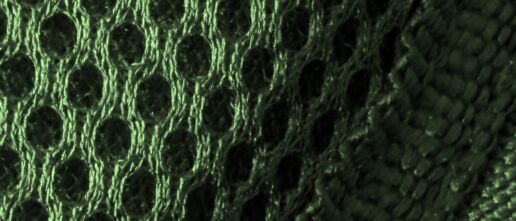
BioCushion
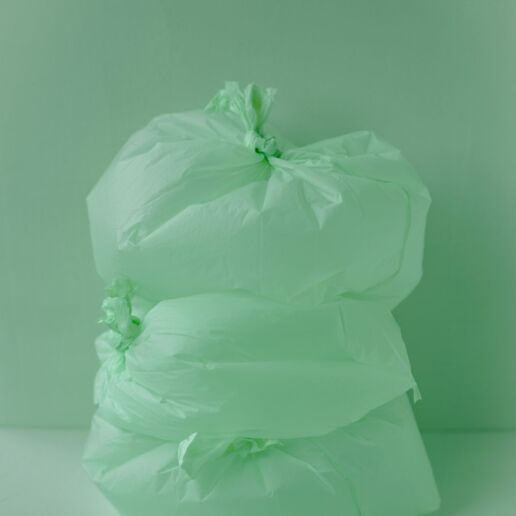
BioPEtex

BioPEtex
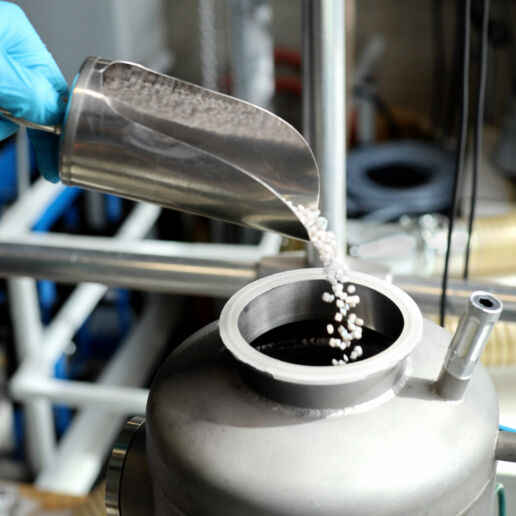
BioPEtex

CircWool
BIOTEXFUTURE is holding the right vision to transform the textile value chain.”
adidas Future Team
The message is clear for fashion and textiles: greenwashing can’t hide the fact that we depend on oil. We need to change the way things are built, and bio-based fibres are a big part of that. The good news is that the technology is available, partnerships are forming, and interest is growing.
Petrochemistry has defined textiles for the last 100 years. But projects like BIOTEXFUTURE show that a new era is coming, one where performance, style, and scale are no longer tied to oil but to renewable innovation.
CircWool
CircWool

CircWool
Visit BIOTEXFUTURE H2 | SI
THIS MIGHT BE ALSO INTERESTING FOR YOU
EMELIE SANDRE DESIGN – SUSTAINABLE INNOVATIONS
Modularity is hardly a new concept. It has transformed architecture, furniture and industrial design for decades. Applying it to soft textiles, however, opens an entirely different conversation.
Smart Textile Design – SUSTAINABLE INNOVATIONS
We have always been driven by creativity and curiosity. Our practice evolves through prototypes, never finished, always asking more questions of materials, processes and possibilities.
STUDIO ALICE GIELEN – SUSTAINABLE INNOVATIONS
It is an idea that feels increasingly relevant as artificial intelligence and computational design become part of fashion's creative landscape. Perhaps the future is not about humans versus machines. Perhaps it is about learning how to create together.
Leather from the Sea – SUSTAINABLE INNOVATIONS
"Through hands-on experimentation, I explore the potential of new surfaces and alternative forms of leather, aiming to reconnect human life with the natural world as an interconnected fabric."
Maison du Flock – SUSTAINABLE INNOVATIONS
Working with everything from delicate tulle and lace to leather, sequins and other unconventional materials, the studio has transformed flock into a contemporary design language capable of meeting the demands of luxury fashion and Haute Couture.
MUNICH FABRIC START – January 26 closing report
A solid trade show. An optimistic mindset. That sums up the outcome of MUNICH FABRIC START. After three days, the Munich textile fair came to an end yesterday, Thursday, with the integrated show-in-shows BLUEZONE, KEYHOUSE and THE SOURCE. MUNICH FABRIC START concluded with a stable visitor frequency compared to the previous event.
MUNICH FABRIC START – Between Attitude and Sensuality
The future begins where we reimagine it. The overarching theme of PLEASURE stands for fashion as an emotional space, as an expression of attitude and cultural reflection.
KnitForm+ by Jeanne Mora – SUSTAINABLE INNOVATIONS
What matters is how the textile responds: how it regulates volume, distributes pressure, and transitions from flat to three-dimensional states. Process transparency is embedded in the methodology itself.
Cartoon – WEAR YOUR OPTIMISM
Embark on this fashionable journey and discover the new Cartoon collection at our store. Be inspired, mix and match to your heart's content, and wear optimism—every day, for every occasion.
RETRAKT – SUSTAINABLE INNOVATIONS
Performance, in this context, is measured by organisational resilience. RETRAKT applies resilience engineering to help employees anticipate, monitor, respond to, and learn from complex and changing requirements.
Additionals Trends Autumn.Winter 26/27 – Part 8
ADDITIONALS NEWS – PART VIII
The latest developments for buttons, ribbons, decorative stones, closures, linings, lace, embroidery, interlinings as well as labeling and branding solutions will be presented by around 150 leading international ingredients and accessories suppliers in the ADDITIONALS Area at MUNICH FABRIC START. Explore the novelties of WE NORDIC LABEL STUDIOS here in our ADDITIONALS blog posts:
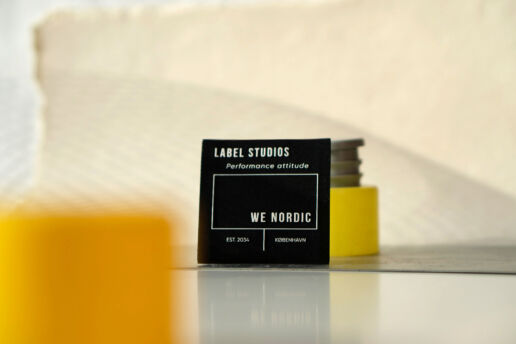
WE NORDIC LABEL STUDIOS
We Nordic Label Studios is a creative supplier of innovative branding products, specializing in certified and high-quality items for fashion and lifestyle brands.
Rooted in Nordic aesthetics and craftsmanship, the company creates conscious and design-led solutions that elevate every detail of the product experience.
We Nordic Label Studios – New Collection: Design and Quality for High Performance
Introducing the latest collection of labels, hangtags, and packaging – crafted specifically for sportswear, performance wear, and outdoor brands that demand more from every detail.
By blending technical expertise, refined craftsmanship, and cutting-edge materials, this collection is built to withstand the toughest conditions while delivering a premium brand experience.
Highlights include durable, functional components made from recycled silicone, as well as paper hangtags with paper string for easy recycling. These tactile, flexible solutions are ideal for garments that move, perform, and are washed repeatedly.
We Nordic Label Studios – New collection: Soft Function & Movement
Introducing the new range of labels, hangtags, and packaging – designed specifically for yoga and athleisure brands that value comfort, style, and conscious living.
This collection embodies softness, simplicity, and flow – from soft-touch labels and stretchable materials that move with the body, to a calming palette of pastel tones and organic, natural fibers.
Every detail has been thoughtfully crafted to reflect the values of today’s wellness-driven brands, including silicone-dipped strings for a smooth, refined finish, recycled silicone trims with a soft-touch feel, and natural, eco-conscious materials that support sustainable storytelling.


Certifications You Can Trust
We Nordic Label Studios uses materials certified for their environmental and ethical standards:
- GRS – Verifies recycled content and responsible production.
- GOTS – Confirms use of organic fibers and sustainable manufacturing.
- FSC – Ensures paper materials come from responsibly managed forests.
- OEKO-TEX 100 – Certifies products are free from harmful substances and safe for consumers.
At H1| B 02 you can discover the We Nordic Label Studios collections and find inspiration.
Hongkong – H1 | B 02


THIS MIGHT BE ALSO INTERESTING FOR YOU
EMELIE SANDRE DESIGN – SUSTAINABLE INNOVATIONS
Modularity is hardly a new concept. It has transformed architecture, furniture and industrial design for decades. Applying it to soft textiles, however, opens an entirely different conversation.
Smart Textile Design – SUSTAINABLE INNOVATIONS
We have always been driven by creativity and curiosity. Our practice evolves through prototypes, never finished, always asking more questions of materials, processes and possibilities.
STUDIO ALICE GIELEN – SUSTAINABLE INNOVATIONS
It is an idea that feels increasingly relevant as artificial intelligence and computational design become part of fashion's creative landscape. Perhaps the future is not about humans versus machines. Perhaps it is about learning how to create together.
Leather from the Sea – SUSTAINABLE INNOVATIONS
"Through hands-on experimentation, I explore the potential of new surfaces and alternative forms of leather, aiming to reconnect human life with the natural world as an interconnected fabric."
Maison du Flock – SUSTAINABLE INNOVATIONS
Working with everything from delicate tulle and lace to leather, sequins and other unconventional materials, the studio has transformed flock into a contemporary design language capable of meeting the demands of luxury fashion and Haute Couture.
MUNICH FABRIC START – January 26 closing report
A solid trade show. An optimistic mindset. That sums up the outcome of MUNICH FABRIC START. After three days, the Munich textile fair came to an end yesterday, Thursday, with the integrated show-in-shows BLUEZONE, KEYHOUSE and THE SOURCE. MUNICH FABRIC START concluded with a stable visitor frequency compared to the previous event.
MUNICH FABRIC START – Between Attitude and Sensuality
The future begins where we reimagine it. The overarching theme of PLEASURE stands for fashion as an emotional space, as an expression of attitude and cultural reflection.
KnitForm+ by Jeanne Mora – SUSTAINABLE INNOVATIONS
What matters is how the textile responds: how it regulates volume, distributes pressure, and transitions from flat to three-dimensional states. Process transparency is embedded in the methodology itself.
Cartoon – WEAR YOUR OPTIMISM
Embark on this fashionable journey and discover the new Cartoon collection at our store. Be inspired, mix and match to your heart's content, and wear optimism—every day, for every occasion.
RETRAKT – SUSTAINABLE INNOVATIONS
Performance, in this context, is measured by organisational resilience. RETRAKT applies resilience engineering to help employees anticipate, monitor, respond to, and learn from complex and changing requirements.