

What If the Future of Leather Doesn't Come from Land?
SUSTAINABLE INNOVATIONS
For decades, the search for alternatives to leather has focused on one question. What can replace it?
There has been mycelium, pineapple leaves, cactus and even apple waste. Each new material promises to reduce fashion’s environmental footprint while replicating the qualities of traditional leather. Now entering the space is designer and researcher Indrė Mikuckė who invites us to consider an entirely different possibility.
Designing with Nature, Not Against It
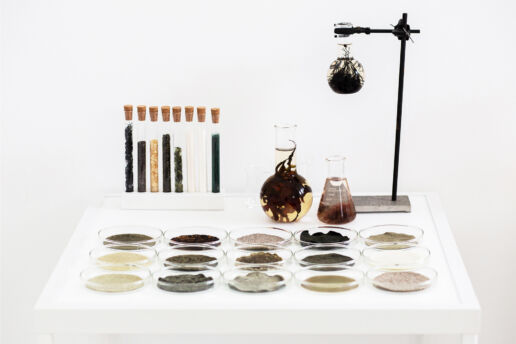
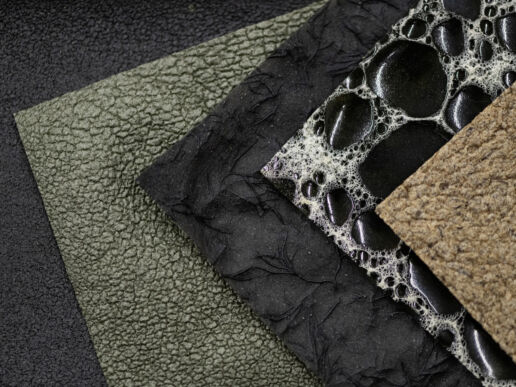
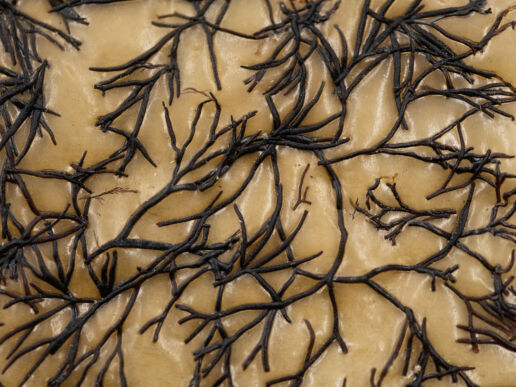
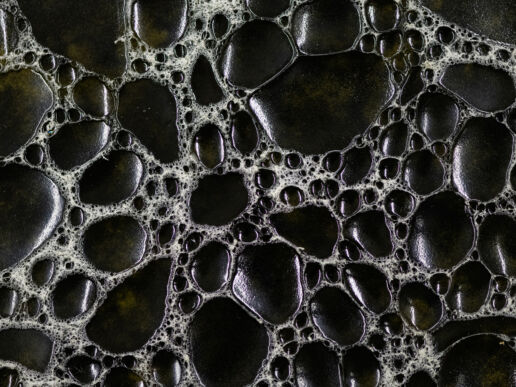
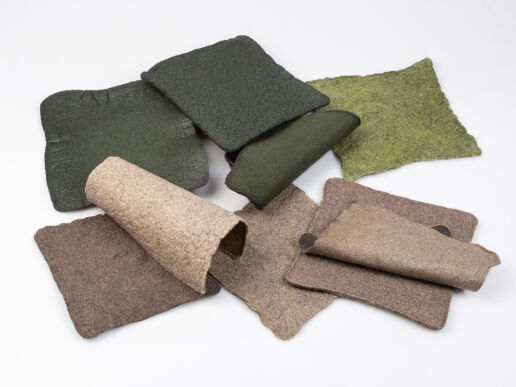
Through her research project, Leather from the Sea, Indrė explores how algae, natural ingredients and algae-derived binders can be transformed into flexible biomaterials through a process of mixing, casting and controlled drying.The resulting surfaces are not designed to perfectly imitate leather.
Instead, they celebrate the subtle irregularities, textures and tonal variations that emerge naturally during the making process. Every sample reflects the unpredictable beauty of the materials themselves, creating surfaces that feel both familiar and entirely new.
Rather than forcing nature to conform to industrial expectations, the project asks what happens when design works alongside natural processes. It is a subtle shift. But an important one.
“Through hands-on experimentation, I explore the potential of new surfaces and alternative forms of leather, aiming to reconnect human life with the natural world as an interconnected fabric.”
Looking Beyond Material Substitution
The thing is, fashion often approaches material innovation as a process of substitution. Replace one fibre. Replace one coating. Replace one material with another. However, leather from the Sea challenges that way of thinking.
Instead of simply searching for a direct replacement, Indrė is exploring an entirely different relationship between designers, materials and the natural world. Marine resources become more than ingredients. They become collaborators in developing future biomaterials that minimise environmental impact while opening new creative possibilities for fashion, accessories and interiors.
As she explains:
“Through hands-on experimentation, I explore the potential of new surfaces and alternative forms of leather, aiming to reconnect human life with the natural world as an interconnected fabric.”
It is a philosophy that places material experimentation at the centre of ecological thinking, demonstrating that innovation is as much about changing our relationship with nature as it is about changing materials.
Materials Still in Conversation
One of the most compelling aspects of Leather from the Sea is that it doesn’t claim to have all the answers. The materials remain under development, with ongoing research exploring durability, future applications and performance across fashion, accessories, interiors and experimental design.
There is an honesty in that.
Innovation is often presented as a finished product, neatly packaged and ready for market. Research rarely works that way. It is iterative, experimental and constantly evolving. Perhaps that is precisely why projects like Leather from the Sea matter.
Visitors exploring the Sustainable Innovation space at Munich Fabric Start this July won’t simply discover another leather alternative. They will encounter a designer asking bigger questions about how materials are imagined, developed and valued. Because the future of fashion may not depend solely on finding new resources.
It may depend on learning how to work more thoughtfully with the ones nature has already placed around us. Be sure to visit the Sustainable Innovation space at Munich Fabric Start, taking place from 14-16 July 2026.

THIS MIGHT BE ALSO INTERESTING FOR YOU:
EMELIE SANDRE DESIGN – SUSTAINABLE INNOVATIONS
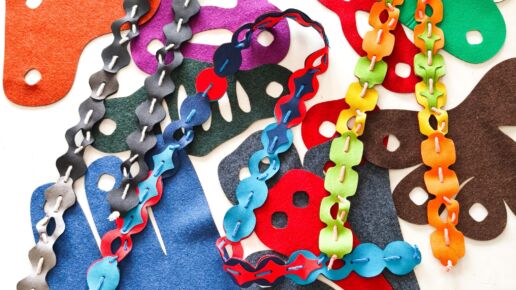
Modularity is hardly a new concept. It has transformed architecture, furniture and industrial design for decades. Applying it to soft textiles, however, opens an entirely different conversation.
Smart Textile Design – SUSTAINABLE INNOVATIONS
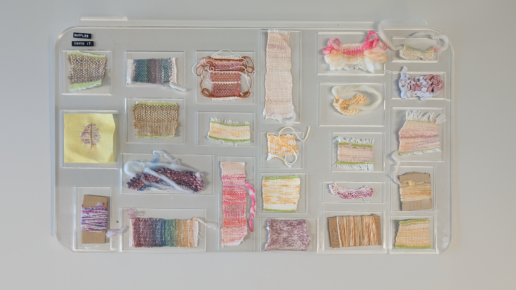
We have always been driven by creativity and curiosity. Our practice evolves through prototypes, never finished, always asking more questions of materials, processes and possibilities.
STUDIO ALICE GIELEN – SUSTAINABLE INNOVATIONS
It is an idea that feels increasingly relevant as artificial intelligence and computational design become part of fashion's creative landscape. Perhaps the future is not about humans versus machines. Perhaps it is about learning how to create together.
Maison du Flock – SUSTAINABLE INNOVATIONS
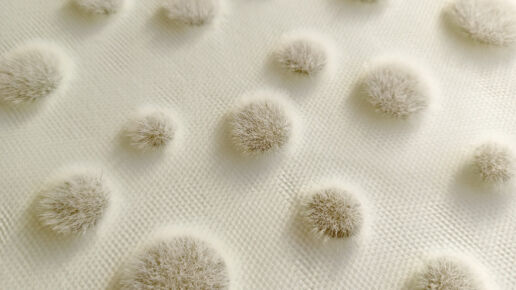
Working with everything from delicate tulle and lace to leather, sequins and other unconventional materials, the studio has transformed flock into a contemporary design language capable of meeting the demands of luxury fashion and Haute Couture.

MUNICH FABRIC START – January 26 closing report
A solid trade show. An optimistic mindset. That sums up the outcome of MUNICH FABRIC START. After three days, the Munich textile fair came to an end yesterday, Thursday, with the integrated show-in-shows BLUEZONE, KEYHOUSE and THE SOURCE. MUNICH FABRIC START concluded with a stable visitor frequency compared to the previous event.
MUNICH FABRIC START – Between Attitude and Sensuality
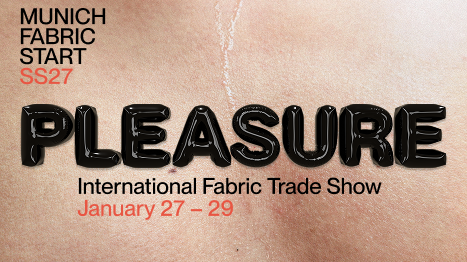
The future begins where we reimagine it. The overarching theme of PLEASURE stands for fashion as an emotional space, as an expression of attitude and cultural reflection.

KnitForm+ by Jeanne Mora – SUSTAINABLE INNOVATIONS
What matters is how the textile responds: how it regulates volume, distributes pressure, and transitions from flat to three-dimensional states. Process transparency is embedded in the methodology itself.

Cartoon – WEAR YOUR OPTIMISM
Embark on this fashionable journey and discover the new Cartoon collection at our store. Be inspired, mix and match to your heart's content, and wear optimism—every day, for every occasion.

RETRAKT – SUSTAINABLE INNOVATIONS
Performance, in this context, is measured by organisational resilience. RETRAKT applies resilience engineering to help employees anticipate, monitor, respond to, and learn from complex and changing requirements.

MATERIA FUTURA – SUSTAINABLE INNOVATIONS
Materia Futura is not proposing a new bio-material category, nor a finished commercial textile. What distinguishes the project is its design-led investigation into the emotional and aesthetic dimensions of bio-based materials, an area often sidelined in sustainability discourse.